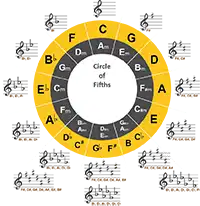



The minor scale (natural minor) is one of the most widely used scales in music and is characterized by its darker, more melancholic sound compared to the major scale. The natural minor scale has the following pattern of whole and half steps:
Whole – Half – Whole – Whole – Half – Whole – Whole
Minor scales are closely related to major scales through parallel keys. For example, A minor is the parallel minor to C major, and the two scales therefore share the same notes and accidentals.
| Scale | 1 | 2 | 3 | 4 | 5 | 6 | 7 | Accidentals |
|---|---|---|---|---|---|---|---|---|
| A-Mol (A Minor) | A | B | C | D | E | F | G | 0 |
| E-Mol (E Minor) | E | G | A | B | C | D | F# | 1: F# |
| B-Mol (B Minor) | B | C# | D | E | F# | G | A | 2: F#,C# |
| B-Mol (B Minor) | B | C# | D | E | F# | G# | A | 3: F#,C#,G# |
| fis-Mol (F# Minor) | F# | G# | A | B | C# | D# | E | 4: F#,C#,G#,D# |
| cis-Mol (C# Minor) | C# | D# | E | F# | G# | A# | B | 5: F#,C#,G#,D#,A# |
| gis-Mol (G# Minor) | G# | A# | B | C# | D# | E# | F# | 6: F#,C#,G#,D#,A#,E# |
| es-Mol (E♭ Minor) | E♭ | F | G♭ | A♭ | B♭ | C♭ | D♭ | 6:G♭,A♭,B♭,C♭,D♭,E♭ |
| B♭-Mol (B♭ Minor) | B♭ | C | D♭ | E♭ | F | G♭ | A♭ | 5:G♭,A♭,B♭,D♭,E♭ |
| F-Mol (F Minor) | F | G | A♭ | B♭ | C | D♭ | E♭ | 4:A♭,B♭,D♭,E♭ |
| C-Mol (C Minor) | C | D | E♭ | F | G | A♭ | B♭ | 3:A♭,B♭,E♭ |
| G-Mol (G Minor) | G | A | B♭ | C | D | E♭ | F | 2:B♭,E♭ |
| D-Mol (D Minor) | D | E | F | G | A | B♭ | C | 2:B♭ |
A minor is the most commonly used minor scale for beginners, as it – like C major – has no accidentals. It is often associated with a soft, mournful, or contemplative mood. Many classical works and folk songs are written in A minor.
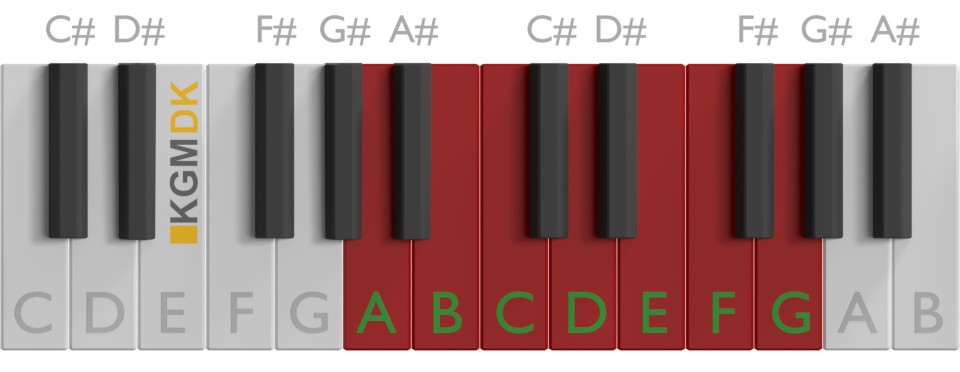
E minor has one sharp: F#. It is frequently used in guitar-based music, as open strings fit well with the scale. Sonically, it is dark, but still with a certain openness.
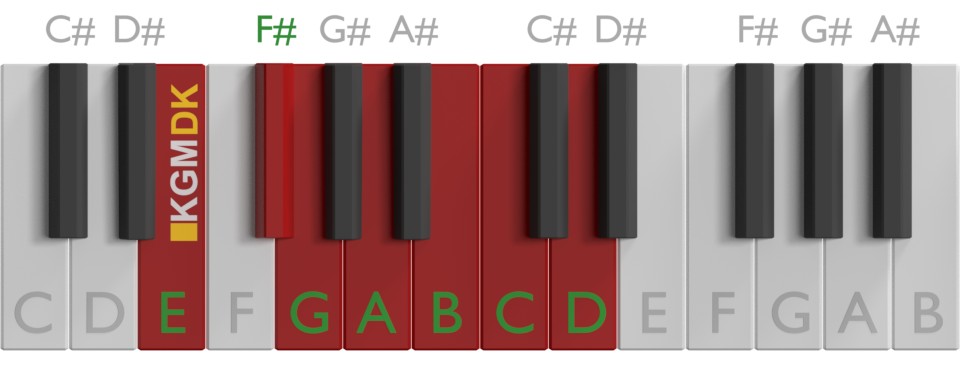
B minor has two sharps: F# and C#. It is known for its somewhat dramatic sound and is often used in classical works, film music, and progressive rock.
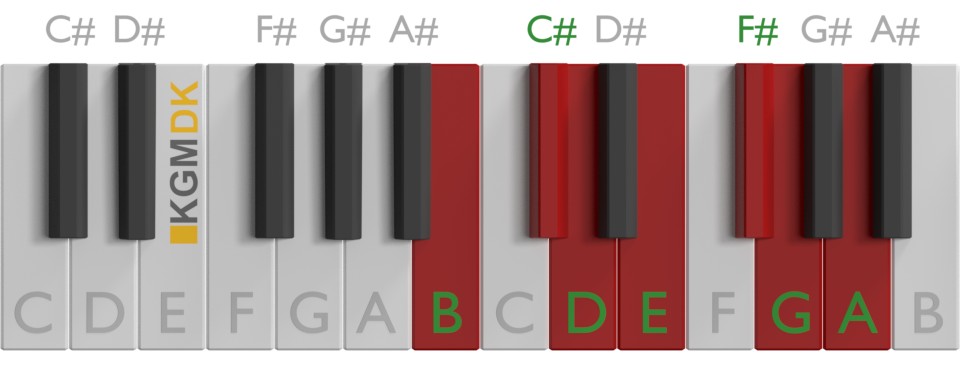
F# minor has three sharps: F#, C#, and G#. It has a dark and intense sound, making it suitable for both classical and modern compositions.
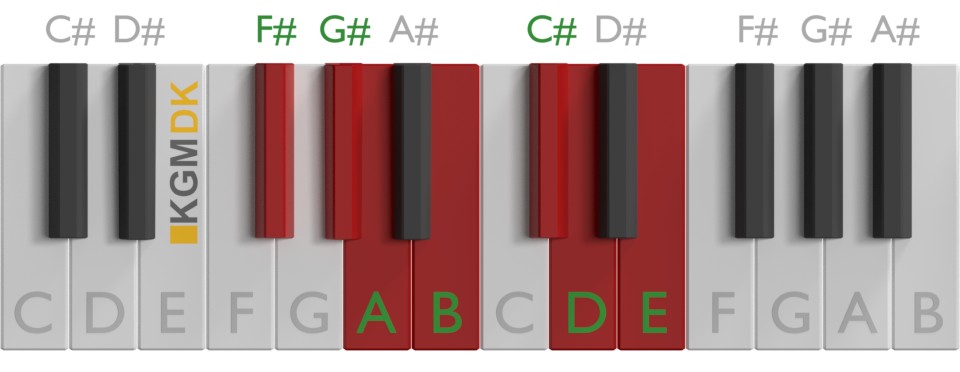
C# minor has four sharps: F#, C#, G#, and D#. It is often used to create a dramatic and emotional mood. Many romantic piano pieces are written in this key.
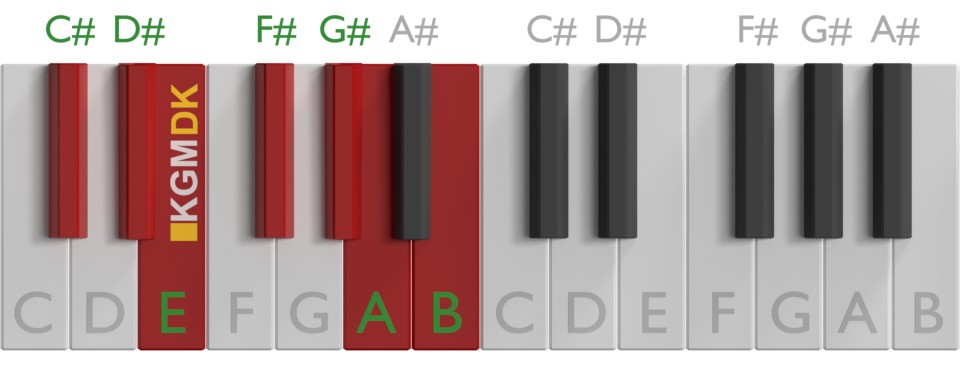
G# minor has five sharps: F#, C#, G#, D#, and A#. It is technically challenging for many instruments, but has an intense and distinctive sound.
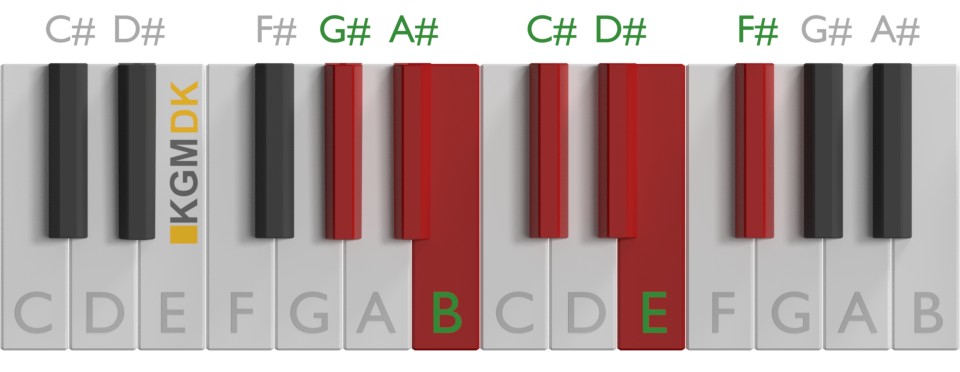
D# minor has six sharps: F#, C#, G#, D#, A#, and E#. It is rarely used in everyday music, but can provide a particularly dark and dramatic effect.
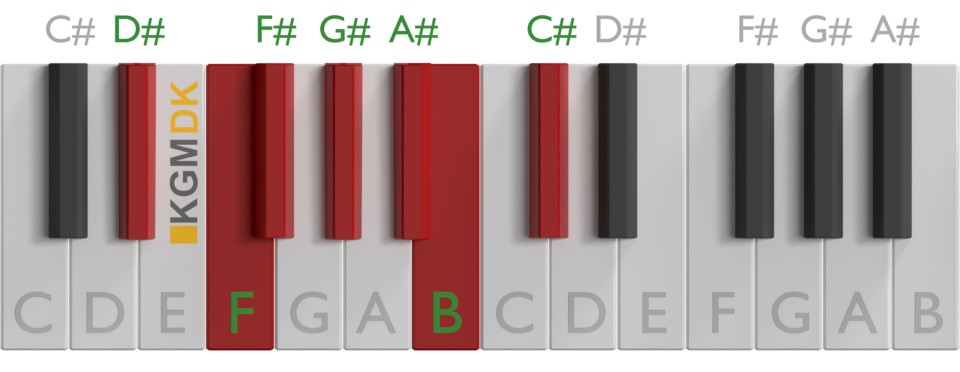
G minor has two flats: Bb and Eb. It is popular in both classical music and film music, often to create a heroic or dramatic mood.
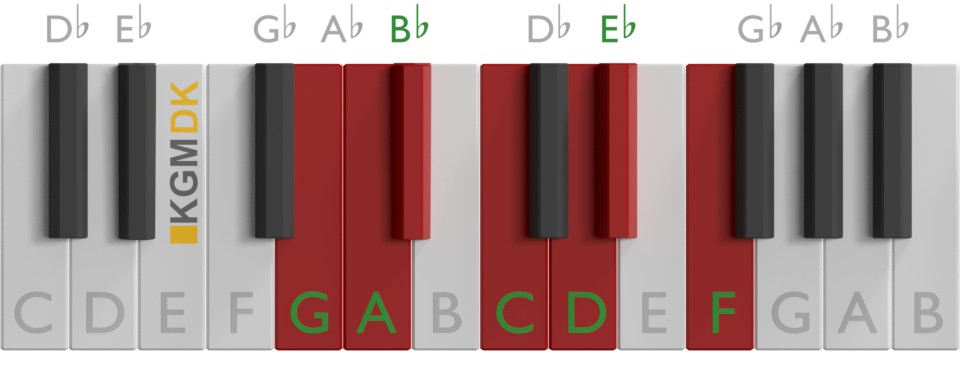
D minor has one flat: Bb. It is often called “the saddest key” and is widely used in Baroque music and melancholic compositions.
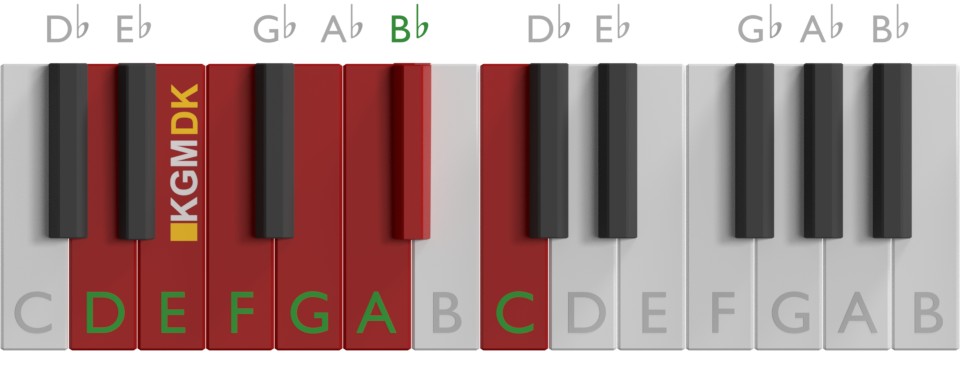
F minor has four flats: Bb, Eb, Ab, and Db. It is deep and dark, often used in dramatic classical works and jazz ballads.
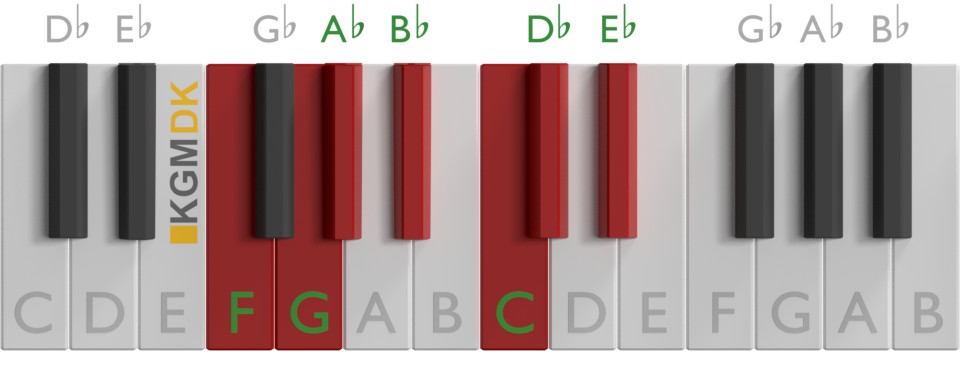
B♭ minor has five flats: Bb, Eb, Ab, Db, and Gb. It has a heavy and emotional sound, perfect for intense pieces of music.
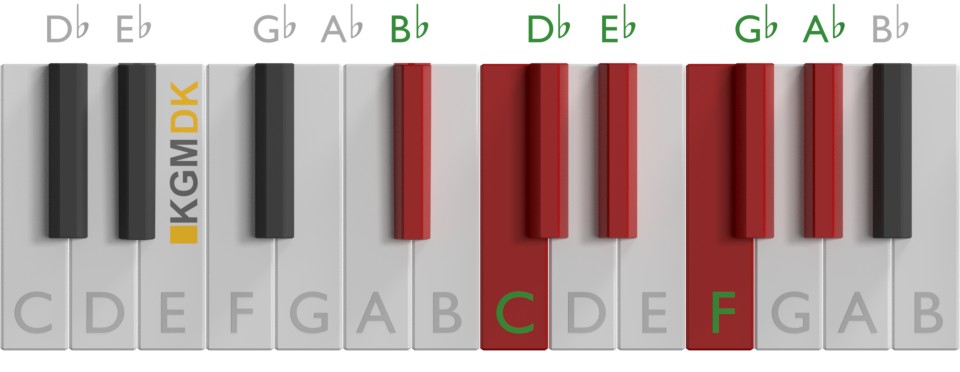
E♭ minor has six flats: Bb, Eb, Ab, Db, Gb, and Cb. It is often used to create a mysterious or mournful atmosphere.
Note: There is also harmonic minor (with a raised seventh degree) and melodic minor (with raised sixth and seventh degrees when ascending). These variants change the character of the scale and are often used in classical music, jazz, and modern compositions.