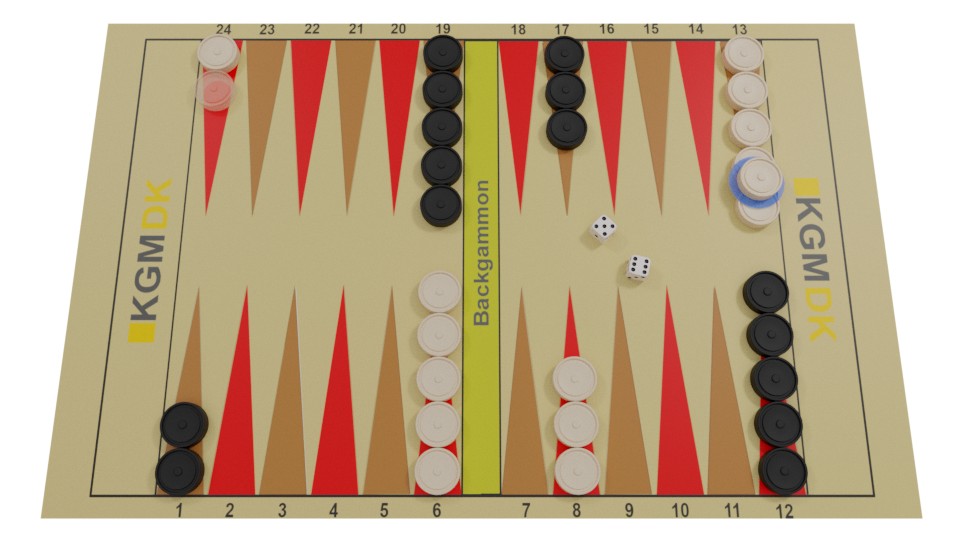
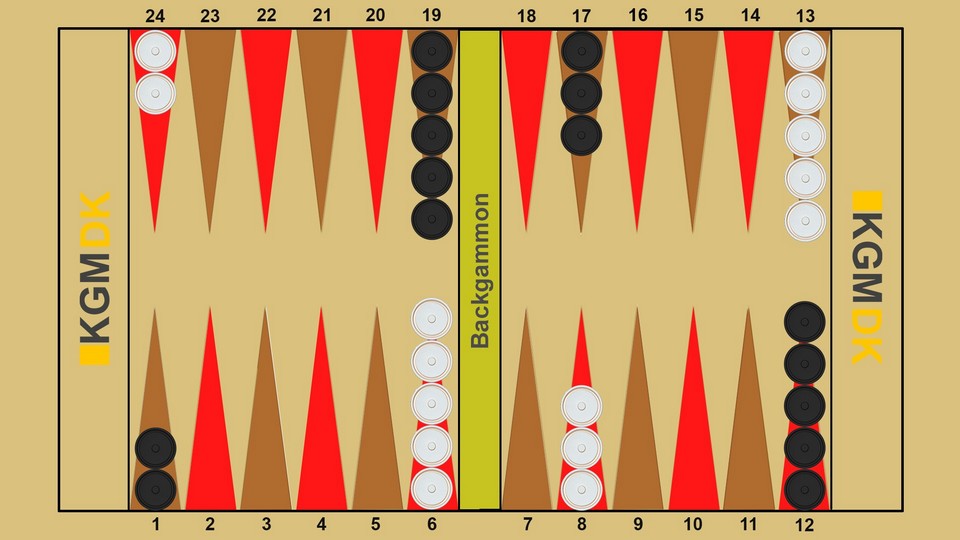


In backgammon, the opening play plays an important role. It is the first step in establishing a strong position and putting pressure on the opponent. Below, we review the possible opening rolls (15 in total), and show which moves are recommended – as well as any alternatives and when they may be relevant.
At the start of the game, both players have 15 checkers set up in a fixed formation. The game opens with both rolling one die, and the player who rolls highest starts with that roll. Each die represents a possible move, and you may split the move between one or two checkers. The earlier in the game, the more risk-taking may be justified.
The safe play is 24/23 and 13/11. This gives a builder on the 11-point and a minimal split at the back.
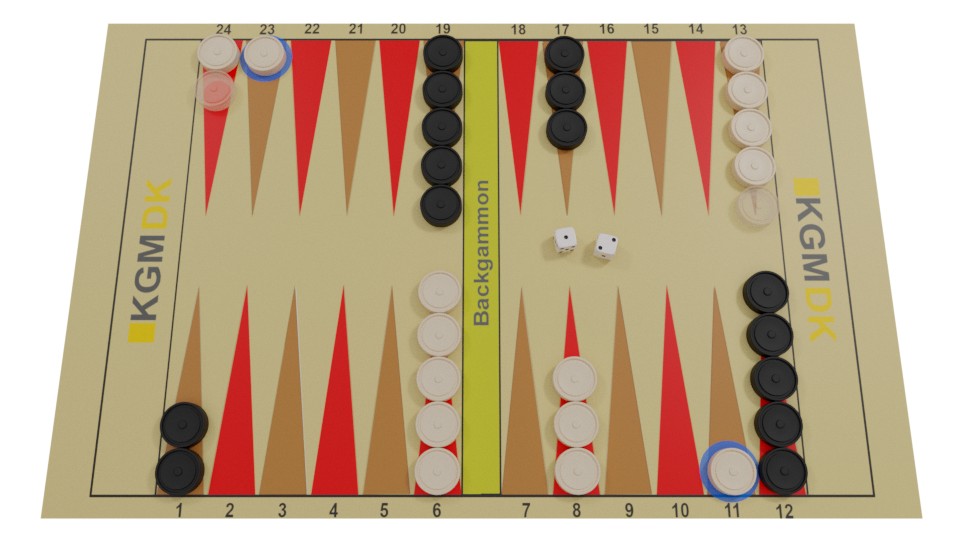
Alternatively, you can play 6/5 instead of 24/23, but this is a more risky play, which is rarely recommended for beginners.
This is one of the strongest opening rolls. Here you play 8/5 and 6/5, which builds a strong blockade on the 5-point.
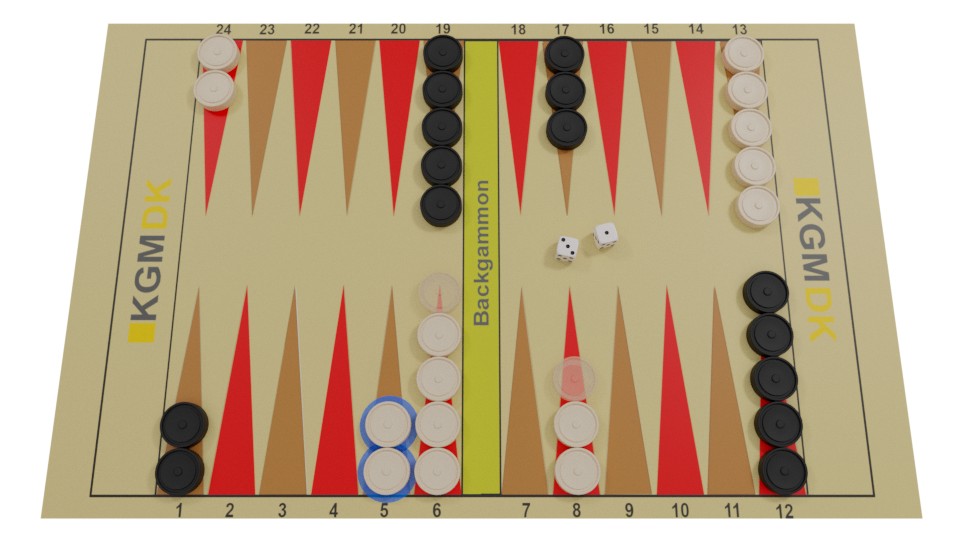
There is no real alternative to this move.
The standard move is 24/21 and 13/11. It combines attack and positioning.
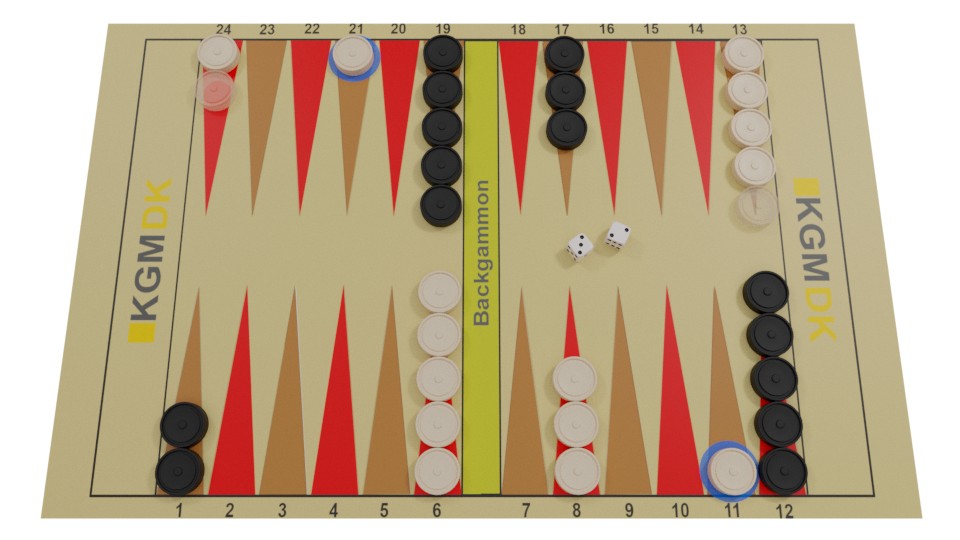
Alternatively, you can swap the order and play 24/22 and 13/10, but this is more risky against a 5-5 from the opponent.
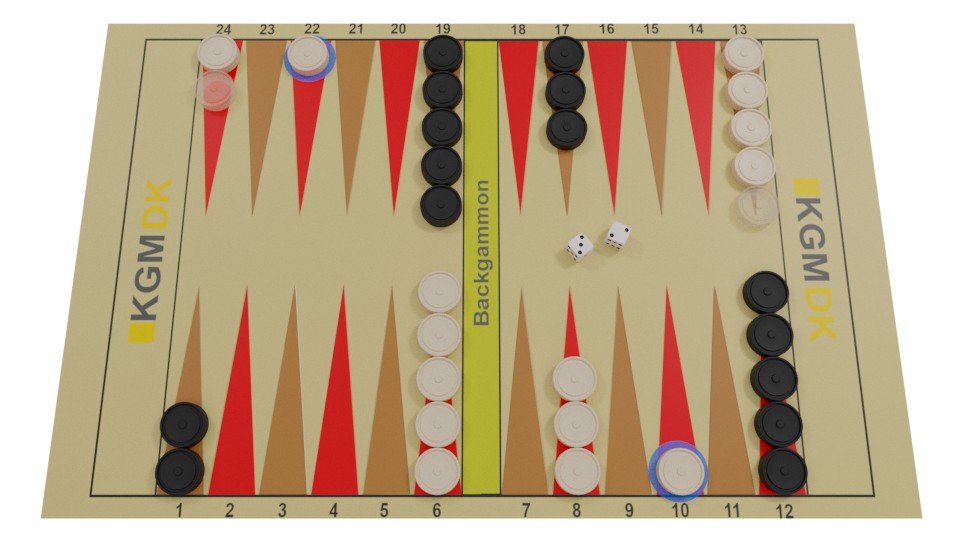
The recommended play is 24/23 and 13/9. You build a good position and split from the back.
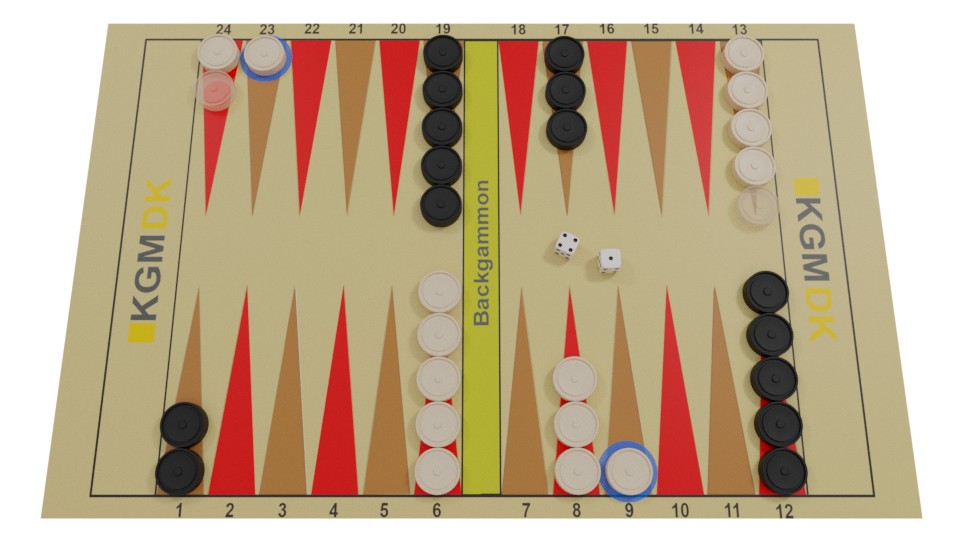
Alternatively, you can play 6/5 to aim for the 5-point, but this should only be done by experienced players.
One of the best opening rolls. Play as 8/4 and 6/4 to build the 4-point.
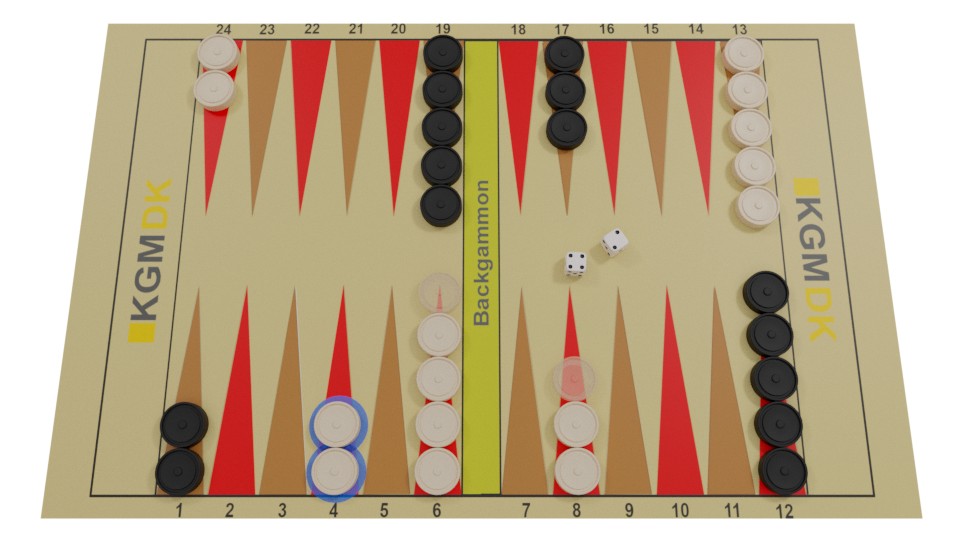
Three playable options:
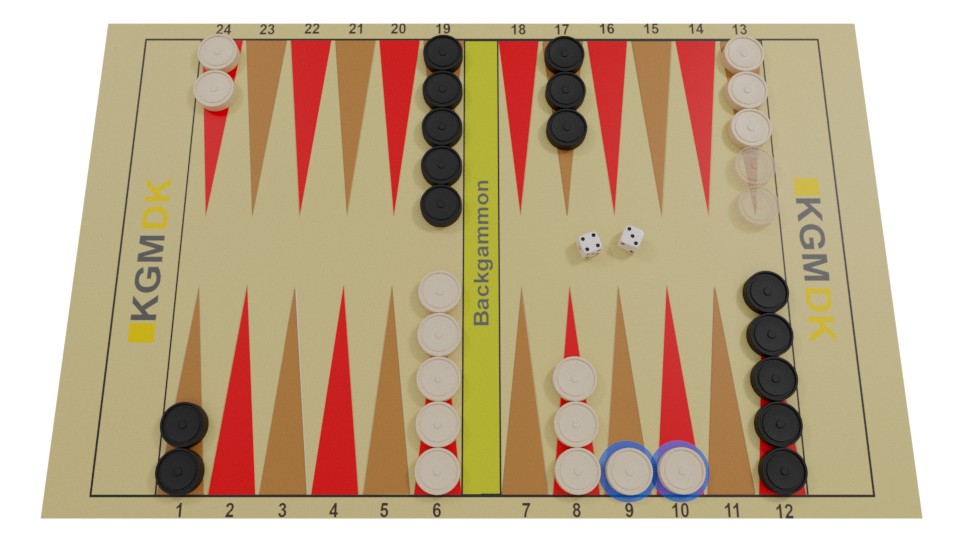
Play 24/23 and 13/8. Alternatively, 6/5 can be chosen for more aggressive positioning.
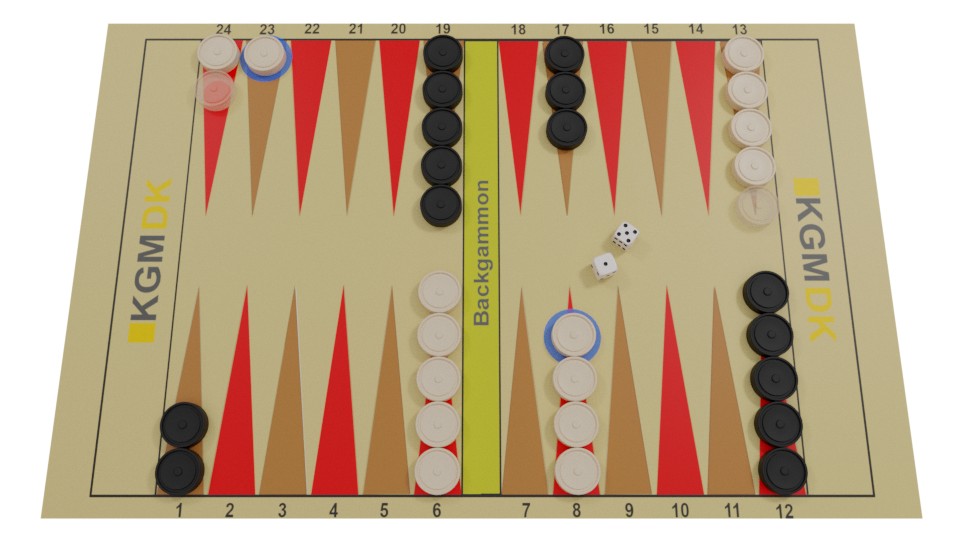
Normally: 13/11 and 13/8. Alternative: 24/22 and 13/8.
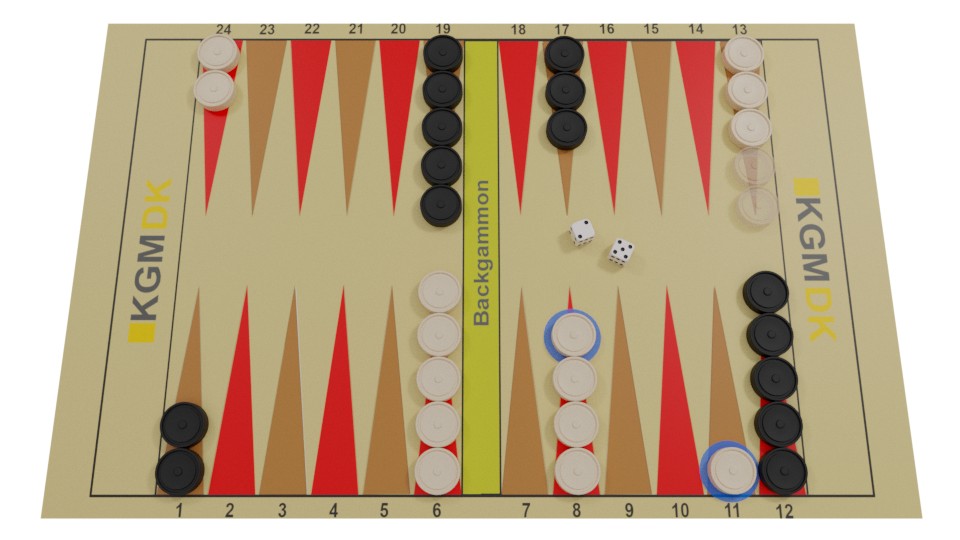
Standard: 8/3 and 6/3. Alternative: 13/10 and 13/8.
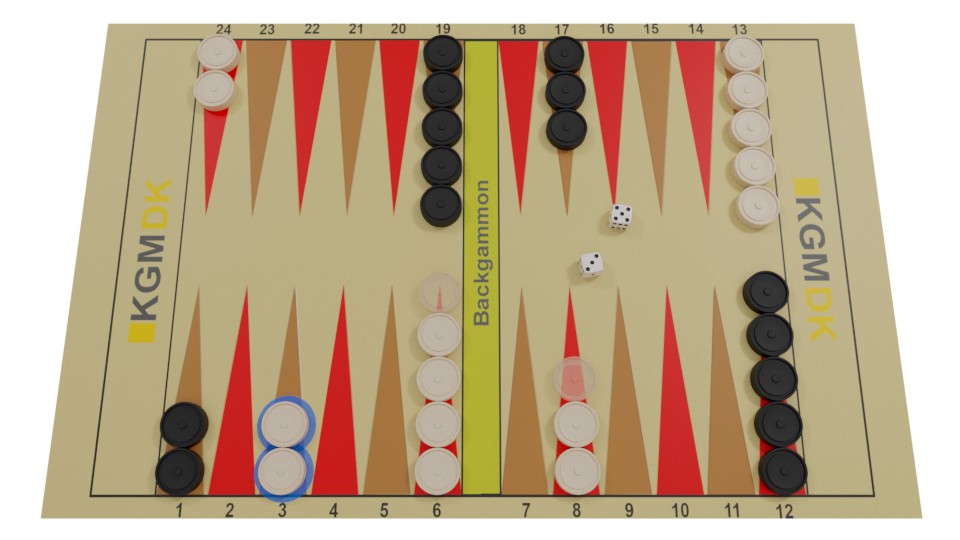
Most common: 24/20 and 13/8. Alternative: 13/9 and 13/8.
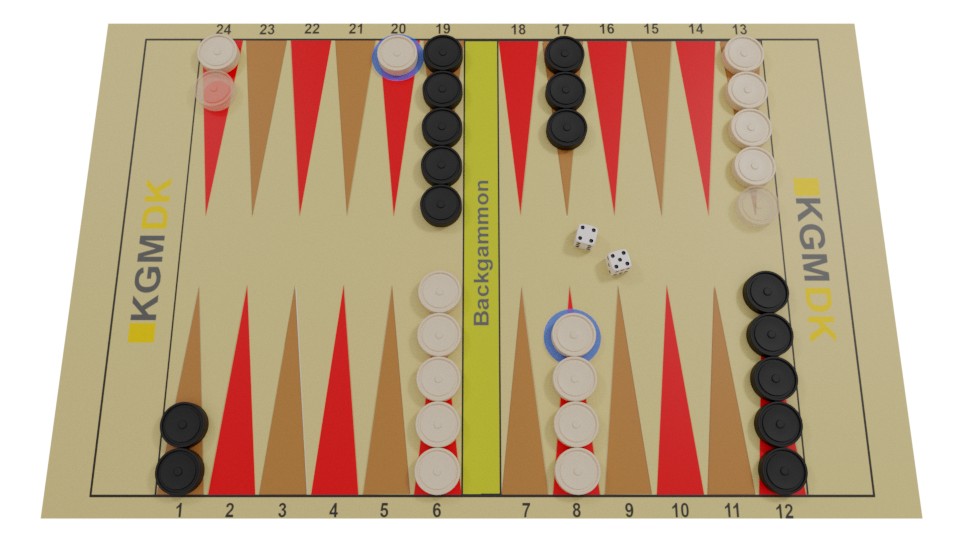
Only one recommended play: 13/7 and 8/7. Ensures control of the bar.
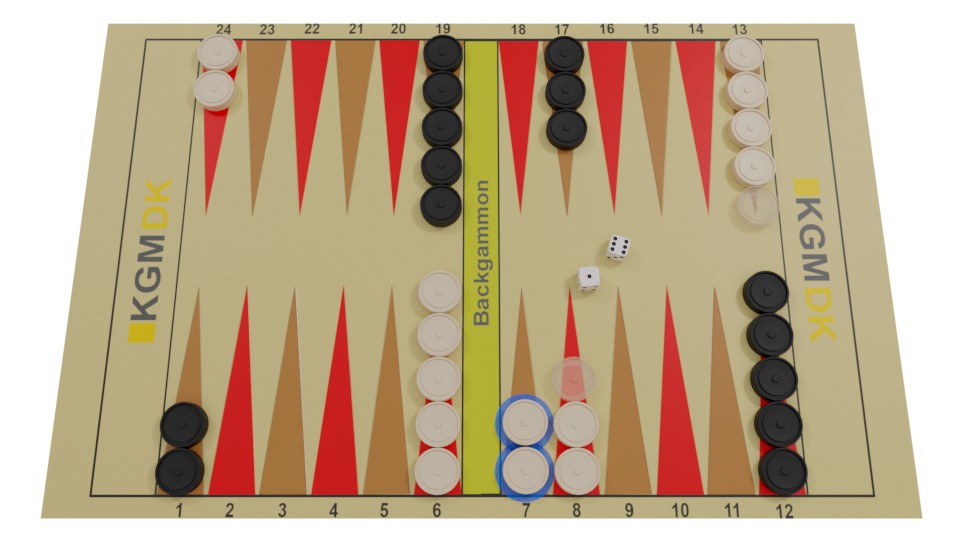
Standard move: 24/18 and 13/11. Alternatively: 24/16 with risk of being hit.
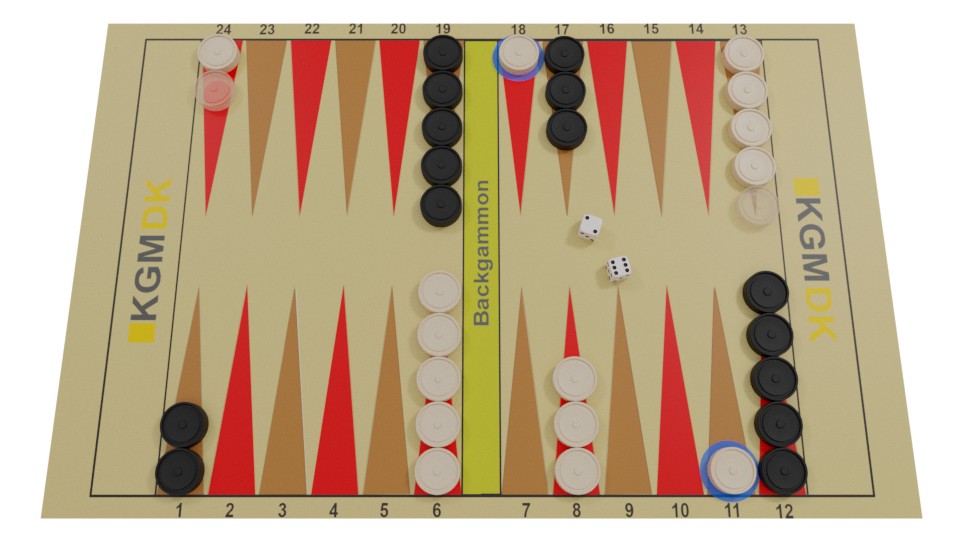
Standard: 24/18 and 13/10. Alternative: 24/15.
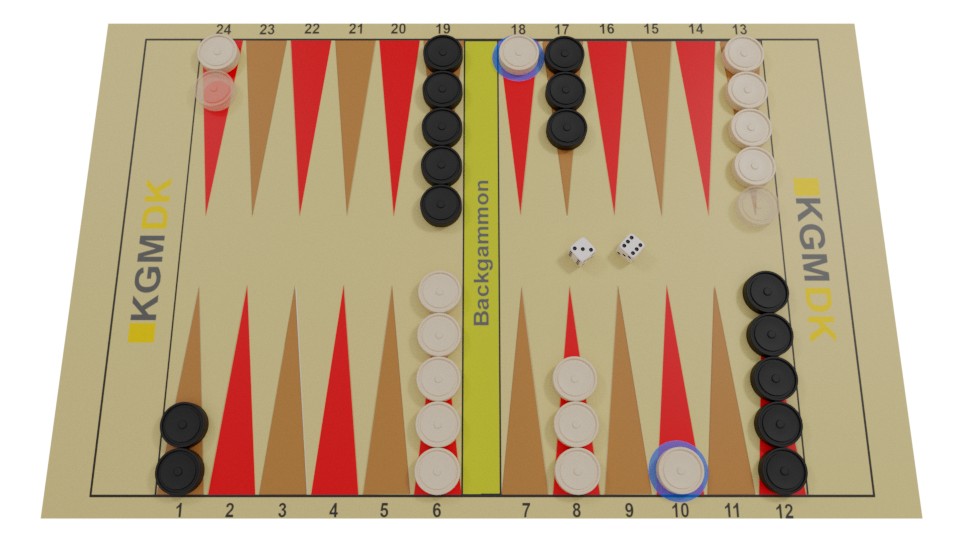
Two equally valid options:
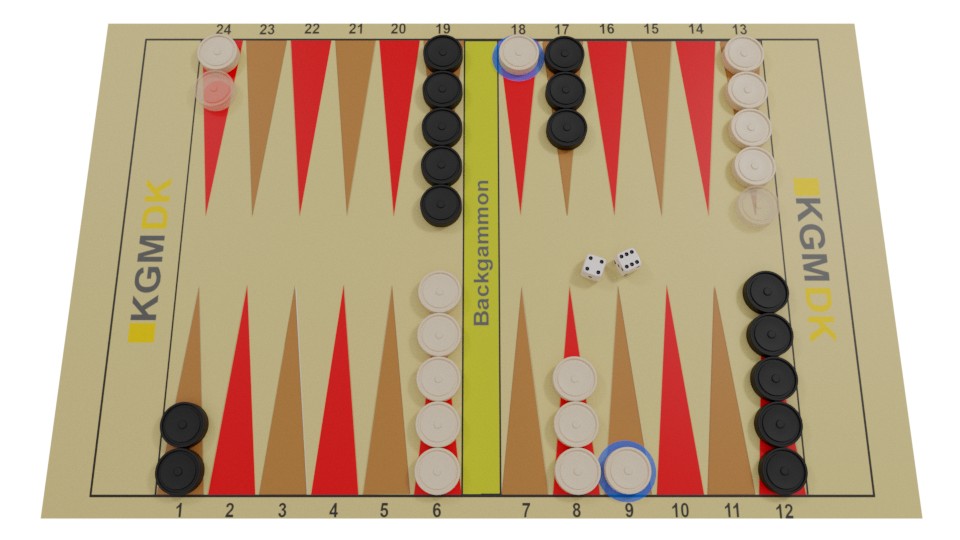
A third, rarely used choice is to build 8/2 and 6/2.
Only one strong option: 24/13. You move a back checker forward to safety.