
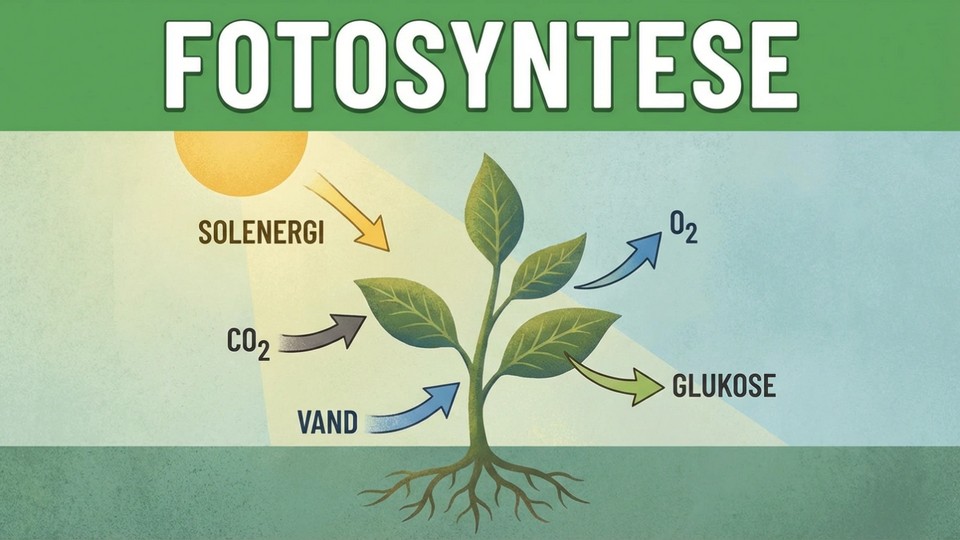


Photosynthesis is the process by which plants, algae, and certain bacteria convert sunlight into chemical energy in the form of glucose. This process is the foundation for almost all life on Earth, as it not only produces the energy plants need, but also the oxygen that animals and humans breathe.
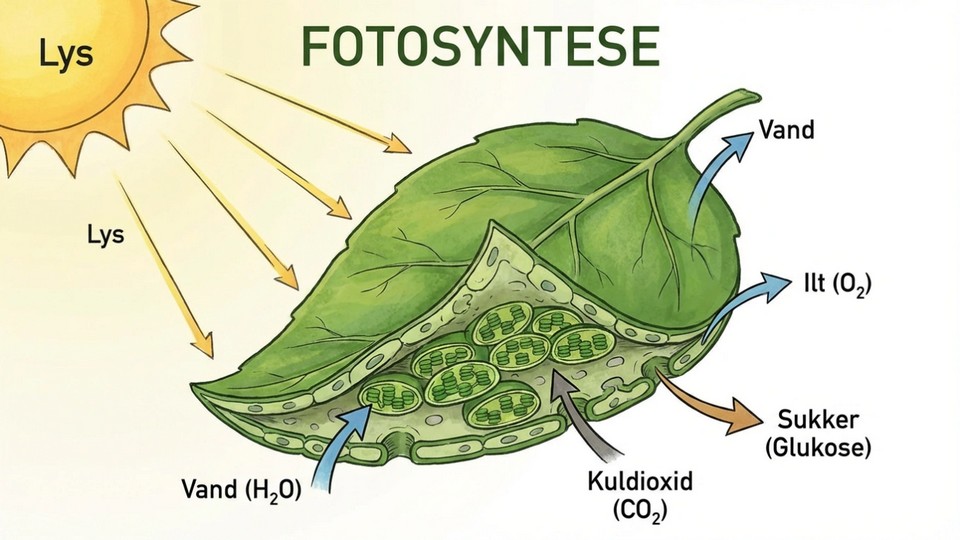
The word's meaning comes from Greek: "photo" means light, and "synthesis" means to put together. It thus describes how living organisms use light to create organic compounds.
Photosynthesis can be simplified to the following chemical reaction:
6 CO2 + 6 H2O + sunlight → C6H12O6 + 6 O2
This means that six molecules of carbon dioxide (CO2) and six molecules of water (H2O) are converted into one molecule of glucose (C6H12O6) and six molecules of oxygen (O2) with the help of the sun's energy.
Photosynthesis takes place in the chloroplasts of plants, more specifically in the green pigment chlorophyll. Chlorophyll absorbs sunlight, especially the blue and red wavelengths, and initiates the chemical process that converts energy from the sun into chemical energy in the form of sugar.
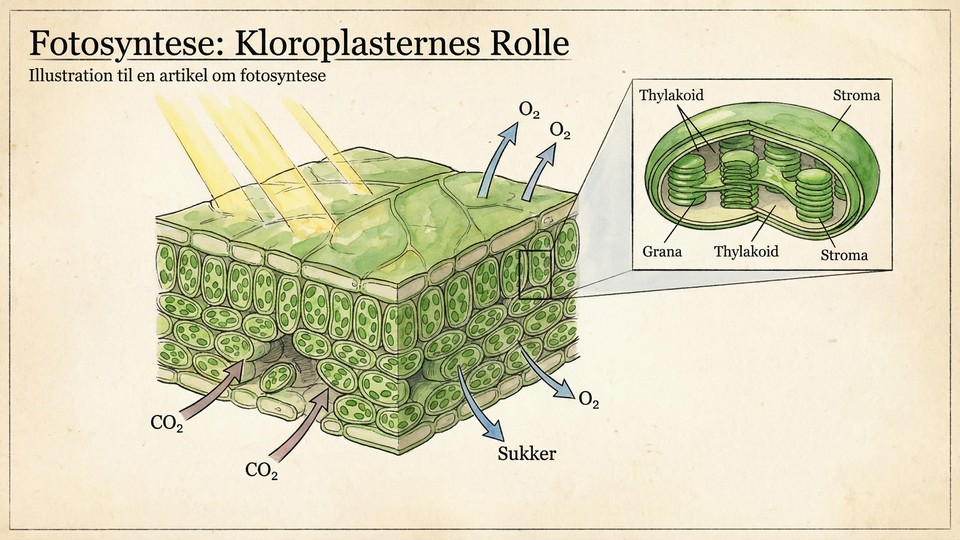
The first phase takes place in the thylakoid membranes in the chloroplasts, where sunlight is absorbed. Here, water molecules are split, and oxygen, ATP, and NADPH are formed — energy-rich molecules used in the next phase.
In this phase, ATP and NADPH are used to convert carbon dioxide into glucose. The process does not require direct sunlight, but depends on the energy-carrying molecules from the first phase.
Photosynthetic organisms – especially plants – form the first link in the food chain. All animals, from insects to humans, are indirectly dependent on the ability of plants to produce energy and oxygen.

Photosynthesis maintains the balance between oxygen and carbon dioxide in the atmosphere. Without this process, oxygen levels would quickly drop, and life as we know it would not be possible.
Plants act as carbon sinks by absorbing CO2 from the atmosphere. Therefore, they play a central role in combating climate change.
Plants have developed different photosynthesis strategies to adapt to their environment:
Researchers are trying to improve photosynthesis to increase food production and develop sustainable technologies, such as artificial photosynthesis, which can produce fuel and reduce CO2 emissions.
Photosynthesis is one of nature's most impressive processes, making life on Earth possible. It captures energy from the sun and converts it into nourishment and oxygen, which all living things depend on.