Oxygen (O) is a chemical element with atomic number 8. It is a non-metal and a member of group 16 in the periodic table. It is essential for respiration and combustion and is the third most abundant element in the universe.
1. Introduction
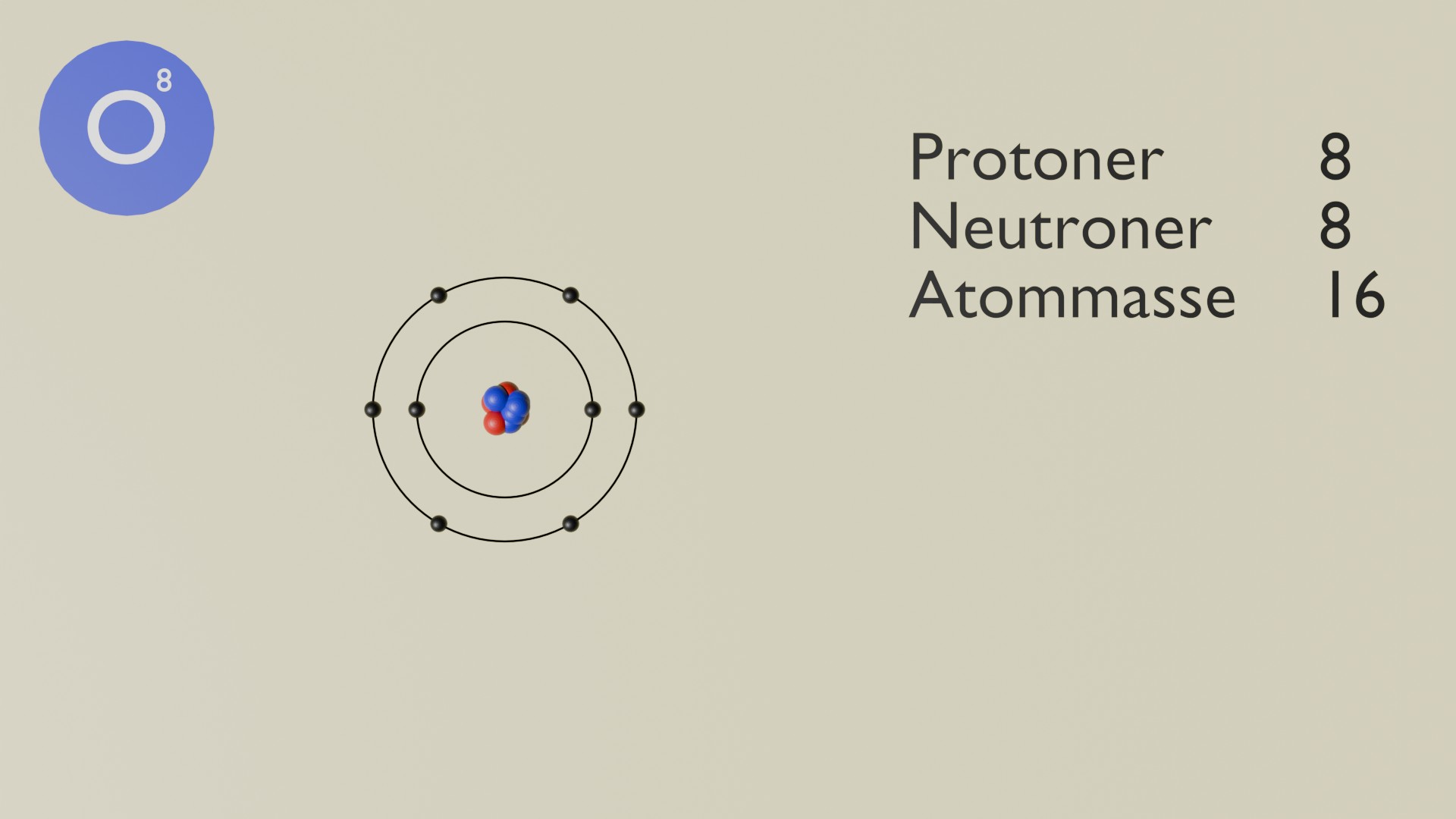
Oxygen is crucial for life as we know it. With 8 protons, usually 8 neutrons, and 8 electrons, it has an atomic mass of about 16 u. In its most common form, O₂, oxygen makes up about 21% of Earth's atmosphere and is used by most organisms for cellular respiration.
2. Physical and chemical properties
Oxygen is a highly reactive gas that supports combustion. It forms compounds with almost all other elements. It exists in several molecular forms, including dioxygen (O₂) and ozone (O₃). It has a boiling point of -183.0 °C and a melting point of -218.8 °C. Oxygen readily forms oxides such as carbon dioxide (CO₂), water (H₂O), and rust (Fe₂O₃).
3. Isotopes
Oxygen has three stable isotopes:
- Oxygen-16 (¹⁶O) – 8 protons, 8 neutrons (most abundant)
- Oxygen-17 (¹⁷O) – 8 protons, 9 neutrons (rare)
- Oxygen-18 (¹⁸O) – 8 protons, 10 neutrons (used in tracing and climate studies)
These isotopes are used in medical, environmental, and geological research.
4. Industrial use
Industrial use of oxygen is crucial for many industrial processes. The table below describes the main applications:
| Use | Description |
| Medical Use | Supplied as oxygen gas or in tanks for respiratory support in hospitals and at home |
| Steel Production | Used in blast furnaces to remove impurities from molten iron |
| Welding and Cutting | Combined with fuel gases in oxyacetylene torches for high-temperature flames |
5.
Extraction and safety
Oxygen is extracted from air via fractional distillation. Although it is essential for life, concentrated oxygen supports rapid combustion and must be handled with care, especially around open flames and oils.