

The Second World War was the most extensive and destructive conflict in modern history. The war lasted from 1939 to 1945 and involved states from almost the entire world. Millions of soldiers and civilians lost their lives, cities were reduced to ruins, and political borders, ideologies, and international relations were changed forever. For beginners, the subject may seem large and complex, but it can be better understood by looking at the background of the war, the most important events, and the consequences it had for the world after 1945. This article provides a clear overview of the Second World War with a focus on context, explanation, and historical significance.
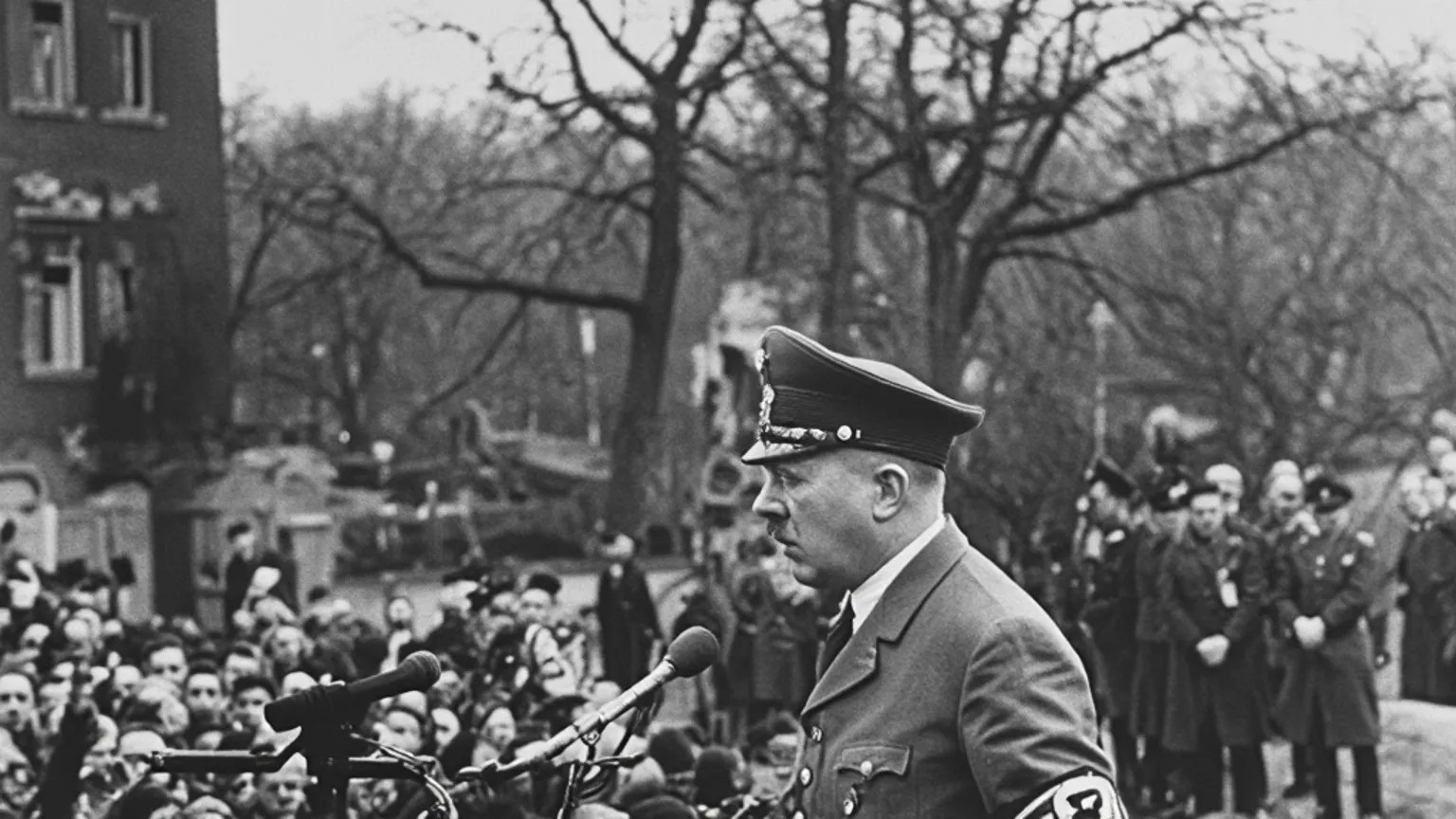
To understand the Second World War, it is necessary to look at the period after the First World War. Many countries were marked by economic crisis, political unrest, and strong national tensions. The Treaty of Versailles of 1919 imposed harsh conditions on Germany, which lost territories, had to pay large war reparations, and had its military restricted. In Germany, this was seen by many as a humiliation, and the dissatisfaction created fertile ground for extreme nationalism. At the same time, the global economic crisis of the 1930s hit hard, with unemployment, poverty, and distrust of democratic governments. In this climate, authoritarian movements grew, especially Nazism in Germany under Adolf Hitler, Fascism in Italy under Benito Mussolini, and militarism in Japan.
Hitler promised to restore Germany’s strength, overturn the Treaty of Versailles, and unite all Germans in a greater Reich. Nazism was based not only on nationalism, but also on racism, antisemitism, and the idea that some peoples were worth more than others. In the 1930s, Germany began to rearm, occupy new areas, and challenge the international order. Many other countries wanted to avoid another major war and therefore reacted cautiously for a long time. This policy of appeasement gave Hitler the opportunity to become bolder. When Germany invaded Poland in September 1939, the limit was reached, and Britain and France declared war.
On 1 September 1939, Germany attacked Poland from the west. Shortly afterward, the Soviet Union moved in from the east as a result of a secret agreement between the two states, the so-called Molotov-Ribbentrop Pact. Poland was quickly defeated, and the country was divided between the two attackers. The invasion demonstrated German warfare in practice: rapid attacks with tanks, aircraft, and motorized forces, often called blitzkrieg. The goal was to paralyze the opponent quickly before an effective defense could be organized. This strategy gave Germany major early victories and made a strong impression on the outside world.
In 1940, Germany conquered Denmark and Norway and then attacked the Netherlands, Belgium, and France. France, which many had considered one of Europe’s strongest military powers, was defeated in just a few weeks. The rapid German advance shocked the world. Britain now stood largely alone in Western Europe. Hitler hoped to force the British into peace, but the country continued the fight under Prime Minister Winston Churchill. The Battle of Britain became an important turning point in 1940 because the German air force failed to break British resistance or achieve air superiority. As a result, a German invasion of the British Isles was never carried out.
At the same time, the war expanded beyond Europe. Italy fought on Germany’s side, but had limited military success and often had to be supported by the Germans. In North Africa, battles were fought over control of strategic areas and supply routes. In Asia, Japan continued its aggressive expansion, especially in China, where the war had already cost many civilians their lives. The Second World War was therefore from the beginning more than a European conflict. It quickly developed into a global war with multiple fronts and different interests.
In June 1941, Hitler broke his agreement with the Soviet Union and launched Operation Barbarossa, the largest invasion in world history. Millions of German and allied soldiers moved into Soviet territory. The goal was to conquer land, destroy the Soviet Union as a state, and obtain resources for the German Reich. The war in the east was especially brutal. Nazism regarded Slavic peoples and Jews as inferior, and therefore the campaign was conducted as an ideological war of extermination. Villages were destroyed, civilians were murdered, and millions of prisoners of war died from hunger, disease, or executions.
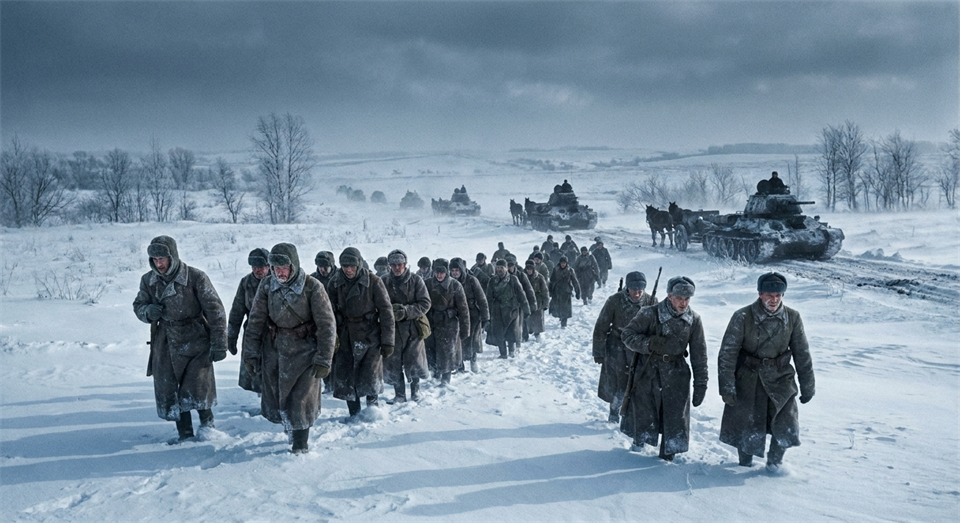
At first, Germany made great progress, but the Soviet Union was enormous, and the resistance became stronger than Hitler had expected. Soviet forces retreated, destroyed supplies behind them, and made use of both distance and winter. The Battle of Moscow in 1941 stopped the German advance, and later the Battle of Stalingrad in 1942–43 became a decisive turning point. Here, a large German army was surrounded and forced to surrender. The defeat showed that Germany was not invincible. From this point on, the Soviet Union gradually began to push the Germans back toward the west. The Eastern Front became the bloodiest area of the war and cost an unimaginable number of human lives.
On 7 December 1941, Japan attacked the American naval base Pearl Harbor in Hawaii. The attack led to the United States entering the war. Shortly afterward, Germany and Italy also declared war on the United States. The conflict thus became truly global. The United States had great industrial capacity and could produce enormous quantities of weapons, ships, aircraft, and vehicles. This economic strength became decisive for the Allied victory. American troops fought both in Europe and in the Pacific, while American factories supplied Allied forces with materiel on a scale that the Axis powers could not match.
In the Pacific War, the United States and its allies fought Japan for control of islands, sea routes, and colonial territories. The fighting was often extremely fierce, including at Midway, Guadalcanal, Iwo Jima, and Okinawa. The war in Asia was also marked by great brutality toward civilians and prisoners of war. Japanese forces were responsible for massacres, forced labor, and occupation policies that affected millions of people. At the same time, the Allies pursued a strategy in which they captured selected islands and bypassed others in order to gradually approach Japan. This part of the war clearly shows that the Second World War was not only about Europe, but about the balance of power in the entire world.
One of the darkest chapters of the Second World War is the Holocaust, the Nazis’ systematic murder of Europe’s Jews. From the beginning, the Nazi regime had persecuted Jews through discrimination, propaganda, and legislation, but during the war the persecution became organized mass extermination. Jews were gathered into ghettos, deported in cattle cars, and sent to concentration and extermination camps such as Auschwitz, Treblinka, and Sobibór. Here, millions were killed in gas chambers, by shootings, through hunger, disease, and forced labor. Around six million Jews were murdered.
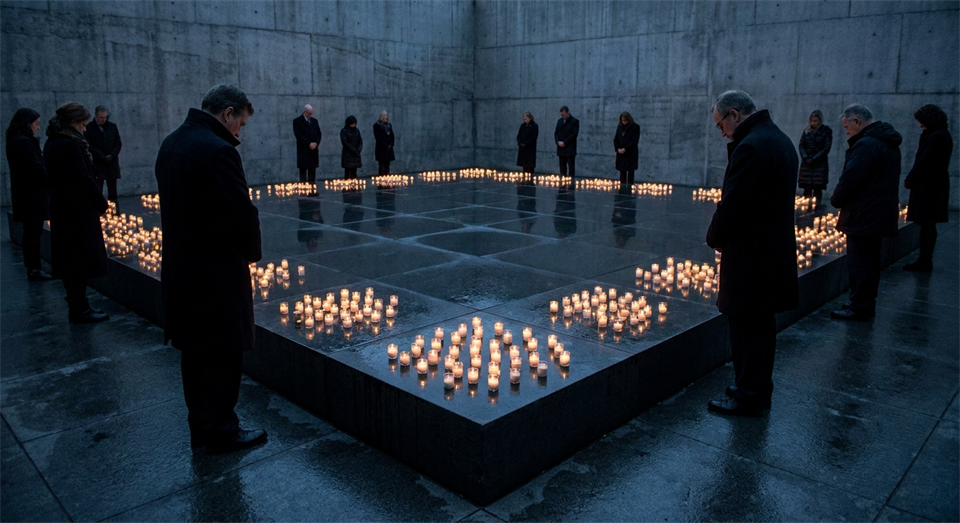
The Holocaust also affected other groups. Roma, people with disabilities, political opponents, homosexuals, Slavic civilians, and Soviet prisoners of war were also persecuted and killed in large numbers. The crimes of Nazism were not random acts of war, but a deliberate policy, planned and carried out by the state with the help of officials, soldiers, police, and collaborators in occupied areas. Therefore, the Holocaust is not only part of military history, but also a warning about what racist ideology, dehumanization, and blind obedience can lead to. Today, the Holocaust stands as a central historical example of genocide.
From 1942 onward, the course of the war gradually began to change. The Allies won important battles in North Africa, where Axis forces were pushed back. In 1943, they invaded Sicily and later Italy. Mussolini’s regime fell, although German forces continued the fighting in the country for a long time. On the Eastern Front, the Soviet Union advanced after the victories at Stalingrad and Kursk. In the air, the Allies bombed German cities and industrial areas to weaken the country’s war-making capacity. These bombings also affected many civilians and are still the subject of historical debate.
On 6 June 1944, the Western Allies carried out D-Day, the landing in Normandy. It was one of the war’s most famous operations and opened a new front in Western Europe. After this, France was gradually liberated, and the Allies advanced into Belgium, the Netherlands, and later Germany. At the same time, the Soviet Union continued its major offensive from the east. Germany was thus pressured from both sides. In April 1945, Soviet forces reached Berlin, and shortly afterward Hitler committed suicide. On 8 May 1945, Germany surrendered. In Europe, the war was over, but in Asia it continued for a few more months.
Even after Germany’s defeat, the fighting against Japan continued. American forces approached the Japanese home islands, but expected that an invasion would cause enormous losses on both sides. In August 1945, the United States dropped atomic bombs on Hiroshima and Nagasaki. The cities were destroyed, and very large parts of the population died either immediately or later from injuries and radiation. Shortly afterward, the Soviet Union also declared war on Japan and attacked Japanese forces in Asia. On 15 August, Japan announced its surrender, and the formal capitulation was signed in September 1945.
The use of atomic bombs marked the beginning of a new age in which humanity had developed weapons with almost unimaginable destructive power. Historians still debate whether the bombs were necessary to end the war quickly, or whether Japan was already close to collapse. Regardless of the assessment, the end of the war in Asia became a symbol of both technological power and moral dilemma. The war was over, but its aftermath would shape the entire next era.
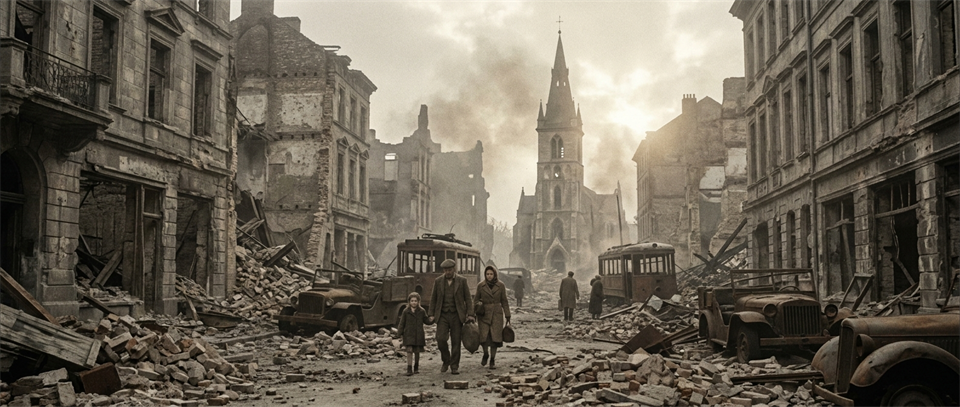
The Second World War changed the world profoundly. Millions of people were dead, large areas lay in ruins, and many societies faced reconstruction. Europe lost much of its former global dominance, while the United States and the Soviet Union emerged as superpowers. This quickly led to the Cold War, in which the two powers confronted each other politically, militarily, and ideologically. At the same time, the United Nations was established in 1945 to create stronger international cooperation and prevent new major wars. The experiences of the interwar period had shown how dangerous it could be when international conflicts were not handled in time.
The crimes of the war also led to new thinking about human rights and international law. At the Nuremberg Trials, leading Nazis were held accountable for war crimes and crimes against humanity. Later, human rights declarations, genocide conventions, and international courts became an important part of the global order. At the same time, the war set decolonization in motion, because the European colonial powers were weakened and many colonized peoples demanded independence. In this way, the Second World War did not merely end one conflict; it also opened a new world order that still affects politics, culture, and historical consciousness today.
The Second World War was more than a series of battles and military operations. It was a struggle between ideologies, empires, and societies, but also a human catastrophe with enormous suffering for soldiers and especially civilians. The war shows how dangerous dictatorship, racism, aggressive nationalism, and international passivity can be. The
n also reminds us of the importance of cooperation, democratic institutions, and historical memory. When studying the Second World War, one learns not only about the past, but also about the choices and values that continue to shape the world today.