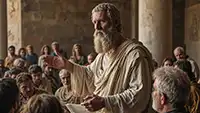
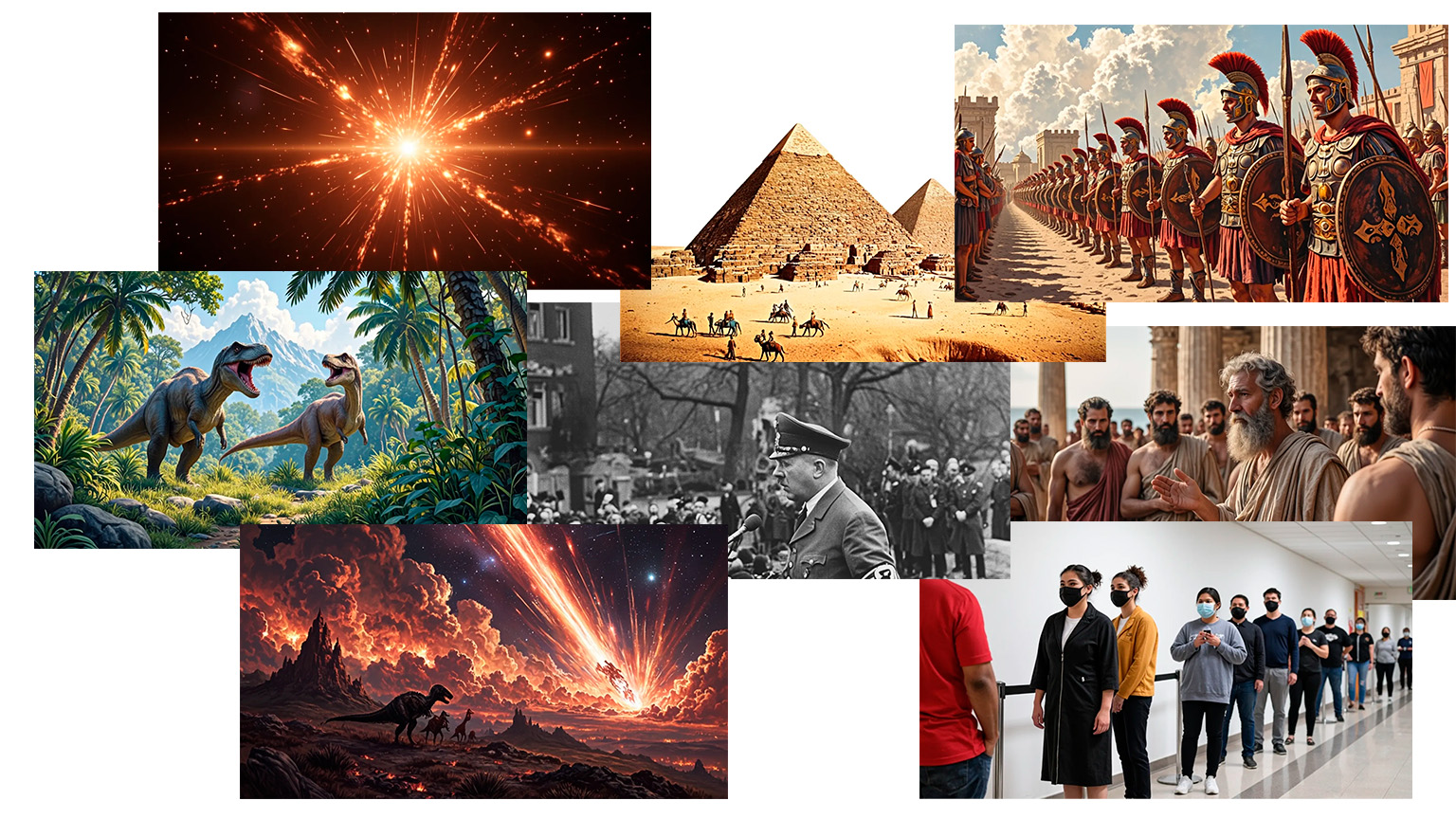


13,800,000,000 BC

The Big Bang theory describes the great explosion that marked the beginning of the universe. At this time, everything existed in an extremely dense and hot point. The universe began to expand rapidly, leading to the formation of stars, galaxies, and later planets. This theory is the foundation for understanding the origin and development of the universe. The Big Bang is the most important event in cosmological history and defines the beginning of time.
4,600,000,000 BC

After the Big Bang, enormous clouds of gas and dust began to gather under the influence of gravity. This process led to the formation of the solar system. The star we know as the Sun formed at the center of the clouds, and the planets, including Earth, formed from the material orbiting the Sun. It was the beginning of a system of planets and moons that would become home to life.
3,500,000,000 BC

The first life forms on Earth were microscopic organisms that arose in the oceans. These organisms slowly evolved into more complex life forms. Plants began to develop and could carry out photosynthesis, which released oxygen into the atmosphere and made it possible for other forms of life to thrive. These early life forms laid the foundation for all later biodiversity.
230,000,000 to 65,000,000 BC

The dinosaurs dominated the Earth for more than 160 million years. This era, also called the Mesozoic, was divided into three periods: Triassic, Jurassic, and Cretaceous. The dinosaurs evolved into many forms and sizes, from small herbivores to enormous predators like Tyrannosaurus rex. Their adaptability and evolutionary development made them the most successful animals on the planet during this period.
65,000,000 BC

The era of the dinosaurs ended dramatically with a massive extinction, most likely caused by a meteor impact that drastically changed the climate. This catastrophic event ensured that the dinosaurs, along with many other species, disappeared from the Earth. This mass extinction marked the transition to a new era, where mammals began to dominate the planet.
2,500,000 to 3000 BC
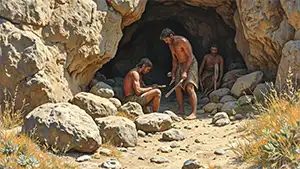
The Stone Age is the time when humans first began to use tools and develop hunter-gatherer societies. Humans began to adapt to different environments, and technological advances such as the use of fire and stone tools led to increased survival. This period ended with the development of agriculture and settlements, paving the way for the first civilizations.
2,600,000 to 11,700 BC

The ice ages were periods of cold temperatures, where large parts of the Earth were covered by ice. Humans and animals had to adapt to the harsh conditions. The ice age had a great influence on human development and migration. Towards the end of the ice age, the climate began to warm up, and the last ice sheets melted, leading to the flourishing of landscapes and flora we know today.
3000 BC to 1200 BC
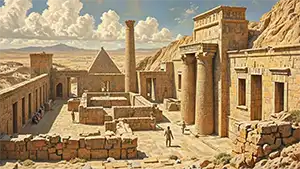
The Bronze Age marks the beginning of the systematic use of bronze for making tools and weapons. This technology enabled people to produce more durable and effective tools, leading to the development of advanced civilizations such as Mesopotamia, Egypt, and the Indus Valley. At the same time, trade and cultural exchange began to flourish.
1200 BC to 500 AD
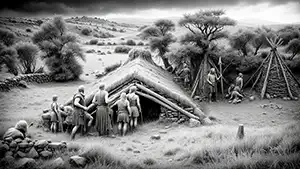
The Iron Age introduced a new era, where iron replaced bronze as the primary material for tools and weapons. This led to technological advances and changes in warfare, agriculture, and trade. During this period, great cultures such as the Greek and Roman civilizations arose, leaving lasting marks on Western history.
820 BC
Homer was a famous Greek poet who has traditionally been recognized as the author of the two most well-known epic poems of ancient Greece: The Iliad and The Odyssey. Although there is doubt as to whether Homer actually existed as a single person, his works have had an enormous influence on Western literature. In The Iliad, Homer describes the events during the Trojan War, while The Odyssey tells the story of the hero Odysseus' long and perilous journey home after the war. Both works are filled with complex characters who display both human virtues and flaws. Here are some of the most important characters from Homer's works:
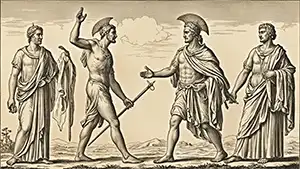
Achilles: Achilles is the greatest warrior in The Iliad and one of the most iconic figures in Greek mythology. He is a demigod, son of the goddess Thetis and the mortal Peleus. His greatest trait is his incredible fighting strength, but he is also marked by his desire for revenge and pride. His anger at the beginning of The Iliad, where he refuses to fight, is central to the plot, and his relationship with his friend Patroclus and his later revenge on Hector are crucial to the development of the war.
Hector: Hector is the greatest warrior among the Trojans in The Iliad and is known for his bravery and loyalty to Troy. He is a protector of his city and his family, and he stands in contrast to Achilles' vengefulness. Hector's tragic fate in the work, where he is killed by Achilles, is one of the most touching and dramatic scenes in The Iliad, and his death marks a turning point in the war.
Odysseus: Odysseus is the main character in The Odyssey and is known for his wisdom, cunning, and ability to think his way out of dangerous situations. He is king of Ithaca and participates in the Trojan War, but his journey home is long and filled with dangers. Odysseus' adventures, including the encounter with the Cyclops, his stay with the enchanted nymph Circe, and his journey to the underworld, make up some of the most famous passages in Greek literature.
Penelope: Penelope is Odysseus' faithful wife, and her role in The Odyssey is central to the themes of loyalty and endurance. During Odysseus' long absence, Penelope remains loyal to him and shows great wisdom and endurance in resisting the many suitors who try to take her place as queen. She is a symbol of the ideal female skill and strength in the ancient Greek world.
Telemachus: Telemachus is Odysseus' son and plays an important role in The Odyssey, especially in the first books, where he sets out on a journey to find his father. Telemachus represents the coming of age and the transition from dependence to responsibility. His development as a leader and his actions in freeing his mother Penelope and Ithaca from the suitors make up a central part of the story.
Agamemnon: Agamemnon is king of Mycenae and leader of the Greek forces during the Trojan War. In The Iliad, he is one of the central figures against whom Achilles' anger is directed, after he takes Achilles' war prize, Briseis. Agamemnon is a complex figure, as he shows virtues such as bravery and leadership, but also mistakes and lack of judgment, which have major consequences for the course of the war. His death, described in The Odyssey, marks the end of his tragic fate.
Patroclus: Patroclus is Achilles' close friend and, according to some interpretations, his beloved. His death in The Iliad is one of the most heartbreaking events in the work. When Patroclus dons Achilles' armor and fights for the Greeks, he is killed by Hector, which causes Achilles to resume fighting in revenge. Patroclus' death and the grief Achilles feels help drive the plot forward and are one of the most important emotional engines in The Iliad.
Helen: Helen, often called "Helen of Troy," is one of the most famous figures in the Trojan War. In The Iliad, she is a predestined catalyst for the war, as her abduction by Paris from Sparta triggers the conflict between the Greeks and the Trojans. Helen is a complex symbol of beauty and destruction, and her actions and choices have been the subject of much literary and philosophical debate.
Homer created a world filled with heroes, gods, and human conflicts, where the main characters often represent virtues such as bravery, loyalty, and revenge, but also human flaws such as pride, jealousy, and anger. These figures, and their interactions, have had a lasting influence on Western literature and culture and continue to inspire writers and readers today. Homer's works are not just historical episodes; they are timeless with their universal themes that still speak to us in modern times.
3000 BC to 30 BC
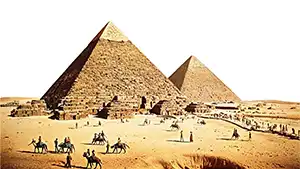
Ancient Egypt was one of the most powerful civilizations of antiquity, and the pharaohs who ruled Egypt were regarded as both political leaders and divine figures. Their power extended far beyond the state and embraced both secular and religious life. The pharaohs played a central role in shaping religious and cultural norms, and they became famous for their monumental constructions, including the magnificent pyramids and temples. Here are some of the most well-known pharaohs in Egypt's history:
Pharaoh Narmer (Menes) - Circa 3100 BC: Narmer is the first pharaoh who united Upper and Lower Egypt. He is often recognized as the first pharaoh who founded the first dynasty and started the Egyptian dynastic monarchy. Narmer became famous for the renowned Narmer Palette, one of the earliest symbols of this unity.
Cheops (Khufu) - Circa 2589-2566 BC: Cheops is best known for having built the Great Pyramid of Giza, which still stands as one of the seven wonders of the ancient world. His reign marks the peak of ancient Egyptian pyramid technology and architecture.
Hatshepsut - Circa 1479-1458 BC: Hatshepsut was one of the few female pharaohs in Egypt's history and became known for ruling Egypt effectively in her husband's place. She carried out extensive building projects, including the magnificent temple at Deir el-Bahari, and she was often depicted as a man to ensure her authority as a leader.
Thutmose III - Circa 1479-1425 BC: Thutmose III, often called "Egypt's Napoleon," was one of the most successful military leaders in Egypt's history. He expanded Egypt's borders to include large parts of the Middle East and North Africa and made Egypt a superpower in the region.
Amenhotep IV (Akhenaten) - Circa 1353-1336 BC: Akhenaten is famous for introducing monotheism in Egypt by worshipping the one god, Aten, and attempting to break down the traditional polytheism. His religious reforms were quickly interrupted after his death, but his regime is one of the most significant breaks with tradition in Egypt's history.
Tutankhamun - Circa 1332-1323 BC: Tutankhamun, the famous "boy pharaoh," was only 18 years old when he died. Although he was not a great ruler, he became famous for his nearly intact tomb, which was discovered in 1922 by Howard Carter. The tomb contained fantastic treasures and revealed much about the lives and wealth of the Egyptian pharaohs.
Ramses II (Ramses the Great) - Circa 1279-1213 BC: Ramses II is one of the most famous and longest-reigning pharaohs in Egypt's history. He is known for his military achievements, including the Battle of Kadesh against the Hittites, and for the monumental buildings he left behind, such as the enormous temple at Abu Simbel and the many statues erected in his honor.
Cleopatra VII - Circa 51-30 BC: Cleopatra was the last pharaoh of Ptolemaic Egypt. She is known for her alliances with Rome, especially her relationships with Julius Caesar and Mark Antony. Her reign marked the end of the Egyptian dynasty and the beginning of Egypt's incorporation into the Roman Empire.
The pharaohs were central figures in Egypt's culture and history. They were regarded as gods on earth, and their actions had a great influence on both the political and religious structure of Egypt. Their tombs and monumental buildings still stand as testimonies to their power and the impressive civilization they led.
600 BC to 300 BC.
The Greek philosophers played a central role in the development of Western philosophy and science. Their investigations of morality, knowledge, existence, and social conditions formed the basis for many of the ideas that still influence modern philosophy and social thought. Here are some of the most significant Greek philosophers and their characteristics:
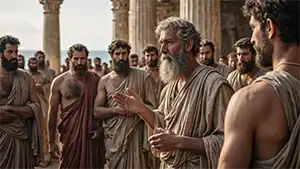
Socrates (470-399 BC): Socrates is often regarded as one of the most important figures in Western philosophy. He focused on ethical questions and believed that knowledge could be obtained through dialogue and critical reflection. He developed the Socratic method, which involved asking questions to get people to think more deeply about their own beliefs. Socrates did not write any works himself, but his ideas were written down by his students, especially Plato.
Plato (427-347 BC): Plato was one of Socrates' students and one of the most influential philosophers in history. He founded the Academy in Athens, one of the first organized schools of philosophy. Plato is best known for his ideas about the world of forms, where he claimed that physical objects are only shadows of the perfect forms that exist in an ideal world. His works, such as *The Republic*, explore questions about justice, knowledge, and social structure.
Aristotle (384-322 BC): Aristotle was a student of Plato, but his philosophy differed significantly from Plato's. He focused on empirical knowledge and developed a systematic approach to science and logic, which would become the foundation for the scientific method for many centuries. Aristotle's work covered subjects such as ethics, politics, metaphysics, and biology, and his influence on Western thought can still be felt today.
Pythagoras (ca. 570-495 BC): Pythagoras was both a mathematician and philosopher and is best known for the Pythagorean theorem in mathematics. He founded a religious movement and believed that numbers and mathematics played a fundamental role in the structure of the universe. He saw the world as a place where harmony could be achieved through the relationships between numbers and proportions, and his ideas were fundamental to the development of both mathematics and music.
Heraclitus (ca. 535-475 BC): Heraclitus was a philosopher best known for his theory of the nature of change. He claimed that "everything flows" (Panta Rhei), meaning that everything is in constant change. According to Heraclitus, opposing ideas such as harmony and order were necessary to understand the world, and his philosophy laid the foundation for later philosophical discussion about constant change and dualism.
Epicurus (341-270 BC): Epicurus was the founder of Epicureanism, a philosophical school that emphasized the importance of personal happiness and pleasure as the highest good. Epicurus taught that happiness was achieved by avoiding suffering and striving for intellectual and physical pleasure. He believed that people's fear of gods and death were the greatest sources of suffering, and therefore it was necessary to remove these fears to live a happy life.
Zeno of Citium (ca. 334-262 BC): Zeno was the founder of Stoicism, a philosophy that emphasized control over one's emotions and maintaining virtue in the face of adversity. Stoics believed that one should accept the natural events that could not be controlled and find inner peace through self-discipline and rational thinking. Zeno and his followers such as Seneca and Marcus Aurelius influenced thinking about morality and personal development through the centuries.
These philosophers and their ideas have helped shape the foundation of Western thought, and their influence can still be traced in modern philosophy, politics, ethics, and science. Their investigations of the universe, society, and human nature have given us the tools we still use to understand the world today.
27 BC to 476 AD.
The Roman Empire was one of the most extensive and powerful civilizations of antiquity, and it stretched over large parts of Europe, North Africa, and the Middle East. Rome's history is marked by political, military, and cultural upheavals, and many of the people who played a central role in the history of the Roman Empire had a huge influence on the development of both the Roman state and Western civilization. Here are some of the most famous people from the Roman Empire:
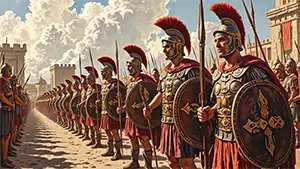
753 BC – Rome is founded
According to tradition, Rome was founded by Romulus and Remus on April 21, 753 BC. This marks the beginning of Roman civilization.
509 BC – Rome becomes a republic
Rome abolishes the monarchy and establishes a republican government, where power is shared between elected officials and popular assemblies. The republic lasts until 27 BC.
264-146 BC – The Punic Wars
A series of wars between Rome and Carthage, culminating in Rome's victory and the destruction of Carthage. These wars make Rome the dominant power in the Mediterranean.
133 BC – Reforms of the Gracchus brothers
Tiberius and Gaius Gracchus attempt to reform the Roman Republic by redistributing land and giving more rights to the poor, but both are murdered. This marks the beginning of internal political tensions in the republic.
44 BC – Julius Caesar is killed
Julius Caesar, who had declared himself dictator for life, is murdered by a group of senators. His death leads to a period of civil war and ends the Roman Republic.
27 BC – Augustus becomes the first emperor
After a series of civil wars, in which Augustus (originally Octavian) prevails, he becomes the first Roman emperor. His reign marks the beginning of the Roman Empire and a new period of stability, known as the Pax Romana.
14 AD – Augustus dies, Tiberius becomes emperor
Augustus dies, and his adopted son Tiberius takes the throne. Tiberius becomes the second Roman emperor, and his reign marks a time of internal political stability, but also the beginning of authoritarian control.
64 AD – The Great Fire of Rome
A great fire breaks out in Rome under Emperor Nero, who blames the Christians for the fire. This marks the first major persecution of Christians in the Roman Empire.
117 AD – The Roman Empire reaches its greatest extent
Under Emperor Trajan, the Roman Empire reaches its greatest extent, from the coast of Britain to Mesopotamia. This marks the culmination of the Roman Empire's power and territorial control.
235-284 AD – The Thirty Years' Crisis
A period marked by political instability, where Rome faces internal conflicts, invasions from barbarian tribes, and economic problems. This period is also called "The Time of the Barricaded Emperors."
330 AD – Constantine establishes Constantinople
Emperor Constantine establishes a new capital, Constantinople (modern Istanbul), which becomes the center of the Eastern Roman Empire, and he legalizes Christianity through the Edict of Milan.
395 AD – Division of the Roman Empire
After Emperor Theodosius' death, the Roman Empire is divided in two: the Western Roman Empire and the Eastern Roman Empire (also called the Byzantine Empire). This marks the beginning of the slow decline of the Roman Empire in the west.
476 AD – The Fall of the Western Roman Empire
The last Western Roman emperor, Romulus Augustulus, is deposed by the Germanic leader Odoacer, marking the end of the Western Roman Empire. The Eastern Roman Empire, also called the Byzantine Empire, continues to exist for several centuries.
1453 AD – The Fall of the Byzantine Empire
Constantinople falls to the Ottoman Empire, and the Eastern Roman Empire ceases to exist. This marks the final end of the Roman Empire.
330 AD to 1453 AD.
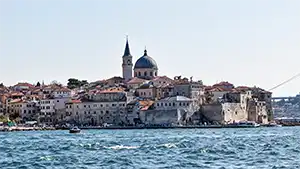
After the fall of the Roman Empire, the Eastern Roman Empire, also called the Byzantine Empire, continued to exist. With its capital in Constantinople, the Byzantine Empire became a center for Christianity, art, and culture. It survived for nearly a thousand years before being conquered by the Ottomans in 1453.
Time: Circa 793-1066 AD.
The Viking Age is a period in Scandinavian history that stretches from the end of the 8th century to the middle of the 11th century. This time is especially known for the Vikings' sea voyages, conquests, and trading activities, which stretched from Scandinavia to many parts of Europe, Asia, and even North America. The Viking societies in Denmark, Norway, and Sweden were skilled seafarers and warriors, and their discoveries and conquests played a central role in Europe's medieval history.
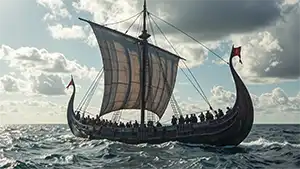
The Vikings' first major raid took place in 793, when they attacked the monastery at Lindisfarne in England. This was considered one of the first Viking raids and marked the beginning of a series of raids that lasted for centuries. The Vikings' attacks and colonizations included large parts of the British Isles, as well as areas in France, Spain, Russia, and further east. They also established settlements in Iceland, Greenland, and Newfoundland in North America, long before Columbus's discovery of America.
In addition to being feared warriors and raiders, the Vikings were also skilled traders. They traded goods such as furs, metals, and glass, and they had trade routes that stretched from present-day Russia to the Arab world. The Vikings' trade network was crucial for the development of the societies they established and participated in.
The Viking Age ended around 1066 with the Battle of Stamford Bridge, where the last Viking army under King Harald Hardrada was defeated by the English king Harold Godwinson. That same year, England was invaded by the Normans under William the Conqueror, marking the end of the traditional Viking Age.
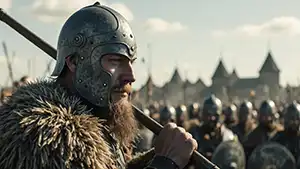
The Vikings' culture and legacy are still evident today, both in Scandinavia and in the areas where they settled. Their history has been widely explored and has become a popular subject in both literature and film, where Vikings are often portrayed as both brutal and heroic figures who played a central role in shaping the European Middle Ages.
500 AD to 1500 AD
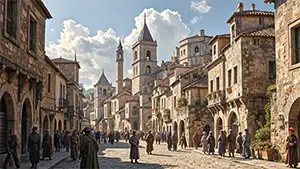
The Middle Ages was a period marked by political unrest, wars, and religious dominance. In Europe, feudalism flourished, and the power of the church was enormous. The period includes important events such as the Crusades, the Black Death, and the beginning of the Renaissance, which marks the start of the modern era.
Time: 1347-1351
The Black Death, one of the most devastating pandemics in world history, struck Europe between 1347 and 1351 and killed an estimated third of the continent's population. The plague is believed to have been brought to Europe by merchant ships from Asia, where it had originated as a bacterial infection caused by Yersinia pestis, which was spread by flea bites from infected rats. It spread rapidly throughout Europe, causing mass death and terror.
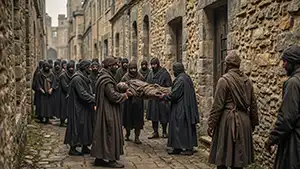
There are three main types of plague: bubonic plague, which causes painful swellings (buboes) in the lymph nodes, septicemic plague, which infects the blood, and pneumonic plague, which attacks the lungs and can be spread through coughing and airborne droplets. The bubonic plague was the most common form during the Black Death, and its symptoms include high fever, chills, and rapidly developing swellings in the lymph nodes.
The pandemic had dramatic social, economic, and religious consequences. With so many people dead, it disrupted economic activity and led to severe labor shortages, especially in agriculture and trade. Many areas experienced a decline in production, leading to hunger and poverty. Furthermore, the church lost many of its followers, as it could not protect people from the disease, which undermined faith in religious institutions.
On the social level, the massive death toll led to fear, distrust, and changed relations between the classes of society. Many people left the cities in an attempt to avoid infection, while others, such as the Jewish communities, were wrongly accused of spreading the plague and were persecuted in many parts of Europe.
The Black Death had long-lasting consequences for the European population and social structure. It helped to end feudalism in many areas and led to changes in labor relations as the demand for labor increased. On a broader level, the pandemic was a reminder of how quickly diseases could change the course of the world and affect human societies.
1789-1799
The French Revolution was a period of dramatic political and social upheaval in France. It led to the abolition of the monarchy, the establishment of the First French Republic, and the implementation of radical reforms. The revolution fundamentally changed the structure of society and sparked democratic movements around the world. Many individuals played central roles in the development of the revolution, and their actions and ideas had a huge impact on both France and the rest of the world. Here are some of the most important people in the French Revolution:
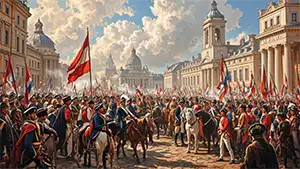
Maximilien Robespierre (1758-1794): Robespierre was one of the most prominent figures in the radical phase of the revolution, known as "The Reign of Terror." As a member of the National Convention and leader of the Committee of Public Safety, Robespierre played a central role in the persecution of the revolution's enemies and in carrying out the extensive execution of opponents, which became a significant part of the revolution's violent course. His power and his radical views on rights and justice made him a controversial figure, and he was himself executed at the end of that period.
Georges Danton (1759-1794): Danton was one of the early leaders of the revolution and one of the founding figures in the establishment of the First French Republic. As leader of the National Convention and one of the leaders of the Committee of Public Safety, he played an important role in the early phases of the revolution. Danton was known for his rhetoric and pragmatic solutions, which set him apart from the more radical Robespierre. However, he was executed during "The Reign of Terror" because of his opposition to further violence and his desire to end the revolution's extreme course.
Marie Antoinette (1755-1793): Marie Antoinette was the last queen of France before the revolution. She became a symbol of the old regime's luxury and extravagant lifestyle, and her reputation worsened during the revolution, where she was accused of being indifferent to the people's suffering. Marie Antoinette was imprisoned together with her husband, Louis XVI, and was executed by guillotine in 1793, marking the end of the monarchy in France.
Louis XVI (1754-1793): Louis XVI was king of France during the revolution. His incompetence and inability to handle the country's economic problems and the political uprising contributed to the outbreak of the revolution. He attempted to flee Paris with his family in 1791, but was caught and brought back. Louis XVI was sentenced to death for treason and was executed by guillotine in 1793, symbolizing the end of the French monarchy.
Jean-Paul Marat (1743-1793): Marat was one of the most radical leaders of the revolution and a leading figure in the Jacobin faction. As editor of the newspaper *L'Ami du peuple* (The Friend of the People), he called for violent actions against the revolution's opponents and played a major role in building "The Reign of Terror." Marat was himself murdered in 1793 by Charlotte Corday, a political opponent, which was regarded as a martyr's death in the eyes of the revolution.
Olympe de Gouges (1748-1793): Olympe de Gouges was a playwright and feminist who played an important role in the early feminist movements during the revolution. She is best known for having written the "Declaration of the Rights of Woman and the Female Citizen" in 1791, which demanded equality between men and women in society. De Gouges was arrested and executed by guillotine during the radical phase of the revolution for her criticism of the revolutionary leaders and her continued support for women's rights.
Napoleon Bonaparte (1769-1821): Napoleon Bonaparte came to power after the end of the revolution and established himself as one of history's most famous military leaders. In 1799, after a coup d'état, Napoleon became First Consul and later Emperor of France. Although he was not directly involved in the revolution itself, he came to symbolize the revolution's ideals of republic and equality, while at the same time establishing an authoritarian regime. Napoleon led France in many wars and expanded the empire, but his defeat in 1815 at Waterloo led to his downfall.
The French Revolution was a complex and multifaceted event, and the people who played a central role in the revolution have had a huge influence on world history. From the radical revolutionaries like Robespierre and Danton to the more moderate figures like Louis XVI and Marie Antoinette, their actions and decisions helped shape both France and the entire modern world. The revolution was both a time of great freedom and great upheaval, and it sparked the democratic movements that continue to influence many societies today.
1775-1783
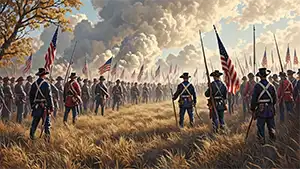
The American War of Independence arose as a result of the American colonists' dissatisfaction with British rule. The war led to the thirteen colonies gaining their independence from Great Britain and forming the USA. The Declaration of Independence of 1776 marked an important milestone in the development of democratic principles and national self-determination.
1861-1865
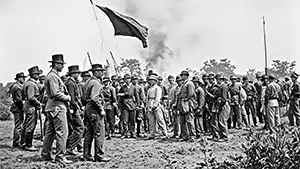
The American Civil War was a bloody conflict that arose as a result of deep political, economic, and social differences between the North and South in the USA. The war was fought between the Union states (the North) and the Confederate states (the South), who wanted to maintain slavery. The Civil War led to a comprehensive restructuring of American society, the end of slavery, and set in motion changes that would shape the modern American nation. Here are some of the most important people who played central roles during the Civil War:
Abraham Lincoln (1809-1865)
Abraham Lincoln was the 16th president of the USA and the most significant figure in the Civil War. He was elected president in 1860, and his decision to preserve the Union, even by using military force, was central to the outcome of the war. Lincoln is best known for issuing the Emancipation Proclamation in 1863, which freed the slaves in the Confederate states. His leadership during the war and his vision of ensuring the unity of the nation made him one of the most respected presidents in American history. Lincoln was assassinated in 1865, just a few weeks after the end of the war.
Jefferson Davis (1808-1889)
Jefferson Davis was president of the Confederate States during the Civil War. As leader of the South's government, he fought for the preservation of slavery and states' rights. Davis, a former senator and secretary of war, was a skilled politician, but his ability as a military leader was more limited. Under his leadership, the Confederate states fought against the Union forces in a bloody and prolonged conflict, but the South's defeat in 1865 also meant the end of his presidency.
Ulysses S. Grant (1822-1885): Ulysses S. Grant was the supreme commander of the Union armies and played a decisive role in leading the northern forces to victory. Grant was known for his determination and his ability to use his superiority in resources to overwhelm the Confederate forces. He won several major battles, including the Battle of Vicksburg, and his success led to his appointment as president in 1869. Grant was later recognized as one of the most outstanding military leaders in American history.
Robert E. Lee (1807-1870): Robert E. Lee was the supreme commander of the Confederate forces and is recognized as one of the greatest military leaders in American history. Lee was a skilled strategist and led the Southern armies in many of the most significant battles of the Civil War, including the battles of Antietam and Gettysburg. He maintained the fight against the Union far longer than many had expected, but his armies were eventually overwhelmed, and he surrendered to Grant at Appomattox Courthouse in 1865, marking the end of the Civil War.
William Tecumseh Sherman (1820-1891): William Tecumseh Sherman was one of the most feared Union generals during the Civil War. He is especially known for his "March to the Sea," where he led his troops from Atlanta to Savannah, Georgia, destroying the South's infrastructure and resources. Sherman's burning of the city of Atlanta and his destruction of Confederate supply lines was a strategic decision that contributed significantly to the South's defeat. He has been both admired and criticized for his brutal warfare.
Stonewall Jackson (1824-1863): Thomas "Stonewall" Jackson was one of the most well-known and respected generals in the Confederate forces. He played a decisive role in several important victories for the Southern armies, including the Battle of Bull Run and the Battle of Chancellorsville. Jackson became famous for his tactical genius and his ability to lead his troops effectively in battle. He was killed during the Battle of Chancellorsville in 1863, which was a great loss for the Confederate forces.
Frederick Douglass (1818-1895): Frederick Douglass was a former slave who became one of the most prominent advocates for the abolition of slavery and civil rights for African Americans. He was a skilled orator and writer, and his autobiography, *Narrative of the Life of Frederick Douglass*, is an important work in American literature and history. Douglass supported the Union during the Civil War and fought for the emancipation of the slaves, which led to his subsequent role as an advisor to President Lincoln.
Harriet Tubman (1822-1913): Harriet Tubman was one of the most remarkable figures in the American abolitionist movement. As an "Underground Railroad" leader, she helped hundreds of slaves escape to freedom in the Northern states. Tubman worked as a spy for the Union during the Civil War and played an important role in assisting Union forces in their fight against the Confederate forces. Her courage and commitment to the fight for freedom make her one of the most respected figures in American history.
The American Civil War was a complex conflict that involved many conflicting interests and forces, but these individuals played central roles in shaping both the outcome of the war and the subsequent changes in American society and politics. Their actions and decisions had lasting consequences, both for the USA and for world history, and they continue to be the subject of study and debate to this day.
1760-1840
The Industrial Revolution was a period of dramatic technological development that changed methods of production, economic structures, and social conditions. New inventions such as the steam engine and mechanized factories led to urbanization, increased trade, and changed labor conditions. The Industrial Revolution laid the foundation for the modern economy.
1879

The invention of the electric light bulb by Thomas Edison in 1879 revolutionized lighting and became one of the most important inventions of the 19th century. The bulb made it possible to illuminate homes and cities at night and played a central role in the electrical revolution, which changed the lives of millions of people worldwide.
1901-1910

In the early 1900s, Oldsmobile was the first company to produce cars in larger quantities. However, it was only a few years later, when Henry Ford introduced the Model T, that mass production of cars at affordable prices really took off. Ford revolutionized the car industry by using assembly line technology to efficiently produce cars on a large scale. This made cars more accessible to ordinary people and played an important role in economic growth and changed transportation habits in the 20th century.
1903
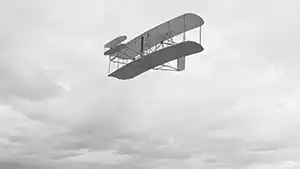
The brothers Orville and Wilbur Wright completed the first successful powered flight on December 17, 1903, in Kitty Hawk, North Carolina. Their invention paved the way for the aviation industry and completely changed transportation and communication on a global scale. Their work marked the beginning of modern aviation.
1914-1918
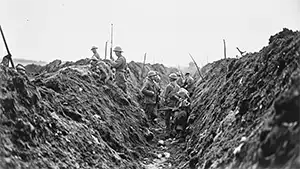
World War I, also known as The Great War, was a global conflict that involved most of the world's great powers, divided into two main alliances: the Allies and the Central Powers. The war was characterized by trench warfare and new weapons technologies. The end of the war in 1918 and the subsequent peace negotiations led to major political changes and laid the foundation for World War II.
June 28, 1914: Assassination of Archduke Franz Ferdinand
The Austro-Hungarian Archduke Franz Ferdinand and his wife Sophie are killed in Sarajevo by Gavrilo Princip, a Serbian nationalist. This assassination becomes the trigger for the start of the war.
July 28, 1914: Austria-Hungary declares war on Serbia
As a result of the assassination, Austria-Hungary declares war on Serbia, starting the conflict.
August 1, 1914: Germany declares war on Russia
After Russia mobilizes its forces to support Serbia, Germany declares war on Russia.
August 3, 1914: Germany declares war on France
Germany declares war on France and begins to invade the country through Belgium, which leads to Britain's declaration of war on Germany.
August 4, 1914: Britain declares war on Germany
In response to Germany's invasion of Belgium, Britain declares war on Germany.
November 23, 1914: Battle of Tannenberg
The German army wins a major victory over the Russian army in the Battle of Tannenberg, which marks a turning point on the Eastern Front.
April 22, 1915: First use of poison gas
Germany uses poison gas for the first time against Allied forces in the Battle of Ypres in Belgium, marking a frightening new chapter in the brutality of the war.
May 7, 1915: Sinking of the Lusitania
The British passenger ferry Lusitania is torpedoed by a German submarine, killing 1,198 people, including 128 Americans. This event increases tensions between Germany and the USA.
February 1, 1917: Germany resumes submarine warfare
Germany decides to resume unrestricted submarine warfare against the Allies, leading to greater losses of ships and increasing the Americans' decision to enter the war.
April 6, 1917: USA declares war on Germany
The USA declares war on Germany, marking a decisive turning point in the war.
March 8, 1917: The Russian Revolution
The Russian Revolution begins, and Tsar Nicholas II abdicates. This leads to the end of the Russian Empire and the end of Russia's participation in the war.
November 7, 1917: Bolshevik Revolution
Lenin and the Bolshevik Party seize power in Russia, and the new Soviet government signs an armistice with Germany in March 1918, ending Russia's participation in the war.
March 21, 1918: German Offensive (Spring Offensive)
Germany launches a major offensive on the Western Front in an attempt to win the war before the Allies, including the USA, arrive in large numbers. This offensive achieves temporary progress but later collapses.
November 11, 1918: Armistice
After several failed German offensives and increased Allied attacks, Germany enters into an armistice with the Allies at Compiègne, marking the end of hostilities in World War I.
June 28, 1919: Treaty of Versailles
The peace treaty between the Allied powers and Germany is signed in Versailles, and it imposes harsh conditions on Germany, including territorial losses, disarmament, and large war reparations.
1917
The Russian Revolution was a period of political upheaval in Russia that led to the fall of the Russian Empire and the establishment of a communist regime under Lenin and the Bolsheviks. The revolution resulted in the formation of the Soviet Union and had a major influence on global politics in the 20th century.
1929-1939
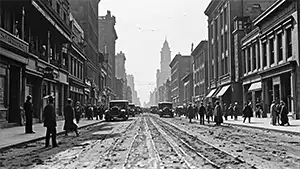
The Great Depression was a severe economic crisis that began with the stock market crash in 1929. It quickly spread globally and led to mass layoffs, unemployment, and political instability. The crisis changed the economic structure in many countries and led to extensive reforms in many nations, including the USA's New Deal.
1939-1945
World War II was a global conflict that arose as a result of the unresolved issues from World War I and the aggressive actions of Nazi Germany, led by Adolf Hitler. The war involved most of the world's nations and resulted in millions of deaths. The end of the war led to the formation of the UN and the beginning of the Cold War between the USA and the Soviet Union.
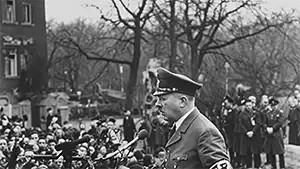
World War II was a global conflict that involved most of the world's nations and was fought between the Allies and the Axis Powers. The war was characterized by enormous human suffering, total warfare, and dramatic changes in the political and social world order. The war led to the end of the era of Nazism and Fascism, the formation of the UN, and the beginning of the Cold War.
Invasion of Poland (September 1, 1939)
Germany invades Poland, marking the official start of World War II. The invasion leads to Britain and France declaring war on Germany two days later.
Battle of France (May 10 - June 22, 1940)
Germany invades France, Belgium, and the Netherlands. The rapid German victory leads to the fall of France and the establishment of the Vichy regime.
Battle of Britain (July 10 - October 31, 1940)
The German Luftwaffe attempts to gain air superiority over Britain to prepare for a possible invasion. The British Royal Air Force successfully defends Britain, marking the first major German defeat in the war.
Operation Barbarossa (22 June 1941)
Germany invades the Soviet Union in the largest military operation in history. The invasion makes rapid progress, but the cold winter and Soviet resistance lead to a stalemate by the end of 1941.
The Attack on Pearl Harbor (7 December 1941)
Japan attacks the American naval base Pearl Harbor in Hawaii, which causes the USA to enter the war, both in the Pacific and in Europe.
The Battle of Midway (4–7 June 1942)
A decisive naval battle between the USA and Japan, where the American navy destroys four Japanese aircraft carriers, weakening Japan's naval power and turning the tide of the war in the Pacific.
The Battle of Stalingrad (23 August 1942 – 2 February 1943)
A turning point on the Eastern Front, where Soviet forces encircle and defeat the German 6th Army. This battle marks the beginning of a series of Soviet offensives that force the Germans back.
Allied Invasion of Italy (9–10 July 1943)
Allied forces land on Sicily and later on the Italian mainland, leading to the fall of Mussolini's fascist regime and Italy's surrender, although German forces continue fighting in Italy until 1945.
D-Day (Normandy Invasion) (6 June 1944)
Allied forces land on the beaches of Normandy, France, in a massive operation known as "Operation Overlord." This marks the beginning of the liberation of Western Europe from Nazi occupation.
The Liberation of Paris (25 August 1944)
Allied forces, including the Free French, liberate Paris after four years of German occupation.
The Battle of the Bulge (16 December 1944 – 25 January 1945)
The last major German offensive on the Western Front takes place in the Ardennes. Although initially successful, it is eventually repelled by the Allies, accelerating Germany's defeat.
The Yalta Conference (4–11 February 1945)
The Allied leaders Winston Churchill, Franklin D. Roosevelt, and Joseph Stalin meet in Yalta to discuss the postwar reorganization of Europe and the establishment of the United Nations.
The Atomic Bombings of Hiroshima and Nagasaki (6 and 9 August 1945)
The USA drops atomic bombs on the Japanese cities of Hiroshima and Nagasaki, forcing Japan to surrender and ending the war in the Pacific.
V-E Day (Victory in Europe Day) (7 May 1945)
Germany officially surrenders to the Allies, marking the end of the war in Europe.
The End of World War II (2 September 1945)
Japan officially surrenders to the Allies aboard the USS Missouri in Tokyo Bay, bringing World War II to a final conclusion.
1957

The first satellite, Sputnik 1, was launched by the Soviet Union on 4 October 1957 and marked the beginning of the space age. The satellite revolutionized technology and science and triggered the space race, which culminated with the human moon landing in 1969. Sputnik 1 was an important milestone in the technological development of the 20th century.
1969
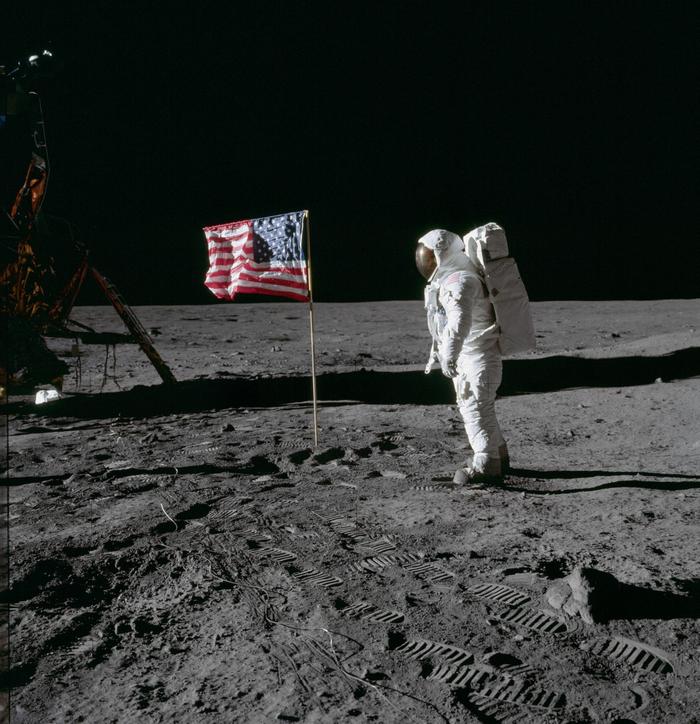
On 20 July 1969, Neil Armstrong became the first human to land on the moon as part of the Apollo 11 mission. This milestone in human space exploration was seen as one of the greatest technological and scientific achievements of the 20th century and symbolized a new era for science and human ambition.
9 November 1989
The fall of the Berlin Wall is one of the most significant events at the end of the Cold War and a symbol of the end of the political division of Europe. The wall, which was erected in 1961 by the East German government under the influence of the Soviet Union, divided Berlin in two: East Berlin, which was under communist control, and West Berlin, which was part of capitalist Western Europe. The wall became a symbol of the Cold War division between east and west, and its fall marked the beginning of the reunification of Germany and a new era in European politics.
The fall of the Berlin Wall was triggered by a series of events, including reforms in the Soviet Union under Mikhail Gorbachev and growing pressure from East Germans who wanted freedom and reforms. On 9 November 1989, after a press conference where a spokesman for the East German government mistakenly announced that border crossings would be opened, thousands of East Germans flocked to the wall and climbed onto it. The soldiers, who had previously been authorized to shoot at escape attempts, opened the gates to the western sectors, and the wall was physically torn down by the population.
The fall of the Berlin Wall was a marker of the end of the Cold War and a symbol of freedom, change, and hope. Shortly after, the two Germanys began to reunite, and the political division of Europe was officially ended. The Berlin Wall, which once symbolized the division of the world, now became a symbol of the Cold War's defeat and the hopeful beginning of a new era.
2019 – 2022 (and continues in some regions)
The Corona epidemic, also known as the COVID-19 pandemic, was caused by a new type of coronavirus, SARS-CoV-2, which was first identified in Wuhan, China, at the end of 2019. The virus quickly spread across the world and caused a global health crisis, affecting millions of people and leading to serious economic, social, and political consequences. On 11 March 2020, the World Health Organization (WHO) declared the pandemic, as the virus had spread to almost every country.

COVID-19 caused an acute illness that in many cases led to severe respiratory disease and death, especially among the elderly and people with underlying health problems. Governments worldwide responded with a range of restrictions, including lockdowns, travel restrictions, social distancing, and mask mandates, to limit the spread of the virus. In addition, healthcare systems were put to the test with a large increase in the number of sick and intensive care patients, and many countries struggled to obtain sufficient equipment and resources to handle the crisis.
The pandemic also led to a global economic downturn, with many businesses, especially in the travel and tourism industry, being hit hard. At the same time, the pandemic accelerated digitalization and remote work, as many employers and employees were forced to adapt to new ways of working.
During 2020 and 2021, several vaccines against COVID-19 were developed, which played an important role in reducing the disease's mortality and promoting recovery in many countries. Vaccination campaigns were launched globally, but the distribution of vaccines and access to them was uneven, leading to inequalities in combating the pandemic between rich and poor countries.
The pandemic has had lasting effects on society, the economy, and global politics. Although progress has been made in controlling COVID-19, the consequences of the pandemic, including psychological effects, economic disruptions, and changes in global health policy, continue to be significant in the years after the initial wave.