
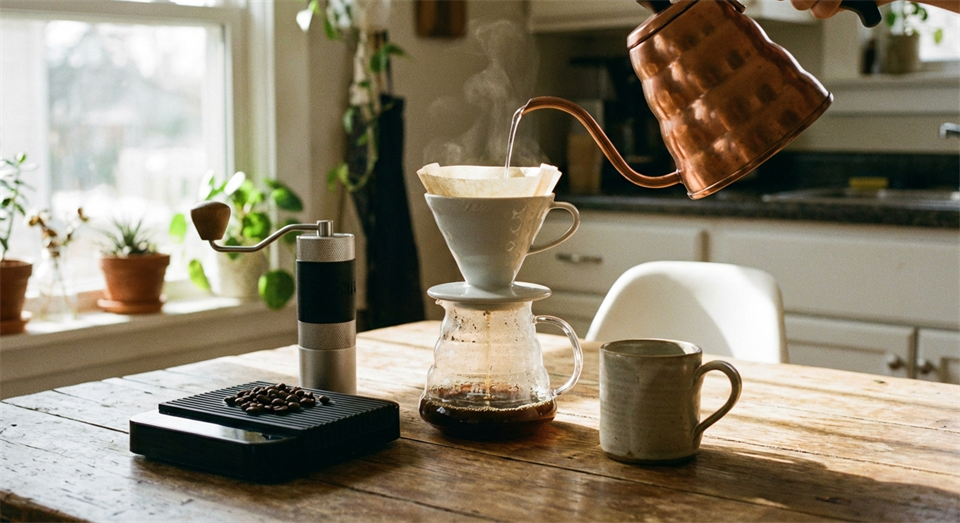


Pour-over is a brewing method where you manually pour hot water over ground coffee placed in a filter. The method is known for highlighting the nuances in the coffee and producing a clean, clear, and aromatic cup. Pour-over is popular among both coffee enthusiasts and beginners because the method allows you to control flavor and strength precisely. In this article, you’ll get a thorough introduction to pour-over – from equipment and technique to tips and troubleshooting, so you can brew delicious coffee at home.
Pour-over means you "pour over" – that is, you pour hot water over coffee grounds in a filter, so the coffee slowly drips down into a serving carafe or cup. It’s a manual method that differs from machine brewing and French press by giving you full control over brewing time, temperature, and water amount. The result is a cup of coffee with distinct flavor nuances, freshness, and clarity. Pour-over is used worldwide, both at home and in specialty coffee bars, because it highlights the coffee’s character and complexity.
You don’t need much to get started with pour-over. Here is the essential equipment and what it’s used for:
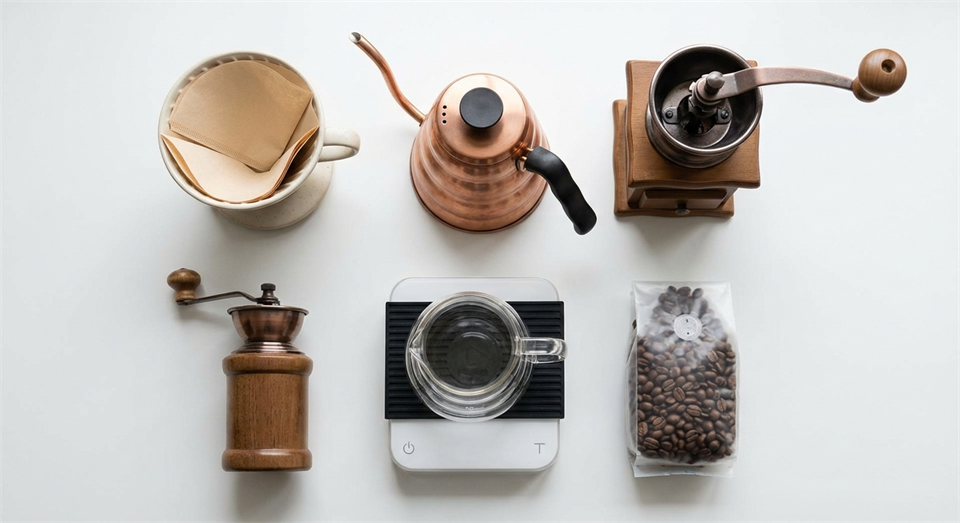
Pour-over highlights the nuances of the coffee, so choose a coffee you want to experience in detail – typically a light or medium roasted specialty coffee. The grind size is very important: Too coarse a grind gives a watery cup, while too fine can make the coffee bitter and over-extracted. The ideal grind size for pour-over resembles coarse sugar or table salt: finer than for French press, but coarser than for espresso.
A good rule of thumb is 60 grams of coffee per liter of water (1:16-1:17 ratio). For a single cup (250 ml), use about 15-16 grams of coffee. Experiment – small variations make a big difference.
Here you get a thorough walkthrough of the classic pour-over method. Feel free to adjust along the way to suit your taste.
Place the dripper on your carafe or cup. Put the paper filter in. Rinse the filter thoroughly with hot water – this removes paper dust and preheats the carafe. Pour out the rinse water.
Grind the desired amount of coffee just before brewing. Pour the coffee into the wet filter, and gently shake the dripper so the coffee lies evenly.
Boil fresh water and let it cool to about 92-96 °C. Too hot water can make the coffee bitter, while too cold water gives a flat cup.
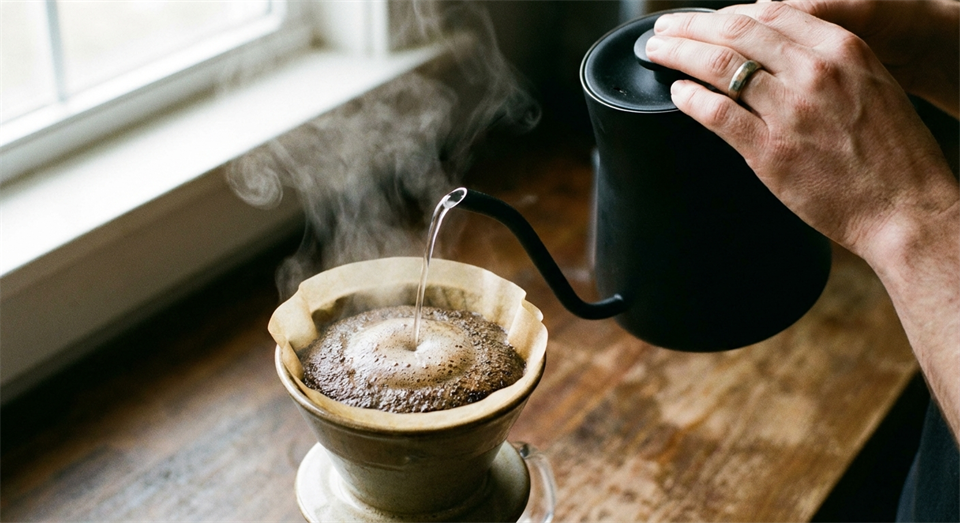
Start brewing by pouring 2-3 times as much water as coffee (e.g., 40 g water to 15 g coffee) over the coffee. Pour slowly and in circles so all the coffee is wet. Wait 30-45 seconds. This "bloom" releases carbon dioxide from the fresh coffee and improves the taste.
After the bloom, pour the rest of the water slowly in circular motions – start from the center and move outward. Do not pour directly on the filter, but stick to the coffee. Optionally, divide the water into 2-3 pours. The whole process should take 2.5-3.5 minutes for a cup.
When all the water has been poured, let the coffee finish dripping. Remove the dripper when most of the water has run through, and discard the filter. Stir the coffee gently so the taste is even.
Even small changes can affect the taste. Here are some common problems and how to solve them:
Take notes, and adjust one thing at a time so you find the perfect balance for your taste and coffee.
Pour-over requires a bit more time and attention than a coffee machine, but turns coffee into a small daily ritual. It can be a calm start to the day or a break in the middle of the afternoon. Take your time to enjoy the process: Smell the freshly ground coffee, listen to the sound of the water, and experience how the flavor nuances develop from cup to cup.
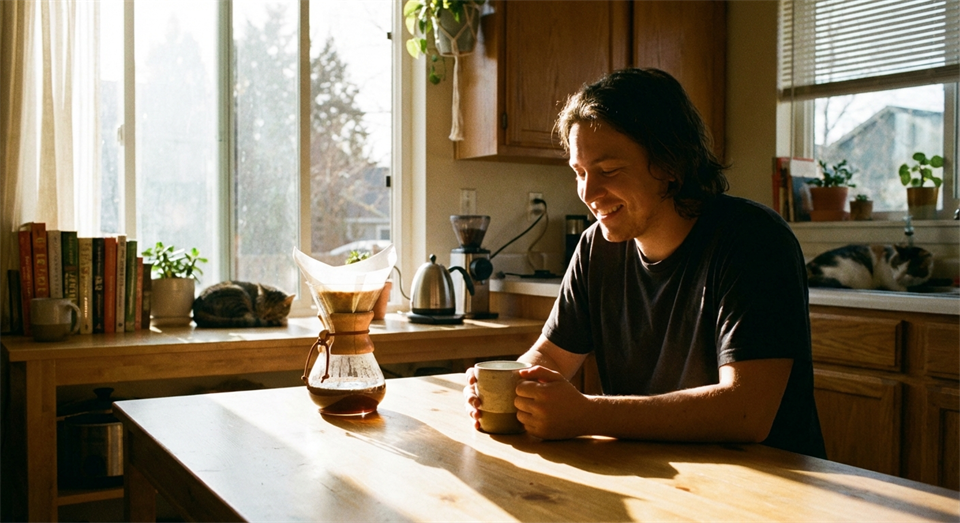
Pour-over brewing is a simple and accessible method to explore the world of coffee – whether you’re a beginner or want more control over your coffee. With a little practice and attention, you can brew a cup that highlights exactly the flavor notes you like best. Start with good ingredients, precise equipment, and patience, and let pour-over become your gateway to daily coffee luxury.
Enjoy your next cup!