
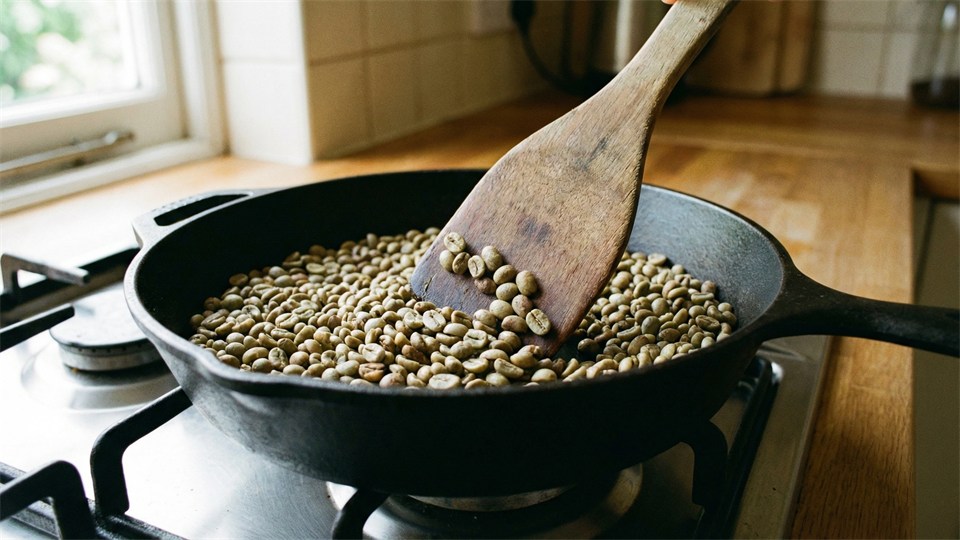


Most people probably see coffee as a finished product – either as whole beans or ground, ready for brewing. But before the coffee ends up in your cup, the beans have undergone a crucial process: roasting. It is during roasting that the coffee's character, aroma, and flavor develop from the raw, green bean's neutral expression to the intense, fragrant coffee we know. This article guides you through coffee roasting – what it is, why it matters, how it works, and how you can try roasting at home yourself.
Coffee beans are actually the seeds of coffee cherries – small, reddish fruits that grow on coffee plants. When the cherries are harvested, the pulp is removed and the green, raw beans are dried. In this form, the beans have little taste and aroma, and cannot be used to brew coffee. Roasting is the process where the beans are exposed to heat, and where the complex flavors and aroma compounds are formed. During roasting, a series of chemical reactions occur, making the beans crisp, darker, and flavorful.
Without roasting, coffee would be a flat, grassy experience. Roasting brings out the nutty, chocolatey, fruity, or spicy notes that make coffee so complex and beloved worldwide.
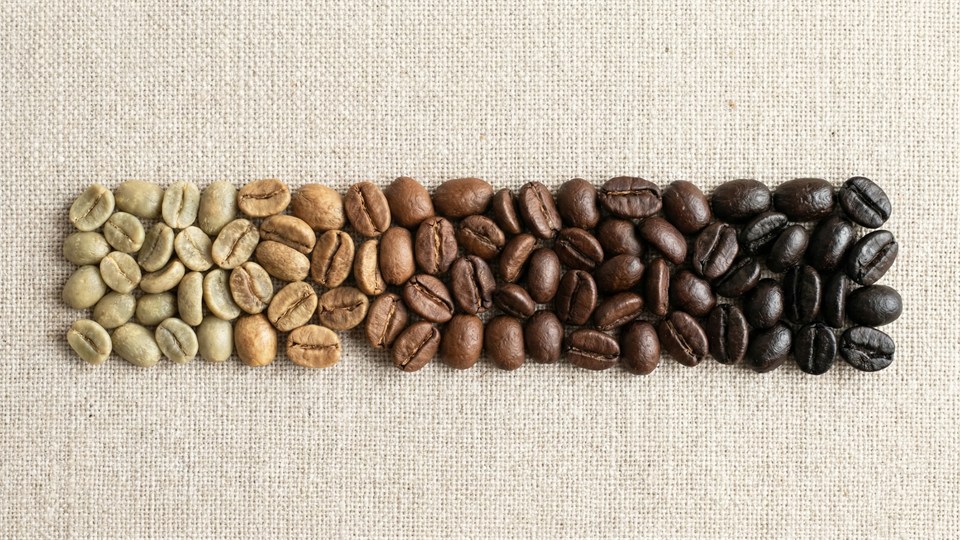
One of the most important things to understand about coffee roasting is that the roast level determines the coffee's flavor profile. There is no single right way to roast coffee – it's about personal taste and the desired result. Here are the most common roast levels:
The beans are roasted only until shortly after the first crack (a crisp pop that occurs at about 196°C/385°F). They are light brown, have a light, acidic taste, and retain much of the coffee's original character. Examples: City roast, New England roast.
The beans get a bit more heat and become darker brown. The balance between acidity, sweetness, and bitterness increases. The taste is fuller and rounder. Examples: Full City roast, American roast.
The beans are roasted longer, often until the second crack (around 224°C/435°F). They become oily and almost black. Acidity drops, while the deep, roasted, and bitter flavor notes dominate. Often used for espresso. Examples: French roast, Italian roast.
Roasting coffee can be done both industrially and on a smaller scale at home. The principle is the same: Green beans are gradually heated so they undergo a series of physical and chemical changes – including the development of CO2, caramelization of sugars, and formation of aroma compounds.
Small changes in time and temperature can make a big difference to the flavor. That's why roasting requires both precision and experience.
Professional coffee roasteries use large, advanced drum roasters that can precisely control temperature and airflow. But you can also roast coffee at home – and it doesn't necessarily require expensive equipment. Here are the most commonly used methods:
There are small electric coffee roasters for home use. They resemble popcorn machines or small ovens and can give good control over the roasting. The advantages are consistency and ease of use, but the price can be high.
You can roast small batches of beans in a heavy-bottomed pan or in the oven. However, it requires attention, constant stirring, and a bit of practice to avoid uneven roasting or burning the beans.
Some use a regular hot air popcorn machine to roast coffee. The advantage is that the machine keeps the beans moving, so they don't burn. The downside is that you can't control the temperature as precisely.
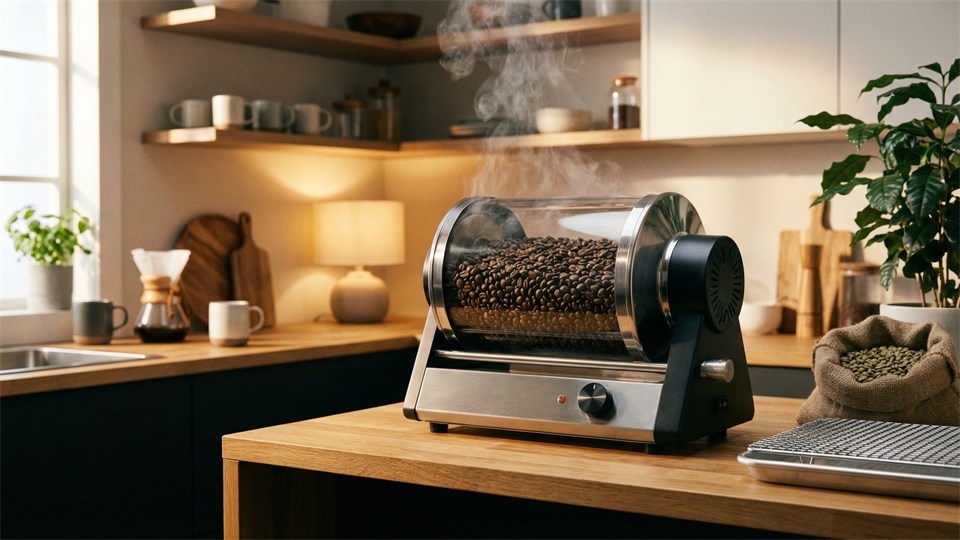
Want to try roasting coffee yourself? Here is a basic recipe you can adapt to your equipment and taste:
It may take a bit of practice to get the roasting just right, but the process is both educational and fun – and you get a coffee that is truly your own.
Most coffee enthusiasts agree: There is a big difference between freshly roasted coffee and coffee that has sat on the shelf for a long time. Freshly roasted coffee has:
Note, however, that coffee quickly loses aroma after roasting, especially if the beans are exposed to air, light, or heat. Therefore, you should only roast as much as you can drink within a couple of weeks.
Roasting coffee is both a craft and an art. By understanding and experimenting with the roasting process, you can transform raw, green beans into a coffee tailored to your taste. Whether you choose a light, fruity roast or prefer the darker, deeper tones, roasting opens up a world of possibilities. And the smell of freshly roasted coffee? It must be experienced – not just in the kitchen, but in every single cup.
Enjoy your coffee roasting!