


Coffee is one of the world's most popular drinks, but not everyone benefits from the stimulating effect of caffeine. For some, it's a matter of sleep, health, or simply a desire to enjoy coffee without nervousness and restlessness. This is where decaffeinated coffee comes into play. But what exactly is decaffeinated coffee? How is it produced, and does it taste as good as regular coffee? This guide gives you a thorough insight into decaffeinated coffee – from bean to brew.
Decaffeinated coffee – or decaf, as it is also called – is coffee where most of the caffeine has been removed from the beans before they are roasted and brewed. According to international standards, a decaffeinated coffee may contain a maximum of 0.1% caffeine in the dried beans. This means that even decaffeinated coffee can contain a very small amount of caffeine, but far from the 60-120 mg normally found in a regular cup.
There are many reasons to choose decaffeinated coffee. Some people experience sleep problems or heart palpitations after drinking regular coffee. Others have health reasons, such as pregnancy, anxiety, or high blood pressure, which make caffeine inappropriate. Finally, there are many who simply want to enjoy the taste of coffee at any time of day, without worrying about the side effects of caffeine.
The removal of caffeine from coffee beans is an advanced process that requires both technology and care to preserve as much of the coffee's flavor and aroma as possible. There are several methods, but the most common are:
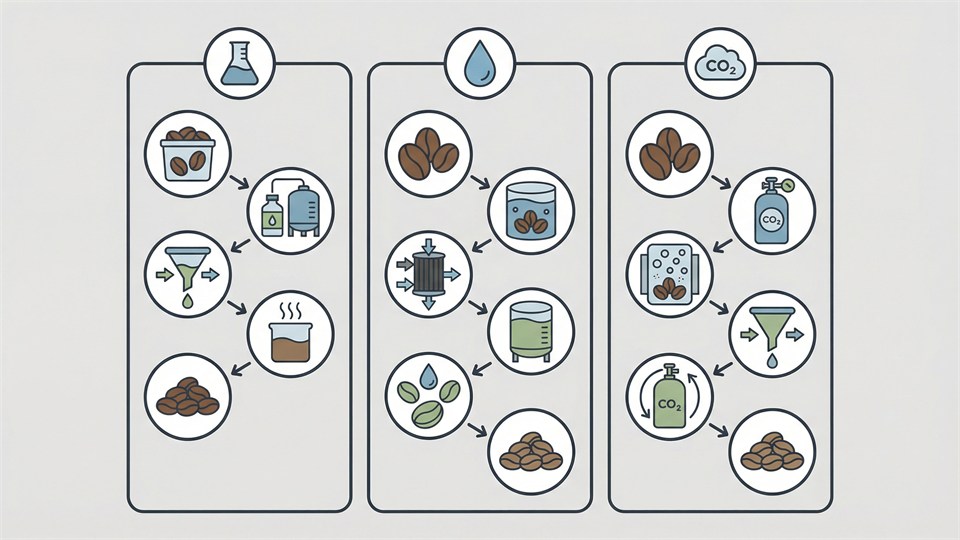
Here, organic solvents, typically methylene chloride or ethyl acetate, are used to extract caffeine from the green (unroasted) coffee beans. The beans are first soaked in water to loosen the caffeine, after which the solvent is added. Finally, both the solvent and the caffeine are removed through rinsing and drying. There are strict regulations for residual solvent content, and the finished coffee is considered safe to drink.
The so-called Swiss Water method uses only water and a filter to remove caffeine. Here, the beans are soaked in hot water, which extracts both caffeine and flavor compounds. The water is passed through an activated carbon filter that only captures the caffeine. The original beans are discarded, while the remaining flavor compounds are used to soak new beans, so they retain more flavor. This method is often preferred by those who want a "natural" process without chemicals.
Here, pressurized carbon dioxide (CO2) is used to draw caffeine out of the beans. CO2 specifically binds to caffeine molecules, which are then removed. This method is more expensive, but preserves more of the coffee's natural aromas and is often used for specialty coffee.
One of the most common questions about decaffeinated coffee is whether it tastes "right." The taste depends on both the raw material and the chosen process. Modern methods have become much better at preserving aroma and flavor nuances, but many will still find decaffeinated coffee a bit milder and less bitter than regular coffee. Sometimes there can be slight differences in acidity, body, and aftertaste, especially if low-quality beans are used or if the process is not gentle.
Decaffeinated coffee has both advantages and possible disadvantages that are worth knowing before you choose it as your daily option.
For many, decaffeinated coffee is an obvious choice in the afternoon or evening when you want to avoid the stimulating effect of caffeine. It can also be a good solution for people who love the taste of coffee but cannot tolerate caffeine – for example, with certain conditions or during pregnancy. Finally, some choose decaffeinated coffee if they want to reduce their overall caffeine intake but still want to enjoy coffee as a habit or social activity.
Brewing decaffeinated coffee is very similar to regular coffee, but there are a few tips that can ensure the best flavor:
You can use all the classic brewing methods: filter coffee, French press, espresso, or aeropress. Do as you prefer – and don't be afraid to experiment.
Decaffeinated coffee has many of the same health properties as regular coffee, such as antioxidants and plant compounds. For people who react negatively to caffeine, decaffeinated coffee can be a healthier choice. However, research shows that some of the positive effects of coffee are linked to its caffeine content, such as increased alertness. Additionally, it's worth noting that decaffeinated coffee can still contain small residues of chemicals, depending on the process. If you choose the Swiss Water or CO2 method, however, this is minimized significantly.
Decaffeinated coffee makes it possible to enjoy the familiar coffee taste – almost without caffeine and without worries about sleep or side effects. Modern production methods mean that you can find decaffeinated coffee that both tastes good and preserves the aroma. Whether you need to avoid caffeine for health reasons, want to enjoy coffee in the evening, or just wish to vary your intake, decaffeinated coffee is an obvious alternative. Try different options, choose quality beans, and find your favorite – then you can safely enjoy your cup of coffee any time of day.