

When you think of beer, your thoughts often turn to Germany, Belgium, or England. But over the past decades, the USA has developed into one of the world’s most innovative and diverse beer nations. From the big, classic pilsners to an explosive range of experimental craft brews, American beer has something to offer both the beginner and the seasoned beer enthusiast. In this article, we guide you through the history of American beer, the most important beer styles, the craft brewery boom, and give you tips on how to choose and enjoy American beers.
The history of American beer is both long and complex. The first European settlers brewed beer in the 1600s, inspired by traditions from home. In the 1800s, immigration especially from Germany and Ireland led to pilsner and lager becoming dominant styles. Back then, the beer was often darker and stronger than the light pilsners we associate with the USA today.
Prohibition from 1920 to 1933 became a turning point. Many breweries closed, and production went underground. When prohibition ended, it was mainly the large breweries that re-emerged – they focused on light, pale beer styles that would appeal broadly and be easy to drink. From here, brands like Budweiser, Miller, and Coors emerged and became international icons for American beer.
In the 1970s and 1980s, a new wave began: Microbreweries and homebrewers experimented with old and new styles. This became the starting shot for the so-called "craft beer revolution," which today has made the USA one of the most innovative beer countries with thousands of small and large breweries.
The USA is especially known for taking classic beer styles and giving them a unique, often more pronounced twist. Here are some of the most iconic American beer styles you should know:
The classic American lager is light, easy, and refreshing. It is often brewed with corn or rice to give a milder flavor. Well-known examples are Budweiser and Coors. The beer is easy to drink and often served ice cold – perfect for hot summer days or as a thirst-quencher with barbecue food.
American Pale Ale is inspired by the English pale ale but uses especially American hops, which give more citrus and pine notes. Sierra Nevada Pale Ale is a classic example, and the APA is often fresh, slightly bitter, and with a good balance between malt and hops.
IPA has almost achieved cult status in the USA. American IPA is typically more hop-driven, bitter, and aromatic than its British ancestors. Flavor notes range from grapefruit, mango, and pineapple to resin and flowers. NEIPA (New England IPA) is a newer, hazy variant that is less bitter but very fruity and soft.

Amber Ale sits between pale ale and brown ale. It has a rich, nutty malt profile and a beautiful amber color. American breweries often use caramel malt, which gives a slight sweetness and balanced bitterness. Fat Tire from New Belgium is a well-known example.
These dark beer styles are characterized by roasted malt, chocolate, and coffee tones. American variants often have more hops than the British originals. They can be both dry and sweeter, depending on the brewery’s style.
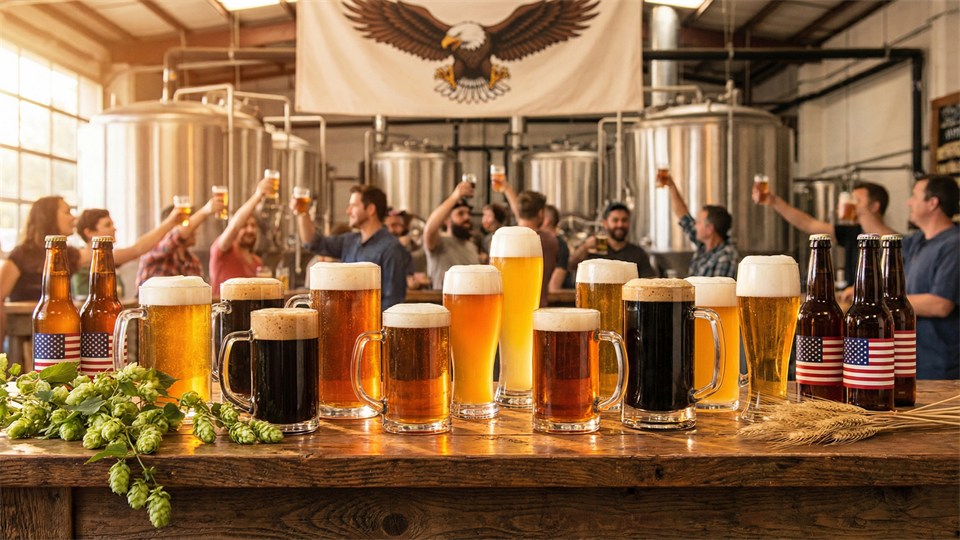
The USA now has over 9,000 registered breweries, and the majority are small, independent microbreweries. This makes the country the absolute epicenter for the development of new beer styles and flavor directions. The microbreweries have created a myriad of unique beers – from barrel-aged stouts to sour "sours" and experimental beers with unusual ingredients like chili, coffee, pumpkin, and tropical fruits.
Cities like Portland, Denver, and San Diego have become known for their vibrant beer scenes, where local breweries often collaborate and inspire each other. Beer festivals and taprooms make it possible for consumers to taste the newest brews straight from the tap. Many breweries also focus on sustainability, local ingredients, and creative collaborations with restaurants and food markets.

The large selection can seem overwhelming if you’re new to American beer. Here are a few tips to help you navigate:
One of the great joys of American beer is how versatile they are with food. Here are some classic combinations:
American beer is also popular for "beer pairings" at restaurants, where chefs and brewers collaborate to create new taste experiences.

The development in American beer doesn’t stop. New trends are constantly emerging. Some of the most popular in recent years are:
American breweries are known for pushing the boundaries of what beer can be – and have often inspired brewers all over the world.
You get the most out of American beer when you:
Also remember that American beer often has a higher alcohol content than European standard beers, so enjoy responsibly.
From the cool lager on the patio to the rich stout in the winter darkness – American beer is much more than just a thirst-quencher. The combination of tradition and boldness has made the USA a true beer mecca, where both beginners and experienced drinkers can find new favorites. Whether you want to explore the supermarket’s selection or dream yourself away to an American taproom, American beer is always worth the journey. Cheers and enjoy your exploration!