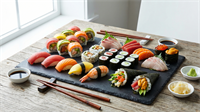



In just a few decades, sushi has evolved from being an exotic specialty to a global dish that many Danes know and love. But for beginners, sushi can seem both mysterious and a little intimidating: What is the difference between nigiri and maki? How do you use chopsticks? Should you eat wasabi and ginger together with the fish? And how can you best enjoy sushi, either out or at home? This guide gives you a solid and easy-to-understand overview of the basics of sushi, the most common types, basic sushi etiquette, and practical tips, so you can confidently explore this flavorful Japanese dish.
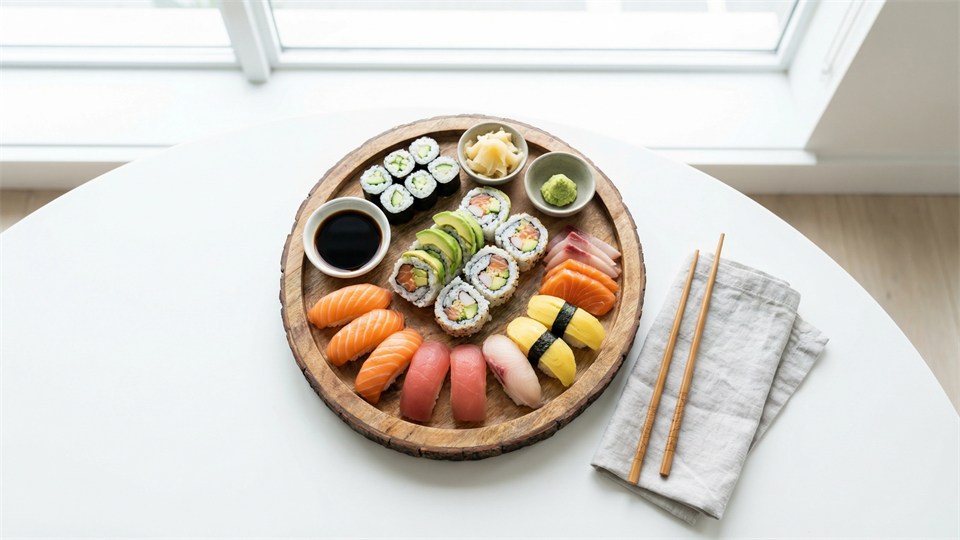
Sushi is, at its core, a dish where rice – not fish – is the main ingredient. It is the slightly sour rice, called shari, that defines sushi. The rice is topped or rolled with various kinds of fish, shellfish, vegetables, or egg. This actually means that sushi can be both raw and cooked, with or without fish. The essence of sushi is the balance between rice, filling, and accompaniments, where flavor and texture come together in harmony.
It is the combination that makes sushi special – and allows it to be varied almost endlessly.
For beginners, the menu at a sushi restaurant can seem a bit overwhelming. Here are the most common and accessible types of sushi you will encounter:
Nigiri are small, oblong rice balls shaped by hand, topped with a piece of fish, shellfish, or omelet. Often, there is a small layer of wasabi between the rice and topping. Nigiri are popular because they let the individual ingredient stand out in flavor. They are often eaten with the fingers.
Maki are sushi rolls where rice and filling are rolled in a layer of seaweed (nori) and cut into slices. There are several varieties:
Maki are often colorful and offer many opportunities to combine flavors and textures.
Sashimi are thin slices of raw fish or shellfish, served completely without rice. Sashimi is not technically sushi, but is often seen on sushi menus. Here, the pure taste of the fish is in focus, and it requires very fresh fish.
You will also encounter gunkan (small rice boats with seaweed and toppings such as roe) and temaki (cone-shaped hand rolls). These are fun to try and add variety.
Every sushi serving comes with soy sauce, wasabi, and pickled ginger. But how do you use them correctly?
The point is that the accompaniments should enhance, not overpower, the taste of the fish and rice.
Sushi can be enjoyed with chopsticks or with your fingers. Many people think it is only polite to use chopsticks, but in Japan it is quite common to eat especially nigiri with clean fingers. Here are some good tips:
If you eat at home, make it a cozy experience with small bowls for dips and a calm atmosphere.
If you are new to sushi, it can be an advantage to start with mild and familiar flavors. Tuna (maguro), salmon (sake), and cooked shrimp are popular beginner-friendly choices. Many places also offer sushi with omelet (tamago), cucumber, or avocado if you want to avoid raw fish at first.
Feel free to order a "set" with mixed pieces, so you can taste different varieties. You will quickly discover which types and combinations you like best. Remember, sushi does not have to be exclusive or expensive – even simple varieties can be delicious.
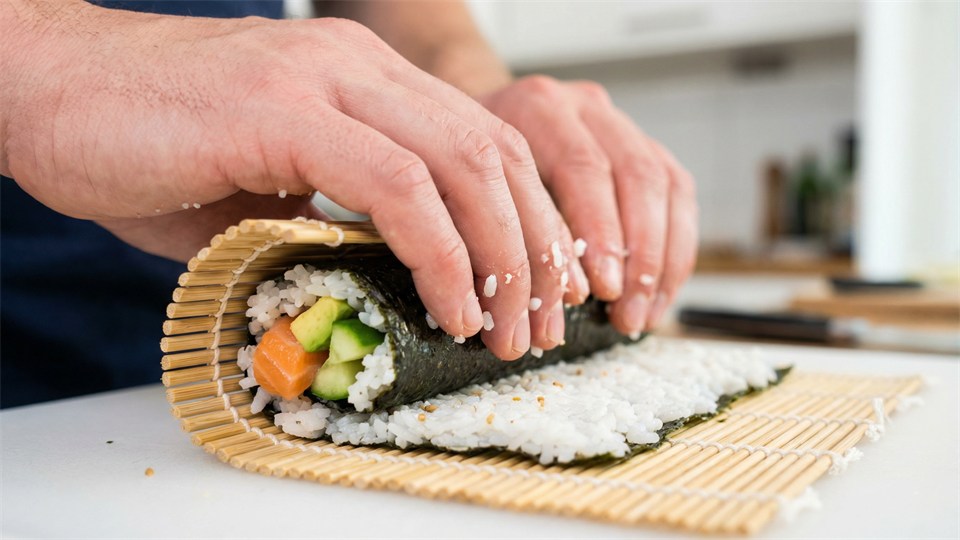
Yes, you can! Making sushi at home can be both fun and cozy, especially if you invite friends or family to join the process. It requires a bit of preparation, but you can easily start with simple maki rolls or nigiri. Here’s what you need:
Tip: Start with simple maki rolls before trying your hand at nigiri or more advanced varieties.
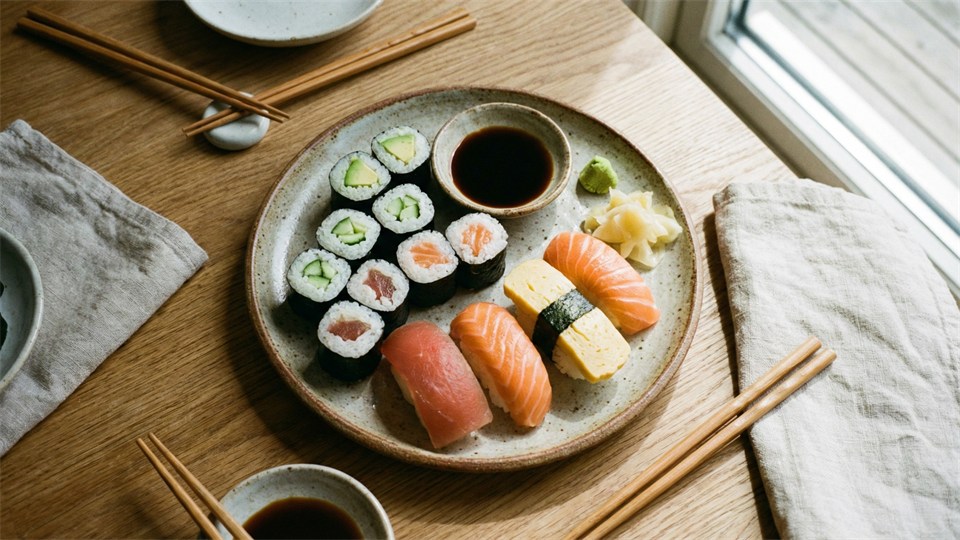
If you want to make sushi at home with raw fish, it is important to choose sushi-grade or frozen fish that is suitable for raw consumption. Always ask the fishmonger or read the package. The fish should be ultra fresh, smell neutral, and be kept cold until use. Alternatively, you can make sushi with cooked fish, shrimp, or only vegetables – that also tastes great.
Sushi is a versatile and inviting dish that offers countless taste experiences – both for the curious beginner and the experienced enthusiast. Whether you choose to eat out or at home, the most important thing is to explore with an open mind and curiosity. Try different types, enjoy the balance between rice, filling, and accompaniments, and find your own favorite. Enjoy your sushi journey!