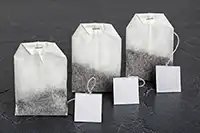
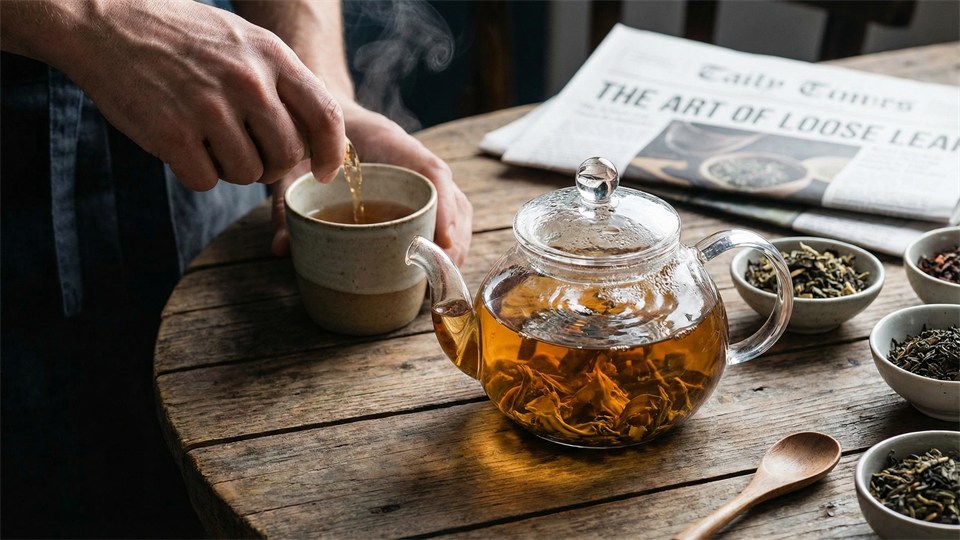


Most people know tea from bags, but loose leaf tea opens up a whole new world of flavor experiences. When you brew tea with loose leaves, you not only get more aroma and body – you also have the opportunity to explore the nuances of tea in a much more authentic way. Many believe that brewing loose tea is complicated, but in fact, it only requires a few simple tools and a bit of knowledge.
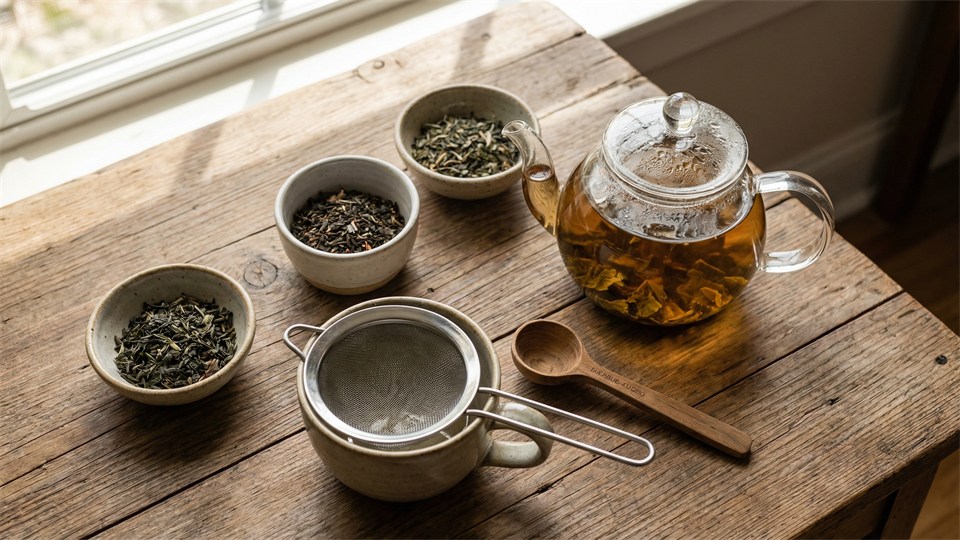
In this article, we will thoroughly guide you through everything you need to know to brew loose tea at home – from choosing your tea, to equipment, to the actual brewing and serving. Whether you are a beginner or have been drinking tea for years, you can find inspiration here to elevate your tea experience to new heights.
Loose tea consists of whole or coarsely cut tea leaves, in contrast to the often finely chopped leaves in tea bags. This means the leaves have more room to unfold and release their natural oils and aromas during brewing. The result is a much more complex, fresh, and full-bodied flavor. Additionally, with loose tea you can adjust the strength and amount yourself, and often gain access to a wider range of qualities and flavor varieties than you find in tea bags.
For example, with loose green tea you get a fresher and more grassy flavor, while loose black tea can provide more depth and character. Many herbal teas and oolong teas are almost exclusively available as loose tea. It is also a much more sustainable solution, as you avoid unnecessary packaging from tea bags.
You don't need expensive or advanced equipment to get started with loose tea. Here are the most important tools:
Some enthusiasts use special equipment like gongfu pots or fine Japanese teapots, but it is not necessary to get started.
Water makes up the vast majority of your cup of tea, and the quality of the water significantly affects the result. Always use fresh, cold water – preferably filtered if your tap water has a lot of lime or tastes of chlorine. The temperature of the water is crucial, as different types of tea require different temperatures to taste optimal:
If you don't have a thermometer, you can just let the water cool for a couple of minutes after boiling for the delicate teas. For black tea and herbal teas, you can pour the water directly from the kettle.
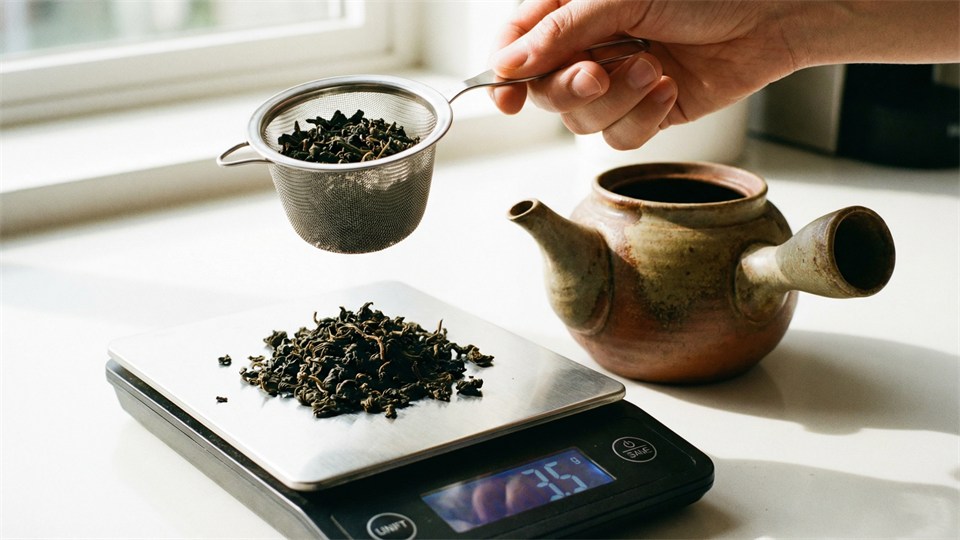
The classic rule of thumb is about 2 grams of tea leaves per 200 ml of water – equivalent to about 1 teaspoon. If you want to be completely accurate, you can use a fine scale, but with a little experience, you'll quickly find the level that suits your taste. Remember, leaves take up different amounts of space – large leaves may require a bit more per cup than small leaves.
If you like strong tea, try 2.5–3 grams per cup. If you prefer a milder cup, use a little less. The most important thing is to measure roughly the same each time, so you can adjust to taste.
Start by rinsing the teapot or cup with a little hot water so the temperature doesn't drop too quickly during brewing. Place the desired amount of loose tea in the strainer or filter.
Heat the water to the right temperature, depending on which tea you have chosen. Use a thermometer for precision, or follow the rule of thumb to let it cool a bit after boiling for green/white tea.
Pour hot water directly over the tea leaves in the pot or cup. Make sure all the leaves are soaked – this promotes the extraction of flavor and aroma. Start the timer.
The steeping time depends on the type of tea and your personal taste:
If the steeping time is too short, the tea will be dull and weak. If it steeps for too long, especially black and green tea can easily become bitter. Experiment and find your preferred balance.
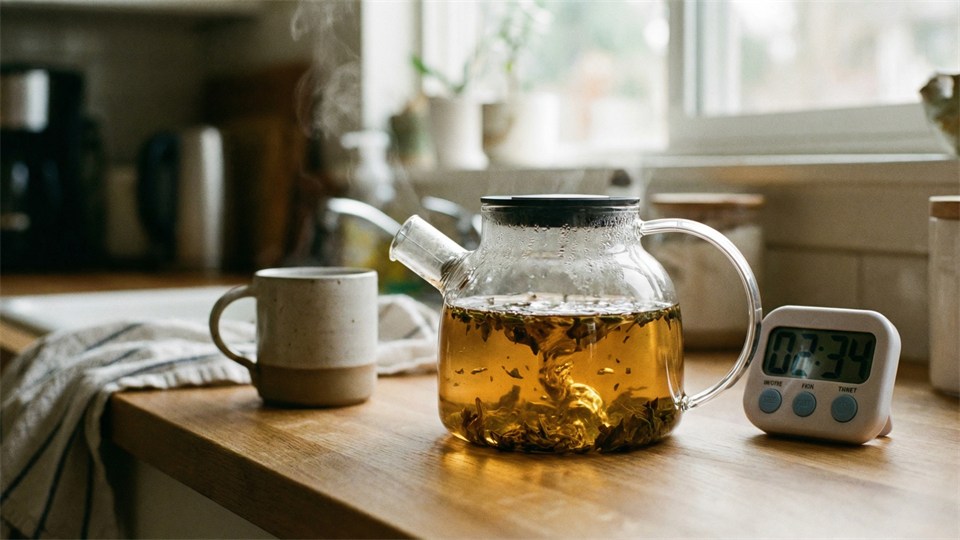
When the time is up, remove the tea leaves immediately. If you leave them in, extraction continues, and the tea can quickly become bitter or too strong. With a strainer or filter, it is easy to lift out the leaves or remove the filter. Pour the tea into cups and enjoy immediately.
Loose tea can be adapted and varied in many ways. For example, try:
To keep your loose tea aromatic for as long as possible, it should be stored airtight, dark, and dry – preferably in a tin or container made of metal or dark glass. Avoid placing the tea near strongly scented foods, as tea easily absorbs foreign odors. Rather buy smaller portions, so you always have fresh tea on hand.
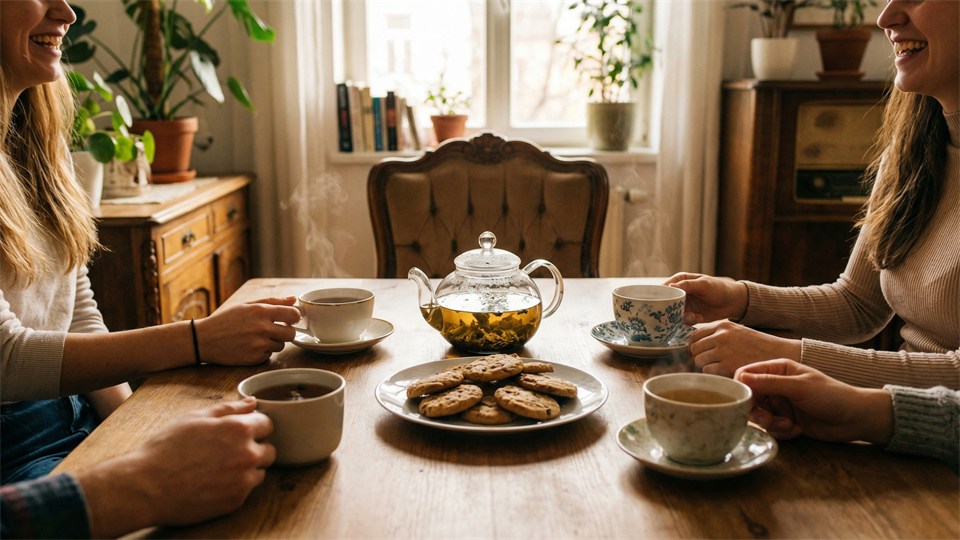
A cup of freshly brewed loose tea deserves to be enjoyed with all the senses. Consider using a transparent pot or cup so you can see the tea leaves unfold. Smell the tea before you drink – the aroma is a big part of the experience. Feel free to invite family or friends for a little tea tasting, and experiment with different types and brewing methods.
Add a little honey, lemon, or milk if it suits the tea – but first try tasting the tea plain, so you get to know its natural character.
Brewing loose tea is not difficult, but requires a bit more attention than tea bags. In return, you are rewarded with a much richer taste experience, greater freedom, and the opportunity to explore the world of tea. Start with simple tools, good tea, and fresh water – and enjoy how each cup can become a small, sensory break in your everyday life. Enjoy and cheers to tea!