Anaerobic training is a concept often mentioned in connection with fitness, sports, and physical exercise. But what does it actually mean for a type of training to be 'anaerobic'? How does it differ from the more well-known 'aerobic' training? And what are the benefits – and challenges – associated with this type of training? In this article, you will get a thorough and easy-to-understand introduction to anaerobic training, its mechanisms, examples of exercises, and how you can use it in your own training.

What does anaerobic mean?
The word 'anaerobic' comes from Greek and literally means 'without oxygen'. In the context of training, it refers to physical activities where the body is working so hard that it cannot supply enough oxygen to the muscles via the blood. Instead, the body produces energy through processes that do not require oxygen. This is in contrast to aerobic training, where the muscles receive plenty of oxygen and energy production takes place with oxygen as a central part.
In practice, anaerobic training typically means short, intense efforts where you push yourself to the maximum for anything from a few seconds to a couple of minutes at a time. Here, you quickly become out of breath, and your muscles begin to 'burn' – a clear sensation that the body is working hard and quickly running out of energy.
How does anaerobic energy production work?
When you perform anaerobic training, your muscles work so intensely that they cannot absorb enough oxygen from the blood to meet the energy demand. The body therefore has to obtain energy in other ways:
- ATP-CP system: During very short and explosive movements (e.g., a jump or a 100 m sprint), the body uses ATP (adenosine triphosphate) and creatine phosphate, which are stored directly in the muscles. This system delivers energy extremely quickly, but only for up to about 10 seconds.
- Anaerobic glycolysis: For longer-lasting but still intense activities (e.g., 400 m running or hard interval training sessions), the body breaks down glucose without using oxygen. This releases energy quickly but leads to the accumulation of lactic acid (lactate), which makes the muscles tired and 'burn'.
These systems make it possible to perform at maximum effort for short periods, but the body cannot maintain anaerobic activity for long at a time.
Examples of anaerobic training
Anaerobic training covers several different types of training and exercises. Here are some of the most common examples:
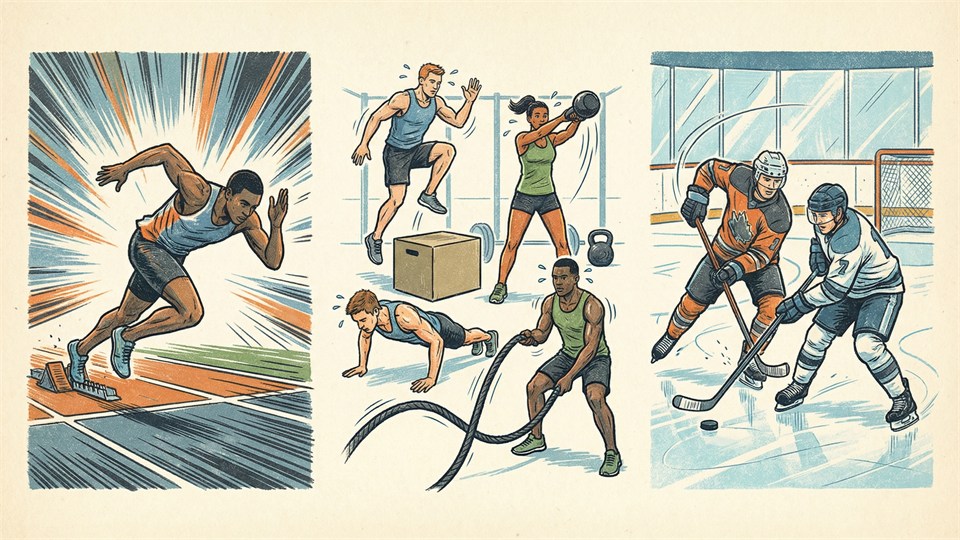
- Interval training: Short, intense intervals, for example in running, cycling, or rowing. Here you work close to your maximum performance for 20–60 seconds at a time, followed by breaks.
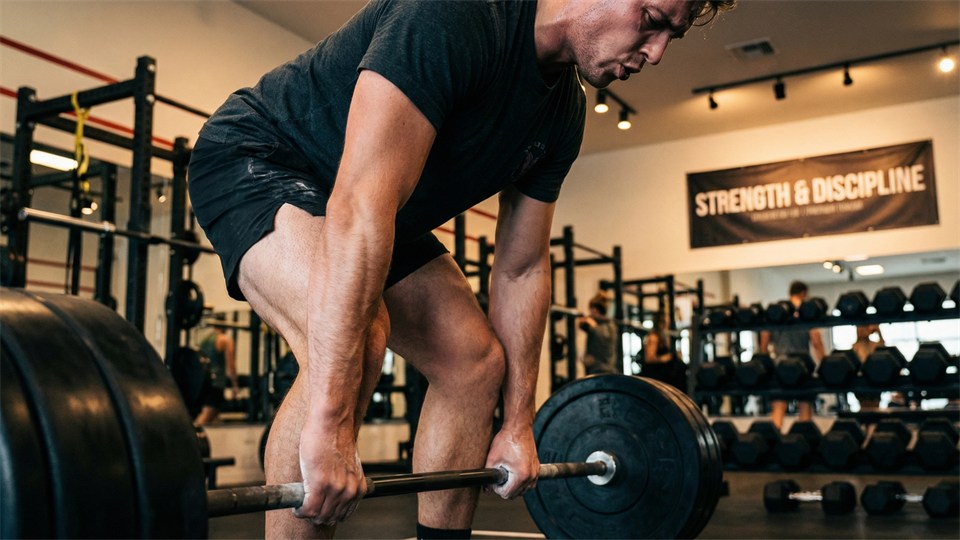
- Strength training: Exercises such as squats, deadlifts, or bench press with heavy weights and few repetitions (typically 1–10 repetitions) are performed anaerobically.
- Sprinting and fast running: Running 100, 200, or 400 meters as fast as you can are classic anaerobic activities.
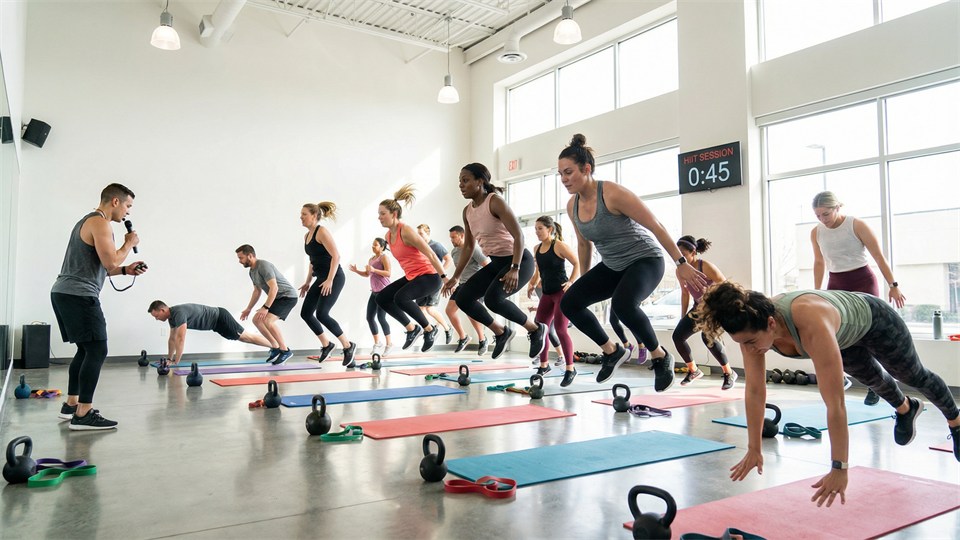
- Crossfit and HIIT: Intensive training with high intensity, short breaks, and a combination of strength and conditioning.
- Sports with explosive movements: Football, handball, basketball, and ice hockey often include anaerobic sequences when sprinting, tackling, or jumping.
What these activities have in common is that they require great exertion in a short time, after which the body needs a break to rebuild energy stores.
Benefits of anaerobic training
Anaerobic training provides a range of beneficial effects for both recreational exercisers and athletes. Some of the biggest benefits are:
- Increased muscle strength and mass: Heavy lifts and explosive movements stimulate the muscles to become stronger and bigger.
- Improved explosiveness and speed: Anaerobic training makes you better at sprinting, jumping, and accelerating.
- Greater endurance at high intensity: Regular anaerobic training makes the body better at handling and removing lactic acid, so you can perform harder and longer before fatigue sets in.
- Increased calorie burn: Short, intense training sessions make the body burn more calories – both during and after training (afterburn effect).
- Strengthened bone health: Strength training, which is a form of anaerobic training, stimulates the bones and helps prevent osteoporosis.
- Mental benefits: Pushing yourself through tough intervals or heavy lifts can give increased self-confidence and mental strength.
These benefits make anaerobic training an important supplement for anyone who wants to be stronger, faster, and more enduring.
Challenges and risks of anaerobic training
Although anaerobic training has many benefits, there are also aspects to be aware of:
- Increased risk of injury: Hard and explosive training puts stress on joints, tendons, and muscles. Unwarmed or untrained individuals are more likely to get injured.
- Requires recovery: Because the body works so intensely, it needs longer breaks between training sessions, especially with heavy strength training.
- Not suitable for everyone: People with heart problems or certain illnesses should consult a doctor before engaging in very intense training.
- Technique is crucial: Incorrect technique – e.g., in strength training – can lead to injuries.
It is therefore important to build up your anaerobic training gradually and get instruction if you are a beginner.
Anaerobic vs. aerobic training – what is the difference?
It can be confusing to distinguish between anaerobic and aerobic training, but the differences are important to know:
- Aerobic training: Running, cycling, or swimming at a slow to moderate pace over a longer period, where the body gets enough oxygen to the muscles and you can hold a conversation along the way.
- Anaerobic training: Short, very intense activities where you quickly become out of breath and the muscles work without sufficient oxygen.
The two types of training complement each other and should both be included in a varied training program. While aerobic training strengthens the heart, circulation, and endurance, anaerobic training focuses on strength, power, and explosiveness.
How to get started with anaerobic training
If you want to integrate anaerobic training into your daily life, you can start with simple steps:
- Interval training: Try, for example, running or cycling for 30 seconds as fast as you can, then rest for 1–2 minutes. Repeat 5–10 times.
- Strength training: Choose heavy weights that you can only lift a few times (typically 5–10 repetitions), and make sure to take good breaks between sets.
- HIIT: Join group training or follow videos with high-intensity interval training at home or in the gym.
- Explosive exercises: Include exercises such as burpees, box jumps, or sprints in your warm-up or main workout.
Always start slowly and increase the intensity gradually so your body gets used to the load.
Who especially benefits from anaerobic training?
Everyone can benefit from anaerobic training, but certain groups get particularly much out of it:
- Athletes: Sportspeople in, for example, football, handball, athletics, and martial arts greatly benefit from training explosiveness and speed.
- Elderly: Strength training helps older people maintain muscle mass and prevent falls.
- Weight loss: Anaerobic training increases calorie burn and preserves muscle mass during weight loss.
- Everyday exercisers: Anyone who wants to become stronger and more robust in daily life can use anaerobic training as a supplement to regular exercise.
When should you choose anaerobic or aerobic training?
The best training program combines both anaerobic and aerobic training, but the choice depends on your goals:
- Do you want to improve your endurance and cardiovascular health? Focus mainly on aerobic training such as running, cycling, and swimming.
- Do you want to become stronger, faster, or build muscle? Include anaerobic training such as strength training, sprinting, or HIIT.
- Do you want variety and to challenge your body in several ways? Alternate between aerobic and anaerobic training during the week.
A balanced approach ensures that you get the best of both worlds and reduces the risk of overuse injuries.
Conclusion
Anaerobic training is an effective and challenging way to strengthen the body. By incorporating short, intense training sessions, you can achieve greater strength, increased calorie burn, better explosiveness, and a healthier physique. However, remember to train sensibly, master the technique, and give your body time to recover. Whether you are a beginner or experienced, anaerobic training can give you a valuable boost in your training routine.