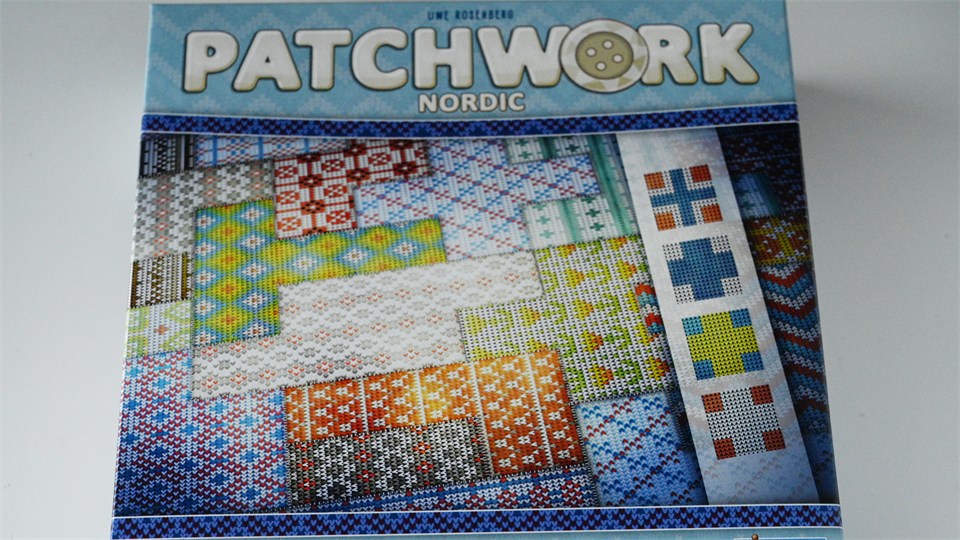


Patchwork is one of the most popular board games for two players, and it is easy to understand why. The game combines a simple core idea with a surprisingly large number of choices along the way. Each player builds their own quilt by buying fabric pieces and placing them on their personal game board. The goal is not just to fill the most spaces, but also to use your buttons wisely and move correctly along the time track. The result is a calm, tactical, and highly satisfying game that both new and experienced players can enjoy. If you want to understand what Patchwork is about and how to get better at it, here is a thorough and beginner-friendly guide.
Patchwork is a strategy board game for exactly two players, where the theme is sewing a quilt from different pieces of fabric. Each fabric tile has its own shape, button cost, and time cost. This means you constantly have to weigh what fits best into your quilt, what you can afford, and how quickly you want to move forward on the time track. The game therefore feels like a mix of puzzle-solving and resource management, but without the rules becoming heavy or difficult to learn.
What makes Patchwork special is that turns do not alternate back and forth in the usual way. The player who is furthest behind on the time track always takes the next turn. Because of this, you can sometimes get several turns in a row if your opponent chooses a tile with a high time cost. This creates an exciting flow where timing is just as important as the actual placement of your tiles. The game is easy to set up, often takes under half an hour, and still offers plenty of small tactical decisions that make each round a little different.
When you open Patchwork, you will find, among other things, two personal game boards, a range of fabric tiles in different shapes, buttons that function as currency and points, a time track, and a neutral marker that shows which three fabric tiles can be bought from. Each player gets their own empty quilt board, which must be filled as well as possible during the game. The fabric shapes resemble puzzle pieces or blocks from a classic pattern game, and their different shapes are a big part of the challenge.
The setup is simple. All fabric tiles are placed in a circle around the time track in a fixed or random order depending on the edition and preference. The neutral marker is placed next to a starting tile, and each player receives a small number of buttons as starting capital. Both players’ time markers begin on the starting space of the time track. In addition, the small leather patches or bonus pieces are placed nearby if they are included in the edition. Once everything is set up, the game is immediately ready, and that is one of Patchwork’s strengths: you spend very little time preparing and almost all your time on the actual game.
On your turn, you usually have two options. You can buy one of the three fabric tiles immediately in front of the neutral marker in the circle, or you can choose to move your time marker forward to the space just in front of your opponent’s marker and receive buttons equal to the number of spaces you move. If you buy a fabric tile, you pay its cost in buttons, move your time marker forward according to its time cost, and place the tile on your own quilt board. After that, the neutral marker is moved to the space where the purchased tile was.
It sounds simple, but the decision is often difficult. A cheap tile may fit perfectly into your quilt, but perhaps it provides almost no button income later. A more expensive tile may be fantastic in the long run, but if it costs a lot of time, you may give your opponent several turns in a row. If you choose income instead of buying, you get more buttons and a better economy, but you also lose the chance to take an attractive tile before your opponent does. Each turn is therefore small in scale, but important in meaning.
Once you have bought a fabric tile, it must be placed on your quilt board without overlapping and within the grid. You may rotate and flip the tile so that it fits as well as possible. This is where the puzzle-like core of Patchwork emerges. Large open areas may seem good at first, but later they can be difficult to fill if you only have access to awkward shapes. On the other hand, a tight and efficient layout can leave you with few gaps and therefore fewer minus points at the end of the game.
A good rule of thumb is to think a couple of moves ahead. Ask yourself whether the tile you buy now leaves strange one- or two-space gaps that will be hard to close later. Patchwork rewards players who do not only look at the current tile, but also at the upcoming options in the circle. Sometimes the best decision is to take a slightly less efficient tile now because it opens space for an even better tile shortly afterward. That is exactly the kind of simple but meaningful choice that makes the game so elegant.
Even though Patchwork is easy to learn, there are some rules that new players especially should understand well. First of all, it is always the player furthest behind on the time track who takes the next turn. So if you are still behind your opponent after your action, you take another turn. Second, special spaces on the time track provide extra effects. When you pass a button symbol, you receive income based on the buttons printed on the fabric tiles in your quilt. This means that certain tiles become more valuable the longer the game lasts.
There are also small bonus patches along the time track, which are typically given to the player who first passes certain spaces. They only fill one space on the quilt board, but they can be very useful for closing annoying gaps. Another important rule is the special bonus for filling a certain area on the quilt board before your opponent, often a 7x7 square. That bonus can be decisive in close games. Finally, remember that empty spaces on your quilt cost minus points at the end. So you are playing both to earn buttons and to avoid empty gaps.
Many new players focus mostly on the shapes and forget the buttons. That is a mistake, because the economy in Patchwork is just as important as the space on the board. If you spend all your buttons early, you may get locked into poor choices for several turns. Tiles with button symbols on them are often strong because they provide ongoing income every time you pass an income space. A tile that seems expensive now can therefore pay for itself later. That does not mean you should always buy the most expensive income tiles, but you should think about what your economy will look like in five or ten spaces on the time track.
A good beginner tactic is to secure at least a couple of early tiles with button income so that you are not constantly short on money. At the same time, you should avoid paying a lot for a tile that both fits poorly and uses a lot of time. If you are under economic pressure, it can be completely right to take an income turn to collect buttons and wait for a better opportunity. Patchwork rarely punishes patience, but it often punishes rushed purchases that look good in the moment and bad three turns later.
The most common problem for beginners is a quilt full of small gaps. A single empty space may not seem important in the middle of the game, but several small gaps quickly add up to many minus points. That is why it is often better to think in terms of large, connected areas than quick, attractive placements. Try building from a corner or a side and gradually work your way inward. That way, your options later will often be more flexible.
It is also useful to know the difference between good and bad empty spaces. A gap of two or three spaces may perhaps be closed with a bonus patch or a small tile later. A strange zigzag-shaped area, on the other hand, may be almost impossible to fill. When you consider a tile, do not look only at how well it fits now, but also at the shapes it leaves behind. Players who become good at Patchwork are often those who can see these patterns early and avoid problems before they arise.
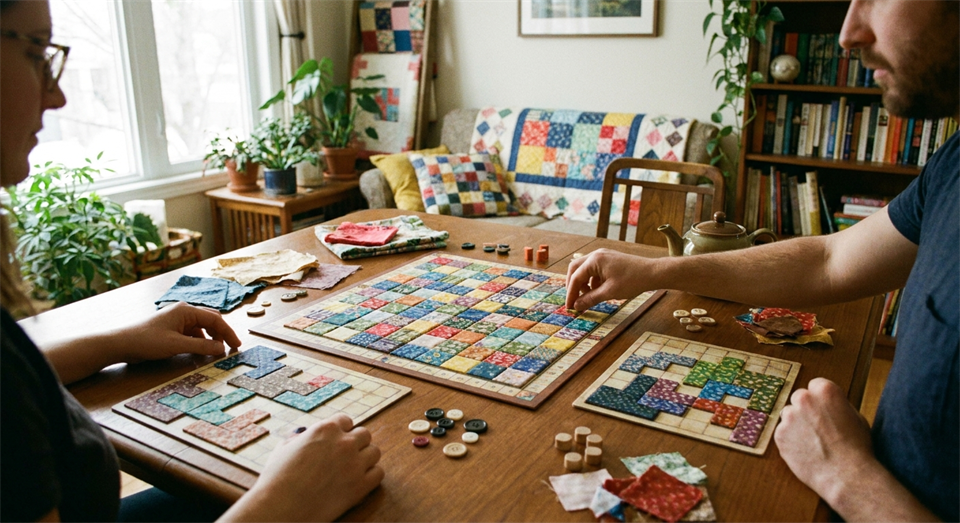
One of the most exciting aspects of Patchwork is the market of fabric tiles. You can only buy one of the next three tiles in front of the neutral marker, and because of that, the game is also about reading the order. Sometimes you should take a tile not because it is perfect for you, but because it would otherwise be easy for your opponent to take. Other times it is better to let an appealing tile pass if it ruins your tempo on the time track. The market is therefore not only a question of shape, but also of timing and access.
It is smart to look at what your opponent is missing. If the other player has an open area that fits perfectly with a certain tile among the next three, it may be worth taking it yourself or changing the market position. In the same way, you can plan when you want to move quickly forward and when you want to stay behind to get several turns in a row. This part of the game gives Patchwork more interaction than many people first think. You are each building your own quilt, but you are constantly affecting each other’s options through the market and the time track.
Patchwork has earned a special place among modern board games because it is easy to learn without being flat or repetitive. The game works well for couples, friends, or family members who want a calm game with clear rules and meaningful choices. It does not require much gaming experience to get started, but it still leaves room for improvement over many plays. Each time the fabric tiles are arranged a little differently, new situations arise, and that keeps the experience fresh even though the core rules are the same.
Another strength is that Patchwork feels friendly and manageable. The theme is cozy, the turns are short, and the playing time is nicely compact. At the same time, there is a satisfying depth in optimizing your quilt, your economy, and your position on the time track. It is a game that many people can bring out on an ordinary weekday without a long explanation or a big setup. That is exactly why Patchwork often becomes a game people return to again and again.
If you are looking for a board game for two that is easy to learn but still leaves room for tactics and improvement, Patchwork is a strong choice. The game combines puzzle-solving, timing, and resource management in a way that feels both simple and well thought out. As a new player, you will get far by keeping an eye on your economy, avoiding awkward gaps, and thinking a little ahead in the market. After just a few games, you will discover that the small decisions matter more than they first appear. It is exactly this blend of accessibility and depth that makes Patchwork a modern classic for two players.