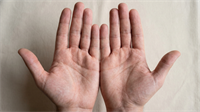


Palm reading has fascinated people for many years because hands seem to contain patterns, shapes, and lines that invite interpretation. For some, it is a spiritual practice; for others, it is a pleasant hobby centered on symbolism, observation, and conversation. Whatever the approach, the lines of the hand are often the first thing people notice. The major lines are relatively easy to find, and they provide a good starting point for beginners who want to learn how to read a hand without getting lost in details. This article offers a simple and clear introduction to palm reading, focusing on the hand’s most important lines, how they are traditionally understood, and how you can practice in a calm and curious way.
When people talk about the lines of the hand in palm reading, they mean the creases and markings that run across the palm. Some of them are clear and deep, while others are fine, short, or almost invisible. In classical palm reading, these lines are often associated with specific themes such as emotions, thoughts, energy, direction in life, and personal patterns. It is important to understand that palm reading does not function as an exact science. Instead, it is a symbolic system in which you look at the whole picture: the lines’ length, depth, curves, breaks, and placement in relation to the rest of the hand.
Beginners are wise to start with the best-known lines instead of trying to interpret every single small mark. The most important are the heart line, the head line, the life line, and often also the fate line. Many hands also have small supporting lines, crosses, or branches, but these only really make sense once you have learned the basic structure. A good rule of thumb is to see the lines as signs that point to tendencies, not as fixed judgments about the future.
One of the first questions in palm reading is which hand you should look at. Traditionally, many say that the dominant hand shows how the person uses their abilities here and now, while the non-dominant hand points to inborn traits, potential, or a more fundamental starting point. If a person writes with their right hand, the right hand will therefore often be read as the active hand, while the left hand is used for comparison. For left-handed people, this is often reversed.
In practice, it makes the most sense to look at both hands. If a line looks the same on both hands, it is often interpreted as a strong and stable pattern. If there is a big difference, it may suggest development, changes, or a tension between inner nature and outer life. For example, a person may have a calm and even head line on one hand and a more divided or branched version on the other. In traditional palm reading, this can suggest that the person’s way of thinking has changed over time. The comparison between the hands is therefore at least as important as the lines themselves.
The life line is perhaps the best-known line in palm reading, and it is often misunderstood. Many believe that it directly tells how long a life will be, but in traditional palm reading it is more about vitality, energy, resilience, and the way a person moves through life. The life line typically begins between the thumb and index finger and curves down around the pad of the thumb toward the wrist. A clear and even life line is often interpreted as a sign of stable energy and good endurance, while a weaker or more uneven line may be associated with periods of change or fluctuating strength.
It is not necessarily “better” to have a very deep life line. A fine but clear line can also be interpreted positively. If the life line lies close to the thumb, some traditions say that the person may be more cautious or reserved with their energy. If it curves widely out into the palm, it is often associated with curiosity, movement, and a desire for experiences. Small upward branches can symbolize ambition or momentum, while downward branches are often interpreted as periods when energy is being heavily used. Here it is important to look at the whole hand and not draw conclusions from a single sign.
The head line usually runs horizontally through the middle of the palm and is associated with thinking, learning, concentration, and the way a person processes impressions. A long and clear head line is often interpreted as focus, reflection, and the ability to immerse oneself deeply. A shorter line may, in some traditions, point to a more direct and practical approach. However, this does not mean that one type is more intelligent than the other. Palm reading works with style and patterns, not report cards.
If the head line is very straight, it is often associated with logic, structure, and realism. If it bends downward toward the lower area of the palm, it is often interpreted as imagination, intuition, or creative thinking. Some people have a head line that begins together with the life line, while others have a head line that is clearly separate from the start. A shared beginning is traditionally associated with caution and thoughtfulness in youth, while a more separate start may point to independence and initiative. Small breaks or chain-like patterns can be interpreted as periods of mental unrest, doubt, or many shifts in focus.
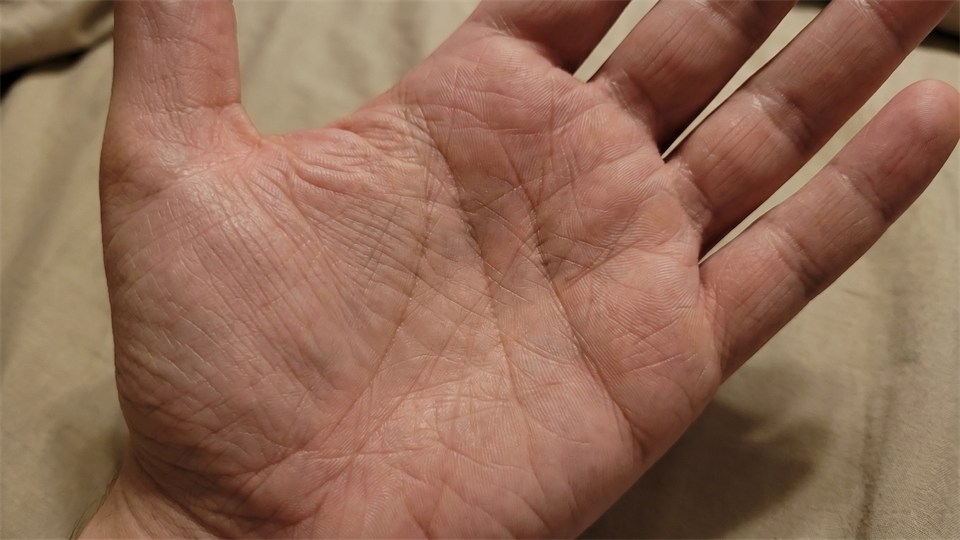
The heart line is normally located at the top of the palm, beneath the fingers, and is associated with emotions, relationships, empathy, and the way a person expresses their emotional life. A deep and clear heart line is often seen as a sign of strong feelings and a clear emotional direction. A finer or slightly broken line may, in traditional interpretation, point to sensitivity, complexity, or a more guarded way of showing emotions. Again, this is not a matter of good or bad, but of different ways of being in the world.
The shape of the line also plays a role. A curved heart line is often associated with warmth, spontaneity, and openness, while a straighter line may point to control, calmness, or a more restrained emotional style. If the heart line ends beneath the index finger, it is often interpreted as idealism in love and high expectations in relationships. If it ends between the index and middle finger, it is often associated with balance and realism. Small upward branches can be seen as positive emotional connections, while many small crossing lines may be interpreted as worries or emotional noise. The most important thing is to read the line with nuance and without reducing people to simple labels.
The fate line is not equally clear in everyone, and some people hardly have it at all. It often runs vertically from the base of the palm up toward the middle finger and is traditionally associated with direction, responsibility, work, calling, or the feeling of being driven by a particular path in life. A strong fate line is often interpreted as purposefulness or a clear sense of direction, while a weak or broken line may point to several changes, freer choices, or a life with many phases.
In addition to the fate line, palm reading often mentions the sun line, which is associated with creative expression and visibility, and the Mercury line, which some connect with communication or practical ability. For beginners, however, it is best to regard these as extra layers. If you start out too detailed, it can quickly become confusing. First look at the three major lines and then at whether there is a clear fate line. Later, when you gain more experience, the smaller lines can be used to add nuance to the reading. In this way, you build your understanding step by step instead of guessing your way forward.
The best way to learn the lines of the hand is by observing many hands. Start with your own. Look at your palm in good light, and notice where the largest lines begin and end. You may want to take a picture of the hand so you can study the lines calmly. After that, you can compare with friends or family and see how different hands actually are. Some have few, clear lines, while others have a finer, more intricate pattern. That kind of comparison makes it easier to understand that palm reading is about variation and overall impression.
When you practice, it can be an advantage to ask open-ended questions instead of making firm statements. For example, if you see a very curved heart line, you can say that the line is traditionally associated with warmth and strong feelings, and ask whether the person recognizes that. In this way, palm reading becomes a conversation rather than an answer sheet. It also makes the experience more respectful and more educational. Many people use palm reading as a tool for reflection, where the symbols help put words to personality, choices, and relationships.

One of the biggest misunderstandings is that a single line can “prove” something decisive about a person. In palm reading, the lines are normally seen in connection with the shape of the hand, the length of the fingers, the structure of the skin, and the small signs around the major lines and mounts in the palm. Another widespread misunderstanding is that the lines are completely fixed throughout life. On the contrary, many palm readers believe that hands can change over time, and that small lines can become clearer or weaker in step with experiences and habits.
It is also important not to use palm reading to frighten people. If a line is broken, weak, or different, it does not automatically mean something negative. A break can just as easily be interpreted as a turning point, a change in direction, or a transition to something new. Palm reading works best as a symbolic language that opens the door to curiosity and reflection. The more calmly and openly you approach the subject, the more meaningful it becomes as a hobby.
The lines of the hand are an exciting place to begin if you want to learn palm reading. The life line, head line, heart line, and fate line provide a simple basic map that makes it easier to understand the rest of the hand. The most important thing is not to memorize hundreds of rules, but to practice seeing patterns, comparing hands, and interpreting with caution. When you read a hand with curiosity and respect, palm reading becomes an interesting combination of observation, symbolism, and conversation. For many, that is exactly what makes the subject so fascinating: the hands may not tell everything, but they provide plenty to wonder about.