
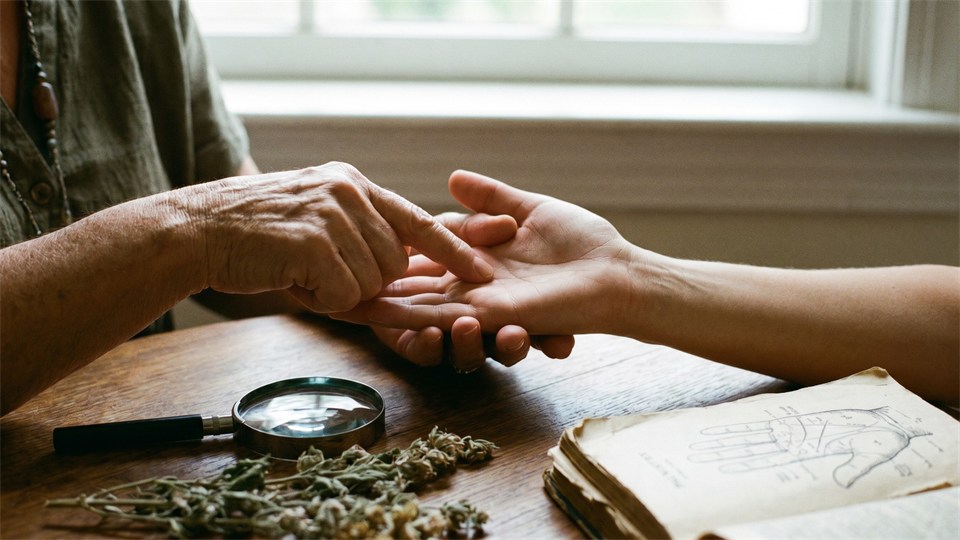


Palm reading is an ancient practice in which one looks at the shape of the hand, the length of the fingers, the texture of the skin, and the lines that run across the palm. For many, it is a pleasant hobby that combines curiosity, symbolism, and conversation. Palm reading is often associated with mysticism, but it can also be viewed as a system of traditional interpretations that helps put words to personality, habits, and life themes. If you are a beginner, the most important thing is not to know everything from the start, but to learn to observe calmly and notice details without overinterpreting them.
In this guide, you will get a simple introduction to palm reading so you can understand the best-known elements and try reading a hand in a respectful and down-to-earth way. You do not need any special equipment, only good lighting, a little patience, and the desire to learn. The goal is not to predict a fixed future, but to understand how palm reading traditionally works with patterns and symbols. Once you know the basic elements, it becomes easier to see connections and ask the right questions along the way.
Palm reading, also known as chiromancy or palmistry, is based on the idea that the hand reflects certain aspects of a person's temperament, energy, and experiences. The tradition exists in many forms and has been interpreted differently over time. Some focus mostly on the lines in the palm, while others place just as much emphasis on the overall shape of the hand, the finger joints, nails, and thumb. For beginners, it is useful to see palm reading as a complete picture in which no single detail stands alone.
This makes palm reading a hobby that is about both observation and interpretation. Two hands can have similar lines but seem very different because of the hand's structure or movement. That is why a good reading often starts with the whole: Is the hand broad or narrow? Are the fingers short or long? Does the skin look soft, firm, or dry? Only after that do you move on to the individual lines. This order helps you avoid getting stuck on one marking and forgetting the rest of the hand.
One of the first questions in palm reading is which hand you should read. There are different traditions, but a common approach is to compare both hands. One hand is often seen as the innate or fundamental side, while the other shows how the person uses their abilities in practice and how life has left its marks. Many readers see the dominant hand as the active hand and the non-dominant hand as the more innate or inner hand.
For a beginner, the smartest approach is to look at both hands and notice differences. If a line is clear on one hand but faint on the other, it can be an interesting sign of development or change. Also compare the hand's tension, flexibility, and finger position. One hand may seem more open, the other more closed. Instead of looking for a definitive answer, you can ask: What is stable in both hands, and what seems to have changed? That approach makes the reading more nuanced and less mechanical.
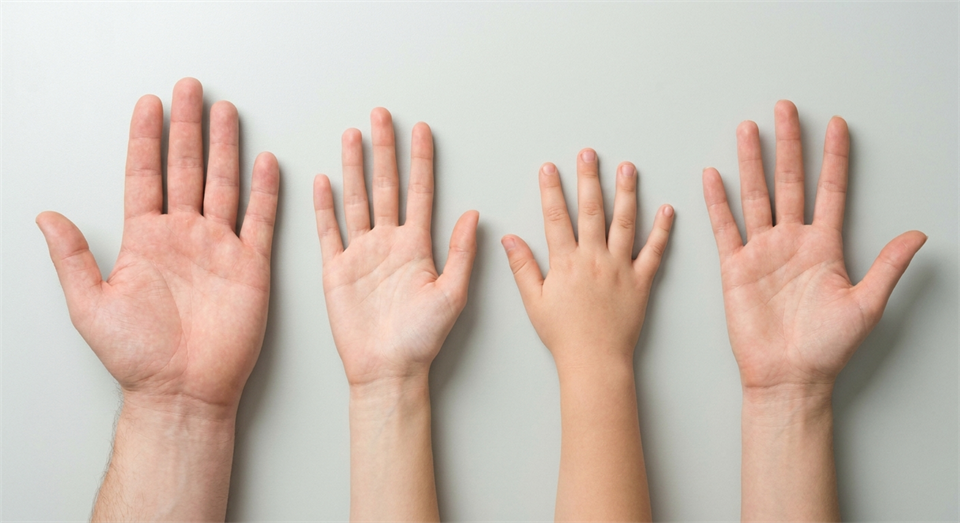
In many introductions to palm reading, the four elements are used as a simple way to describe hand types: earth, air, fire, and water. It is not natural science, but a symbolic system that makes it easier to remember different traits. An earth hand is often broad with shorter fingers and is traditionally associated with the practical, stable, and concrete. An air hand is more square or rectangular with long fingers and is associated with thinking, communication, and curiosity.
The fire hand is typically described as having a long palm with shorter fingers and is associated with energy, initiative, and enthusiasm. The water hand is often narrow or soft with long fingers and is associated with sensitivity, intuition, and imagination. Most hands do not fit perfectly into one category, however. Many have mixed traits, and that is completely normal. Therefore, use the elements as a starting model, not as a fixed box. If, for example, a hand has the sturdy shape of an earth hand but the fine, long fingers of a water hand, you can note both the practical and the sensitive in your overall reading.
The life line is the curved line that runs around the base of the thumb. Many people mistakenly believe that it directly tells how long a person will live, but in palm reading it traditionally has more to do with vitality, energy, and the rhythm of life. A clear and even life line is often interpreted as stability and good resilience, while a finer or more uneven line may be associated with periods of change, sensitivity, or shifting energy. The most important thing is to look at the quality of the line rather than only its length.
The head line usually runs horizontally across the palm and is associated with thinking, learning, and decision-making patterns. A straight head line is often linked to logic, structure, and practical sense, while a more curved or sloping line may point toward imagination, intuition, or creative thinking. If the line is deep and clear, it is often interpreted as focus and direction. If it is more chained or broken, it can be seen as a sign of a mind that works along many tracks at once. Here it is useful to think in terms of tendencies, not fixed judgments.
The heart line lies at the top of the palm and is traditionally connected to emotions, relationships, and the way one expresses closeness. A long and clear heart line can be interpreted as emotional strength or openness, while a shorter or more discreet line does not necessarily mean coldness, but perhaps a more reserved way of showing feelings. If the line is very curved, it is often associated with warmth and spontaneity. If it is straighter, it may point toward control and a need for emotional clarity.
The fate line is not equally clear in everyone, and it typically runs vertically up through the palm toward the middle finger. In palm reading, it is often associated with direction, responsibility, work, or the experience of having a particular path in life. A strong fate line is sometimes interpreted as determination or a clear sense of calling, while a faint or missing line is not negative. It may just as well point to freedom, flexibility, or a life shaped more by choices than by fixed tracks.
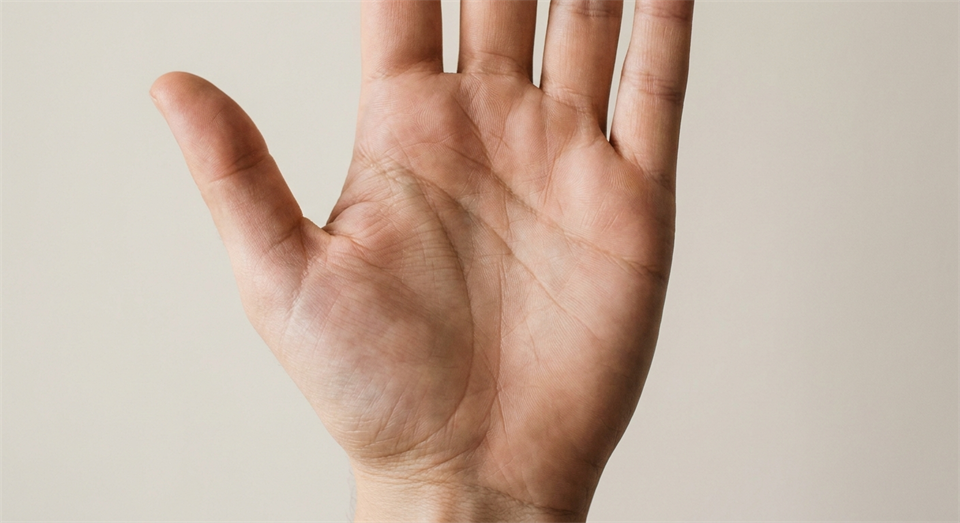
In addition to the lines, palm reading also looks at the so-called mounts, meaning the soft areas in the palm under the fingers and by the thumb. A full area under the index finger is often associated with ambition and self-esteem, while the area under the ring finger may be linked to creativity and enjoyment of visibility. The area by the little finger is often associated with communication, and the fleshy pad by the thumb is often interpreted as life force, warmth, and a desire for contact. Again, these symbols are used as guideposts, not as proof.
The fingers also provide a lot of information in traditional palm reading. Long fingers are often associated with attention to detail and reflection, while shorter fingers may point toward quick action and a more direct focus. Knotted joints are sometimes interpreted as analytical or systematic thinking, while smoother fingers are associated with spontaneity. The thumb is especially important because it is often seen as a sign of willpower and self-control. A strong and flexible thumb can symbolize both determination and the ability to adapt, while a very stiff or very loose thumb may point toward other balances in the personality.
If you want to try palm reading yourself, you can use a simple order. Start by looking at the whole hand in calm light. Notice the shape, size, skin, and finger length. Then compare the two hands. Then move on to the three main lines: the life line, head line, and heart line. Look at whether they are deep, light, straight, curved, broken, or branched. Finally, you can look at the fate line, the mounts, and the thumb. Feel free to write down your observations so you train your eye over time.
A good beginner method is to phrase interpretations carefully. Instead of saying: “You are like this,” you can say: “This line is often associated with…” or “It may point to…”. That makes the conversation more open and less overconfident. Palm reading works best as reflection and curious dialogue. If you are reading for a friend, you can ask whether the interpretation makes sense to them. In that way, the reading does not become just something you deliver, but a shared exploration of patterns and impressions.

One of the biggest misunderstandings is that palm reading gives certain predictions about the future. In practice, most hobbyists use palm reading as symbolic interpretation, not as a fixed judgment of what will happen. Hands also change over time. Lines can become clearer or fainter, and the hand's expression can change with age, work, habits, and life situation. Therefore, it makes more sense to see palm reading as a snapshot of tendencies than as an unchangeable map of an entire life.
Another misunderstanding is that one single line can explain everything. Beginners often become very focused on the life line, but a good reading is built on the whole picture. A faint heart line, for example, can look completely different if the hand is also warm, open, and has soft, full mounts. Finally, some people think that palm reading is only about the supernatural. But many use it as a cultural tradition, a conversation tool, or a creative interest. So you can absolutely be curious about palm reading without having to believe everything literally.
The best way to get better at palm reading is to practice on many different hands. Look at your own hands first, and then compare them with friends or family if they are willing. Try to describe what you actually see before you interpret it. That trains your powers of observation. You can also take pictures in good light and later compare details such as the depth of the lines, finger shapes, and differences between the right and left hand. The more hands you see, the easier it becomes to discover patterns and variations.
It is also a good idea to keep interpretations simple at the beginning. Learn the most important lines and hand shapes before moving on to rarer signs and small symbols. If you try to learn everything at once, it quickly becomes confusing. Also, be respectful when reading other people's hands. Avoid dramatic conclusions about illness, accidents, or major life events. Palm reading is best suited to curious reflection and pleasant immersion. When you approach the subject with humility, it becomes both more interesting and more comfortable for everyone involved.
Palm reading is a fascinating hobby because it combines observation, symbolism, and human curiosity. For beginners, it is first and foremost about learning the basic shapes of the hand, the most important lines, and the calm way of interpreting. You do not need to believe in fixed destinies to enjoy the subject. Many find palm reading exciting precisely because it opens up reflection on personality, choices, and development.
As you practice, you will discover that no two hands are exactly alike. That is part of the charm. Each hand tells its own pattern through shape, structure, and lines, and the more attentively you look, the more nuanced your understanding becomes. Start simply, stay curious, and use palm reading as a way to get to know both details and the whole. Then you will have a hobby that both
e can be entertaining, thought-provoking, and surprisingly educational.