

UFOs arouse curiosity because they exist at the boundary between experience, technology, and mystery. The word is often used for something alien or sensational, but in a scientific context it simply means an unidentified flying object: something in the sky that has not yet been explained. That makes the topic interesting, because science is precisely about investigating what we do not yet understand. Instead of starting with a conclusion, one begins with questions, data, and cautious interpretations. When researchers, technicians, or analysts look at UFO reports, they therefore do not first try to prove something dramatic. They try to find out what was actually observed, how it was measured, and which ordinary explanations must be tested before anything can be called truly unusual.
A scientific investigation is based on a simple idea: you must be able to distinguish between what you believe and what you can support with evidence. When a person sees a strange light in the sky, the experience is real for that person, but the explanation is not automatically certain. That is why one asks, among other things: When did it happen? How long did it last? In which direction did the object move? Were there clouds, stars, planets, air traffic, or unusual weather conditions? The more details you can gather, the better you can test different explanations. Science is therefore not the same as rejecting the unknown. It is a method for investigating the unknown step by step, so that you avoid confusing errors, illusions, or incomplete data with something extraordinary.
It is also important that others should, in principle, be able to review the material. If a claim is based only on a vague story without time, place, images, sensor data, or independent witnesses, it is difficult to work with. A stronger case might, for example, consist of video recordings, radar tracks, weather information, and multiple observers who have not influenced one another. Even then, the conclusion is not necessarily dramatic. Often, closer analysis shows that something unknown becomes known when enough information is available. That is exactly how science works: not through quick answers, but through systematic sorting of possibilities.
When a UFO incident is to be investigated, one starts with the observation itself. A person may describe a bright light, a strange shape, or a movement that seems impossible. But human senses are not perfect instruments. Distances in the sky are difficult to judge, size can be deceptive, and speed can look very different if you lack fixed reference points. A light far away can seem enormous, and a stationary object can appear to move quickly if the observer is moving. That is why one tries to translate the experience into measurable information: direction, height above the horizon, duration, color changes, and any sounds.
The next step is to gather additional data. Here, one can compare with flight paths, satellite passes, astronomical objects, and local weather conditions. Some phenomena look strange because they occur under special conditions. Venus, for example, can appear so bright that it is mistaken for a craft. High-altitude clouds can reflect light in unexpected ways. Drones, balloons, or rocket launches can also create observations that seem puzzling if you only see part of the event. That does not mean that all reports are trivial, but it shows why good data collection is more important than quick conclusions.
Instruments such as radar, infrared cameras, telescopes, and ordinary mobile phone cameras can provide more than eyewitness accounts alone. But instruments are not flawless either. A camera can compress the image, lose depth information, or magnify light in a way that makes objects look strange. Infrared images show heat, not necessarily shape, and radar can pick up noise, reflections, or misinterpreted signals. That is why it is best when several types of data point in the same direction. If video, radar, and independent observers all record the same thing at the same time, the case becomes more interesting because it is harder to explain as a single error.
Researchers especially look for patterns that can be tested. If an object apparently accelerates dramatically on video, for example, one asks whether the camera’s zoom, angle, or movement could create an illusion. If radar shows a track, one investigates whether it could be due to known technical factors. The point is that even exciting data only become useful when you understand how they were produced. Science is not only about collecting measurements, but also about knowing the limitations of those measurements.
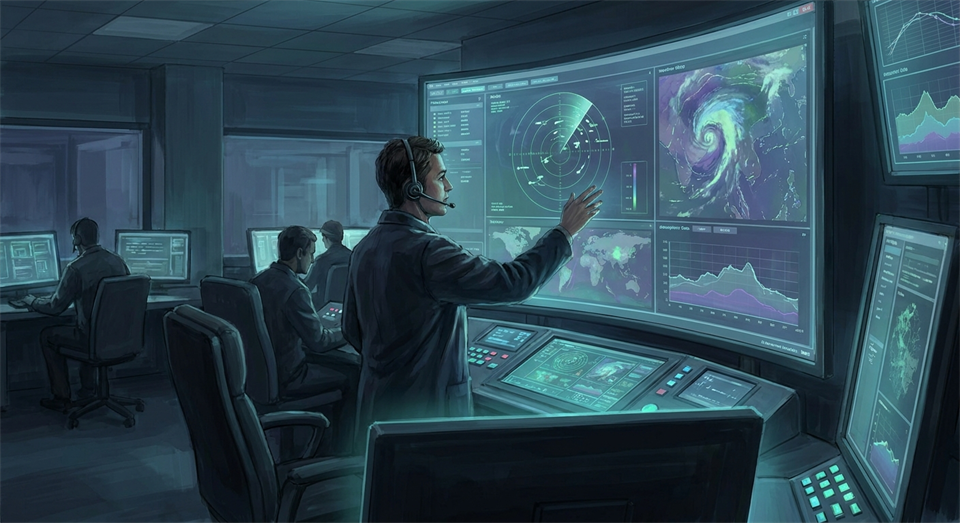
A central principle in science is that you first test the most likely explanations. If something in the sky looks strange, it is more reasonable to investigate aircraft, drones, balloons, planets, satellites, optical effects, or weather conditions before considering more spectacular possibilities. This is not due to a lack of imagination, but to sound method. A good investigation begins with hypotheses that can be tested and possibly rejected. If all ordinary explanations fall away after thorough analysis, you are left with a more interesting problem. But “unexplained” still does not automatically mean “extraterrestrial.” It only means that the data are not yet sufficient for a certain identification.
This is where an important misunderstanding often arises in public debate. Many people think that if a case remains unidentified, that in itself points to something alien. In science, that is not how it works. A gap in knowledge is not proof of a particular explanation. It is simply a gap in knowledge. That is why researchers are careful with words. They would rather say “we do not know yet” than fill the gap with a dramatic conclusion. That caution may seem dry, but it is necessary if you want to distinguish between exciting possibilities and wishful thinking.
Humans are good at detecting patterns, but that can also lead to mistakes. When we see something unexpected, the brain quickly tries to create meaning. That is useful in everyday life, but it can make us certain of something that is not true. In the sky, this is especially clear because distance, size, and direction are difficult to assess. A flashing light can seem intelligently controlled, even if it is just an aircraft heading toward the observer. A group of lights can resemble formations, even though they are separate objects at different distances. In addition, memory can change over time, especially if you talk with others, watch videos, or read theories afterward.
That is why serious investigations take psychological factors into account without mocking witnesses. You can absolutely take an experience seriously while also recognizing that people make mistakes. In fact, it is a strength of science that it builds in room for error. It recognizes that senses, memory, and instruments can all be misleading, and therefore investigations are structured so that several independent lines of evidence can confirm or weaken an explanation. The more a case rests on one dramatic interpretation, the more cautious you should be.
The most interesting cases are not necessarily those that sound the wildest, but those with the best documentation. A strong case may include precise timing, multiple observers, raw video data, radar information, and known weather conditions. Even better is if the data can be reviewed by independent experts with different backgrounds, for example in physics, image analysis, aviation, and meteorology. When several fields meet, it becomes easier to avoid tunnel vision. A physicist may see one type of error, while a pilot or meteorologist notices something else. In this way, the investigation becomes broader and more robust.
In addition, openness is important. If data are kept hidden, or if only selected clips are shown without context, it becomes difficult to assess the case properly. Science works best when material can be verified. That does not mean that all mysteries can be solved, but it increases the chance that errors will be discovered. Sometimes the most honest conclusion is still that data are missing. That may be unsatisfying, but it is better than letting fascination replace analysis.
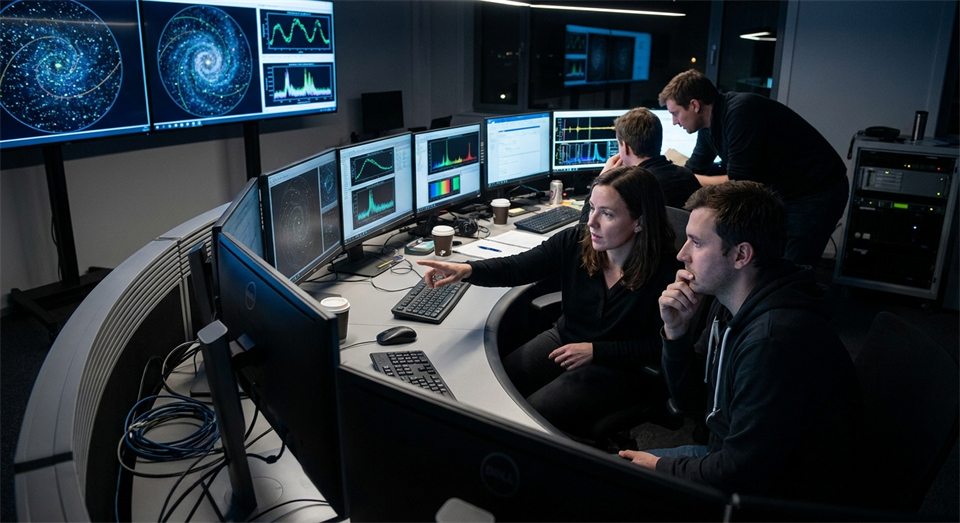
Yes, and that is actually one of science’s most important tasks. Many major discoveries began with observations that no one could explain right away. What matters is not whether something seems strange, but whether it can be investigated systematically. In the case of UFOs, that means setting up clear questions: What data exist? Which explanations have already been tested? What is missing in order to move forward? In this way, the topic becomes less a question of belief and more a question of method. You do not have to choose between blind rejection and blind conviction. You can be curious and critical at the same time.
For beginners, a good approach is to think like an investigator. Write down what is certain and what is only assumption. Distinguish between observation and interpretation. “I saw a white light blinking for three minutes” is an observation. “It was a spaceship” is an interpretation. The better you become at that distinction, the better you also understand how science works with the unknown. This applies not only to UFOs, but to all topics where data are incomplete and emotions can easily take over.
UFOs fascinate because they remind us that the world still contains things we cannot immediately explain. But fascination is most valuable when it is accompanied by method. Science does not investigate the unknown by promising sensations, but by asking precise questions, collecting better data, and testing explanations in the right order. Some cases end with completely ordinary explanations. Others remain open because the material is too weak. Both results are useful, because they teach us something about the sky, technology, and our own way of perceiving the world. If you want to understand UFOs seriously, the best path is therefore not to believe too quickly or dismiss too quickly, but to investigate patiently.