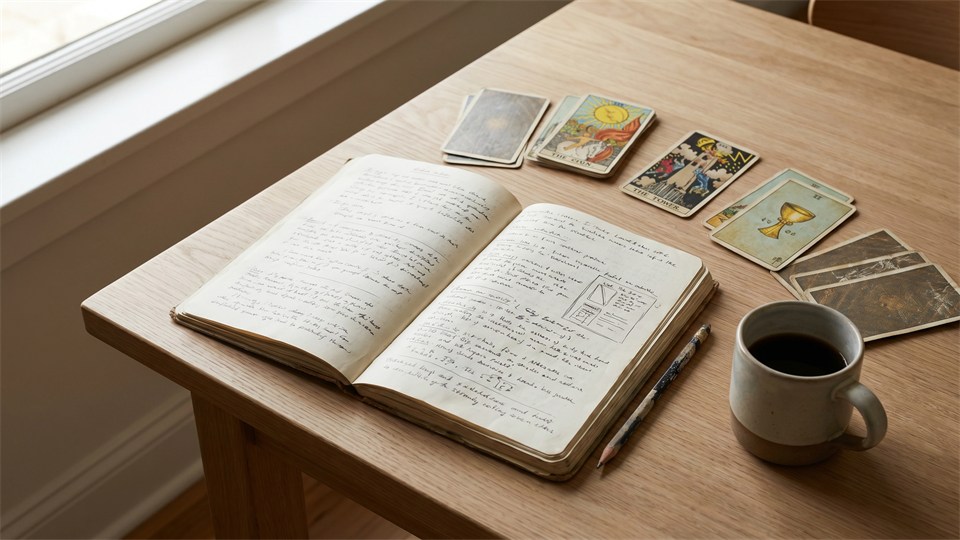


Tarot can seem mysterious at first glance, but a tarot reading does not have to be dramatic or difficult. For beginners, it is first and foremost about getting to know a simple system and practicing how to ask good questions. The cards work as a tool for reflection, patterns, and new perspectives, and you do not need to memorize all the meanings to get started. In this guide, you will get a practical and down-to-earth introduction to how you can do a tarot reading yourself from start to finish, so you can practice with calm, curiosity, and more confidence.
A tarot reading is a method where you draw cards from a tarot deck and interpret them in relation to a question, a situation, or a theme. Some people use tarot spiritually, while others see it as a psychological tool for reflection. Regardless of the approach, the reading typically consists of three parts: a focus, a card draw, and an interpretation. Each card has classic meanings, but it is also important to notice the images, symbols, and your immediate reaction. For example, if you ask about a new job opportunity and draw a card that shows movement or choice, it may point to development, uncertainty, or the need to make a decision. Tarot rarely gives a single definitive answer, but it helps you see a matter from several angles.
The best starting point for a tarot reading is a place where you can sit undisturbed for a few minutes. You do not need candles, crystals, or special rituals, although some people feel that it creates a certain atmosphere. The most important thing is that you can concentrate. Start by thinking about what you would like to explore. An unclear question often gives an unclear reading, so try to phrase something specific such as: “What should I pay attention to in this relationship?” or “What can help me move forward in my current project?” Avoid questions that only invite a yes or no answer, because tarot usually works best when there is room for nuance. You can also write the question down so you keep your focus throughout the reading.
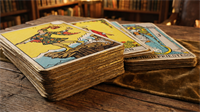
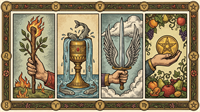
As a beginner, it is an advantage to use the same deck for a while so that you become familiar with the images. Many people start with a classic tarot deck because there are many books and guides for it, but the most important thing is that the illustrations speak to you. Look through the cards one at a time and notice colors, figures, moods, and symbols. You can begin by distinguishing between the Major Arcana, which often deal with larger life themes, and the Minor Arcana, which more often describe everyday life, relationships, thoughts, and actions. You do not need to learn all 78 cards by heart from day one. It is far more useful to build a calm, personal understanding of the deck through repeated use and small notes.
There is not just one correct way to shuffle tarot cards. Some people shuffle for a long time and focus on the question, while others shuffle more briefly and practically. You can use the method that feels natural, as long as the cards are shuffled well. When you are ready, you can either let one or more cards fall out during shuffling, cut the deck into two or three piles, or simply draw from the top. For beginners, it is a good idea to keep the process simple so that the attention stays on the interpretation rather than the ritual. If you are unsure about reversed cards, meaning cards that are upside down, you can choose to ignore them at first. That makes learning more manageable. Later, you can always expand with more layers and more advanced techniques.
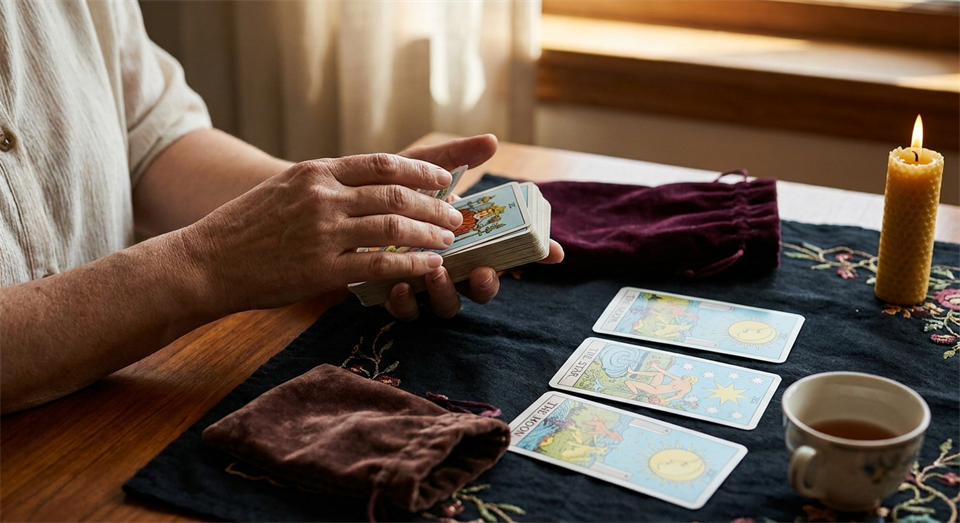
A three-card spread is one of the best ways to learn tarot because it is simple, flexible, and gives enough information without becoming overwhelming. You can use three cards for many purposes, for example past, present, and near future, or situation, challenge, and advice. If you ask about a conflict with a friend, the first card can show the background, the second card can show the central tension, and the third card can point to a constructive way forward. The advantage of three cards is that you see both each card on its own and as part of an overall story. It trains your ability to connect meanings, which is an important part of tarot reading. As you become more experienced, you can try larger spreads, but three cards are more than enough to create a strong beginning.
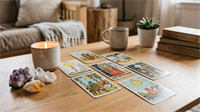
Once you have shuffled the cards and thought about your question, place three cards from left to right. Give each position a clear meaning before you turn the cards over. It can, for example, be: 1) What is happening now? 2) What should I pay attention to? 3) What can help me? Then turn over one card at a time and take a moment to look at the image before looking anything up. What do you notice first? Is the mood heavy, light, fast, or still? Does the figure in the card seem to act, wait, protect itself, or let go? This first intuitive observation is important because it helps you develop your own reading style. After that, you can compare your impressions with the card’s more traditional meanings.
Many beginners think they need to know every single meaning perfectly, but that is rarely necessary. A good interpretation often starts with three simple questions: What does the image show? What does the card traditionally mean? How does it fit the question? For example, if you draw a card associated with balance, in a reading about work it may point to the need to prioritize better, while in a reading about relationships it may be about reciprocity and patience. Also look at the interaction between the cards. If one card shows doubt, another action, and a third clarity, the reading may tell a story about moving from uncertainty to decision. Feel free to write your thoughts down. A tarot journal is a powerful tool because you can later see how your interpretations develop over time.
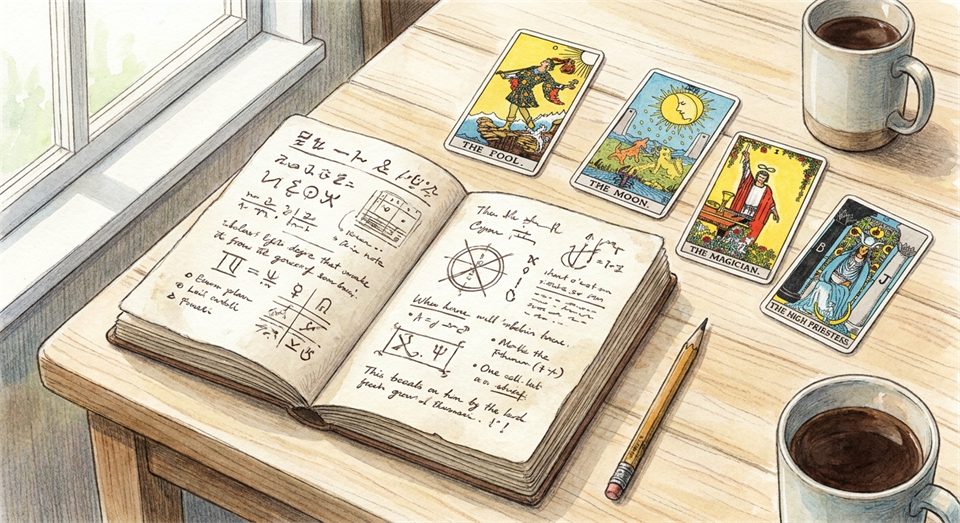
One of the most overlooked steps in tarot is the question itself. If you ask something very broad, such as “What is happening in my life?”, the answer can be difficult to use concretely. Instead, try asking open and action-oriented questions. Good examples are: “What can I learn from this situation?”, “What is blocking me right now?” or “How can I best support myself in the coming period?” That type of question invites reflection and makes it easier to interpret the cards in a practical way. It is also a good idea to avoid using tarot to control other people, for example by asking what another person is thinking exactly or what they are going to do. Tarot is most useful when the focus is on your understanding, your choices, and your way of navigating a situation.
A common mistake is drawing too many cards because you become unsure about the first answer. That often creates more confusion than clarity. Instead, stick to the spread you have chosen and work thoroughly with the cards you already have. Another mistake is looking up meanings immediately without first looking at the images. That can make the reading stiff and mechanical. Give yourself permission to observe and feel the card first. Some beginners also interpret things far too literally. A dramatic card does not necessarily mean that something dramatic will happen; it may just as easily point to an inner process, a fear, or a turning point. Finally, it is important not to use tarot as a substitute for professional help with serious problems. The cards can support reflection, but they should not carry the full responsibility for major decisions.
The best way to become comfortable with tarot is to practice a little and often. You can start with a daily card, where you ask: “What energy shapes my day?” or “What might be helpful for me to remember today?” Write down the card’s name, your first impressions, and how the day actually unfolded. Over time, you will discover that the meanings of the cards become more vivid and personal. You can also practice with small, harmless questions before moving on to the bigger topics. If you read for others, start with friends who are open and curious, and explain that you are still practicing. That creates a relaxed setting. Remember that tarot is not about being perfect, but about becoming better at listening, observing, and connecting symbols with real situations.
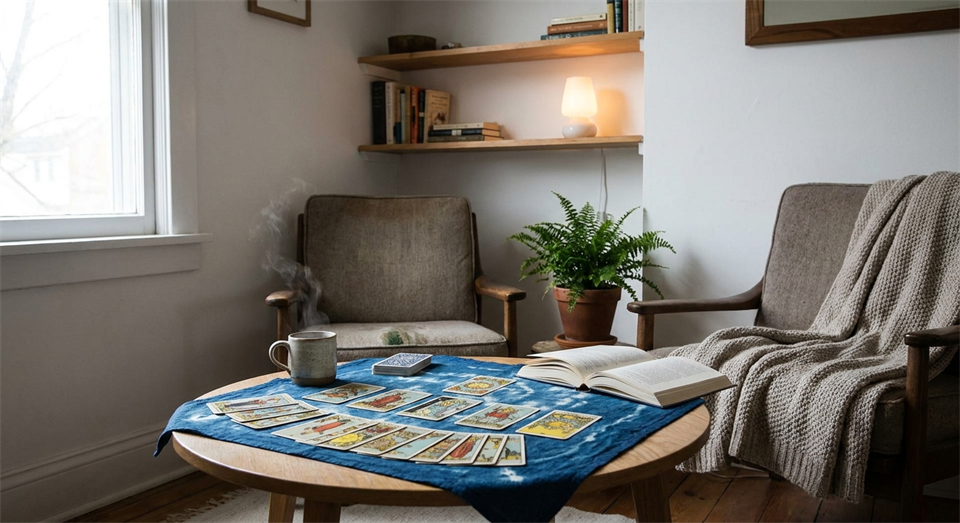
If you want to learn how to do a tarot reading, the most important thing is to start simply. Find a deck you like, ask a clear question, use a three-card spread, and take your time interpreting without stressing. The more you practice, the easier it becomes to see connections between cards, symbols, and the situations you are in. Tarot does not have to be complicated to be meaningful. On the contrary, the best readings often come when you approach the cards with calm, honesty, and curiosity. Start small, write down your experiences, and let your understanding grow little by little. Then tarot becomes not just something you read about, but something you actually learn to use in practice.