

Music has not always been something you could start with a tap on a screen. Today, it feels natural to search for a song, hear it instantly, and move on to the next one. But that has only been the case for a very small part of music history. The road from the first sound recordings to modern streaming has been long, and each technological shift has changed how music was made, sold, and listened to.
This development is not only about devices and formats. It is also about habits. Some media made music something people gathered around in the living room. Others made it portable, personal, and always available. When you understand the journey from phonograph to streaming, it becomes easier to see why today’s music consumption looks the way it does, and why old formats still fascinate many people.
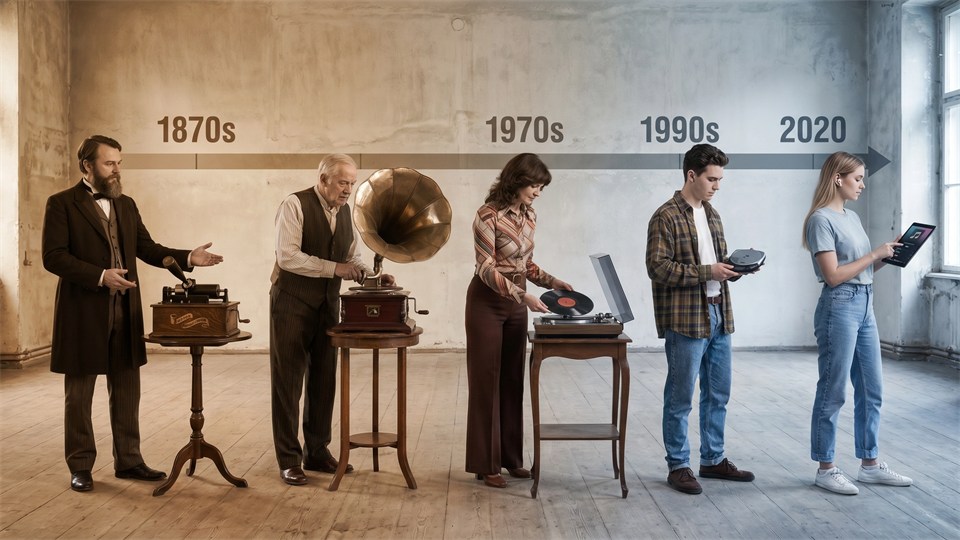
At the end of the 19th century, an invention appeared that changed the history of sound: the phonograph. It made it possible to record and play back sound mechanically. It was a revolution, because before that time music essentially had to be experienced live. If you wanted to hear a song, someone had to sing or play it at that very moment. With the phonograph, sound could suddenly be stored, repeated, and transported.
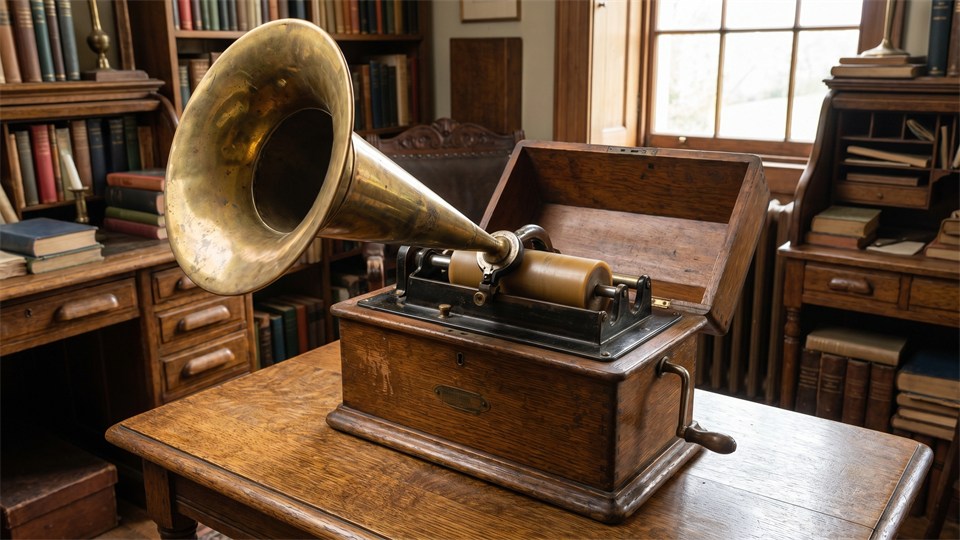
The phonograph used cylinders, where sound waves were etched as physical grooves. When the device played the recording back, a needle followed these grooves and set a diaphragm in motion, recreating the sound. The quality was limited, and the recordings were short, but the idea was enormous. For the first time, a voice or a melody could survive the moment. This laid the foundation for the entire later music industry.
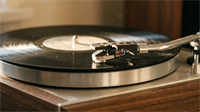
After the phonograph came the gramophone and flat records, which proved more practical than cylinders. Records were easier to manufacture in larger quantities, easier to store, and easier to distribute. This meant that music could be sold to far more people. At the same time, it became possible to build catalogs of artists and releases, so music slowly went from being a local experience to a mass market.
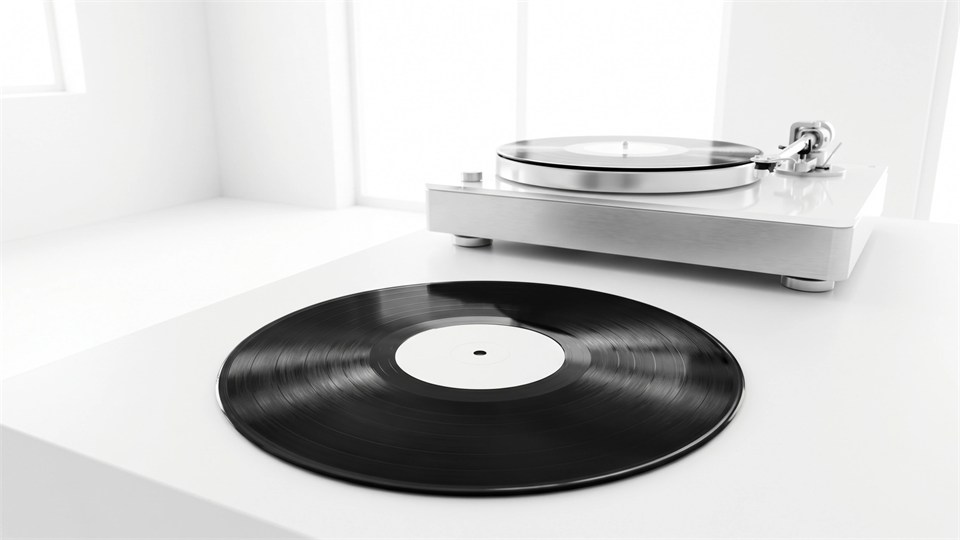
The early records were fragile and had short playing times, but they created an entirely new way of listening. The family could gather around a player and hear the same songs again and again. This also changed the role of the musician. An artist no longer needed only to perform live to reach an audience. A recording could travel far and create fame across cities and countries. In other words, music became both a product and a cultural commodity.
An important part of the development was that certain formats and speeds became more common. As manufacturers and record companies gradually aligned around standards, it became easier for consumers to buy music without fearing that it could not be played at home. Standardization may sound boring, but it was crucial. Without shared formats, music media would have been much more cumbersome and far less widespread.
It was also during this period that covers, labels, and release information began to matter. Music was no longer only sound; it was also packaged, named, and marketed. The physical release became part of the experience. That is an idea that still lives on today, even though much music now exists only digitally.
Although radio is not a storage medium in the same way as records and files, it played an enormous role in the transition between different music formats. Radio made music something that could flow into the home without the listener owning the recording. It was an early form of access rather than ownership, and in that way radio actually points ahead to the logic of streaming.
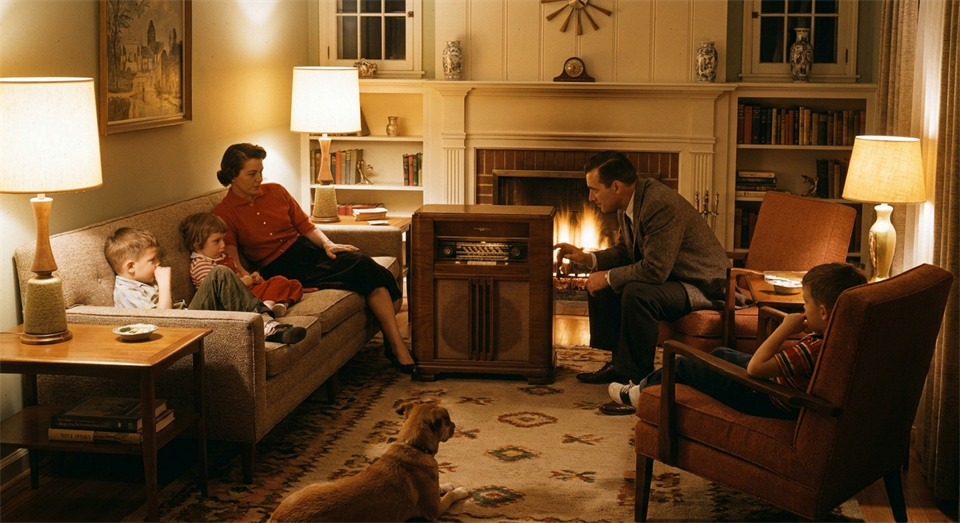
For many people, radio became the most important source of new music. You could discover artists, hear the charts, and be influenced by what the stations chose to play. This gave record companies and media great power, but also made music more shared. Many people heard the same songs at the same time. Radio therefore created tastes, trends, and stars, while also strengthening sales of physical releases.
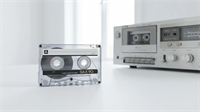
When magnetic tape became widespread, music changed again. Tape made it easier to record, copy, and take music with you. This was an important difference compared with earlier formats, which were often more stationary and fragile. With tape, music became more flexible. You could record speeches, radio programs, or your own collections, and that gave the user more control over the listening experience.
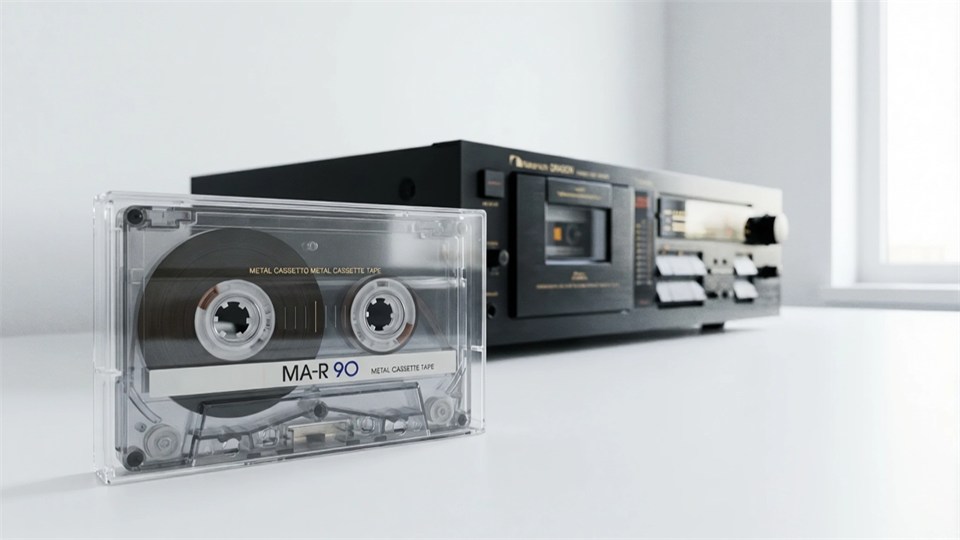
Portability became even more important when smaller players made it possible to listen on the go. Music moved out of the living room and into everyday life. People could hear their favorite songs on the way to work, during walks, or alone in their room. This strengthened the idea of music as something personal. Where the record player was often a piece of furniture in the home, the tape player became a companion that followed the user around.
Another important thing about tape was that the listener could make their own collections. This gave a freedom that earlier media had not offered in the same way. You could choose the order, mix artists, and create a personal soundtrack. That may sound ordinary today, but at the time it was a major change. Music became more actively curated by the user, not only by record companies and stores.
This ability to collect, copy, and share music pointed ahead to later digital habits. The idea of playlists, mixed favorites, and personal choices did not begin with streaming. It was largely prepared by the flexibility of tape. So the technology changed not only sound quality, but also the way people thought about music.
When the CD emerged, digital sound truly became a mass market. Instead of analog grooves, the CD used digital data that could be read with a laser. This provided clean and stable playback without the same kind of wear that many knew from older media. Consumers experienced the CD as modern, practical, and often more convenient than earlier formats. It was small, easy to change, and easy to skip between tracks on.
The CD also changed expectations of sound quality. Many began to associate digital sound with clarity and precision. At the same time, reissues of older albums became popular, because record companies could sell the same music in a new format. For a period, the CD became the dominant music medium in large parts of the world. Music stores grew, collections filled shelves, and the album format stood strong.
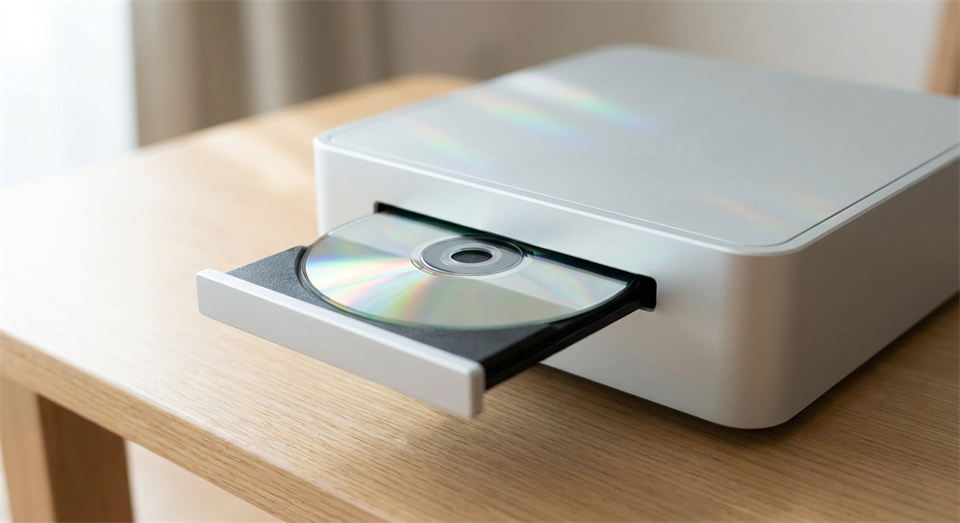
The next major shift came when music became files. Compressed formats such as MP3 made it possible to store many songs in relatively little space and share them quickly over the internet. It was a dramatic break with the idea of music as a physical product. Now a song could be moved between computers, stored on small devices, and organized in large digital libraries without shelves, covers, or discs.
For the listener, this primarily meant convenience. You could carry hundreds or thousands of tracks with you on a single device. For the industry, it created both opportunities and problems. Distribution became cheaper, but control became more difficult, because copying and sharing became so easy. As a result, this period was marked by conflict between technological freedom and the desire to protect the income of artists and companies.
The digital file also made it easier to choose individual songs rather than entire albums. This changed listening habits noticeably. Where many previously bought a whole album to get a few favorites, you could now focus on individual tracks. This affected sales, charts, and the way artists planned releases. A strong single could become even more important than before.
At the same time, the music library became more searchable and faster. The user could sort by artist, genre, year, or mood. So music did not just become digital; it also became data that could be organized and found in new ways. This is an important part of the explanation for why the transition to streaming later felt so natural.
Streaming perhaps marks the biggest change in modern music consumption. Instead of owning records, CDs, or files, many now pay for access to enormous catalogs. Music does not necessarily sit on the user’s own device, but is delivered continuously via an internet connection. This makes it possible to hear almost anything, almost anytime, without thinking about storage space or the size of the collection.
The advantage is obvious for beginners and ordinary listeners. You can discover something new immediately, switch between genres, and get recommendations based on previous choices. Streaming has made music more accessible than ever before. At the same time, it has changed the value of the individual release. When millions of songs sit side by side in the same app, attention becomes a scarce resource, and the competition for the listener’s time becomes intense.
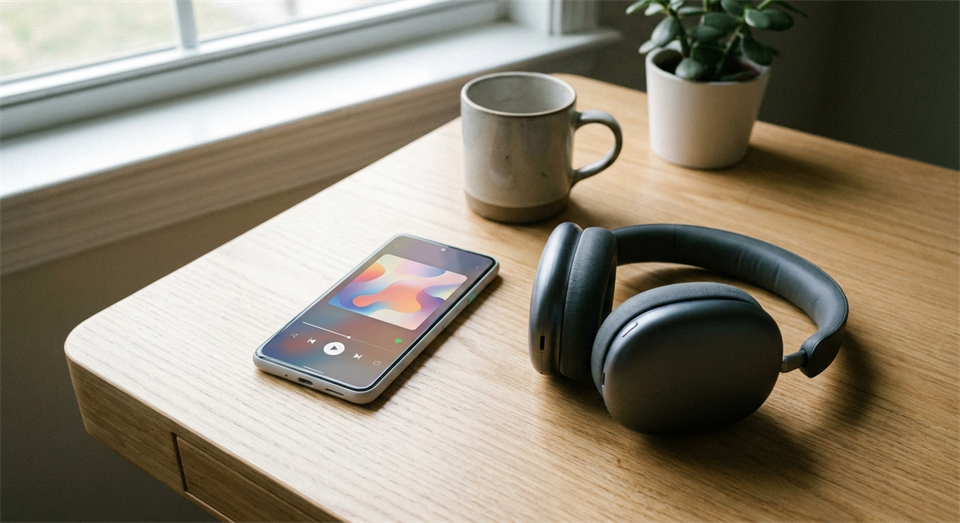
An important part of streaming is that the platforms do not only play music, but also suggest it. Algorithms analyze listening history, popular patterns, and similar artists to recommend new songs. This can be useful, especially for someone who wants to discover more music without searching for long. But it also means that the platform gains great influence over what gets heard.
Playlists have taken on a central role in this context. Many no longer listen only to albums in a fixed order, but choose mood-based or activity-based lists, such as relaxing music, workout music, or background music for work. This shows that streaming is not just a new format. It is a new way of using music in everyday life.
The development from phonograph to streaming has brought enormous advantages. Music has become easier to find, cheaper to access, and more mobile than ever before. More people can discover more artists, and new releases can reach a global audience in a matter of seconds. For the listener, it is hard to overlook how practical today’s solutions are compared with the heavy and limited media of earlier times.
But something has also been lost along the way. When music becomes invisible and always available, it can feel less tangible. The physical collection, the cover art, and the feeling of owning an album matter less. Some also miss the slower kind of listening, where you sat down with one release and gave it time. Streaming gives freedom, but it can also make the experience more fleeting and less focused.
The journey from phonograph to streaming shows that music media have constantly shaped our relationship with sound. The phonograph made recording possible, the record made music a product, radio made it shared, tape made it personal, the CD made it digital for the masses, and files as well as streaming made it almost limitless. Each step has changed technology, industry, and listening habits.
Even though streaming dominates today, the
old formats have not entirely disappeared from interest. They remind us that music is not only about content, but also about the way we encounter it. When you look at the entire development as a whole, it becomes clear that the history of music media is also the history of how people want to own, share, discover, and experience music.