

Vinyl records have experienced a significant resurgence, even in a time when most music can be streamed in seconds. For many, vinyl is not just about nostalgia, but about a special way of listening. A record is physical, visible, and demands attention. You choose an album, take it out of the sleeve, place it on the turntable, and often listen more consciously than with digital playback running in the background. For beginners, however, vinyl can seem a little mysterious. What is the difference between the formats, why do some records crackle, and what do you actually need to get started? In this guide, we go through the most important things about vinyl records in simple and practical language.
A vinyl record is an analog audio medium in which sound is engraved as tiny grooves in a round disc made of plastic material. When the record is played, a stylus follows the grooves and converts the small movements into electrical signals, which eventually become sound in your speakers or headphones. What makes vinyl special is that the sound is not stored as files or numbers, but as physical information in the material. That is why many people talk about vinyl as a more tangible medium. Records come in several sizes, but the most common are 7, 10, and 12 inches. Most albums are released on 12-inch LPs, while singles are often found as 7-inch records. The format combines music, design, and collector culture in a way that many find appealing.
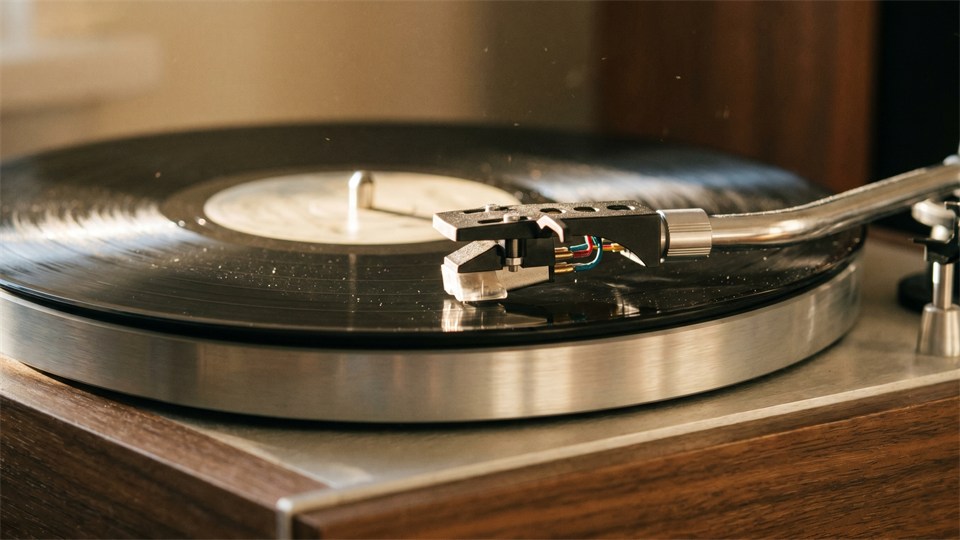
Playing vinyl is based on a mechanical process that is simple in principle but sensitive in practice. The record rotates on the turntable platter at a fixed speed, typically 33 1/3 or 45 revolutions per minute. The cartridge, which sits at the end of the tonearm, holds the stylus that moves through the groove. The microscopic irregularities in the groove cause the stylus to vibrate, and these movements are converted into a signal. That signal is very weak, so it must be amplified through a phono stage before being sent on to a regular amplifier or active speakers. If one link in the chain is set incorrectly, the sound can become harsh, quiet, or distorted. That is why proper setup matters more with vinyl than with many digital solutions, where most things work automatically from the start.
A basic vinyl setup typically consists of a turntable, a cartridge, a phono stage, and a set of speakers. Some turntables have a built-in phono preamp, which makes them easier for beginners to use. The cartridge can be either moving magnet or moving coil, with the former often being the most common in affordable systems. The tonearm must be properly balanced so that the tracking force matches the cartridge. If the force is too low, the stylus may skip or track poorly. If it is too high, both the record and the stylus can wear out faster. The platter itself and the mat under the record help with stable rotation and damping vibrations. Even small differences in the components can affect the experience, but for most beginners, the most important thing is to choose a stable and well-adjusted system rather than chasing expensive specialty parts.
Vinyl records come in several formats, and that can be confusing at first. LP stands for long play and is usually a 12-inch record played at 33 1/3 revolutions per minute. It is the classic album format, typically with music on both sides. A single is often a 7-inch record played at 45 revolutions per minute and contains one or two tracks. There are also EPs, which fall between a single and an album in length. Some releases are pressed on colored vinyl, transparent vinyl, or picture discs, where the appearance is part of the product. Although these can be attractive collector's items, some listeners still choose regular black vinyl because it is often associated with more stable production. In practice, however, quality depends mostly on pressing, mastering, and material control.
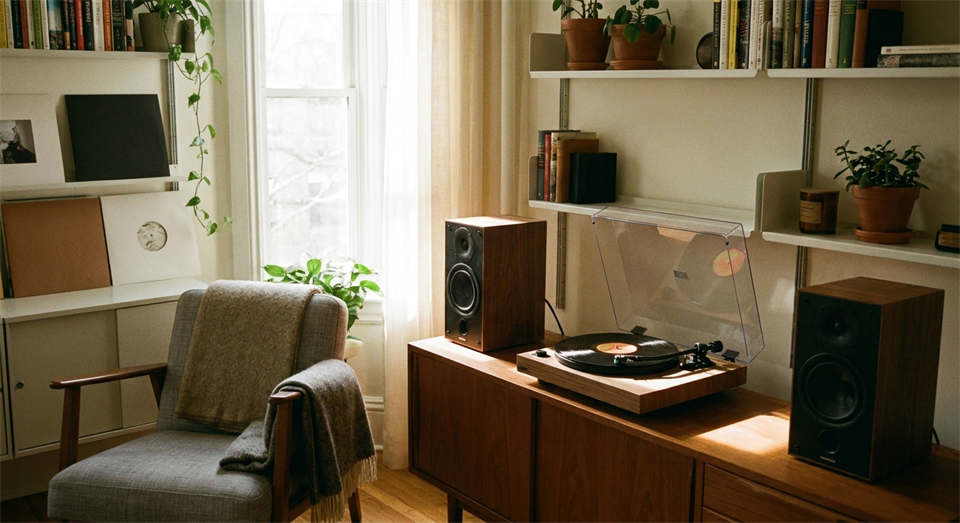
There are many opinions about sound quality, and vinyl is often described as warm, soft, or lively. Part of the explanation lies in the analog playback, but also in how music for vinyl is often mastered. Some releases receive less aggressive treatment than digital versions, and that can provide a more pleasant listening experience. At the same time, the playback itself adds small characteristics such as light background noise, the stylus's contact with the groove, and variations in the mechanics. For some, these are flaws; for others, they are charm. It is important to understand that vinyl does not automatically sound better than digital formats. A poor pressing on an expensive system can sound weaker than a good digital edition. But many listeners appreciate the combination of sound, ritual, and physical presence, which together creates a different experience.
Crackling sounds are often associated with vinyl, but they are not a requirement for the experience. A clean, well-pressed record played with a good stylus can sound surprisingly quiet. Noise often arises because of dust, static electricity, scratches, or wear from incorrect playback. If a record has previously been played with a worn stylus or incorrect tracking force, the grooves can suffer permanent damage. That is why used vinyl is an area where visual condition and the seller's description matter a great deal. Many beginners think that all old records automatically have poor sound, but that is not the case. A well-kept older release can sound excellent, while a new record can have production defects. Care and proper handling make a big difference, both for the sound right now and for how long the collection stays in good condition.
If you want to start with vinyl, you do not need to begin with a complicated or expensive system. The most important thing is to choose a turntable that keeps stable speed, has a decent cartridge, and allows for proper setup. Many people choose a model with a built-in phono stage because it makes connection easier. Avoid overly simple solutions where the speaker and turntable are combined in a very lightweight construction, as they often produce weak sound and can treat records harshly. It is better to buy fewer records at first and spend a little more on a sensible setup. Choose some albums you really want to hear several times, because vinyl is best suited to intentional listening. It is also a good idea to learn the most basic habits from the start, such as handling records by the edge and putting them back in the inner sleeve after use.
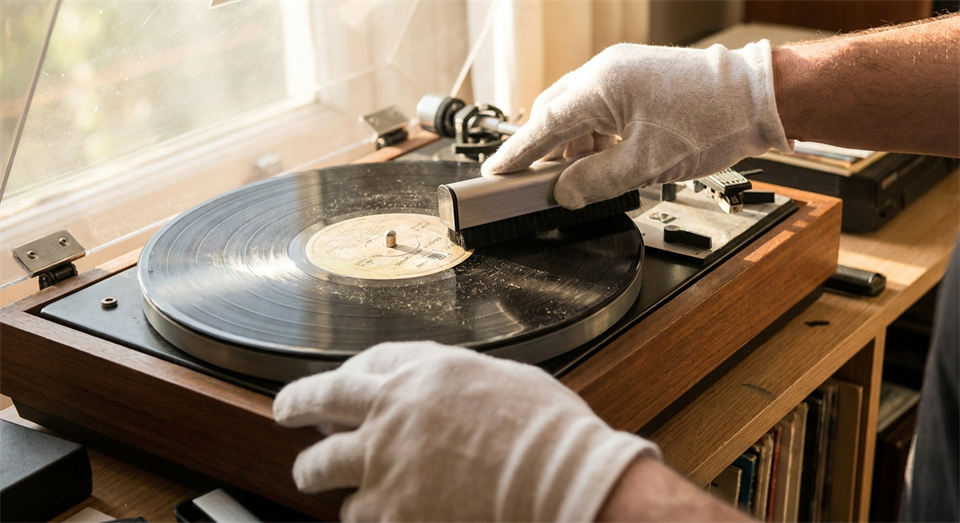
Vinyl records require more care than digital music files, but fortunately the maintenance is simple. Records should be stored upright, not lying in tall stacks, because weight and heat can cause them to warp. They should be kept dry, clean, and away from direct sunlight. High heat can deform the record, and moisture can damage sleeves and inner sleeves. Feel free to use anti-static inner sleeves if the originals are worn or dusty. Before playback, you can remove loose dust with a carbon fiber brush, and more thorough cleaning can be done with special cleaning fluids or washing systems. The stylus itself must also be kept clean, as dirt on the stylus affects both sound and wear. A good habit is to clean lightly and often instead of waiting until the records are visibly dirty. Small routines improve the vinyl experience and protect the investment over time.
The simplest rule is to avoid touching the grooves. Hold the record by the edge and possibly on the label in the center when taking it out and putting it back. Fingerprints contain grease and dirt that can settle in the grooves and attract more dust. When taking a record out of the sleeve, do so calmly and without bending it unnecessarily. Also make sure that the turntable stands on a stable surface so that vibrations from the floor or furniture do not interfere with playback. If you move the system, the tonearm should be locked in place so the stylus is not damaged. Many problems with vinyl are caused not by the format itself, but by small mistakes in handling. The earlier you learn good habits, the easier it will be to keep both records and equipment in nice condition for many years.
An important part of vinyl's appeal is that it turns music into a physical experience. The cover is larger than on other formats and provides space for images, lyrics, and design that become part of the listening experience. Many people appreciate flipping through the collection, reading credits, and discovering details about production, musicians, and artwork. Vinyl also encourages listening to an album as a whole. When you turn the record after side A, you notice the structure of the release and often listen more attentively. That makes the format especially well suited to albums intended as cohesive works. The collector aspect also plays a role. Some go after first pressings, special color editions, or rare releases, while others simply want to own their favorite music in a durable physical format. Both approaches are completely legitimate and can easily be combined.
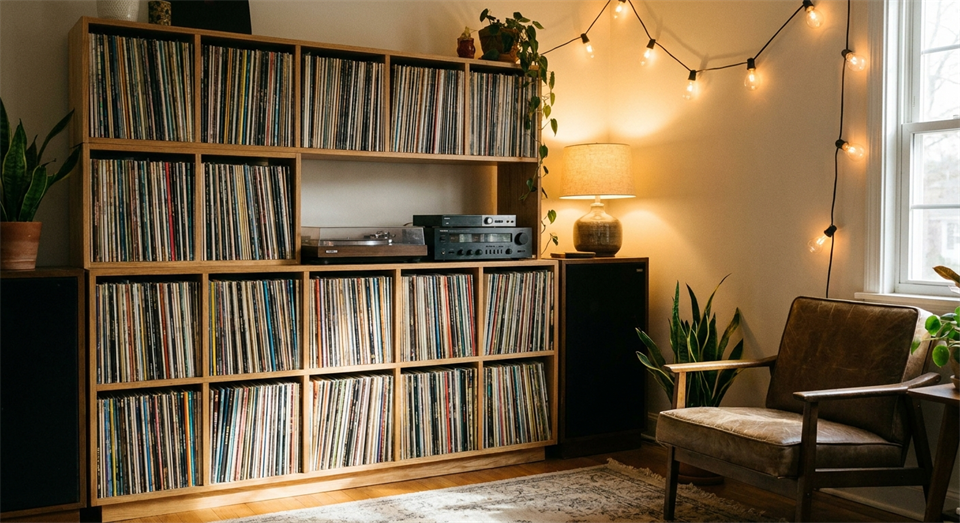
Vinyl has clear strengths, but also obvious limitations. The advantages are the physical experience, the visual presentation, the intentional focus on music listening, and the special sound character that many people love. In addition, a record collection can feel more personal and lasting than a digital playlist. But vinyl requires space, care, and patience. Records take up room, equipment must be adjusted, and playback is less practical than streaming. You cannot easily jump between a hundred albums with a single click. At the same time, both records and equipment can be relatively expensive. For some, that is precisely part of the charm, because it makes the music feel more present. For others, it will be impractical. Vinyl is therefore not necessarily a replacement for digital formats, but often a supplement that offers a different way of experiencing music.
Vinyl records are more than an old music format that has survived by chance. They offer a special combination of sound, craftsmanship, design, and listening ritual that continues to appeal to new generations. For beginners, the most important thing is not to know every technical detail from day one, but to understand the basic principles: how the record works, what equipment is required, and how to take good care of both records and stylus. With a simple, sensible setup and some good habits, vinyl can be a very satisfying way to listen to music. Whether you are curious about sound quality, the joy of collecting, or simply want a more focused music experience, vinyl is a format that rewards attention and gives music a clear physical place in everyday life.