

Cassette tapes were for many years one of the most common ways to listen to and record music. Before streaming, smartphones, and large music libraries in the cloud, there were small plastic cassettes with magnetic tape inside that could be played in home stereo systems, car radios, and portable players. For many people, cassette tapes were not just an audio format, but also a practical and personal way to collect music. You could buy albums, record from the radio, or make your own mixed tapes for friends and family.
Although cassette tapes are now an older medium, they still hold a special place in music history. They are easy to understand, relatively simple in construction, and interesting because they show how analog sound works in practice. In this article, we take a closer look at what cassette tapes are, how they work, what strengths and weaknesses they have, and why they still attract interest from collectors, music fans, and curious beginners alike.
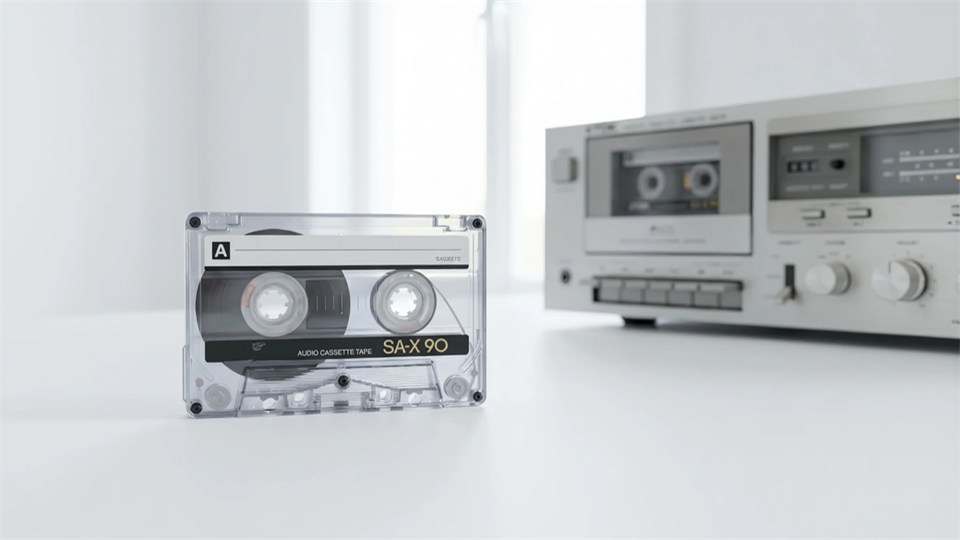
A cassette tape is an audio medium consisting of a thin magnetic tape enclosed in a small plastic cassette. When the tape moves past the player's read heads, the magnetic patterns on the tape are converted into electrical signals, which become sound in speakers or headphones. The format is often called the compact cassette because it was developed as a smaller and more user-friendly solution than earlier tape formats.
A typical cassette has two sides, A and B. When one side has finished playing, you turn the cassette over to hear the rest. This simple design made the medium easy to use in everyday life. Cassette tapes came in different lengths, for example 60 or 90 minutes, and they could be used both for commercially released music and for personal recordings. This made them especially popular with ordinary listeners who wanted flexibility rather than advanced technology.
Cassette tapes became truly widespread in the second half of the 20th century. They became popular because they made sound recording and music playback more accessible to ordinary people. Previously, recording often required larger and more expensive equipment, but with cassette tapes many people could suddenly record speech, music, and radio broadcasts at home. This was an important change, because the listener was no longer only a passive receiver, but could also create their own audio content.
As cassette players became smaller, cheaper, and more portable, the format grew in importance. Portable players made it possible to take music with you, and car radios with cassette functions made long drives more personal. Cassette tapes therefore became closely linked to everyday life, youth culture, and private music sharing. Later, CDs and digital formats took over the market, but the cassette tape's role as a bridge between stationary listening and personal mobile music is still important in music history.
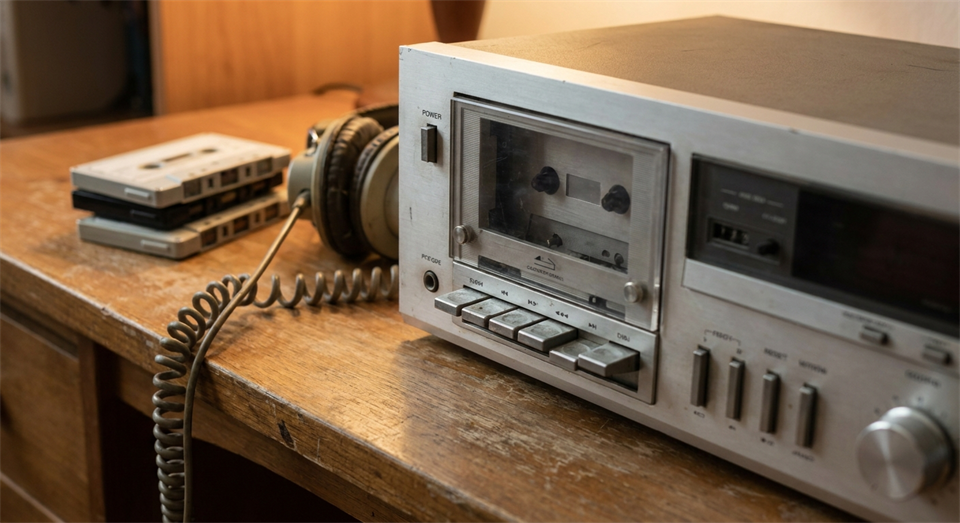
Inside the cassette is a long, narrow plastic tape with a layer of magnetic material. When you record sound, the recorder sends an electrical signal to a recording head, which magnetizes small areas on the tape in a pattern corresponding to the sound waves. During playback, the player's head reads these patterns and converts them back into electrical signals. The signal is then sent on for amplification and ends up as sound you can hear.
It sounds technical, but the basic idea is simple: the sound is stored as magnetic variations on a physical tape. Because the medium is analog, the signal continuously follows the shape of the sound instead of being divided into digital numbers. This is one of the reasons many people describe cassette tapes as warm or soft in tone. At the same time, the analog method also means that small errors, noise, and wear can more easily affect the result.
For a cassette tape to work, the tape must be pulled evenly past the player's heads. This happens through a small mechanism in which wheels and a drive shaft ensure constant movement. If this movement is not stable, the pitch may begin to fluctuate slightly. This is often called uneven speed and can be heard as a slight wavering in the music's pitch, especially on long piano or synth notes.
The player typically has a playback head, a recording head, and an erase function so old recordings can be replaced with new ones. The quality of these parts has a major impact on the sound. A well-maintained player with clean heads and correct adjustment can produce surprisingly good sound, while a worn machine may sound muffled, noisy, or unstable. That is why the experience of cassette tapes is not only about the tape itself, but also about the equipment being used.
Cassette tapes were never the most precise audio format compared with later digital media, but they had other qualities. They could sound pleasant, somewhat rounded, and less harsh than some digital recordings. Many people associate them with a warm, close, and personal sound. This impression is due both to the analog storage and to the small colorations that the tape and player add to the signal. For some, that is a flaw; for others, it is part of the charm.
The format does, however, have clear limitations. There may be tape hiss in the background, especially during quiet passages. High-frequency details can lose some clarity, and if the tape is used a lot, the quality can decline. Repeated playback, heat, dust, or poor storage conditions can damage the tape. Even so, the sound quality was good enough for everyday music listening, and for many people the advantage of being able to record, copy, and take music with them was more important than perfect technical reproduction.
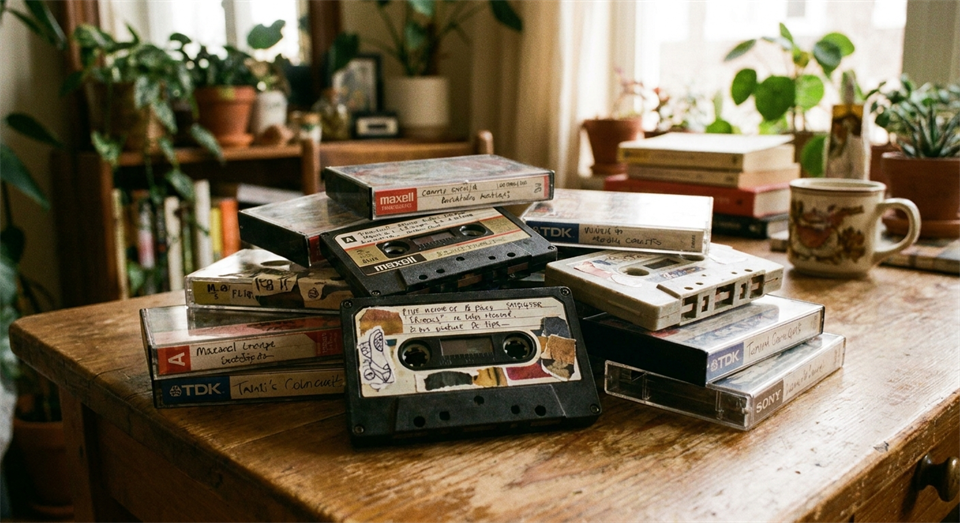
One of the greatest strengths of the cassette tape was the ability to record things yourself. You could record speech, practice music, save ideas, or make collections of favorite songs. This made the format far more personal than many other media. Making a mixtape required time and thought. You had to choose the order, keep track of the length of each side, and often press the record button at exactly the right moment. As a result, a homemade tape was often seen as a carefully made gift or a personal musical greeting.
Mixtapes also had a social function. They were used to share musical taste, introduce new artists, or create a mood for a particular situation, such as a road trip or a party. Today, playlists are made digitally in a matter of seconds, but the slower process of cassette tapes often gave a stronger sense of presence. Each choice was more deliberate, and the handwritten labels, small mistakes, and pauses between songs made the experience unique and human.
Not all cassette tapes are the same. There were different tape types made for different needs and quality levels. Some were good for ordinary speech and everyday use, while others were intended for music with higher demands for detail and dynamics. For the average user, the difference could be noticed in clarity, noise level, and how well the tape handled loud or bright sounds. The choice of tape type ideally had to match the settings of the player or recorder.
Many players also had noise reduction systems. These systems were meant to reduce the characteristic tape hiss, especially during quiet passages. When they worked correctly, the sound could become cleaner and more pleasant. However, if recording and playback did not use the same noise reduction system, the result could sound unnatural or unbalanced. This illustrates an important point about cassette tapes: the format is simple to use, but many small technical details lie behind the best possible sound.
Cassette tapes require more physical care than digital files. If you want to preserve them, they should be stored in a dry, clean place and kept away from strong heat or direct sunlight. Magnetic fields can in the worst case affect the contents, so it is wise to keep them away from equipment that could interfere with the tape. The cassette itself should also be handled carefully, because the shell can crack, and the tape inside can become wrinkled or wound incorrectly.
The player also needs maintenance. Heads, pinch rollers, and other parts can collect dust and residue from the tape. If they are not cleaned, the sound can become worse, and the tape can wear out more quickly. Many people also know the problem of a tape being "eaten" by the machine. This happens when the mechanism does not pull the tape correctly. With a little patience, some tapes can be saved, but it underlines that cassette tapes are a physical medium in which both sound and durability depend on mechanical precision.
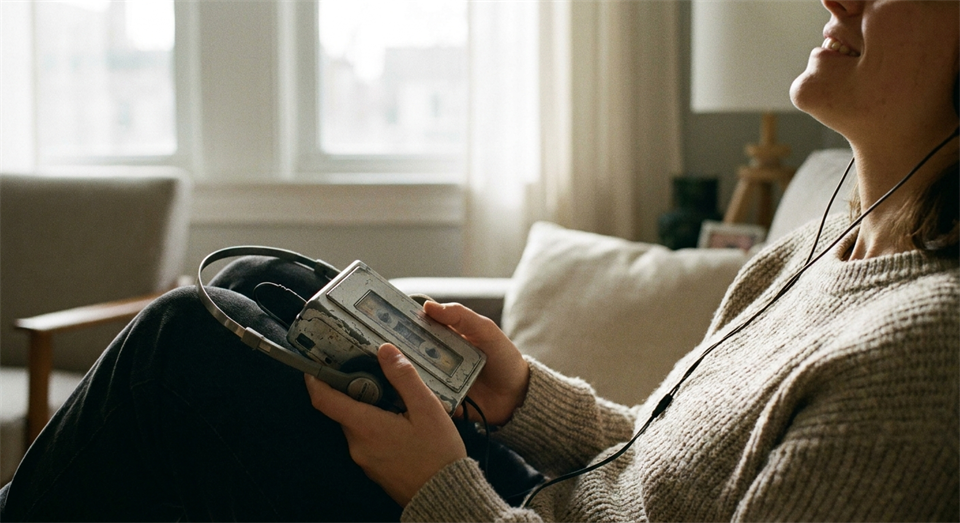
Even in a time of fast access to almost all music, there are still people who collect or use cassette tapes. Part of the appeal is nostalgia, but not all of it. Many appreciate the physical experience of holding the music in their hands, reading the cover, turning the tape over, and listening to an album in the order it was intended. This creates a different rhythm in listening than modern services, where it is easy to skip ahead after just a few seconds.
In addition, cassette tapes have a special aesthetic. Small mechanical sounds, tape hiss, and the limited playing time create an experience that feels more concrete and less invisible than digital playback. Some newer artists also release music on cassette in small editions precisely because the format signals something handmade, intimate, and deliberate. Cassette tapes are therefore not only an old medium, but also a choice that can express a particular way of listening to music.
Cassette tapes are a simple but fascinating audio format that has had great significance for how people have listened to, recorded, and shared music. They made sound more personal and portable and gave ordinary users the opportunity to record and compile music themselves. Although they have technical limitations such as noise, wear, and uneven quality, they also have a character and closeness that many people still appreciate.
For beginners, cassette tapes are a good introduction to understanding analog sound, mechanical playback, and the physical history of music. They show that music is not only about the songs themselves, but also about the media we use to experience them. That is why cassette tapes are still worth knowing about, both as a historical format and as a living example of how technology can shape our relationship with music.