

Most of us rarely think about what is beneath our feet. But beneath the Earth's surface hides a fascinating interior, consisting of several layers with very different properties. To understand why we have mountains, earthquakes, volcanoes, and a protective magnetic field, it is necessary to know something about the Earth's structure. In this article, you will get a thorough yet easy-to-understand overview of the Earth's three most important layers: core, mantle, and crust.
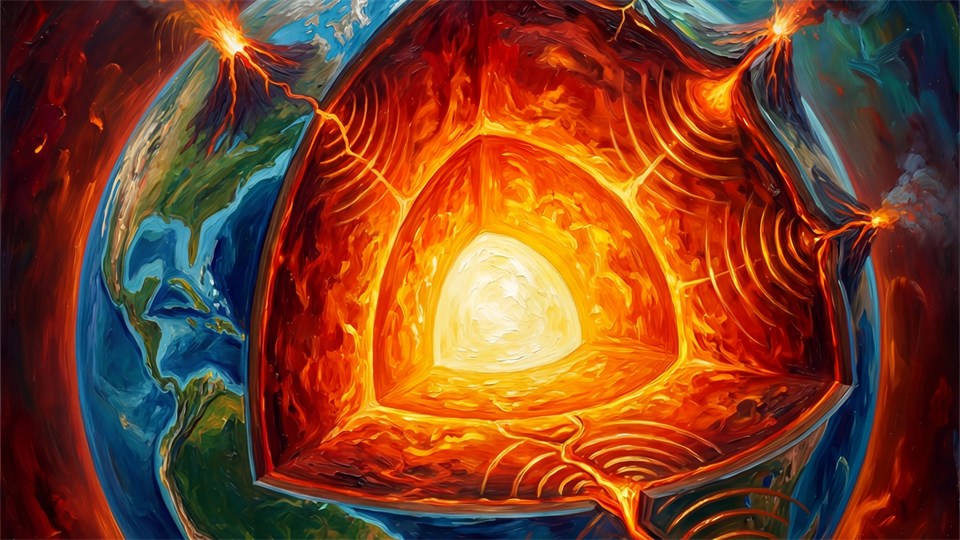
The Earth's structure can be compared to an onion, where each layer has its own function and composition. From the outside in, the Earth consists of:
These layers differ not only in thickness, but also in temperature, pressure, and material. The interaction between the layers is crucial for the Earth's dynamics and the development of life.
The crust is the Earth's thinnest layer and makes up only about 1% of the planet's total volume. Nevertheless, it is incredibly important, because this is where we live, where land, sea, and all ecosystems are found. The crust is not the same everywhere, but is divided into two main types:
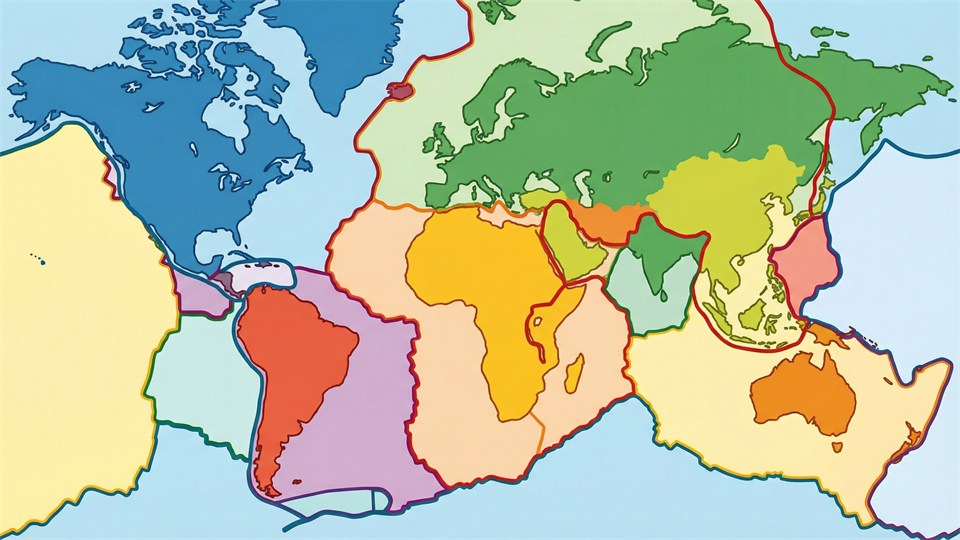
The crust is not one unbroken layer, but is divided into large plates – the so-called tectonic plates. These plates move slowly relative to each other, and this can lead to earthquakes, volcanic eruptions, and the formation of mountains. For example, the Himalayas are formed because the Indian plate collides with the Eurasian plate.
The mantle lies beneath the crust and makes up most of the Earth's interior – in fact, about 84% of the Earth's volume. The mantle is about 2,900 km thick and consists of solid, but tough rocks that can flow very slowly. The temperature in the mantle rises from 500°C near the crust to over 3,000°C close to the core.
The mantle is not completely still. There are convection currents – slow movements of material up and down. These currents transport heat from the Earth's interior toward the surface and are the engine behind plate tectonics, which shapes continents and ocean floors.
An example of the mantle's importance is the Hawaiian Islands. They are formed by volcanic eruptions caused by hot material being pushed up through the mantle from the depths.
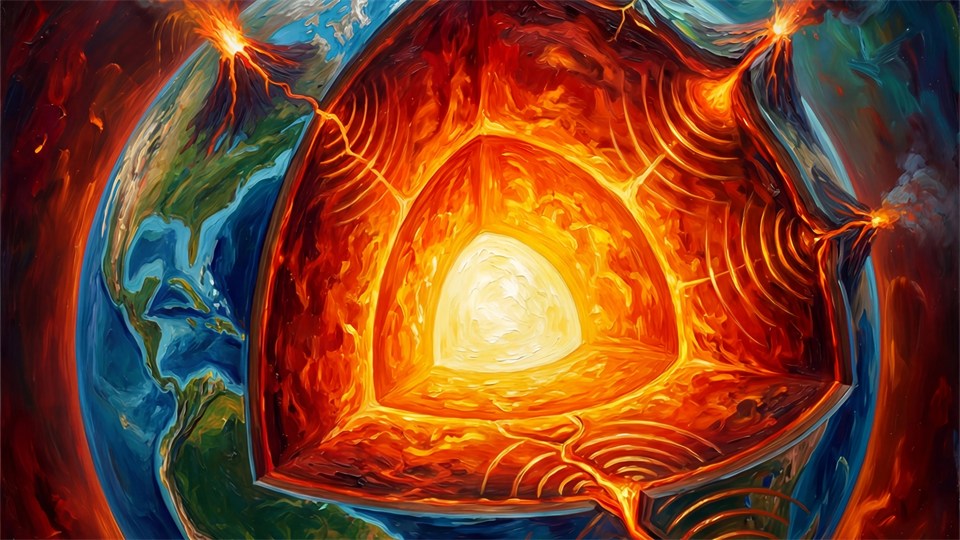
At the center of the Earth is the core, which consists mainly of iron and nickel. The core makes up about 15% of the Earth's volume, but as much as 32% of its mass, because the material is very heavy. The core is divided into two parts:
Scientists believe that the inner core is growing very slowly as the Earth cools. The magnetic field that arises in the outer core is very important for navigation and for preventing the atmosphere from being blown away by the solar wind.
No one has ever drilled all the way through the Earth, so how can we know what is deep down? Scientists use several indirect methods:
Together, these methods give us a detailed picture of the Earth's interior, even though no one has yet been down there.
The Earth's inner layers are enormously important for life to exist on the planet. The crust gives us land, minerals, and resources. The mantle drives processes such as volcanic eruptions and continental drift, which shape the landscape and create new ecosystems. The core forms the magnetic field, which protects all life from dangerous radiation from space.
If the Earth did not have this layering, the planet would be far less dynamic. There would be no continental drift, mountains, or volcanoes – and without the magnetic field, the atmosphere would be at risk of disappearing, which would make life impossible.
The Earth is much more than just the surface we live on. Its inner layers – core, mantle, and crust – work together as a huge and efficient machine that drives the processes we see on the surface. Understanding the layers beneath our feet has given us insight into everything from natural disasters to the development of life and the Earth's history. Knowing the Earth's structure makes us better able to protect and understand our unique planet.