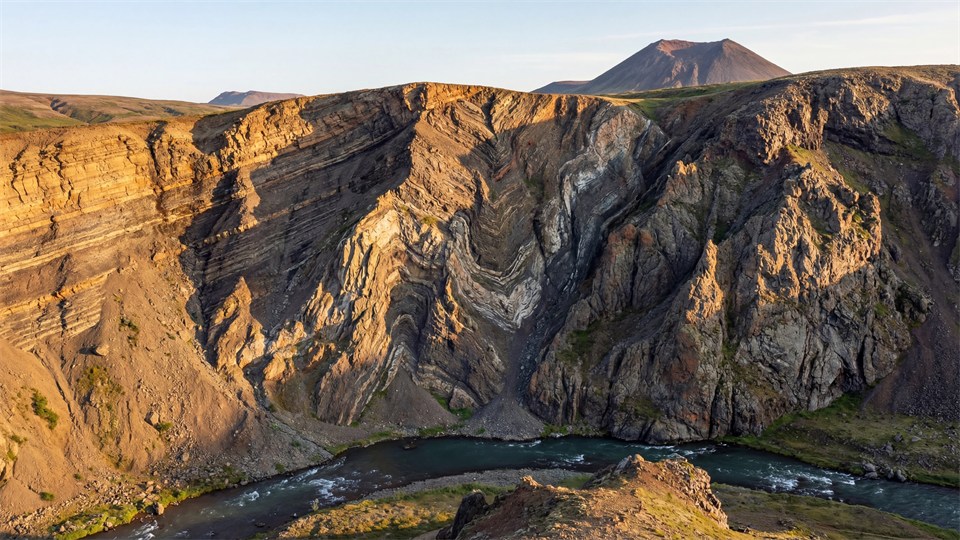


Rocks form the foundation of our planet – they are literally the building blocks of the Earth. Whether you are taking a walk in nature, looking at a mountain, collecting stones at the beach, or building a house, you are surrounded by rocks. But what exactly is a rock, and why are there different types? The answer lies in the geological cycle and the processes that shape the Earth's surface. In this article, we explain the three main types: igneous, sedimentary, and metamorphic rocks – with examples, formation processes, and their significance in nature.
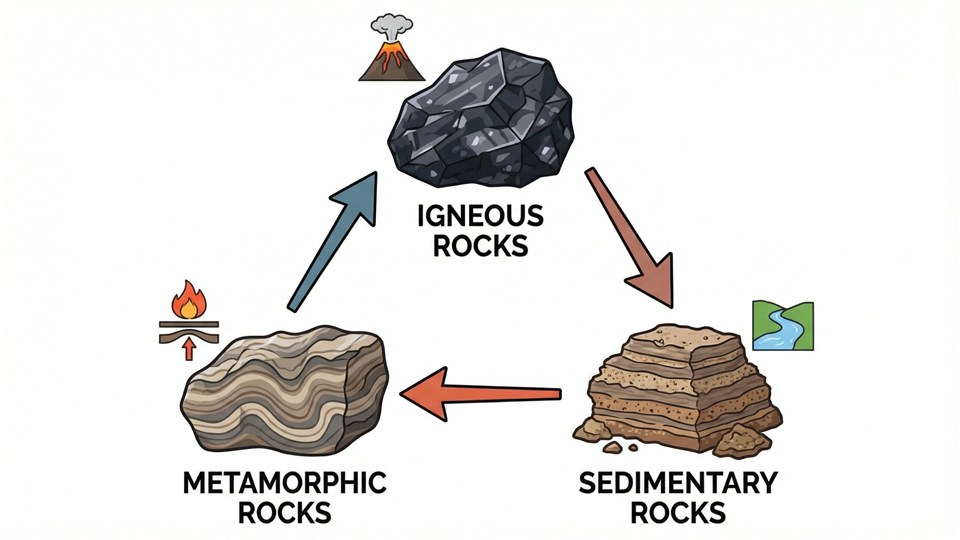
The Earth's surface is not static. Stones and rocks are constantly being formed, broken down, transformed, and reborn in an endless cycle called the rock cycle. This cycle connects the igneous, sedimentary, and metamorphic rocks:
All three types can be transformed into each other through the Earth's internal and external forces – this is why we can find such great variation in rocks and stones all over the Earth.
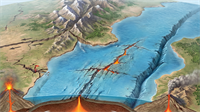
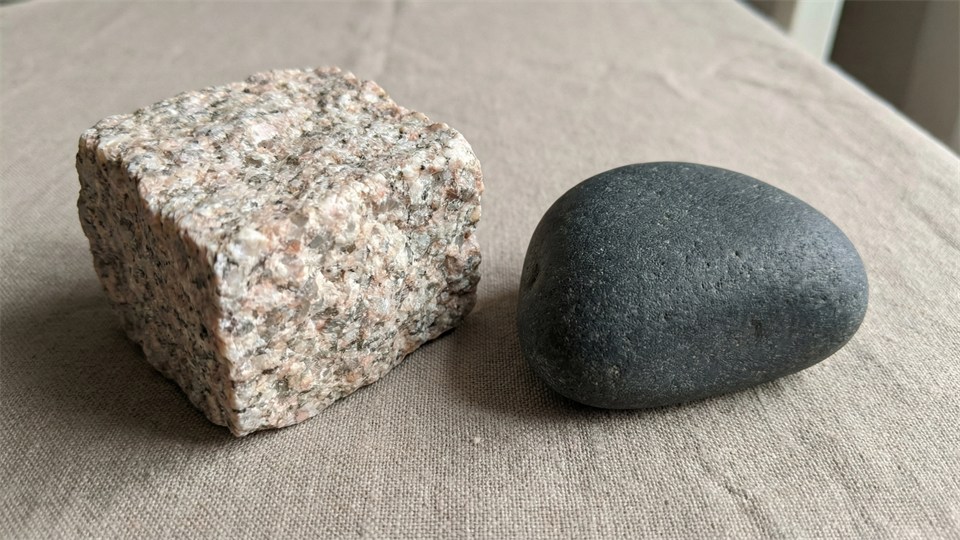
Igneous rocks are the first rocks to form on a young planet. They occur when magma from the Earth's interior cools and solidifies. Magma is molten rock found deep within the Earth, and when it breaks through to the surface as lava (e.g., during volcanic eruptions), new rocks are formed.
Igneous rocks are often very hard and resistant to weather and wind. They therefore form many of the world's mountain ranges and rock formations.
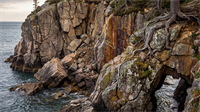
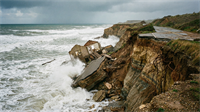
Sedimentary rocks form on the Earth's surface, where wind, rain, ice, and rivers break down existing rocks into small particles. These particles – called sediments – are transported by water or wind and deposited in lakes, rivers, seas, or depressions. Over time, the layers are pressed together and become stone.
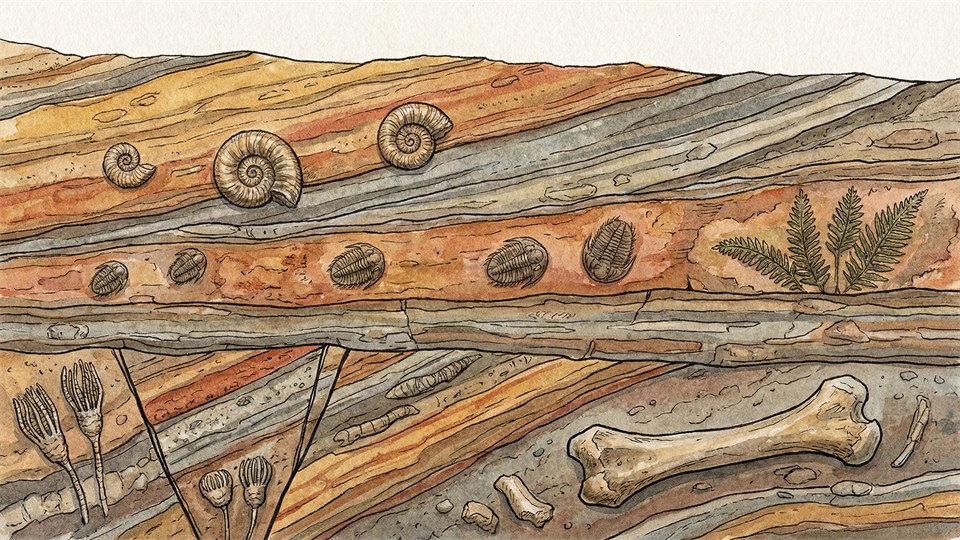
The special thing about sedimentary rocks is that they often contain fossils – remains of plants or animals that were buried in the sediments before they became stone. Therefore, we can use sedimentary layers to understand Earth's history and ancient life.
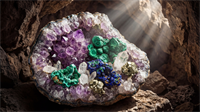
Metamorphic rocks are the result of major changes. They form when an existing rock (igneous or sedimentary) is exposed to high pressure and/or high temperature, typically deep within the Earth's crust. This causes the minerals to recrystallize and form new structures, but without the rock completely melting.
The result is strong, often striped or banded rocks, which can be very different from the original state. Metamorphic rocks are found especially where mountain ranges form or at plate tectonic boundaries.
Rocks are not only fascinating for geologists. They play a role in almost everything we do:
In addition, rocks tell us about Earth's past – how climate, life, and landscape have changed over millions of years.
Rocks are the backbone of all geology. Whether they are formed from solidified magma, compressed layers, or transformed under extreme pressure, they play a crucial role in the Earth's development and our daily lives. Knowing the difference between igneous, sedimentary, and metamorphic rocks gives us the key to understanding both the forces of nature and the materials we surround ourselves with. Next time you pick up a stone, consider what story it might tell about the Earth's inner life.