

DA | EN | DE | FR | ES

What is Geology? Basics of Earth's Structure and the Importance of Geology

naturvidenskab Geologi
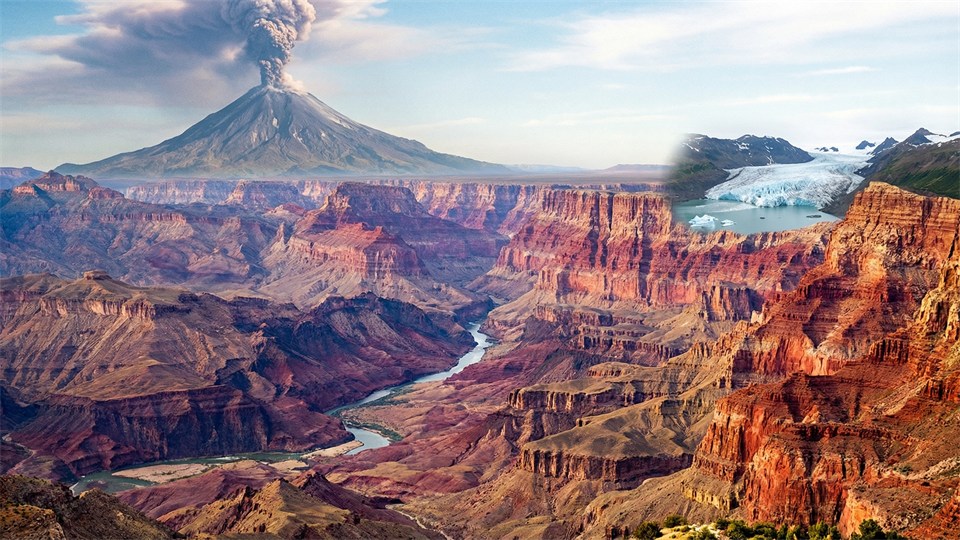
What is Geology? Title Image

Introduction: The Fascinating World of Geology

Geology is the study of the Earth – its structure, materials, processes, and history. Although many may think of geology as the study of rocks and stones, it is much more than that. Geology helps us understand how landscapes are formed, why earthquakes and volcanic eruptions occur, and how the conditions for life on Earth have changed over billions of years. In this article, you will get an easy-to-understand introduction to what geology is, why it is important, and how it shapes our planet and everyday life.

What does geology mean?

The word geology comes from the Greek words "geo" (earth) and "logos" (study). So, geology is the study of the Earth. Geologists investigate everything from tiny minerals to entire continents, and how Earth's internal and external forces have shaped the planet over time. Geology is about understanding both the materials the Earth is made of and the processes that change and transform these materials.

Scientists within geology are called geologists. They often work with everything from mapping rocks and minerals to studying volcanoes, earthquakes, climate changes, and fossils from the past.

The Structure of the Earth and the Fields of Geology

The Earth's Inner and Outer Layers

Geology deals with the entire structure of the Earth from the surface down to the core, which consists of several layers:

  • The crust: The outermost, solid layer where we live. The crust consists of continents and ocean floor.
  • The mantle: Lies beneath the crust and consists of solid but partly plastic rocks.
  • The core: Consists of an outer liquid part and an inner solid part, primarily iron and nickel.

These layers play a major role in Earth's geological processes. For example, mountains are formed when plates in the crust collide, and volcanoes occur when molten rock is pushed up from the mantle.

The Main Fields of Geology

Geology covers many specialties, but the most important areas are:

  • Mineralogy: The study of minerals and their properties.
  • Petrology: The study of rocks and their formation.
  • Paleontology: The study of fossils and ancient life.
  • Stratigraphy: Analysis of layered rocks and Earth's history through the layers.
  • Tectonics: Understanding plate movements and Earth's dynamics.
  • Geochemistry and geophysics: The study of chemical and physical properties in Earth's materials.

Geologists often work across disciplines and use both fieldwork, laboratories, and computer models to understand Earth's processes.

Geologist examining rock layers in the field with a hammer

Geological Processes: Earth's Engine of Change

Internal and External Forces

The appearance of the Earth is constantly changing, both slowly and suddenly. Geological processes are typically divided into:

  • Internal forces: Come from inside the Earth. This includes volcanic eruptions, earthquakes, and mountain formation. These processes happen because the Earth is hot and dynamic inside, and because the plates in the crust move.
  • External forces: Come from the sun's energy, wind, rain, ice, and living organisms. They shape the landscape through weathering, erosion, and deposition – for example, when mountains are broken down into sand and clay.

The interaction between internal and external forces means that landscapes like mountains, valleys, rivers, and coasts are constantly changing. Some changes take millions of years, while others – like earthquakes – can happen in just a few seconds.

Examples of Geological Phenomena

  • Volcanoes: When molten rock (magma) pushes up through the crust and causes eruptions.
  • Earthquakes: Shaking of the ground caused by movements in the crust.
  • Plate tectonics: Continents and ocean floors slowly move on large plates.
  • Fossils: Traces and remains of ancient animals and plants, preserved in stone.
  • Glaciers: Large masses of ice that shape the landscape through movement.

All these phenomena are studied by geologists, and they help us understand Earth's past, present, and future.

Geology in Everyday Life and Society

Geology is not just theory – it has great significance for our daily lives and society. Here are some examples:

  • Raw materials: Everything from metal, oil, natural gas, gravel, and sand is extracted using geological knowledge.
  • Water supply: Geologists find and protect groundwater, which we use for drinking water.
  • Construction: When we build roads, bridges, and houses, it is important to know the properties of the soil.
  • Risk assessment: Knowledge about earthquakes, volcanoes, and landslides helps protect people and infrastructure.
  • Climate and environment: Geological data is used to understand climate change, sea level rise, and pollution.

Many modern technologies – such as electronics, batteries, and wind turbines – depend on metals and minerals that can only be found and extracted thanks to geological knowledge.

The History and Methods of Geology

The Emergence of Geology

Geology is a relatively young science. It was only in the 18th and 19th centuries that scientists began to systematically study Earth's layers and fossils. They realized that the Earth must be much older than previously thought, and that landscapes are constantly changing. This realization laid the foundation for modern natural science.

The Geologist's Toolbox

Geologists use many different methods to study the Earth:

  • Fieldwork: Studies in nature, where one observes, measures, and collects samples.
  • Laboratory analyses: Examination of minerals, rocks, and fossils under a microscope or with chemical tests.
  • Geophysics: Use of measurements such as seismics (sound waves), gravimetry, and magnetism to "look" into the Earth.
  • Mapping: Drawing geological maps that show the distribution of different rocks and structures.
  • Computer models: Simulations of, for example, earthquakes, erosion, or climate development.

The combination of these methods makes it possible for geologists to reconstruct Earth's history and predict future changes.
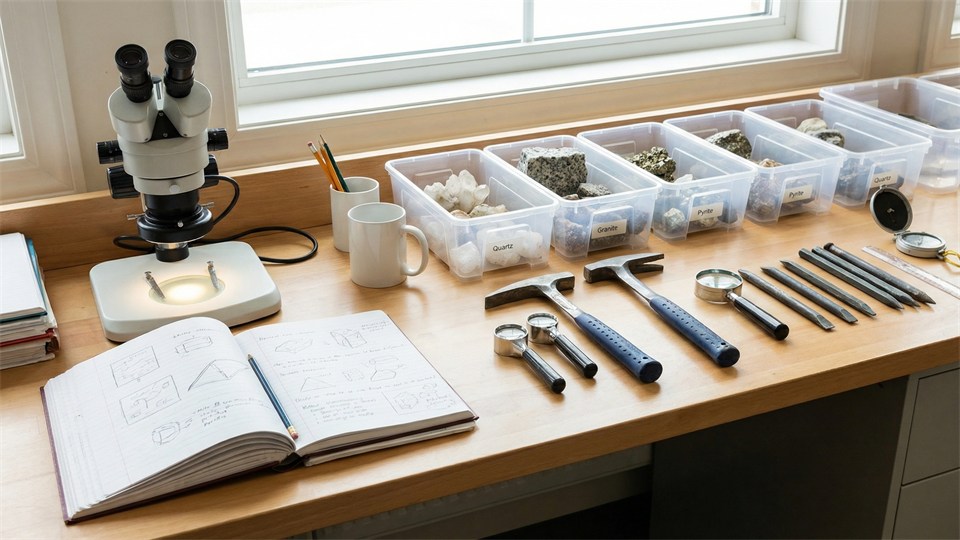
Geological tools and samples in a laboratory

The Importance of Geology for the Future

Knowledge of geology is crucial for many of the challenges the world faces today:

  • Resource management: Extracting raw materials sustainably without harming the environment.
  • Climate change: Understanding Earth's past climate helps predict future changes.
  • Natural hazards: Preparing for earthquakes, volcanic eruptions, and erosion protects people and society.
  • Water supply: Ensuring clean groundwater for a growing population.

That is why geology is one of the most important sciences if we are to understand and take care of our planet in the future.

Conclusion

Geology is the study of the Earth and its eternal changes. From the smallest minerals to the largest mountain ranges – geology helps us understand our planet's past, present, and future. Without geology, we would not be able to find resources, build safely, or protect ourselves from natural disasters. Geology is about reading Earth's history – and using that knowledge to take care of our shared home.


Similar articles

Earth's Inner Layers
Geologi
Earth's Inner Layers
Core, Mantle, and Crust Explained for Beginners
Plate Tectonics and Continents
Geologi
Plate Tectonics and Continents
How Earth's Plates Move
Geological Time: Earth's Primeval Clock
Geologi
Geological Time: Earth's Primeval Clock
How We Read Earth's History Layer by Layer
Weathering: Breakdown of Rocks
Landskabsdannelse
Weathering: Breakdown of Rocks
How rocks and stones turn into soil over time

You might also like

Astrology
Astrologi
Astrology
A Window to the Universe
World History According to KGM.DK
Historie
World History According to KGM.DK
From the Big Bang to Covid
Rosé Wine
Øl og Vin
Rosé Wine
Rosé Wine: From Summer Drink to Serious Wine Experience
USB Sticks
Hardware
USB Sticks
From Type-A to USB-C and Everything In Between