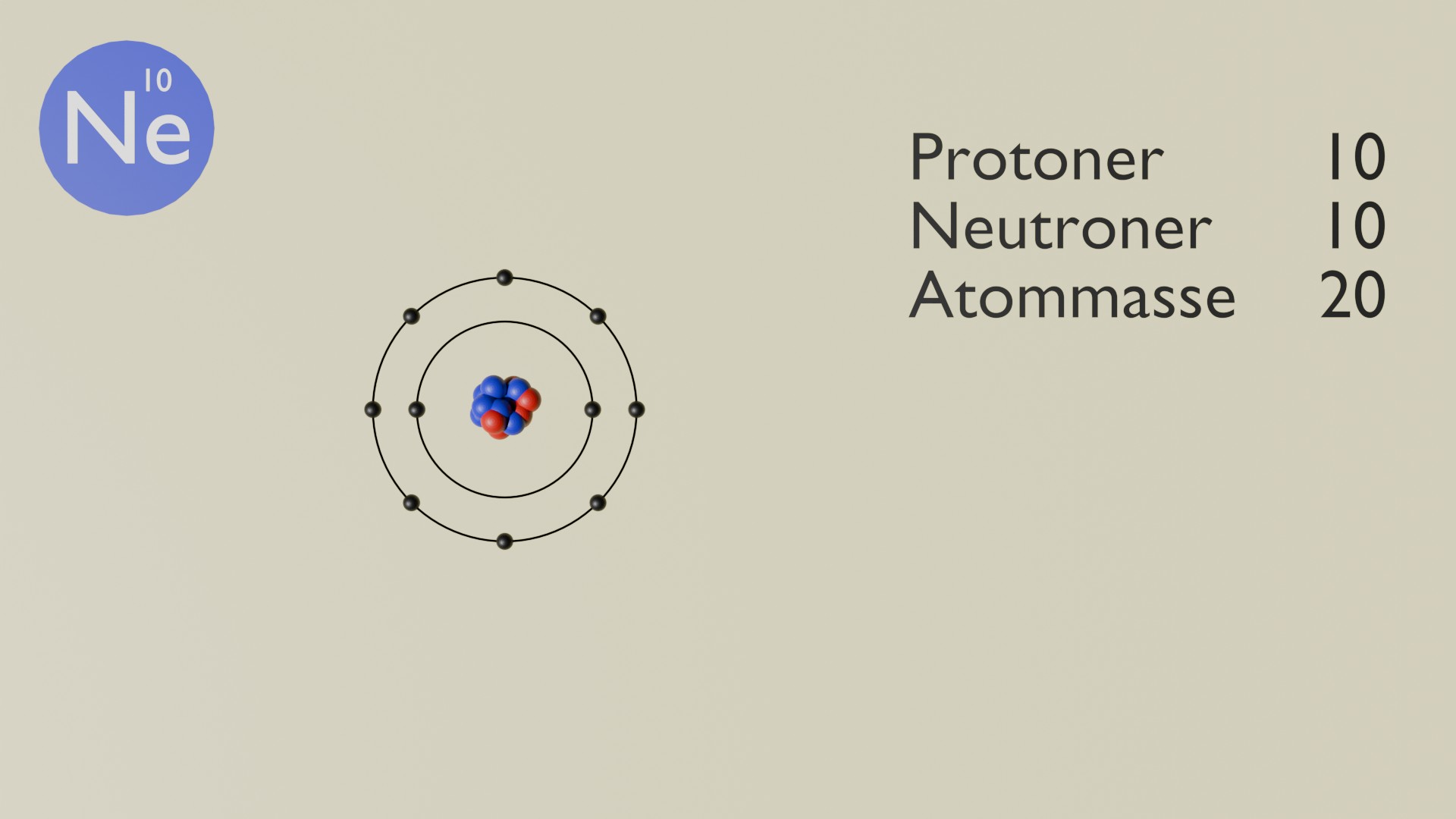
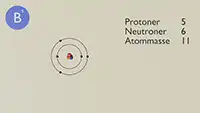
Neon (Ne) is a chemical element with atomic number 10 and belongs to the noble gases in group 18 of the periodic table. Neon is a colorless, odorless, and inert gas, best known for its use in neon signs.
1. Introduction to neon
Neon has 10 protons, typically 10 neutrons, and 10 electrons. It is the second lightest noble gas and makes up a small part of Earth's atmosphere (approx. 0.0018 %). Neon was discovered in 1898 by British chemists William Ramsay and Morris Travers.
2. Physical and chemical properties
Neon is one of the most inactive elements and forms no stable chemical compounds under normal conditions. Like other noble gases, neon has a completely filled outer electron shell and therefore hardly reacts with other substances.
- Boiling point: –246.1 °C
- Melting point: –248.6 °C
- Lighter than air and poorly soluble in water
When neon is exposed to electric current, it emits a characteristic reddish-orange light.
3. Isotopes of neon
Neon occurs naturally as three stable isotopes:
- Neon-20 (²⁰Ne): 90.5 %
- Neon-21 (²¹Ne): 0.27 %
- Neon-22 (²²Ne): 9.2 %
All isotopes are stable and non-radioactive.
4. Industrial applications
Neon's most important uses take advantage of its electrical and optical properties:
| Application | Description |
| Neon signs | Used in advertising signs and decorative lighting; the characteristic orange glow is due to ionized neon. |
| Lasers | Used in helium-neon lasers for measuring instruments and scanning. |
| Coolant | Liquid neon has high cooling capacity and is used in specialized cryogenic systems. |
| Plasma screens and high-voltage systems | Used as a protective gas in electrical devices and in plasma units. |
5. Safety and occurrence
Neon is extracted by fractional distillation of liquid air. It is non-toxic and considered biologically inert, making it safe to handle in closed systems.
Since neon is heavier than helium but lighter than argon, it does not float upwards like helium and is not used for lifting. Its low natural abundance makes it a relatively expensive noble gas.