


The Solar System is the region in space where the Sun's gravity dominates and keeps a multitude of objects in orbit. It includes not only the well-known planets, but also moons, dwarf planets, asteroids, comets, and countless small particles. The center of the Solar System is the Sun, a yellow dwarf star, which makes up over 99% of the system's total mass and provides energy for all life on Earth.
The Sun is a giant ball of hydrogen and helium, where nuclear fusion creates the energy we see as light and feel as heat. Without the Sun, there would be no life on Earth, and the planets would drift aimlessly in the cold universe.
The Solar System contains eight planets, which are divided into two main groups:
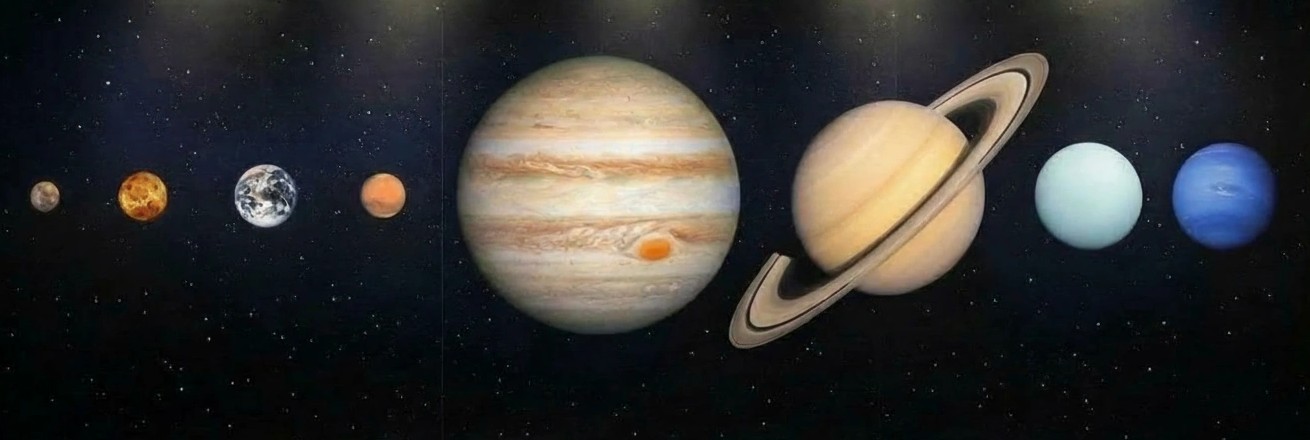
The smallest and innermost planet. Mercury has no atmosphere and is characterized by extreme temperatures and large craters.
A rocky planet almost the same size as Earth, but with a dense and toxic atmosphere that creates extreme greenhouse effects.
The only planet we know that has life. Earth has liquid water on its surface and an atmosphere that protects against harmful radiation.
Known as the red planet because of its iron oxide-rich dust. Mars has a thin atmosphere and signs of past water.
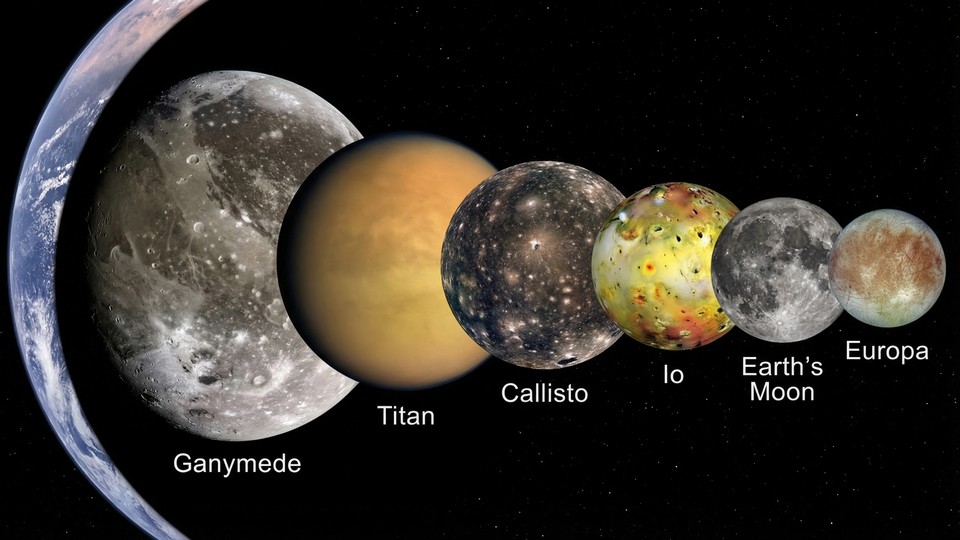
The largest planet in the Solar System. Jupiter is a gas giant with more than 70 known moons – including Ganymede, the largest moon of all.
Known for its spectacular ring system, which consists of ice and rock. Saturn also has many moons, of which Titan is the most famous.
An ice giant that rotates almost sideways. Its atmosphere contains methane, which gives it its characteristic blue-green color.
The outermost planet. Neptune has strong winds and a deep blue color due to methane in its atmosphere.
In addition to the eight planets, there are dwarf planets such as Pluto, Eris, and Ceres. These celestial bodies meet many planet criteria but share their orbits with other objects.
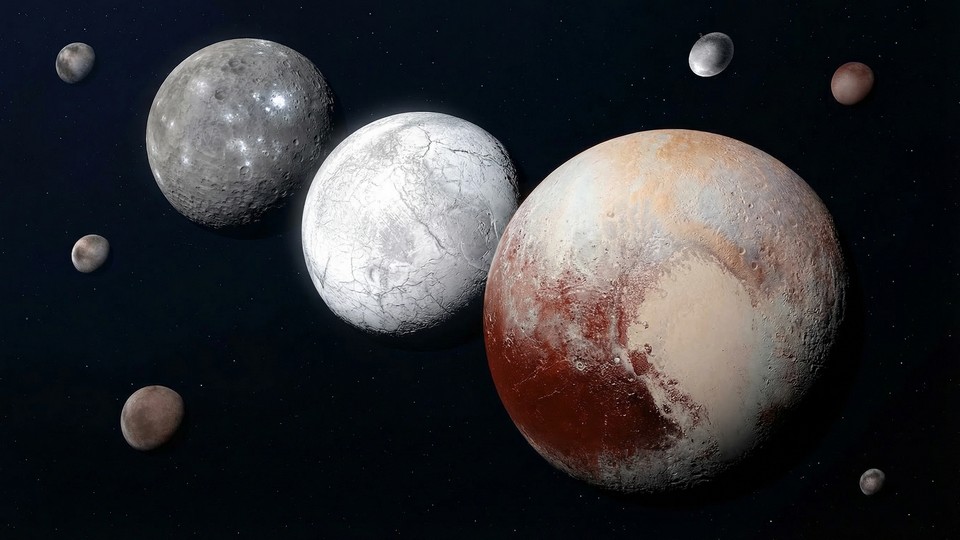
Many planets and dwarf planets have moons. Earth has one – the Moon – which affects tides and the night sky. Jupiter and Saturn have dozens, several of which (such as Europa and Enceladus) are thought to have subsurface oceans and possibly conditions for life.
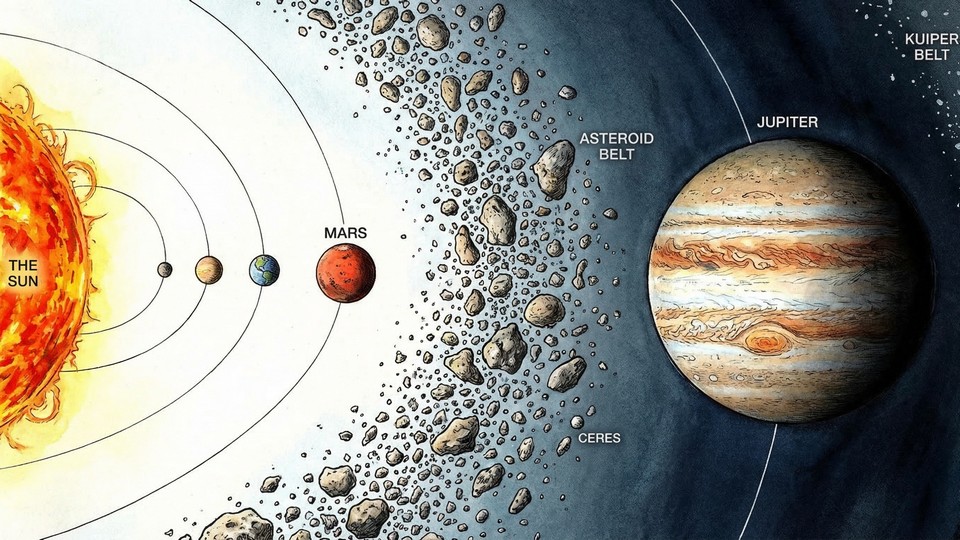
Between Mars and Jupiter lies the asteroid belt, where thousands of rocky objects orbit the Sun. Ceres, a dwarf planet, is the largest object here.
Beyond Neptune's orbit is the Kuiper Belt, where Pluto and many other icy objects orbit. Even farther out lies the Oort Cloud – a hypothetical sphere of billions of comets that surrounds the entire Solar System as a huge outer layer.
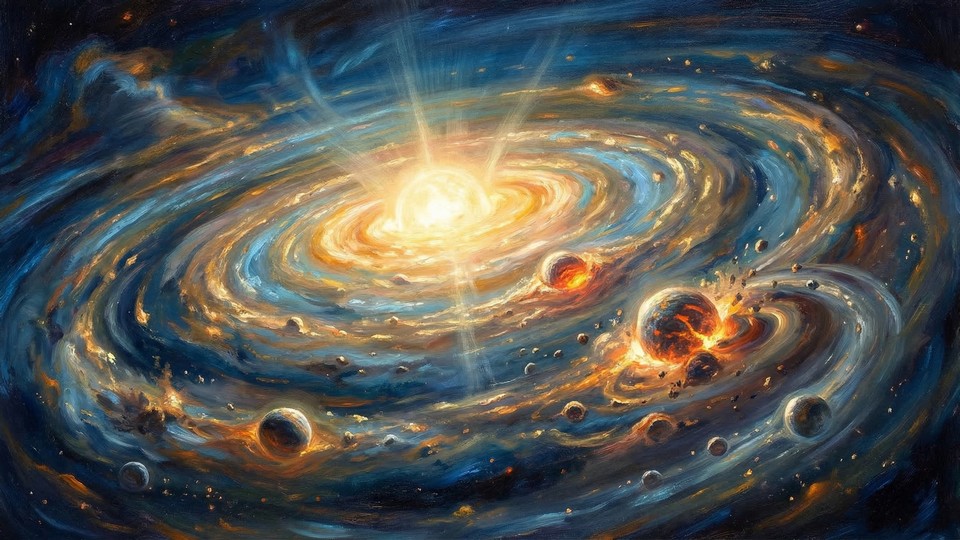
The Solar System formed about 4.6 billion years ago from a rotating cloud of gas and dust – a so-called solar nebula. Gravity caused the cloud to collapse, and the Sun formed at the center. The rest of the material gathered into planets, moons, and smaller objects. This process is often called the nebular hypothesis.
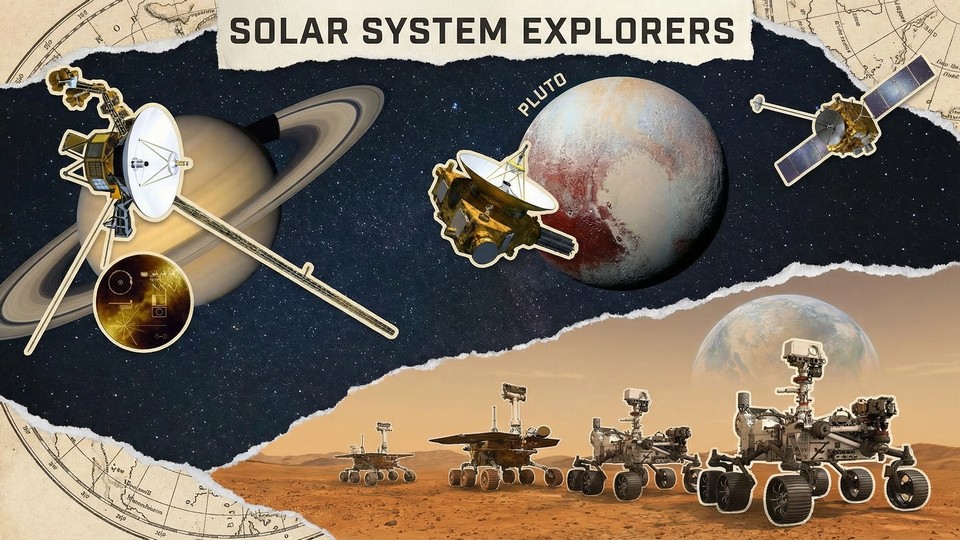
Since the 1950s, humans have sent space probes to almost every corner of the Solar System. Among the most well-known are:
The Solar System extends far beyond the eight planets. Although the boundary is not precise, the Oort Cloud is often considered the outermost limit – about one light year from the Sun. That corresponds to about 9,460 billion kilometers!
Earth's position in the Solar System – in the so-called habitable zone – makes it possible for water to exist as a liquid, which is essential for life. At the same time, the large gas giants protect us from many comets and asteroids that could otherwise threaten life on Earth.