



Darts is a fascinating and social game that combines precision, strategy, and excitement. The most well-known darts games – especially 501 and 301 – are played worldwide, both in pubs and professional tournaments. These variants are the core of darts as a competitive sport. In this guide, you’ll get a complete introduction to 501, 301, and related points games, focusing on rules, scoring, strategies, and tips for beginners.

501 and 301 are called points games because each player starts with a specific number of points (typically 501 or 301). The goal is to get exactly down to 0 points – no more, no less – by subtracting the value of each thrown dart from your total points. Most official matches require you to finish with a double (double segment).
Imagine you’re playing 501. You throw three darts and hit 20, 5, and 50 (bullseye). That gives 20 + 5 + 50 = 75 points. You subtract 75 from 501 and now have 426 points left. Next round, you start with 426. The game continues like this until one player reaches exactly 0.
The basic rules for 501 and 301 are the same, but the starting points differ. Here are the most important rules:
The last dart must land in a double segment (outer ring on the dartboard) or bullseye (which also counts as double 25). If, for example, you have 40 points left, you must hit double 20 to win. If you hit more, you "bust," and your score resets to what you had before this turn.
Bust means you have scored more points than you need to reach 0 – or you don’t finish with a double. If this happens, the turn passes to the next player, and your score remains as it was before you threw.
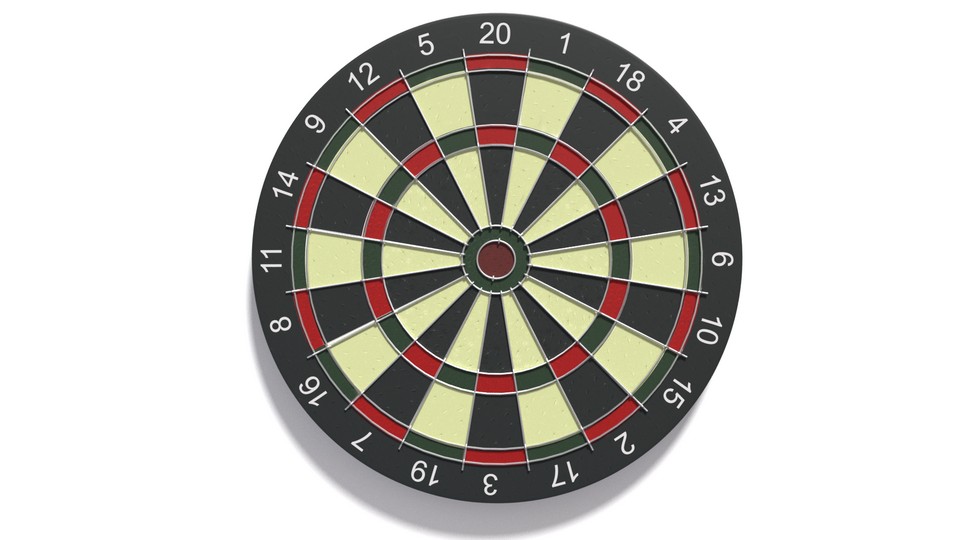
The dartboard is divided into 20 sectors, each assigned a point value from 1 to 20. There are three important areas:
Bullseye in the center gives 50 points (red circle), and outer bull (green) gives 25 points.
Besides 501 and 301, there are variants such as 701 (often for teams), 170 (short, fast version), and more. Many beginners play "straight in" – where you can immediately start subtracting points. In "double in," your first dart must hit a double segment before you start counting points down.
301 is often played in pubs and as practice. Because there are fewer points, the "bust" rule becomes extra important, and a good player can finish the game in just a few throws.
701 is often used in team tournaments, where 2 or more players on each team take turns throwing. Here, more endurance and strategy are required to reach exactly 0.
Although darts is about hitting the highest scoring segments, strategy is crucial – especially as you approach the finish ("checkout"). Here are some concrete tips:

In official tournaments, points are kept on a scoreboard or electronic display. In informal settings, you can use paper, a mobile phone, or mental arithmetic. Always remember to subtract the total points for each turn from your previous score.
Example: You have 108 left. In your turn, you hit triple 20 (60), single 16 (16), and single 16 (16). That’s 60 + 16 + 16 = 92. 108 - 92 = 16 points left. Next turn, you can go for double 8 to finish.
Darts games like 501, 301, and their variants are fun, challenging, and easy to get started with – regardless of age and level. By understanding the rules, the double out principle, and basic strategy, you can quickly improve your game and enjoy the sport even more. Practice your double segments and keep track of your points – and you’ll be well on your way to mastering darts.
Have fun and "good darts"!