
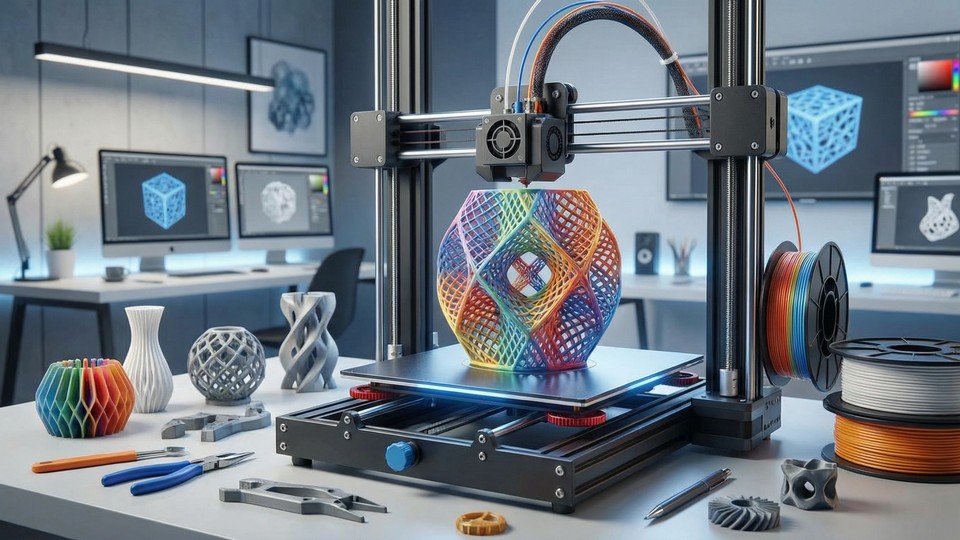


3D printing, also known as additive manufacturing, is a technology that has changed the way we design, develop, and produce physical objects. From the first simple prototypes to today's advanced production of finished products, 3D printing has evolved into an indispensable tool in both industry and for private consumers.
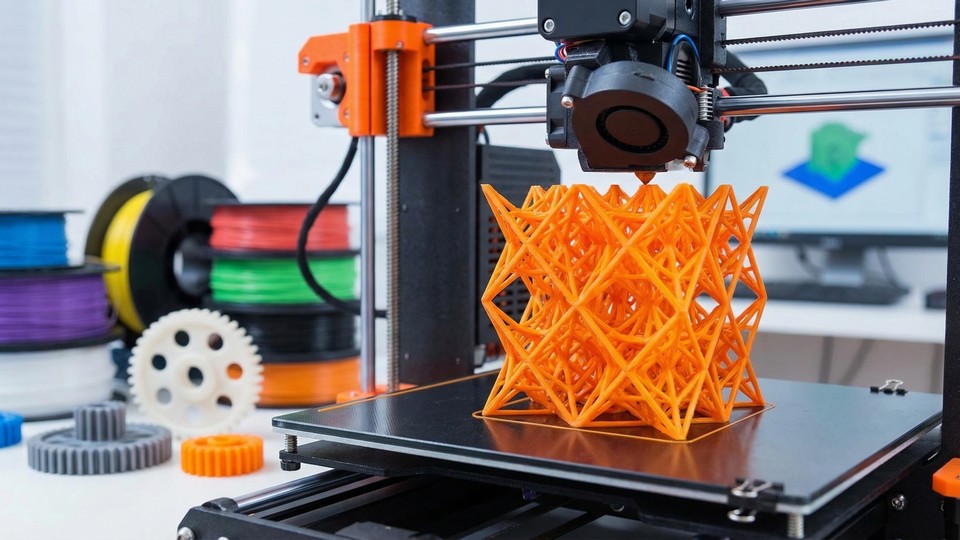
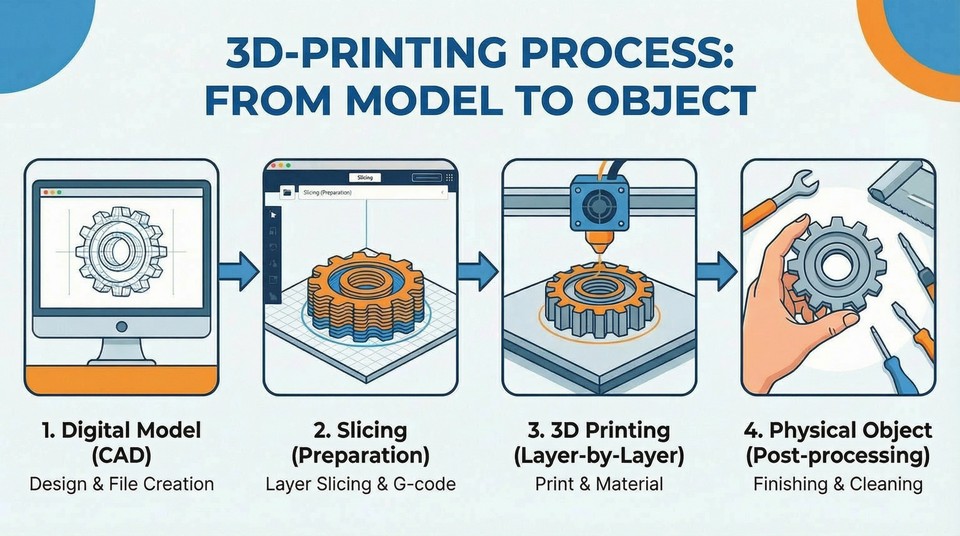
3D printing is a process where a digital design is transformed into a physical object by adding material layer by layer. This is done from a 3D model – typically designed in CAD software (Computer-Aided Design).
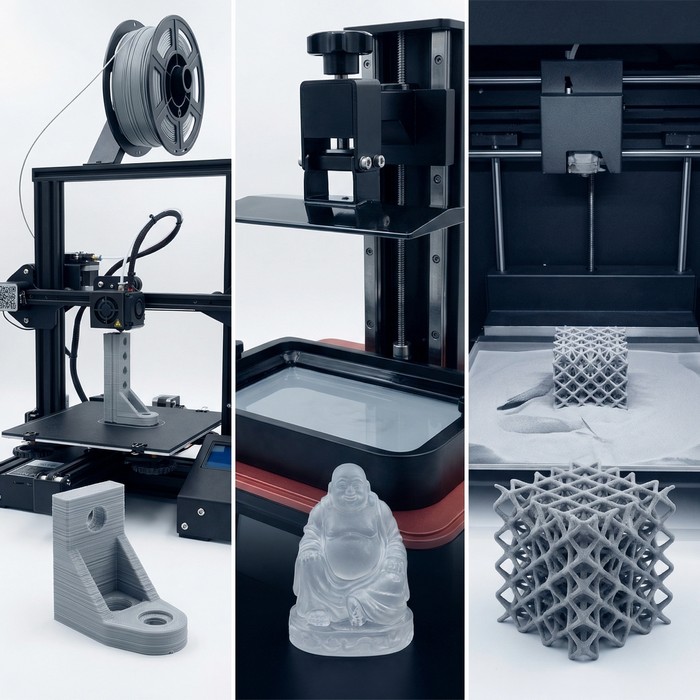
The most common type for home and education. The printer melts plastic filament and deposits it layer by layer. FDM is inexpensive but has limited resolution.
Uses a laser to cure liquid resin in very fine layers. SLA provides higher detail, but the materials are more expensive and require post-processing.
Used in industry. A laser fuses powdered plastic or metal together layer by layer. SLS can make strong, complex parts without support.
3D printing makes it possible to quickly test and adjust ideas before starting production. This saves both time and money in the development process.
Today, 3D printing is used not only for prototypes but also for the production of end products – e.g. spare parts, medical equipment, dental prostheses, and even housing construction.
3D printing enables tailor-made solutions, where each product can be adapted to the user's needs – for example, orthopedic insoles or custom-designed jewelry.
Cheaper printers have opened the door for schools, universities, and private individuals to experiment and learn about design and engineering.
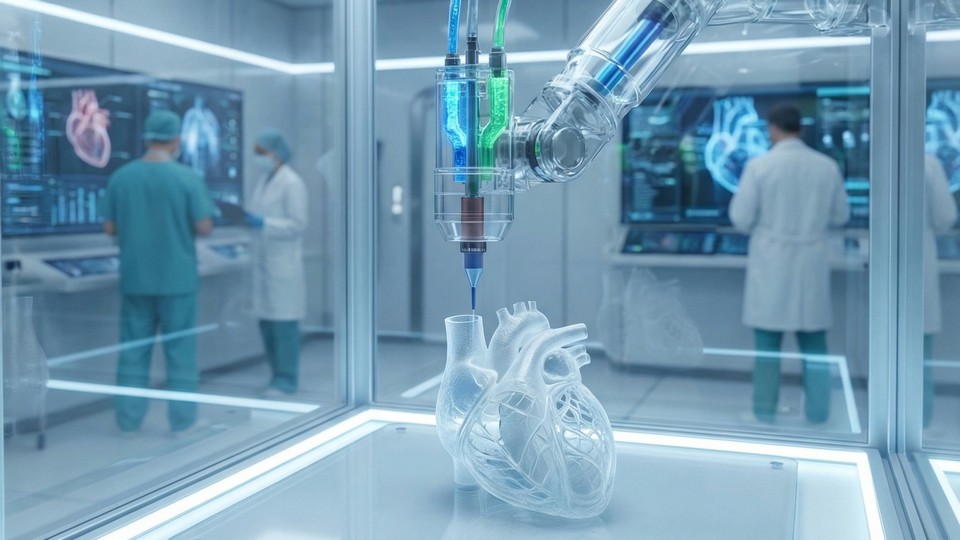
3D printing is developing rapidly. New materials (e.g. bioprinting of tissue and food) and techniques (multi-material and faster printers) are opening up even more applications. Large companies are already using 3D printing in the aerospace, automotive, and construction industries, while researchers are working on printing organs for transplantation.
In the longer term, decentralized 3D printing may challenge global supply chains and make production more local and sustainable.
3D printing has transformed product development and opened new possibilities for both businesses and private individuals. The technology makes it possible to go from idea to reality faster than ever before, but there are still technical and economic limitations. With continued development, 3D printing will play an increasingly important role in the future of manufacturing, innovation, and everyday life.