Intro
This is the first of two articles about microphones. This article contains the theoretical part, where we go through the different types of microphones and frequency characteristics and provide a description of different types of plugs, cables, and accessories. In the second article, we will describe how the microphones work in practice by going through the microphones we use when recording videos.
1 - Microphone Types
1.1 - Dynamic Microphones
The two most commonly used types of microphones are dynamic and condenser microphones.
Dynamic microphones work by having a coil inside the microphone move back and forth under the influence of the sound waves it receives. It is this movement of the coil that generates the electrical signal which is sent on to the device to which the microphone is connected.

Some of the advantages of these microphones are that they are very simply constructed and therefore very durable, and that they can handle very high sound levels. Therefore, dynamic microphones are very popular for use in live music.
The biggest problem with condenser microphones is that they lack detail and sensitivity. So, for example, they are not suitable for studio recordings, whether it is for vocals or instruments.
1.2 - Ribbon Microphones
There is a special type of dynamic microphone called ribbon microphones. These microphones work by having a thin metal ribbon vibrate between two poles, thereby generating the electrical signal. These microphones were the standard microphone for film and studio recordings up until around 1950, after which they have been replaced by other microphone types. The problem with ribbon microphones is that they are very fragile and cannot withstand high sound pressure.

1.3 - Condenser Microphones
Condenser microphones are in many ways the opposite of the dynamic microphone. While dynamic microphones, as mentioned, are durable and can handle very high sound levels, condenser microphones are much more fragile and cannot handle the same sound levels. The advantage of the condenser microphone is that it is much more precise and covers a wider frequency range than the dynamic microphone. Therefore, condenser microphones are always used for studio recordings where precise sound reproduction is required.
2 - Directional Sensitivity (Pickup Pattern)
The microphone's sensitivity in different directions around the microphone is called the pickup pattern in English, and since there is no proper Danish term, that is also the term we will use here.
The directional sensitivity can be seen in the microphone's datasheet, and there are a number of different designations.
2.1 - Diagrams
The most commonly used directional characteristics are omnidirectional, cardioid, supercardioid, hypercardioid, and bidirectional. The graph for directional sensitivity is shown with 0 degrees at the top, which is forward relative to the microphone's position. As can be seen from the omnidirectional characteristic, these microphones pick up sound equally well all the way around the microphone,
while, for example, the cardioid pattern microphone hardly picks up any sound from behind.
2.2 - Cardioid
The first microphone characteristic is a cardioid pickup pattern. This is the most commonly used pattern for vocal and instrument microphones, as they pick up a large area in front of the microphone but virtually no sound from behind. Some lavalier microphones also use this characteristic, as they also need to pick up sound in a larger area.

2.3 - Super Cardioid
If you need a more directional microphone, you can instead use a microphone with a supercardioid characteristic. This is used in so-called shotgun microphones, which are microphones suitable for TV recordings, like the ones we make here, where they can be placed at a distance so they do not appear in the picture. Because they are very directional, they can be placed at a distance of almost a meter from the mouth without picking up too much noise. On the other hand, shotgun microphones actually pick up some sound directly from behind the microphone, so that is something to be aware of when using these microphones.

2.4 - Omni-Directional
Another very commonly used characteristic for lavalier microphones is an omnidirectional characteristic, which picks up sound with roughly equal strength from all directions. This means that no matter where the sound comes from, it is picked up by the microphone. Reporter microphones will also often be omnidirectional, as a reporter does not want to have to make sure the microphone is always facing the right way.

3 - Filtering and Attenuation
Many microphones offer the possibility to filter and attenuate the signal directly in the microphone. Some of these filters can also be added in post-production, but by using the microphone's built-in filter, you can eliminate this extra work process.
3.1 High-pass Filtering
High-pass filtering removes some of the low tones up to around 80 Hz. The primary reason for using high-pass filtering is to remove the deep rumble that can often be generated by electrical appliances or parked trucks nearby. Another reason to use high-pass filtering is if you want to counteract the proximity effect. The proximity effect is the term for the increase in low tones that occurs when you hold a microphone close to your mouth. The proximity effect is often seen as a good thing, especially for voice overs, where you often want the sound of a deep voice. It is important to remember that high-pass filtering can also be done in postprocessing.
3.2 Attenuation
4 - Connection
Whether we use dynamic microphones or condenser microphones, the signal that comes out of the microphone (called mic level) is very low. The weak signal is first amplified when it reaches the connected device, which in this case is a sound recorder. Here, a preamplifier ensures that the signal is amplified up to what we call line level. Preamplifiers are not something we will cover in this video, but it is important to know that the quality of the preamplifier has a significant impact on the quality of the sound and especially on the signal-to-noise ratio.
On the other hand, we will take a look at plugs and cables. Because the signal from the microphone is so low, it is very susceptible to noise, and therefore the choice of plugs and especially cables is very important.
Microphones are usually available with either mini-jack plugs or with XLR plugs. Mini-jack plugs use unshielded cables and are often used in connection with lavalier microphones, like the one we have here, or to connect microphones directly to a camera or mobile phones.
4.1 - Mini-jack
Cables with mini-jack plugs should not be longer than 1½ meters and preferably shorter, as they are very susceptible to noise.
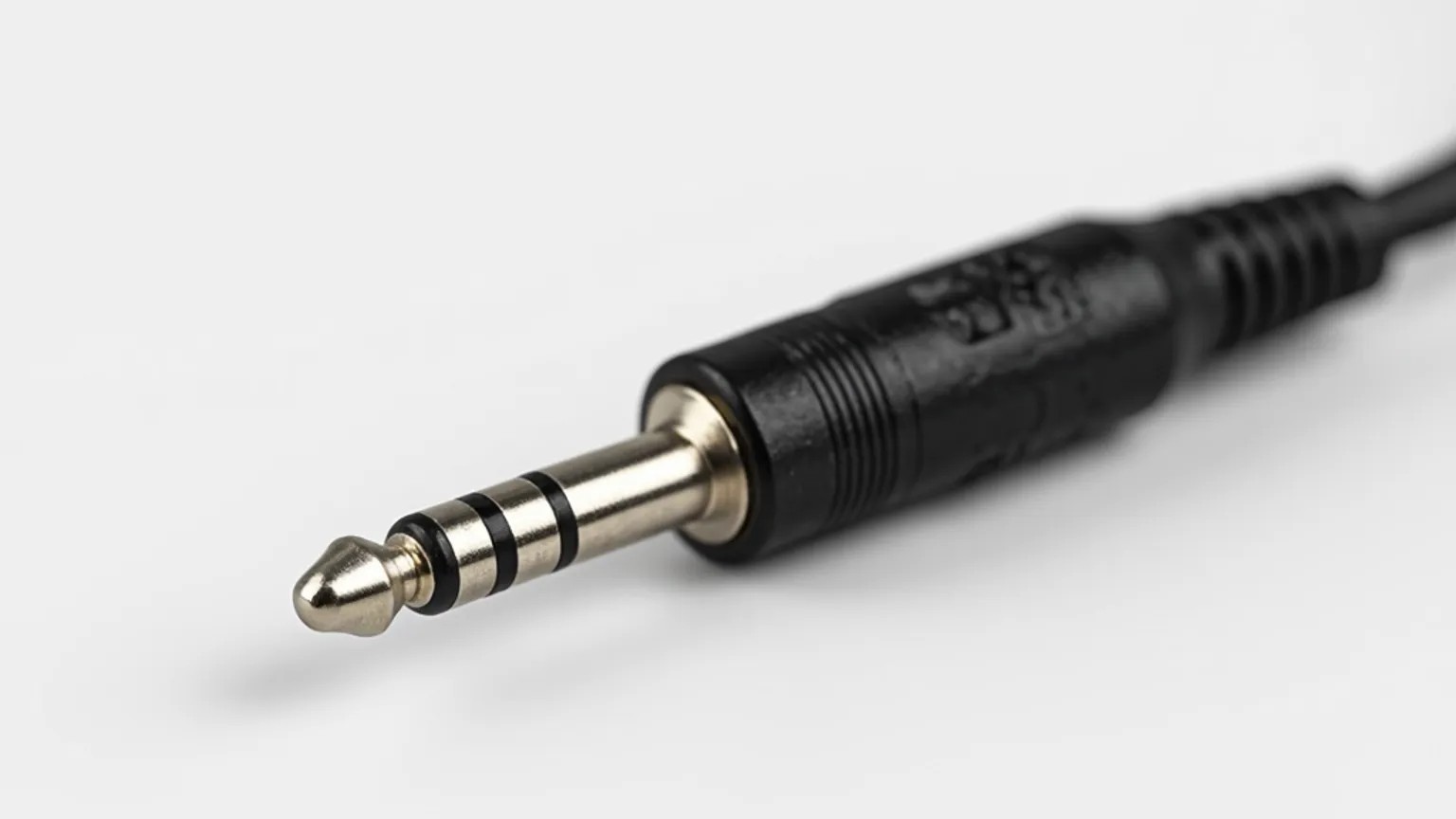
For our recordings, we exclusively use mini-jack plugs and unshielded cables together with lavalier microphones. We connect these microphones either to our wireless units, which then send the signal to one of our field recorders, or we connect them to our small audio recorders. All these devices can be placed close to the microphone (for example, in a belt), so the cable can always be kept very short.
4.2 - XLR
If you need to run the signal from the microphone longer than 1½ meters, you use balanced cables, which use twisted wires to reduce susceptibility to noise. These cables use XLR plugs, which can typically be mounted on the back of the microphone and similarly connected with XLR plugs to the device at the other end.
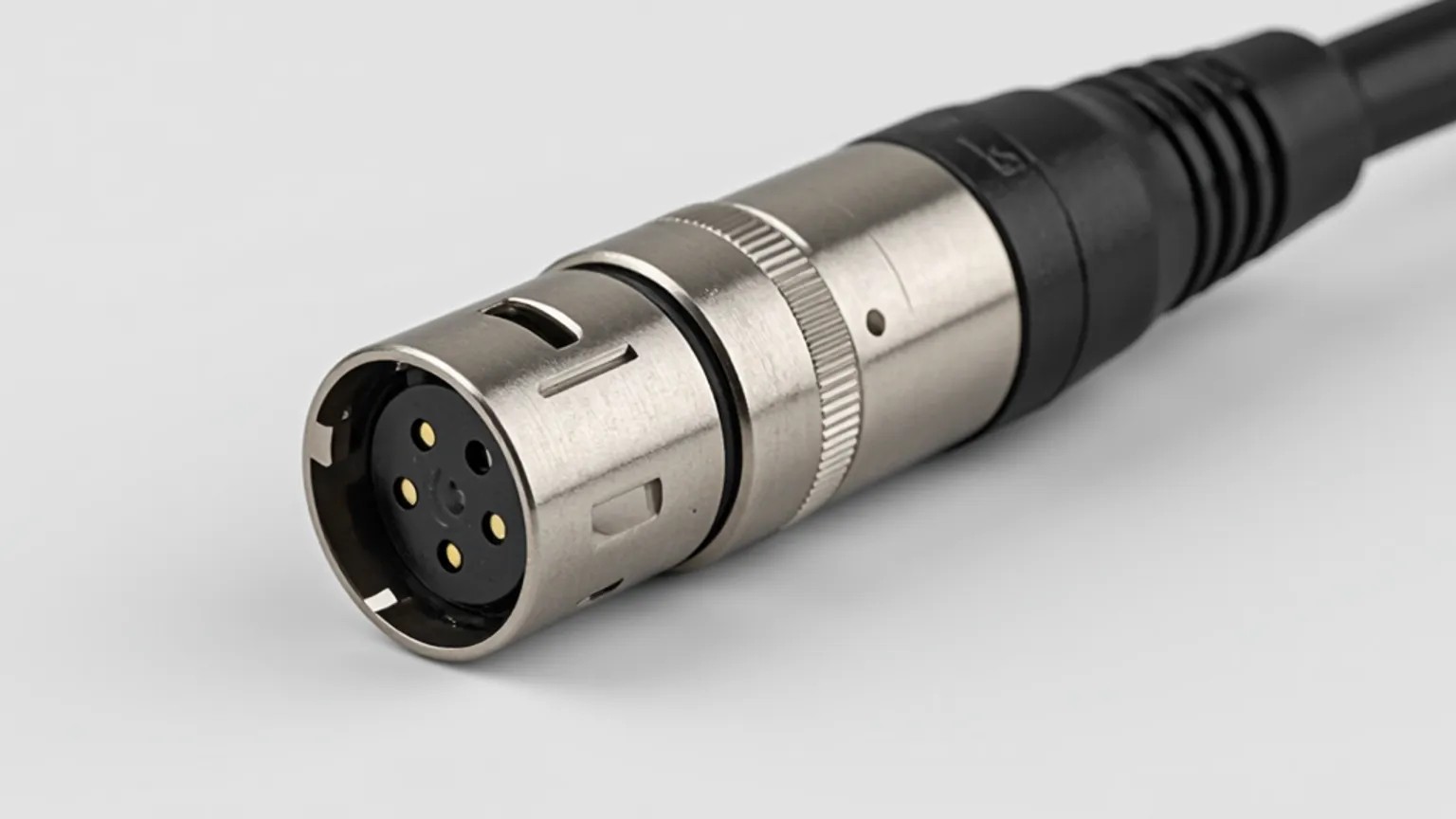
XLR cables are shielded and therefore protect much better against external noise. It is still best to use the shortest cables possible, but we often use cables of both 10 and 20 meters during recordings. When we record here in the studio, for example, we use a microphone that is placed just outside the frame and is connected to our Field Recorder here with a cable of 6 or 10 meters.
4.4 - Adapters
Since microphones always only have either a jack plug or XLR connection, it can sometimes be useful to use an adapter to convert between the two plug types. For this purpose, you can get some small adapter cables like the ones shown below.