

The internet has become an indispensable part of our everyday lives. We use it to communicate, search for information, work, shop, and entertain ourselves. But what exactly is the internet, and how does it work? In this article, you will get an easy-to-understand introduction to the structure, function, and significance of the internet.

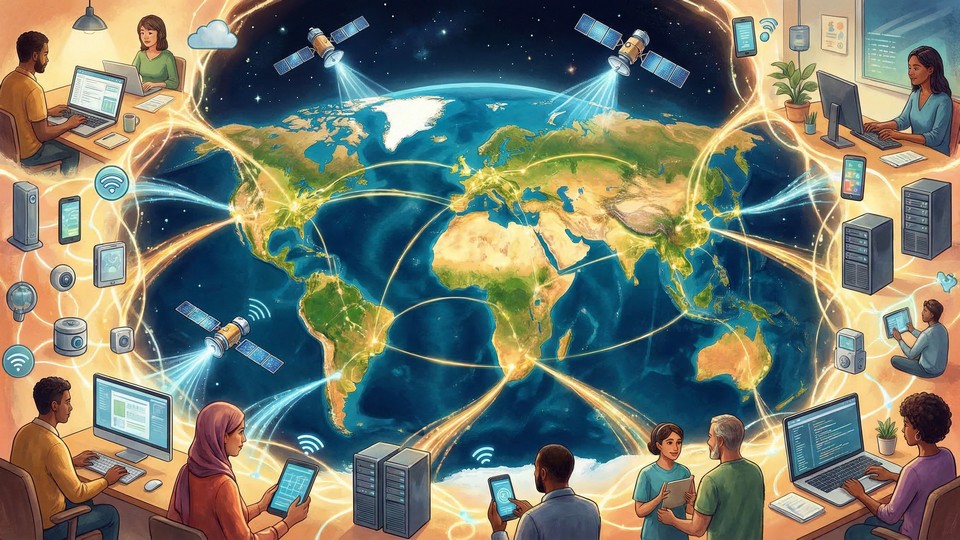
The internet is a worldwide network of computers and other devices that can exchange data with each other. It does not consist of a single computer or a specific place – on the contrary, the internet connects millions of smaller networks and devices across the globe. When you visit a website, send an email, or stream a video, you use the internet to transfer data between your device and another.
The word "internet" actually means "network of networks." Every time you go online, your device connects to a local network (for example, via Wi-Fi or mobile network). This network then communicates with other networks through larger connections until your data reaches its destination. The internet thus works like a gigantic road network, where data packets are sent from one address to another.
To understand how the internet works, it is useful to know some basic concepts:
For example, when you type a web address, your device translates it into an IP address (a numeric code that identifies the server). Your computer sends a request to display the website, and the server sends data back – all of this happens in fractions of a second.

The internet consists of many different technologies that work together. Here are some of the most important:
TCP/IP (Transmission Control Protocol/Internet Protocol) is the "language" that computers use to send and receive data on the internet. TCP ensures that data is divided into smaller packets, sent off, and reassembled correctly at the receiver. IP makes sure the packets find the right path through the network.
DNS (Domain Name System) works a bit like the internet’s phone book. When you type a web address like kgm.dk, the DNS system finds out which IP address it belongs to, so your request is sent to the right place.
Although the internet often feels wireless, it mainly consists of physical cables – fiber optic and copper cables – that cross countries and oceans. These cables connect larger networks and data centers. Wireless technologies like Wi-Fi and mobile networks connect your device to the nearest point on the big net.

The internet has revolutionized how we communicate, work, and learn. Here are some of the most important areas:
Since the internet is open and global, it is important to think about security and privacy. Data can potentially be intercepted or misused if you are not careful. Use strong passwords, update software, and be aware of what information you share online.
The internet is constantly evolving. New technologies such as the Internet of Things (IoT), artificial intelligence, and faster connections are shaping the digital landscape of the future. More devices, more data, and more opportunities – but also new challenges for security and ethics.
The internet is a global network that connects people, information, and services across the world. It works through an interplay of technologies like TCP/IP, DNS, and physical cables. By understanding the basic mechanisms behind the internet, you are better equipped to use it safely and effectively – and to keep up with digital development.