
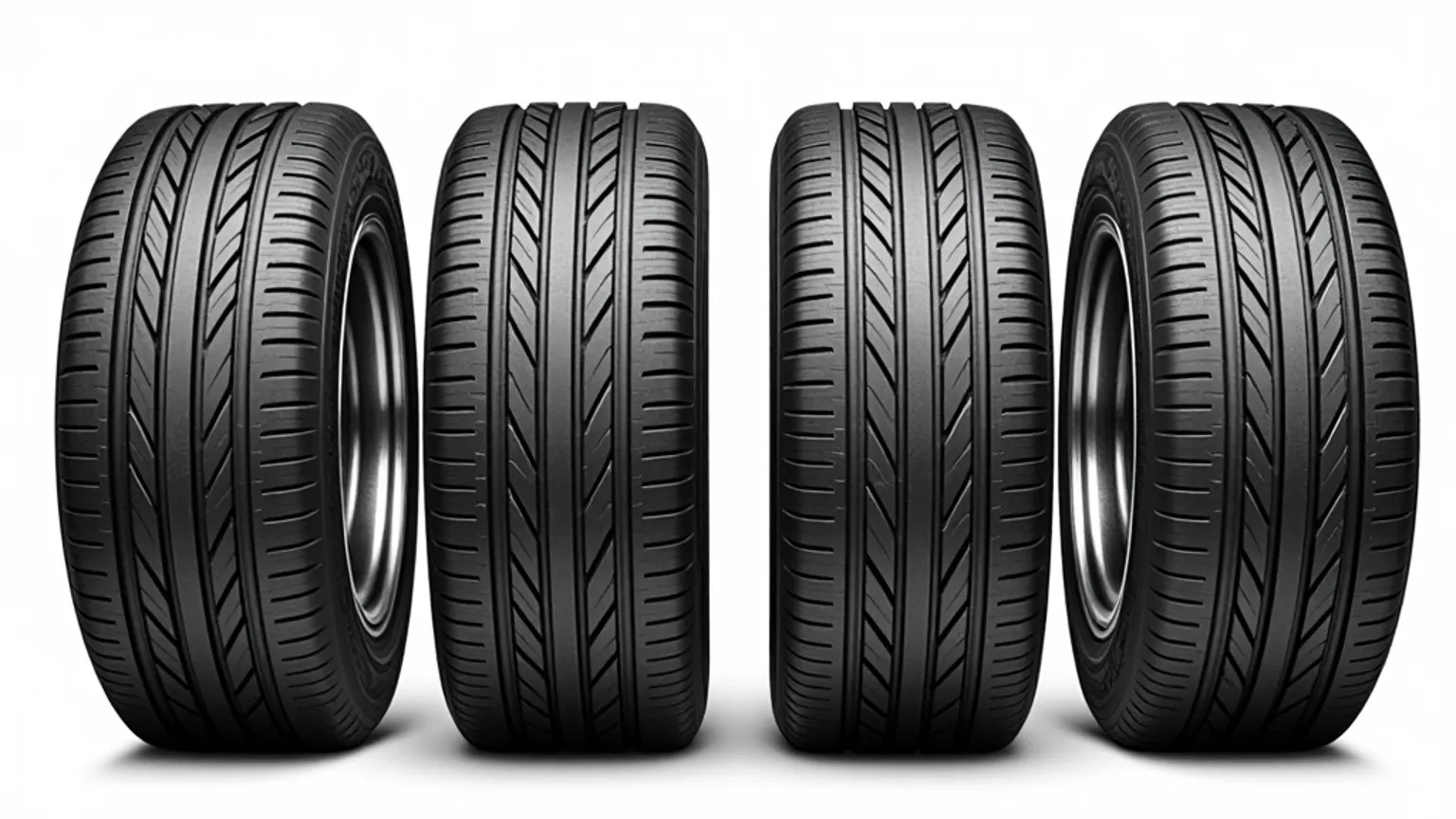


Car tires are some of the most crucial factors for safety, comfort, and fuel economy when driving on the roads. The tires are the car's only contact point with the road, and their quality and characteristics have a major influence on the car's handling. In this article, we review the development of tires, the difference between winter tires, summer tires, and all-season tires, as well as what the numbers and letters on the side of the tire actually mean.
The first tires were developed at the end of the 19th century and were primarily solid rubber wheels without air. These tires were hard, heavy, and provided a poor driving experience. The Irish inventor John Boyd Dunlop is credited with inventing the first air-filled tire in 1888 for use on a bicycle, which was quickly adapted for cars.
At the beginning of the 20th century, car tires with canvas and rubber became standard. These were later replaced by radial tires in the 1940s and 50s, where steel reinforcement and diagonal cords improved both durability and road grip. Radial tires have since been the dominant tire type worldwide.
Today, modern car tires are the result of advanced engineering. The tires are produced with complex rubber compounds, tread designs, and technologies such as silent profiles, low rolling resistance, and self-sealing properties. Tires for electric cars are a newer focus area, where work is being done on lower weight and special tread patterns that compensate for the high torque and increased weight from the batteries.
Choosing the right type of tire for the season is crucial for safety. Tires are developed to function optimally under specific temperature and road conditions.
Summer tiresSummer tires are designed to perform best at temperatures above 7°C. They have a harder rubber compound, which provides better road grip and precision on both dry and wet roads in the summer. The tread is optimized to channel water away and minimize aquaplaning. However, summer tires lose their effectiveness in cold temperatures and become hard, which significantly reduces road grip.
Winter tiresWinter tires are made with a softer rubber compound, which remains flexible in the cold and thus provides better grip. The tread has deeper grooves and more sipes that bite into snow and ice. In Denmark, winter tires are not mandatory, but are strongly recommended from November to March, especially if you drive outside the cities.
All-season tiresAll-season tires are a compromise between summer and winter tires. They are practical for motorists who mainly drive in urban areas and do not experience extreme winter conditions. Modern all-season tires have become significantly better in recent years, but they will never perform as well as dedicated seasonal tires in extreme temperatures. If you choose all-season tires, you should ensure that they are marked with the “3PMSF” symbol (a snowflake in a mountain peak), which confirms that they meet the requirements for winter tires in the EU.
On the side of every car tire, there is a series of numbers and letters that describe the tire's dimensions and performance. Let's take an example: 195/55 R15 85V.
In addition to this information, you can also find the production date indicated as four digits – for example “2319”, which means the tire was produced in week 23 of the year 2019. Tires age over time, even if they are not used, and it is typically recommended to replace them after 5-6 years, depending on storage conditions.
Tires should be changed when the tread depth is below the legal limit of 1.6 mm. But already at 3 mm for summer tires and 4 mm for winter tires, performance drops noticeably. It is also recommended to regularly check for uneven wear, cracks, bulges, and other damage.
If you switch between summer and winter tires, you should consider having wheel changes and balancing done at a tire workshop to ensure optimal comfort and lifespan.
Tires are not just black round rubber objects – they are advanced components that play a crucial role in the car's performance and your safety. By understanding the differences between tire types, choosing correctly according to the season, and reading tire markings properly, you can save money, increase comfort and – most importantly – drive more safely all year round.