


Astrology is one of the oldest forms of symbolic thinking and has fascinated people for thousands of years. From the ancient Babylonians and Egyptians to modern horoscopes on social media, the idea that the positions of celestial bodies can reflect and influence human life has been a constant source of curiosity, debate, and insight.
But what is astrology really? How does it work? And why do some believe it can provide valuable insight into everything from personality to life's major events? This introductory article gives you an overview and opens the door to a world where the sky is not just a backdrop – but an active language.
Astrology is the study of how the positions of planets and stars at the time of a person's birth (and throughout life) are said to influence that person's personality, life path, and relationships. It is important to distinguish astrology from astronomy, which is the scientific study of celestial bodies. Astrology is not a natural science, but rather a symbolic and interpretive practice.
Astrology works with a cosmic “language,” where planets, signs, houses, and aspects serve as building blocks. By analyzing the relationships between these elements, one can interpret themes and tendencies in a person's life – or in society and events in general.
Most people know astrology from horoscopes and the 12 zodiac signs: Aries, Taurus, Gemini, Cancer, Leo, Virgo, Libra, Scorpio, Sagittarius, Capricorn, Aquarius, and Pisces. These are also called sun signs, because they indicate which zodiac sign the sun was in on your birthday.
The sun sign is said to represent your fundamental identity and life force – your "inner sun." But in astrology, many other factors come into play, and the sun sign alone only gives a fragmented picture of a person's horoscope.
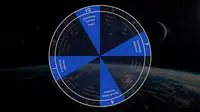
A horoscope is a “map” of the sky as seen from a specific place on earth at a specific time – most often at a person's birth. It is also called a birth or natal horoscope. The horoscope shows where the Sun, Moon, and planets were located in the 12 zodiac signs and the 12 houses.
A complete horoscope contains:
This complex network forms your unique astrological “DNA.”
Two other central elements in the horoscope are the moon sign and the ascendant (the rising sign).
Many people find that they actually recognize themselves more in their moon or ascendant sign than in their sun sign.
Astrology can be used in several ways, depending on what you are seeking:
Today, astrology is experiencing a renaissance – especially among younger generations. Social media has given new life to astrological memes, apps, and horoscopes, while many seek meaning in a complex and unpredictable world. At the same time, there are in-depth astrological traditions and schools that offer serious and complex knowledge.
Some see astrology as psychology's cousin: not as an exact science, but as a symbolic method for exploring the human psyche and experience.
Astrology does not claim that the stars control us, but that they mirror what is happening – just as the tides are moved by the Moon without depriving the sea of its freedom. For those who choose to work with astrology, it is not a question of fate, but of consciousness.
This was only the beginning. In upcoming articles, we will dive deeper into specific topics such as sun signs, houses, aspects, retrogrades, and much more.
Maybe astrology is not for everyone – but for many, it is a language that helps to understand both themselves and the world a little better.