
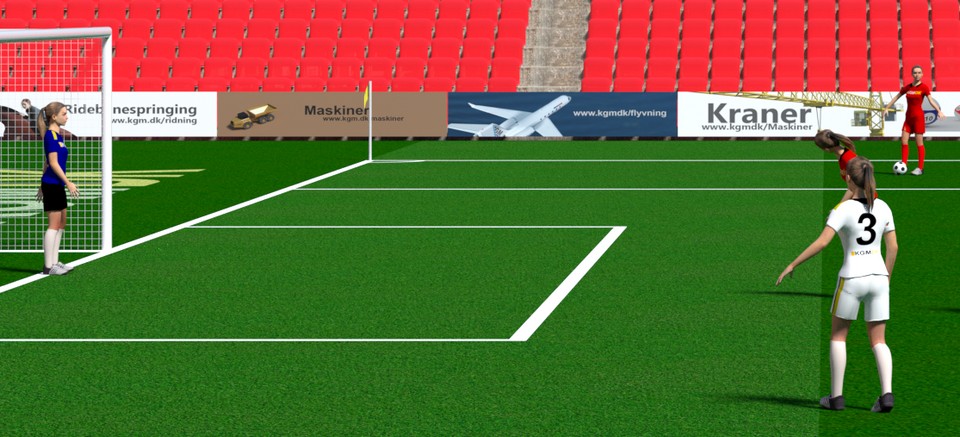


Offside is one of the most discussed and misunderstood rules in football. It plays a crucial role in ensuring that the game proceeds fairly and with tactical balance, but it can be difficult to understand – especially for new fans.
A player is in an offside position if he or she, at the moment the ball is played or touched by a teammate, is:
It is important to emphasize that a player is only penalized for offside if he or she also becomes involved in play – for example by receiving the ball, attempting to play it, interfering with an opponent, or gaining an advantage from their position.
When the referee (or VAR) assesses whether a player is in an offside position, only the body parts with which the player can legally score a goal count. That means:
Arms and hands do not count – neither for outfield players nor goalkeepers. For goalkeepers, their hands and arms are also not included in the offside assessment, even though they are normally allowed to use them to play the ball.
A player who is in an offside position is only penalized if he/she:
Offside is not called if the player receives the ball directly from:
The assistant referee (linesman) is responsible for assessing offside and signals with the flag when an infraction is observed. With the introduction of VAR (Video Assistant Referee), it is now possible to check close offside situations with precise camera angles and digital lines.
This has made offside decisions more accurate, but has also sparked debate about marginal calls, where just a few centimeters can be decisive.
The offside rule was introduced to prevent attackers from "camping" close to the goal and waiting for a long pass. It forces teams to work tactically and coordinate their movements, which makes the game more structured and exciting.
In recent years, there have been discussions about changing the offside rule to encourage more goals. Some have proposed that a player should only be offside if their entire body is ahead of the second-last opponent – rather than just parts of the body. FIFA has tested such changes in youth and test tournaments.
Regardless of changes, offside will probably always be a central part of the game – and of the debate.
The offside rule is complex but necessary to maintain balance in football. It requires precision from referees, attention from players, and patience from spectators. With technological aids like VAR, offside is assessed with unprecedented accuracy – but the discussions are unlikely to stop.
When you understand offside, you understand one of the most tactical aspects of football.