

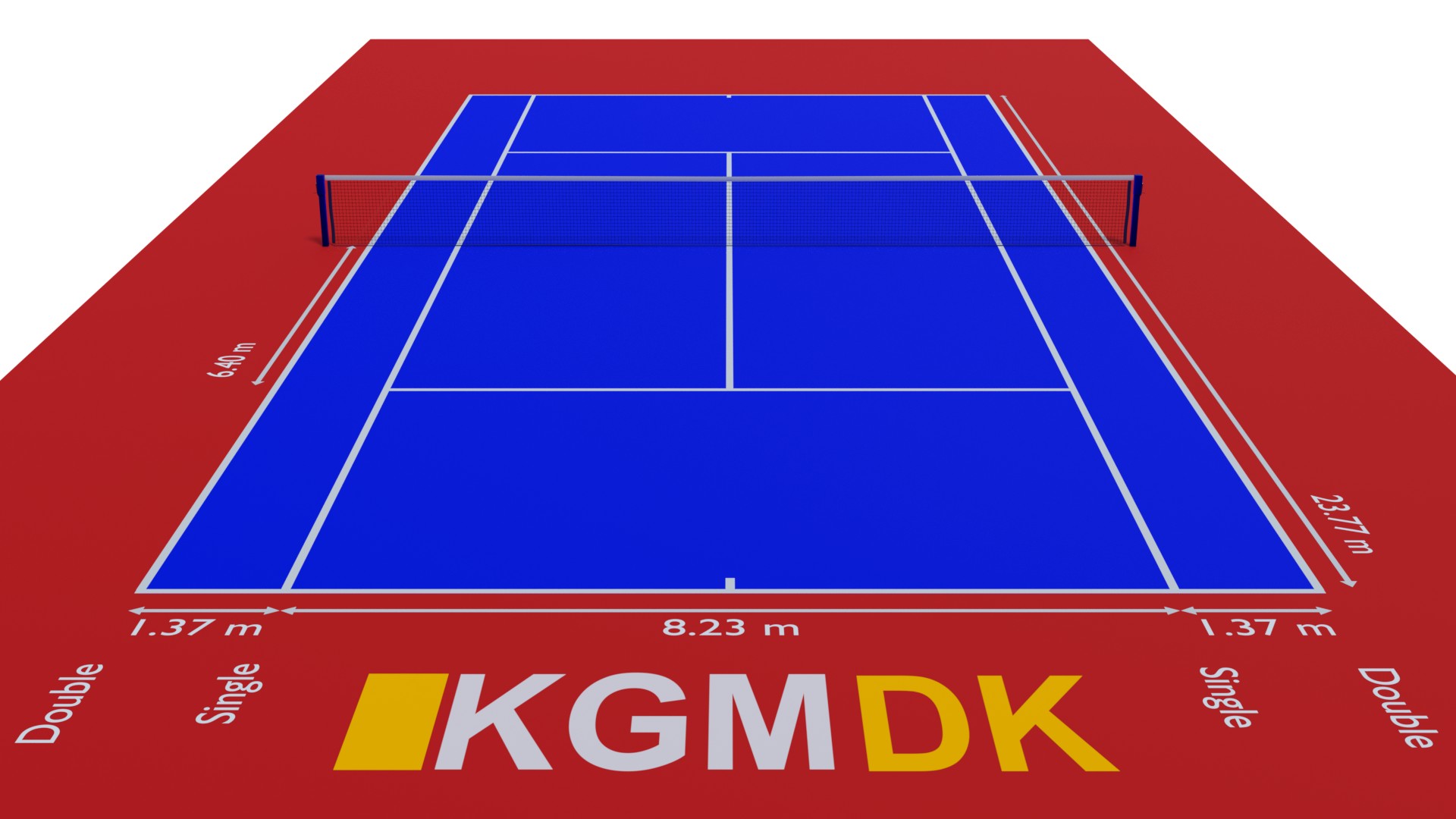
The white lines at the end of the court are called baselines, and on the sides there are 2 sidelines on each side. If singles are played, the width of the court only extends to the inner lines, and here the court is only 8.23 meters wide. In doubles, the full court width is used.
The four boxes in the middle of the court are called service boxes, and as the name suggests, they are used exclusively during the serve, where the ball must land in the service box opposite from where the serve is made.

Hardcourt consists of a hard surface, which provides a harder and more consistent bounce than the other court types. Hardcourt favors hard-hitting players, and it is used in the Grand Slam tournaments Australian Open and US Open.

Grass courts are the fastest court type because the ball skids on the grass and does not bounce as high as on other court types. Grass courts are expensive to maintain, and therefore they are no longer very common. Certain types of injuries are also more common on grass courts because the surface is more slippery than the other court types.
In Grand Slam, Wimbledon is the only remaining grass court. US Open and Australian Open were previously grass courts but have switched to hardcourt.

Clay courts are the cheapest to acquire and maintain, and therefore they are the most common court types. The clay slows the ball down more than the others, and it is the slowest of the three court types we have here.
The French Open is the only Grand Slam clay court.
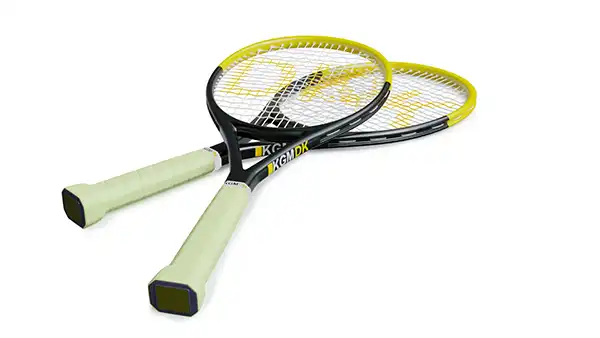
There are specific rules for the size and weight of tennis rackets, but there are still many parameters that are important when choosing a racket. Here we quickly go through the most important ones:
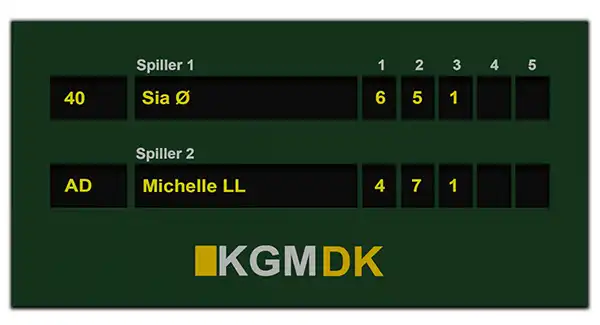
Games are divided into points, and the first three points are called 15, 30, and 40. A game must be won by 2 points more than the opponent, so if the score is 40-40, the next point does not win the game. Instead, the winner of the point gets 'Advantage', and if the player also wins the next point, the game is won. If the player with 'Advantage' loses the next point, the score is tied again, and two consecutive points are again required to win the game.
On the scoreboard above, the third game in the third set is in progress, and Michelle has advantage, which means she wins the game if she wins the next point.
Sets are divided into games, and 6 games must be won to win a set. A set must be won by two games, so if the score is 5-5 in games in a set, play continues until a player leads by 2 games, such as 7-5.
On the scoreboard above, two games have been played in the third set, and each player has won one game. Sia won the first set with 6 games to 4, while Michelle won the second set with 7 games to 5. Here, the score was 5-5, and therefore an extra game was needed to finish the second set.
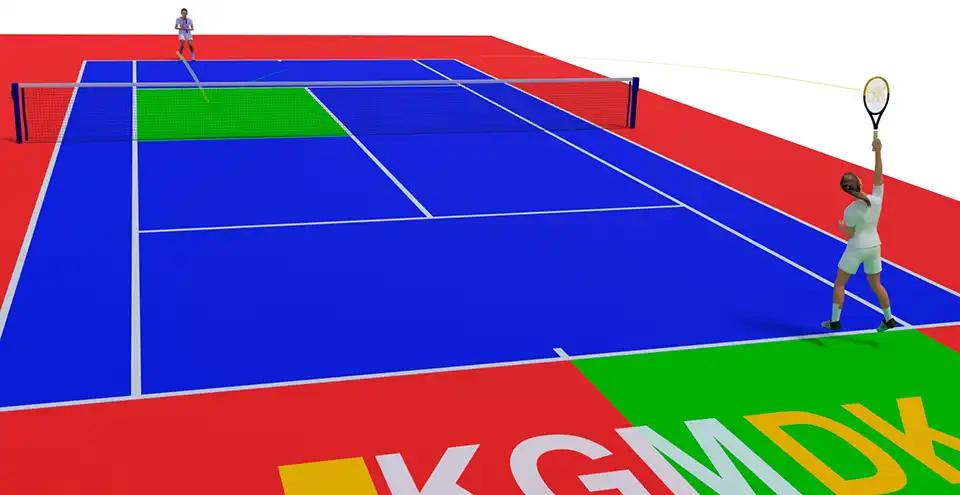
The serve is performed by tossing the ball into the air and hitting it with the racket before it hits the ground. The ball must be hit over the net and must land in the service box opposite the serving player. In the image, this box is marked in green. The ball may also hit the lines around the service box.
The server has two attempts to start the game with a correct serve. If the ball lands outside the service box on the first serve, you get another attempt called the second serve. If this serve also fails, the game is lost. If the ball grazes the net before landing in the service box, the serve is replayed.
The serving player must stand behind the service line and between the center mark and the sideline until the ball has been hit. This is also marked in green in the image above. There are no restrictions on where the receiving player may position themselves.