
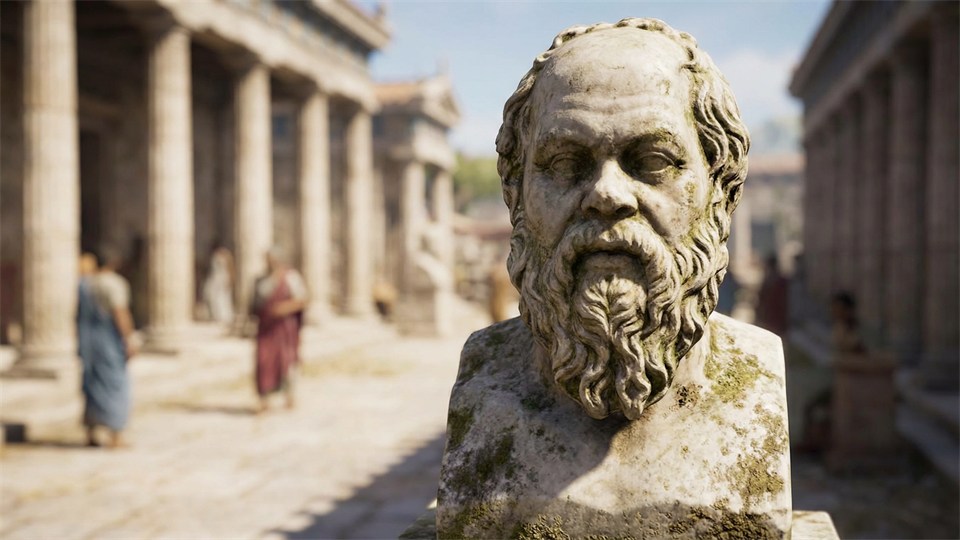


Socrates is often regarded as the founder of Western philosophy. He lived in Athens in the 5th century BC, and although he left no written works, his thoughts and methods have had enormous influence through his students, especially Plato. Socrates was famous for his ability to ask questions, challenge norms, and provoke reflection among his fellow citizens. His life and death have become a symbol of the pursuit of truth and the courage required to defend one's convictions.
Socrates was born around 470 BC in Athens. His father, Sophroniscus, was a stonemason, and his mother, Phaenarete, was a midwife. The family did not belong to the upper class of society, but Socrates still received a good education and grew up in an Athens marked by political and cultural flourishing.
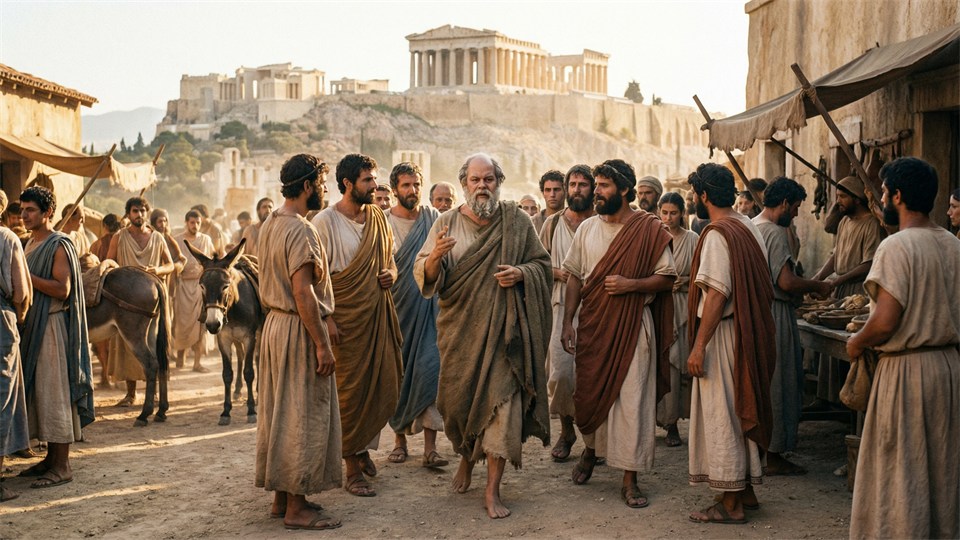
Socrates was known for his modest lifestyle. He often went barefoot, wore old clothes, and lived simply. He married Xanthippe, with whom he had three sons. According to tradition, he was not wealthy, but prioritized the philosophical life over material goods. This set him in contrast to many of Athens’ sophists and politicians.
Socrates' most important contribution to philosophy is his unique questioning technique, often called "the Socratic method." This approach involved asking open and often provocative questions to uncover contradictions and ignorance in his conversation partner. By leading the conversation with questions instead of giving answers, Socrates helped people discover the truth for themselves or recognize their lack of knowledge.
A classic example is Socrates’ conversations about concepts such as justice or courage. He might ask: “What is justice?” and then challenge the answers he received, until the other party reached a deeper understanding – or realized that the answer was not so simple.
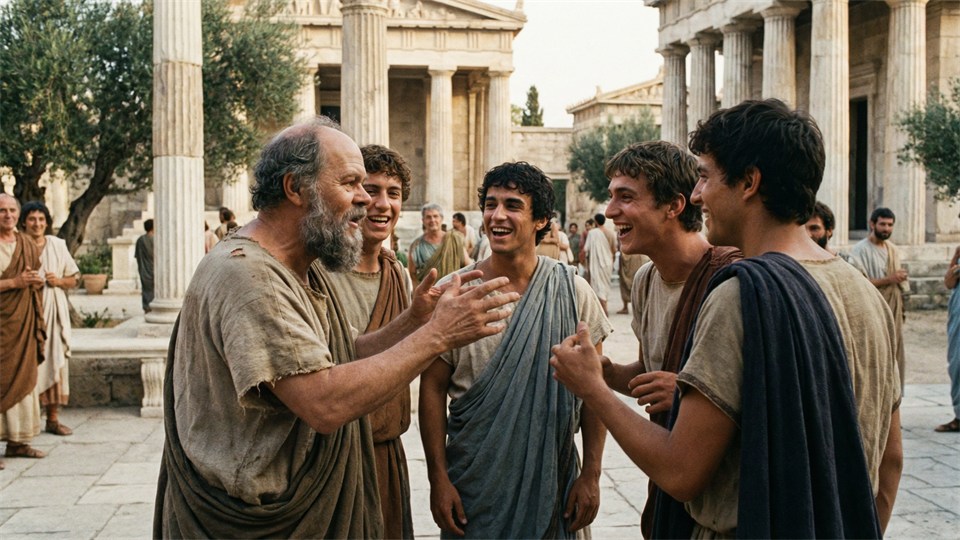
In Athens, it was common to take lessons from the sophists, who for payment taught rhetoric and philosophy. Socrates distinguished himself by not taking payment, and by focusing on moral and ethical questions rather than merely teaching people to win debates. He quickly became known for asking uncomfortable questions to the city's authorities, politicians, and scholars, which made him unpopular in certain circles.
Socrates spent much of his time in Athens’ public squares, where he engaged in conversations with people from all walks of life. His philosophy was not an academic exercise, but a living project, where he sought to make Athenians more aware of their own values and choices.
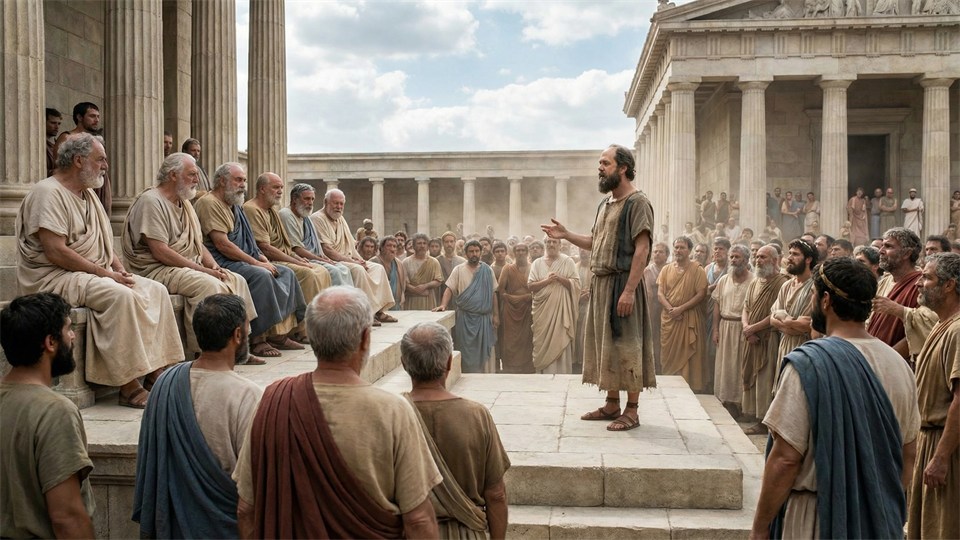
In 399 BC, Socrates was accused of "corrupting the youth" and "not recognizing the city's gods." This was during a time marked by political turmoil after Athens’ defeat to Sparta and oligarchic takeovers. Socrates’ critical questions and influence on young men like Alcibiades and Critias, who had played roles in the city's political upheavals, made him a controversial figure.
The trial against Socrates is described in detail in Plato’s dialogue “The Apology.” Here, Socrates defends himself with great dignity and refuses to renounce his philosophical activities. Despite his defense speech, he was sentenced to death by drinking hemlock.
Socrates refused to escape from prison, even when his friends offered him the opportunity. He believed it would be against the law and his principles. His final hours are described by Plato as calm and dignified, where he discusses the immortality of the soul with his friends before drinking the cup of poison.
Although Socrates did not write anything himself, his thoughts live on through his students. Plato made Socrates the main character in many of his dialogues, and through Plato, Socrates’ method and ideas were spread and developed. Aristotle, Plato’s student, was likewise strongly influenced by Socratic thinking, especially the critical approach to established truths.
Socrates’ conversational method lives on today, both in pedagogy, psychology, and philosophy. His insistence on seeking truth, even when it is uncomfortable, and his willingness to die for his principles, make him a role model for intellectual integrity. The concept of “being Socratic” today covers everything from asking critical questions to having the courage to stand by one’s convictions.
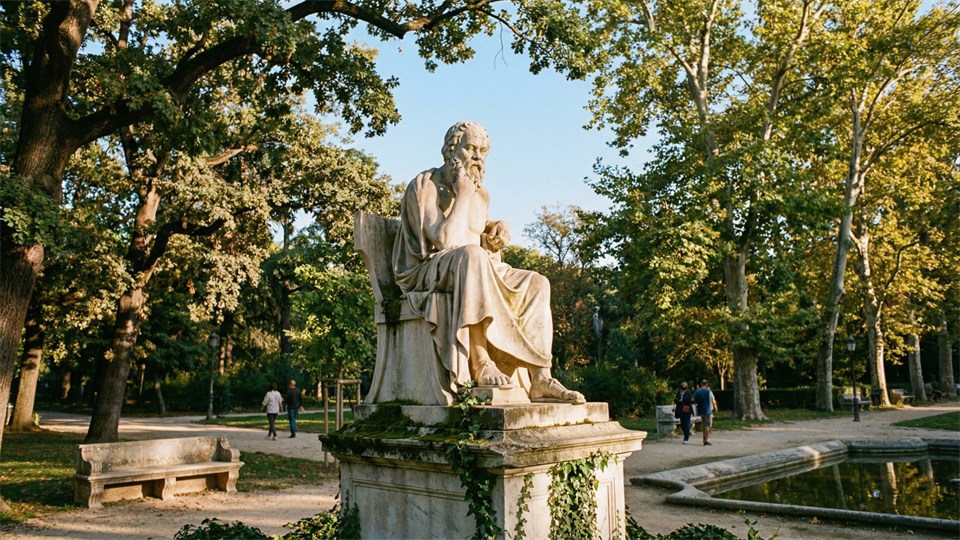
Socrates’ ideas about self-knowledge, ethics, and critical thinking are cornerstones of modern Western culture. His questioning tactics are used in teaching and therapy, and his life has been interpreted in countless works of art, books, and films. For many, he symbolizes the eternal search for truth and the courage it takes to go against the current.
Socrates appears not only as a philosopher, but as a role model for reflection, civil disobedience, and moral integrity. He shows that asking questions can change both the individual and society.
Socrates’ life and philosophy have left deep marks, not only in the history of philosophy, but in the entire Western world’s self-understanding. Through his method and by his example, he stands as an eternal source of inspiration for all who seek truth and wisdom.