

The Greek gods make up one of the world's most influential and fascinating mythological universes. From the mighty Olympian gods to the lesser-known nature spirits, the Greek gods have shaped literature, art, and thought for millennia. Through their myths, the Greeks told of the creation of the world, the forces of nature, and humanity's place in the cosmos. Although belief in these gods has long since vanished, their stories live on – not only in ancient ruins, but in modern films, books, and language.
In contrast to monotheistic religions, the ancient Greeks believed in many gods, each with their own strengths, weaknesses, and areas of responsibility. The society of the gods was hierarchical, with the twelve Olympian gods at the center, but also populated by titans, nymphs, satyrs, and monsters. The world of the gods was connected to that of humans, and the myths served to explain everything from weather phenomena to morality and social norms.
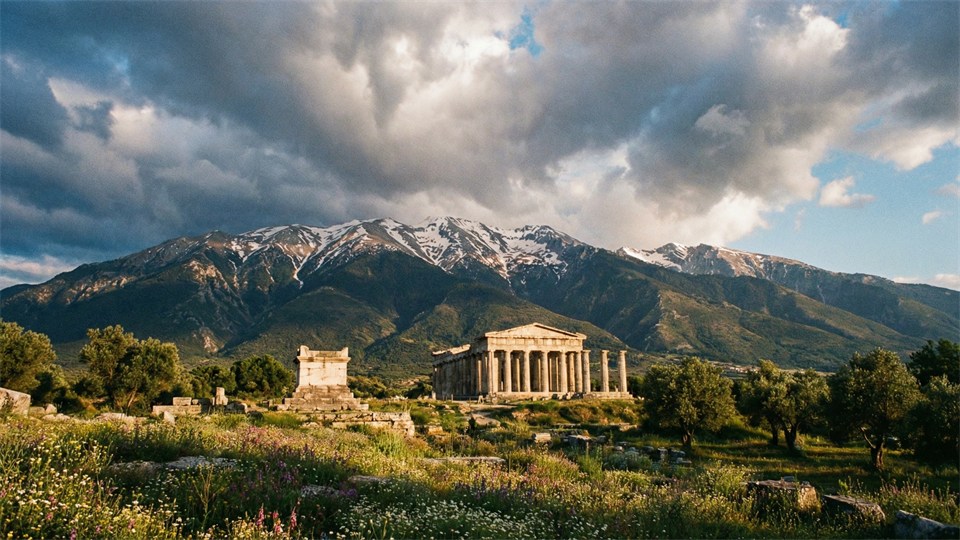
The most important Greek gods lived on the snow-covered Mount Olympus, which was regarded as both a physical place and a mythical dimension. From here, they governed divine affairs, but often intervened in the world of humans – both to help and to punish.
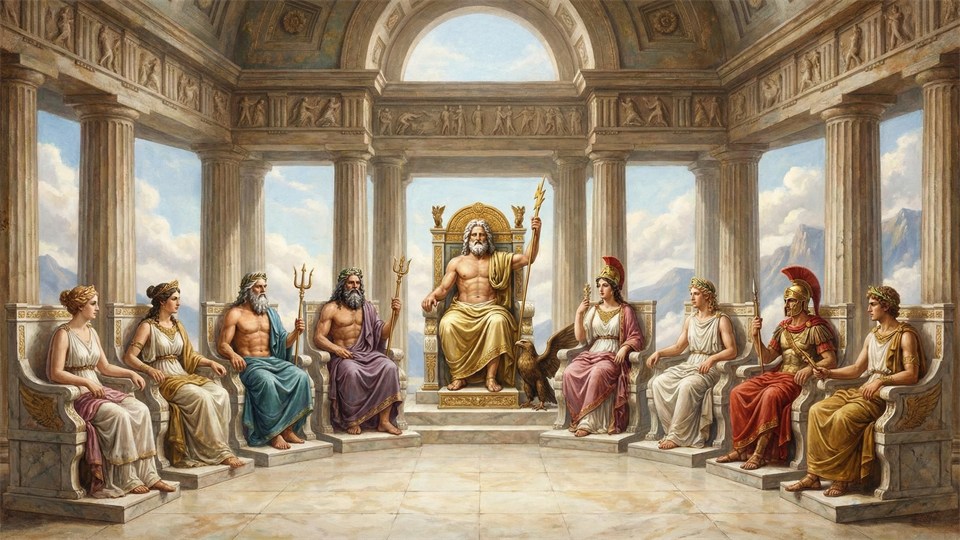
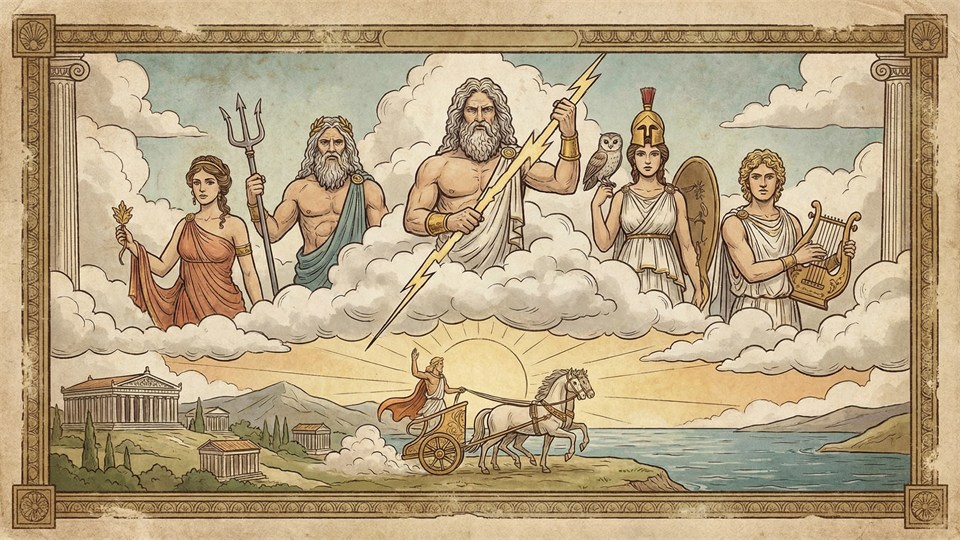
Zeus, god of the sky and thunder, was the supreme ruler among the gods. He was often depicted with a lightning bolt and was known for his sense of justice, but also for his many love affairs. The myths about Zeus reflect both power and human weaknesses – he punished those who defied the gods, but also protected humans and heroes.
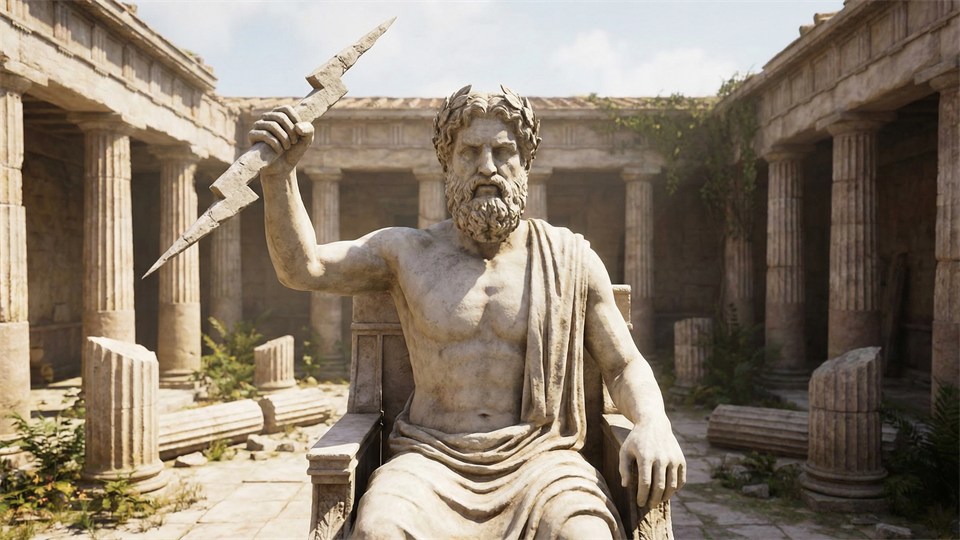
Hera was Zeus' wife and sister and watched over marriage and family. She is often portrayed as a dignified, but also jealous queen. Hera played a central role in many myths, especially where she tried to punish Zeus' lovers and their children.
Poseidon was the god of the sea, earthquakes, and horses. He was often depicted with his trident and had a temperamental nature. When angered, he sent storms and earthquakes upon both gods and humans.
Athena, daughter of Zeus, was the goddess of wisdom, war, and crafts. She was born fully grown from Zeus' forehead, according to the myth. Athena was the protector of cities, especially Athens, and was often depicted with a helmet, shield, and owl.
Apollo was the god of light, music, prophecy, and healing, while his twin sister Artemis was the goddess of the hunt, nature, and the moon. Apollo was worshipped for his beauty and artistic abilities, while Artemis was known for her independence and protection of animals and young girls.
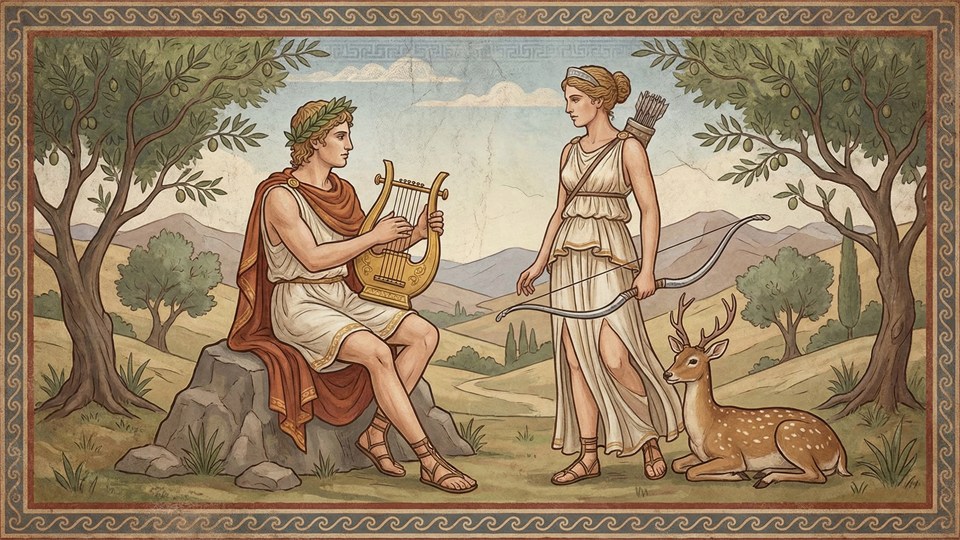
The Greek myths served both as entertainment and life wisdom. They explained the course of nature, the movements of the stars, and the fate of humans. The stories of the gods were often dramatic, full of intrigue, love, revenge, and heroism. But they also revealed the gods' human sides – jealousy, pride, weakness – which made them recognizable and relevant to ordinary people.
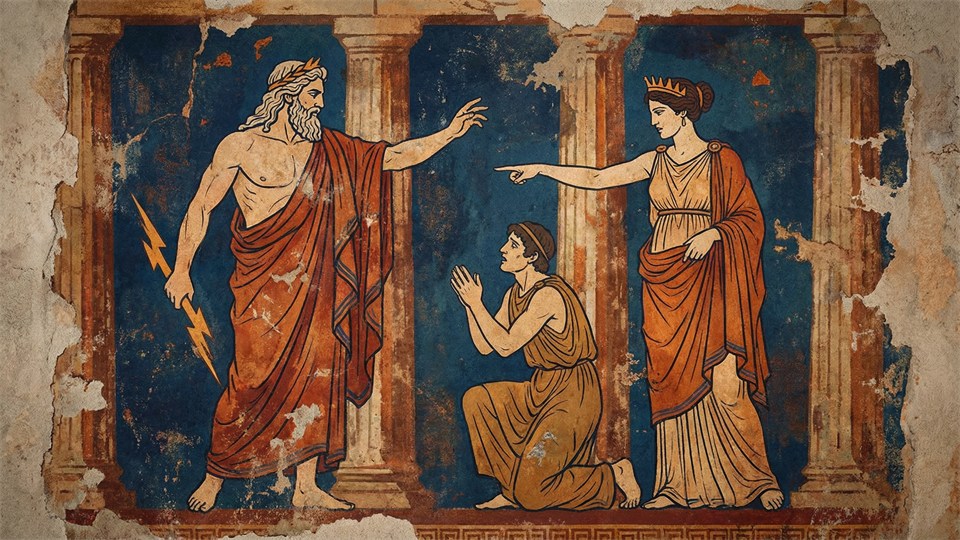
The gods were often associated with particular animals, plants, or symbols. For example, the owl was Athena's symbol, the dolphin was linked to Apollo, and the vine to Dionysus. These symbols were used in art, architecture, and everyday life – from coins to temple decorations.
Religion permeated ancient Greek society. Each city-state had its own protectors and festivals, where offerings were made to the gods to ensure the city's welfare. The Olympic Games were held in honor of Zeus, while Dionysus had his own ecstatic festivals, where theater, wine, and dance played a central role.
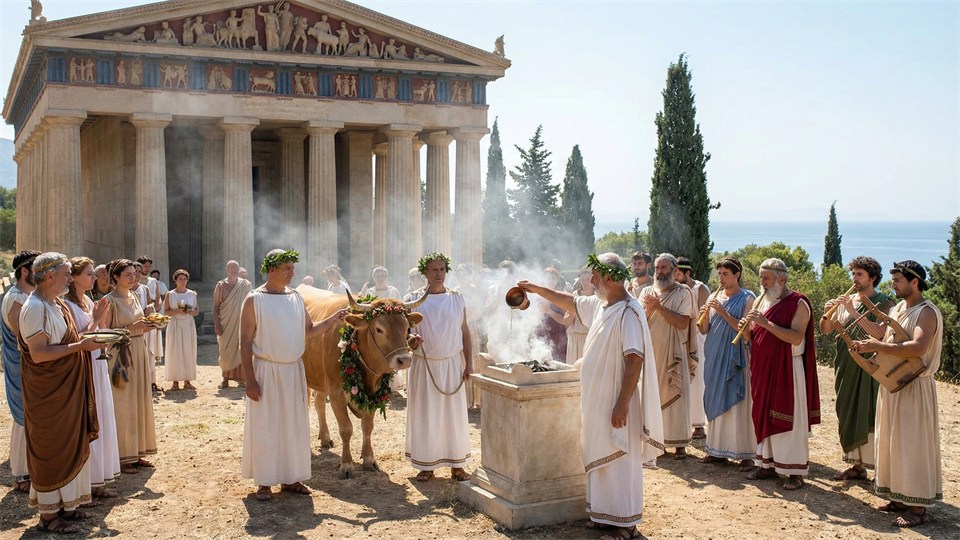
Oracles – especially the famous oracle at Delphi – played an essential role as mediators between the gods and humans. Priests and priestesses interpreted the will of the gods through omens, dreams, and ritual acts. Many Greeks sought the oracle's advice before important decisions, from war to marriage.
The Greek gods have inspired countless works of art through the ages. From marble sculptures and temple friezes to Renaissance paintings and modern films, their stories live on. Writers such as Homer and Hesiod described the gods in epic poems that are still read and interpreted today.
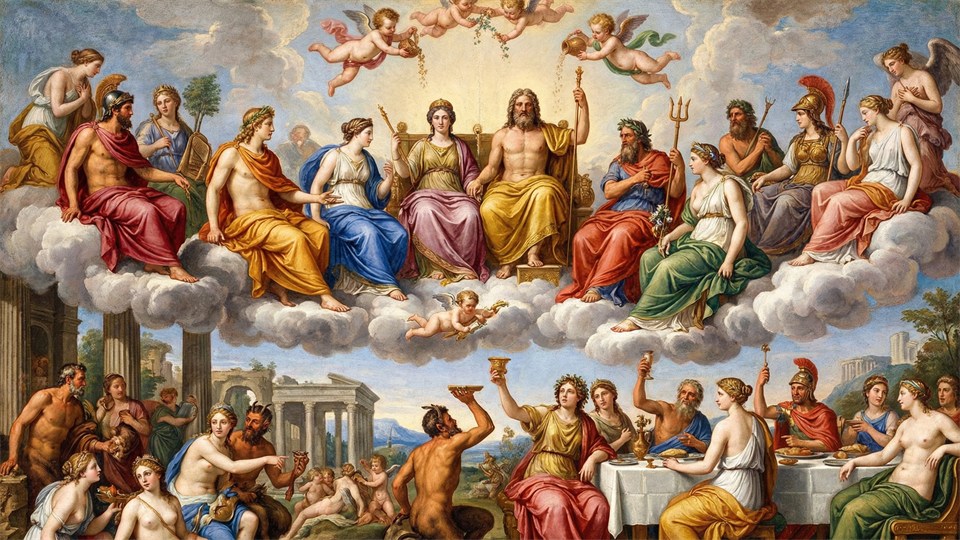
Although no one sacrifices to Zeus or Athena anymore, the Greek gods live on as cultural icons. They are used as metaphors, psychological archetypes, and in popular stories. Olympus lives on in language – when we speak of "an Olympic mind" or "Achilles' heel" – and in modern tales, where superheroes, fantasy, and films borrow elements from the old myths.
The Greek gods were more than just supernatural beings – they were expressions of human dreams, fears, and ideals. Their myths live on as a source of inspiration, reflection, and creativity. To know them is to understand an important part of Europe's cultural roots, and their stories will continue to challenge and fascinate new generations.