
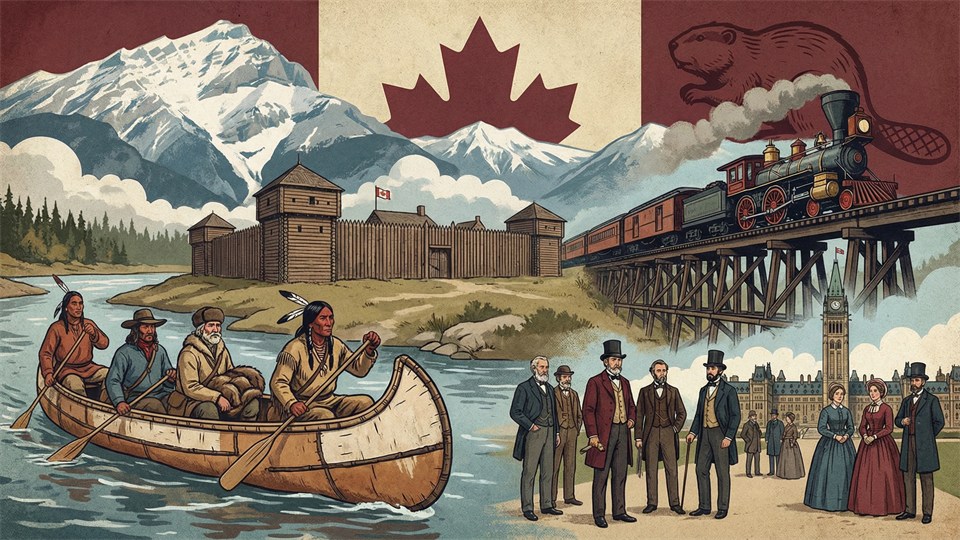


Canada is the world's second largest country and spans a vast geographical area filled with diverse nature and culture. The country's history is marked by the encounter between Indigenous peoples, European explorers, colonial powers, and the gradual development toward independence and modern national identity. This article gives you a thorough and easy-to-understand overview of Canada's history – from the first settlements to today's challenges and opportunities.
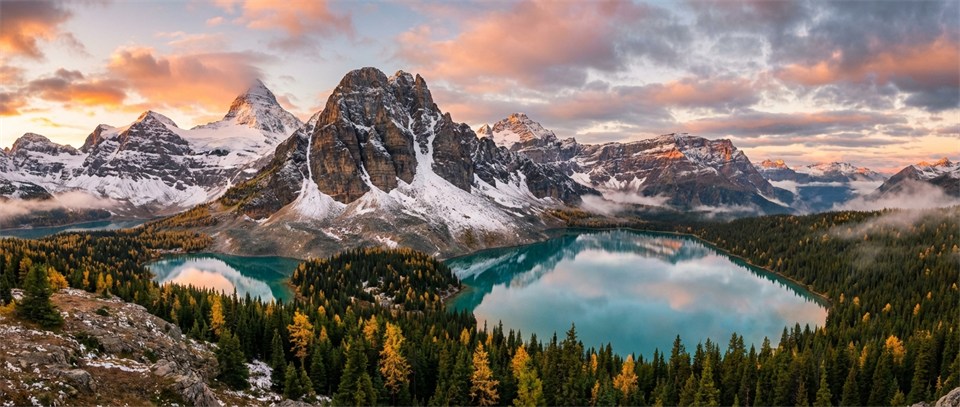
Canada has been inhabited for at least 12,000 years, likely much longer. The first people crossed the Bering Strait from Asia and spread across the North American continent. Over time, these peoples developed into many different ethnic groups with their own languages, cultures, and ways of life. Today, we know them as First Nations, Inuit, and Métis.
Before the Europeans arrived, Canada was home to a wealth of different cultures. In the west, peoples such as the Haida and Salish lived by fishing and forestry, while on the prairies they hunted bison. In the east, the Iroquois and Algonquin were known for their agriculture, trade, and complex social structures. Inuit in the north adapted to the harsh Arctic environment and developed unique hunting and survival techniques.
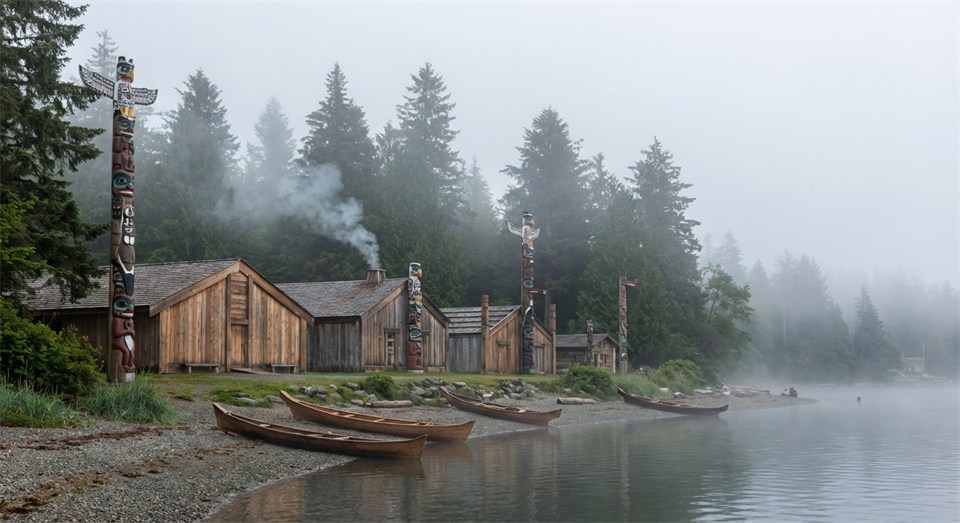
Indigenous peoples established extensive trade networks that stretched across great distances. They traded furs, copper, food, tools, and cultural goods. Alliances and rivalries emerged, which later came to play a major role in the encounter with Europeans.
The first Europeans to set foot in what is now Canada were likely the Norse (Vikings) around the year 1000 AD. Leif the Lucky and his people established the settlement L’Anse aux Meadows in Newfoundland, but their presence was short-lived and had limited influence.
It was not until the 16th and 17th centuries, however, that European colonization truly gained momentum. In 1534, the French explorer Jacques Cartier arrived and claimed the area for France. Later, Samuel de Champlain founded the city of Québec in 1608, and New France grew up along the St. Lawrence River.
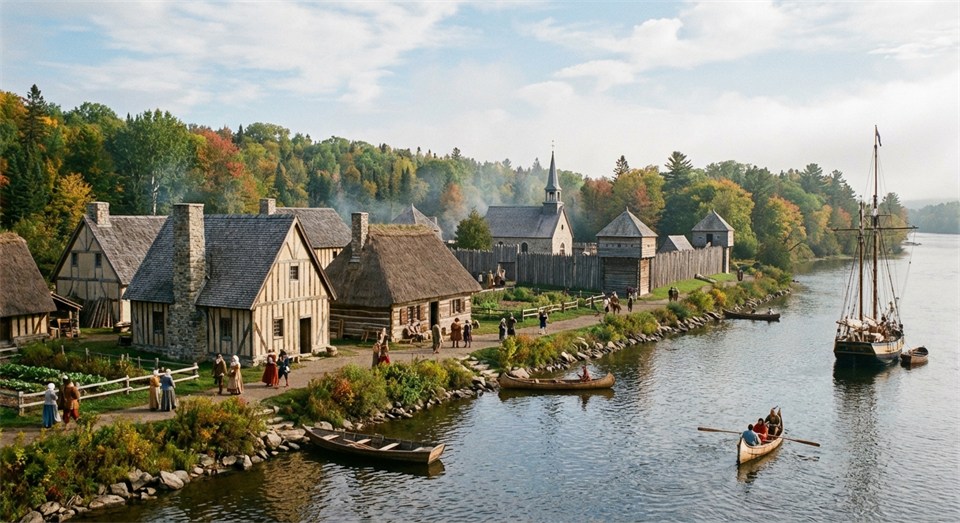
The following centuries were marked by rivalry between France and England. Both powers wanted to expand their territories and control the lucrative fur trade, especially beaver pelts, which were coveted in Europe. Indigenous peoples often played a crucial role as allies or opponents in this conflict.
The fur trade became a cornerstone of Canada's early economy. European traders exchanged goods such as metalware, weapons, and textiles for furs collected by Indigenous hunters. This led to a close, but often unequal, relationship between Europeans and Indigenous peoples. Mixed communities emerged where cultures blended, especially among the Métis people.
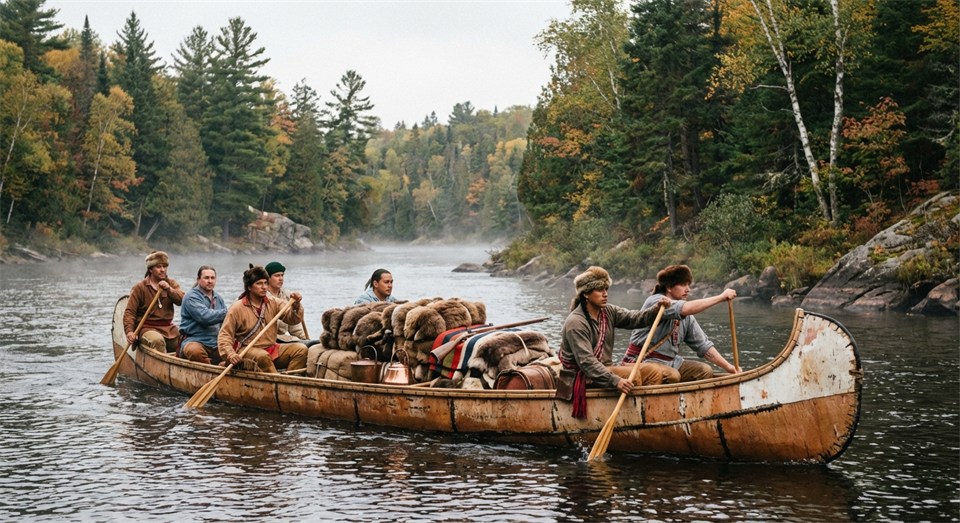
In 1670, the Hudson’s Bay Company was formed – one of the world's oldest still existing companies. With royal support, the company gained control over vast territories and trading posts. The British and French struggle for power and resources shaped the entire North American region.
The Seven Years' War (1756-1763) between France and England was decisive for Canada's subsequent history. After several years of fighting, the British took control of New France in 1763. Québec and other French areas now became British colonies, but the French language and culture survived – especially in the province of Québec.
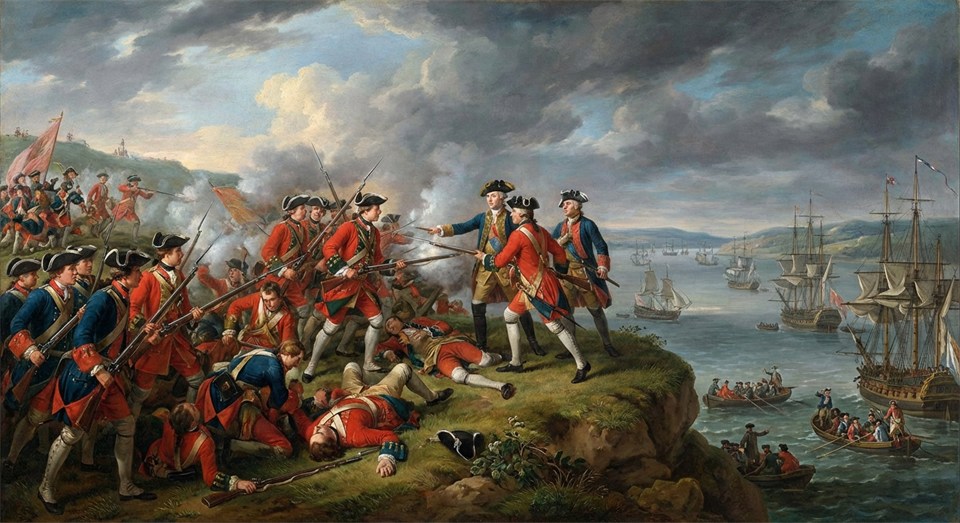
The American War of Independence (1775-1783) led to a new wave of migration. Many English who remained loyal to the crown (Loyalists) fled north and settled in British Canada. This strengthened the English-speaking population and laid the foundation for the dual Canadian identity.
In the wake of American independence, Canada was divided into Upper Canada (now Ontario) and Lower Canada (now Québec) to accommodate both English-speaking Loyalists and French-speaking settlers. The Constitutional Act of 1791 secured certain rights and self-government for both groups.
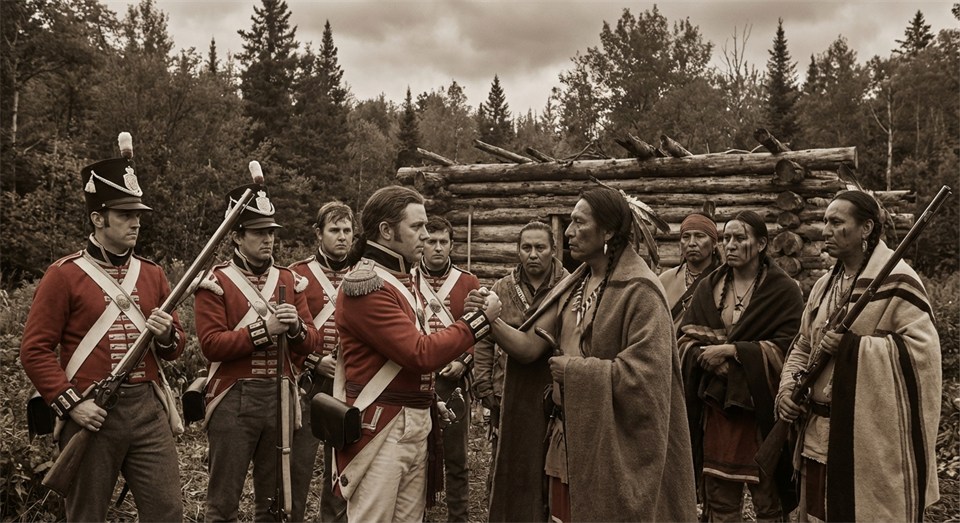
Between 1812 and 1815, the British and Americans fought another war, in which Canadian forces (British soldiers, loyal settlers, and Indigenous allies) played an important role. The war strengthened an emerging Canadian national feeling and highlighted cooperation among different peoples.
The first half of the 19th century saw large-scale immigration from Britain, Ireland, and later many other countries. Settlers cleared forests and founded new towns. The railway was built across the continent, enabling westward expansion and the founding of new provinces.
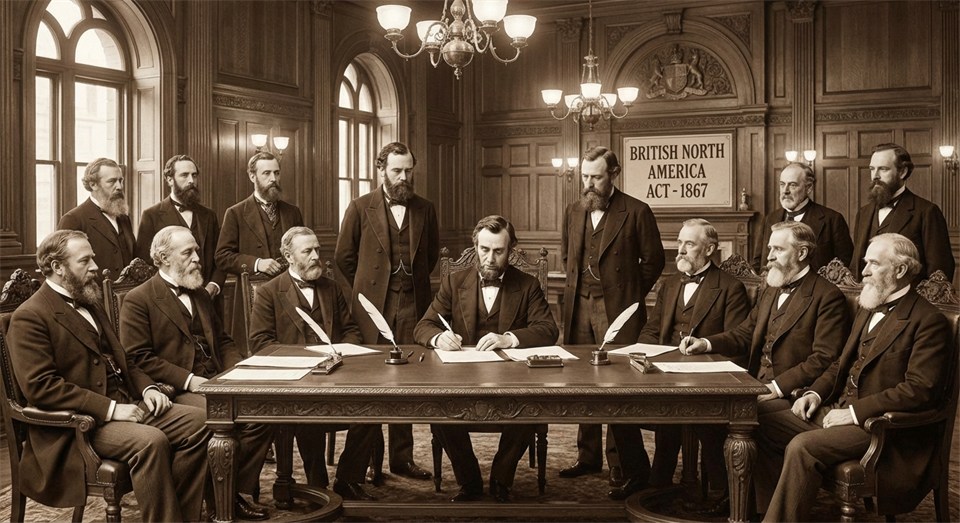
In 1867, Canada officially became a self-governing dominion under the British Empire through The British North America Act. The four original provinces – Ontario, Québec, New Brunswick, and Nova Scotia – formed the core of the new country. Confederation was seen as a solution to political, economic, and military challenges.
Over the following decades, Manitoba, British Columbia, Prince Edward Island, and later Alberta and Saskatchewan joined the confederation. Yukon, the Northwest Territories, and Nunavut were organized as territories. The railway and immigration bound the country together and created new dynamics.
The expansion of the confederation had major consequences for Indigenous peoples. Treaties were made, which often favored the state over Indigenous rights. Many were moved to reserves, and laws were introduced to assimilate them into the European-dominated culture.
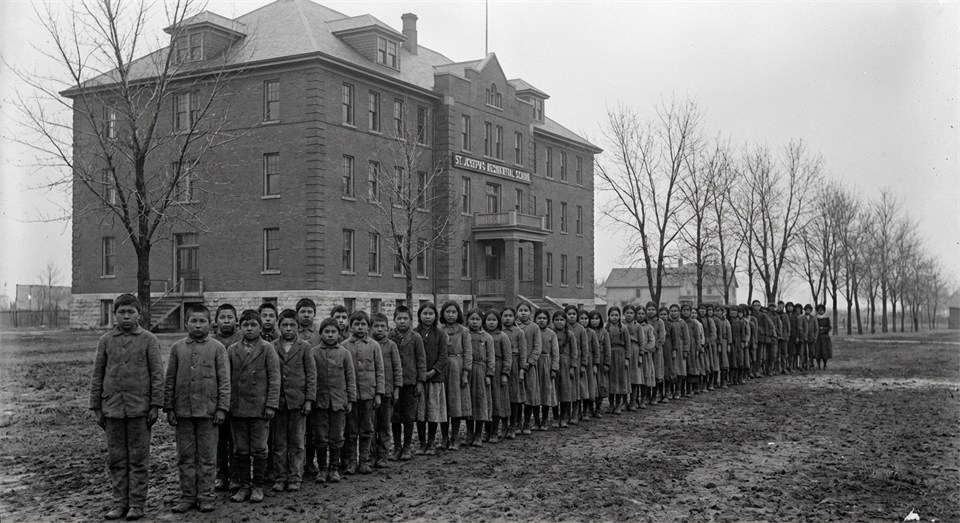
A dark chapter in Canada's history was the establishment of residential schools, where Indigenous children were removed from their families and forced to give up language and culture. Many suffered abuse, and the consequences are still felt today. In recent years, Canada has worked with truth and reconciliation processes to address past injustices.
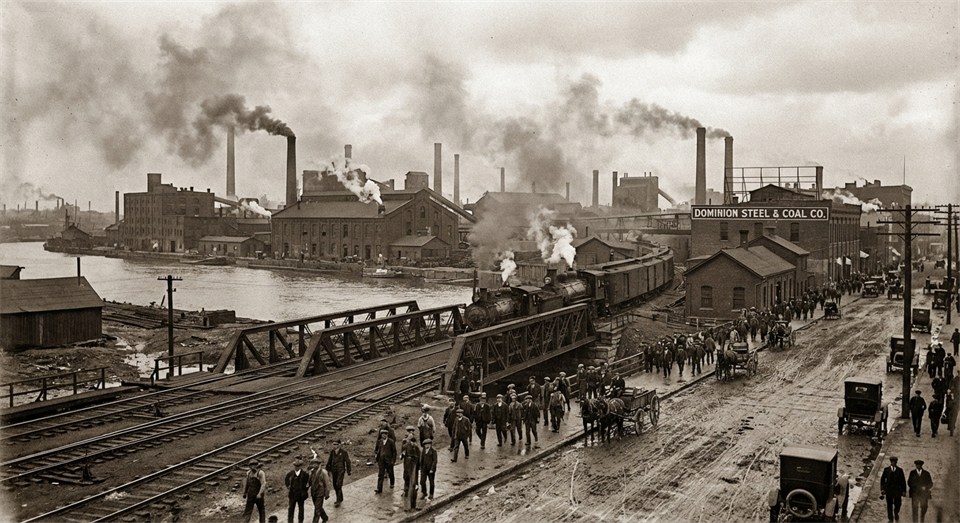
The 20th century brought great economic growth to Canada. Industrialization accelerated – especially in cities like Toronto, Montréal, and Vancouver. Railways, mining, and forestry became the backbone of the economy. People increasingly moved from the countryside to the cities to find work.
Canada participated actively in both the First and Second World Wars. Hundreds of thousands of Canadians fought in Europe, and many lost their lives. The wars strengthened an independent national identity, and Canada gained greater international recognition and influence.
After the Second World War, Canada experienced an economic boom and population growth, especially through immigration from Europe and later the entire world. The welfare state was expanded with health insurance, social benefits, and education. The national identity became more multicultural and open.

A significant challenge for modern Canada has been the tensions between the English-speaking and French-speaking parts of the country – especially in Québec. Two referendums on independence (1980 and 1995) showed that the issue still divides opinion, but so far Québec has remained part of the federation.
Today, Canada has one of the world's most open immigration policies and has made multiculturalism an official part of its national identity. Major cities like Toronto, Vancouver, and Montréal are global melting pots where people from all over the world live side by side.

A central theme in today's Canada is the work for reconciliation with Indigenous peoples. The government and society are working to recognize past abuses, secure rights, and strengthen the survival of Indigenous languages and cultures. This is a long and complex process, but is seen as crucial for a just future.
Canada has enormous natural resources and a rich wildlife. The country faces major challenges with climate change, sustainability, and environmental preservation. The debate about oil extraction, forestry, and the relationship with nature is prominent in politics and public discourse.
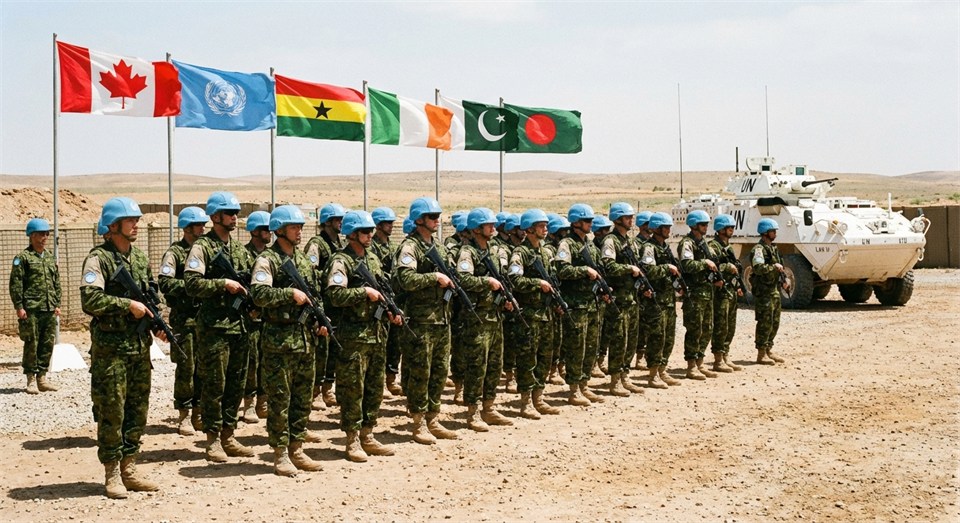
Canada is known as a moderate and cooperative actor in international politics. The country is a member of the UN, NATO, the Commonwealth, and many other international organizations. Canada has distinguished itself as an advocate for human rights, peacekeeping, and development aid.
With an open economy, Canada is dependent on trade with the rest of the world, especially the USA. Free trade agreements and international partnerships have been important for the country's prosperity and development.
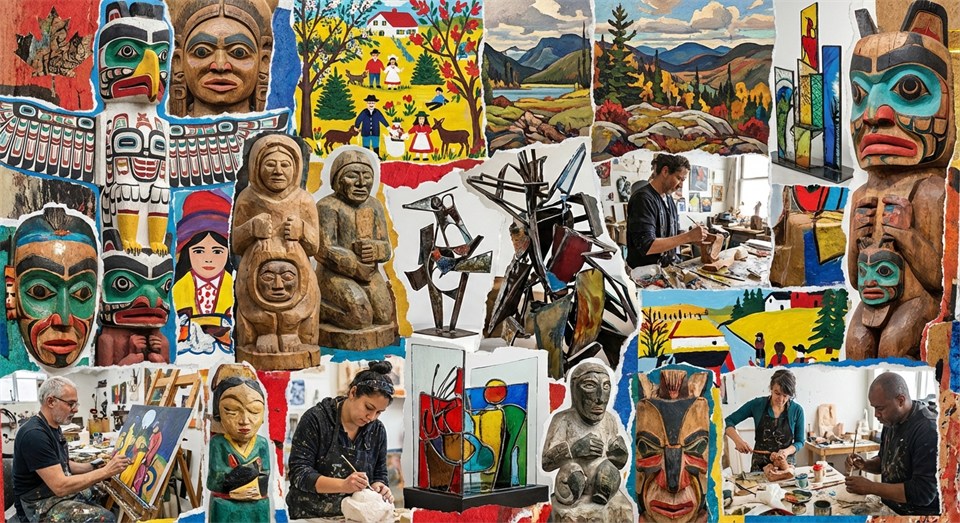
Canada has a rich and varied cultural heritage. Indigenous art and crafts, French and British culture, as well as inspiration from immigrants, influence architecture, music, literature, and visual arts. Canadian authors such as Margaret Atwood and Alice Munro, musicians like Leonard Cohen and Drake, and visual artists like Emily Carr have made a global impact.
Canada celebrates both national and regional holidays. Canada Day (July 1st) marks the birth of the nation, while Thanksgiving, National Aboriginal Day, and Saint-Jean-Baptiste Day in Québec demonstrate diversity. At the same time, sports like ice hockey and lacrosse hold a special place in the national identity.
The history of Canada is the story of a country in constant change – from the first settlements, through colonization and the birth of the nation, to today's multicultural and modern society. The story of Canada is also the story of cooperation and conflict, survival and innovation, as well as a continual search for reconciliation and a shared identity.
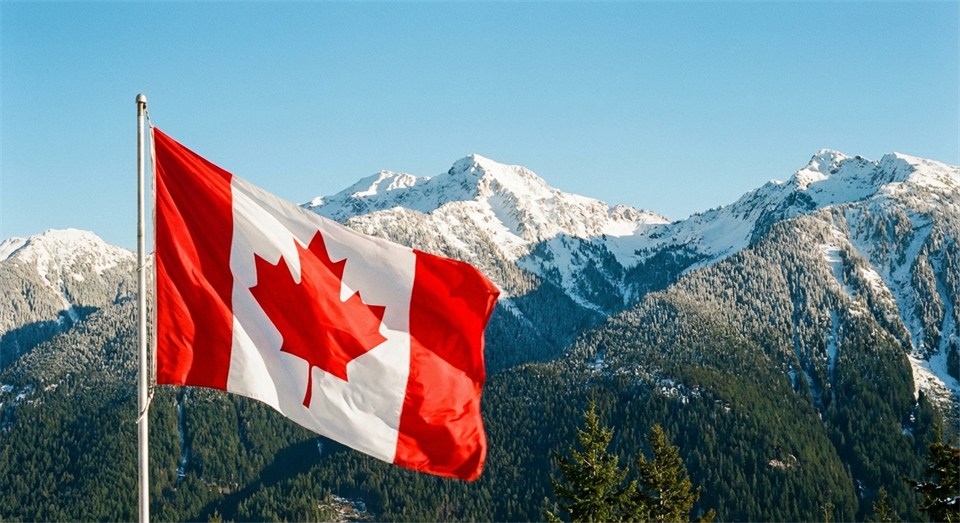
Today, Canada stands as one of the world's most open, diverse, and peaceful countries. The past lives on in the language, culture, and landscape – and in the challenges the country continues to work on. To understand Canada's history is to understand how nations are formed, and how the past always casts shadows into the present and the future.