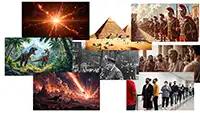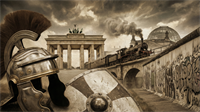
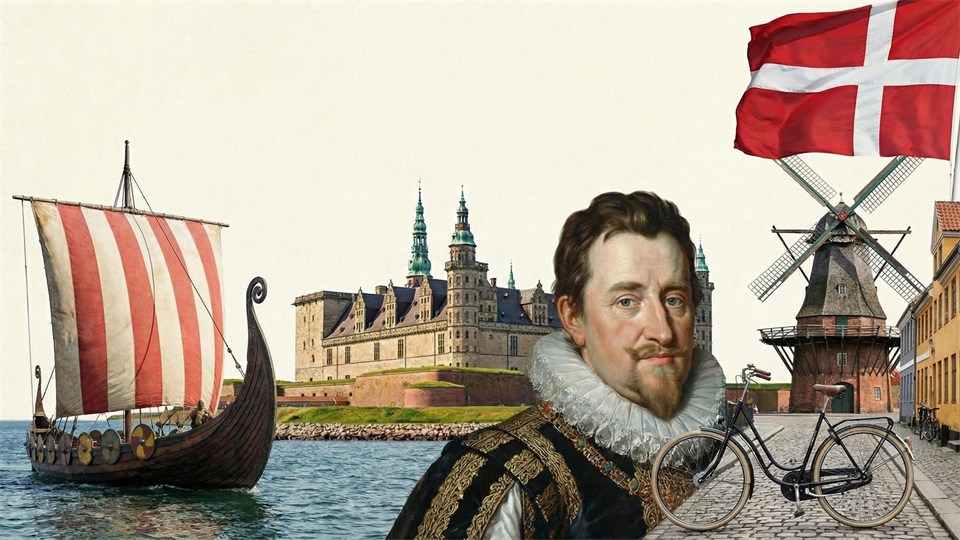


The history of Denmark is the story of a small country in Northern Europe, which over thousands of years has developed from the settlements of hunter-gatherers to a modern welfare society. Despite its size, Denmark has had significant influence on European history, culture, and politics. In this article, you will get an overview of the most important periods, events, and themes in Denmark's history, from the first people set foot on Danish soil to today's society. Along the way, we will meet kings and queens, Vikings, farmers, inventors, and artists, and we will see how the country has adapted to changes and challenges through the ages.
The earliest people came to the area we today call Denmark about 14,000 years ago, after the ice retreated from the last Ice Age. These people were nomadic hunters and gatherers who followed reindeer, elk, and other game. They lived primarily by hunting and fishing, and their tools were made of flint, bone, and wood. Settlements and tools have been found that show how these people lived in small groups and moved according to the resources of the seasons.
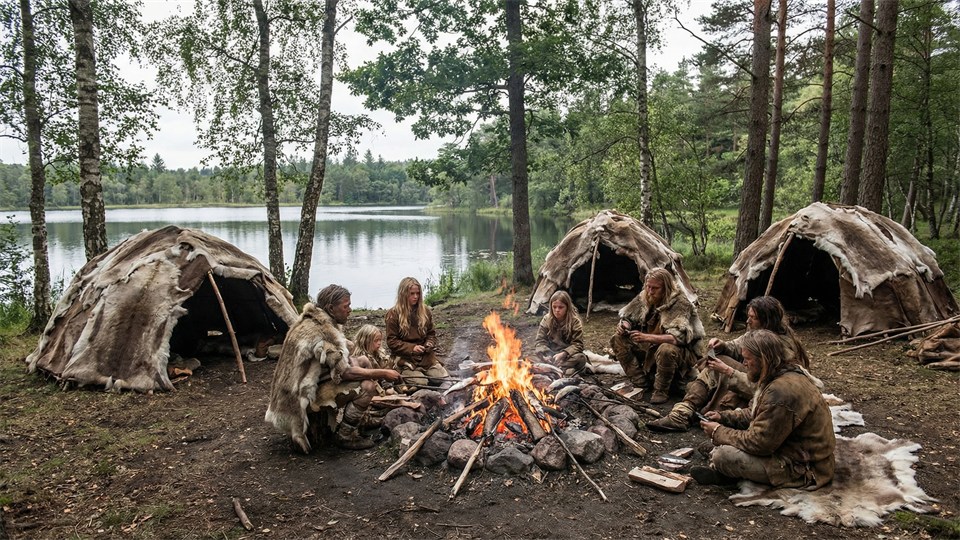
Around 4000 BC, people in Denmark began to cultivate the land and keep livestock. This period is called the Neolithic Age. It marked the beginning of a more settled lifestyle, where small villages and fields emerged. The farmers built longhouses of wood and clay, and they began to erect the impressive dolmens and burial mounds that can still be seen in the Danish landscape today. These burial monuments bear witness to a society where religion and ancestor worship played a central role.
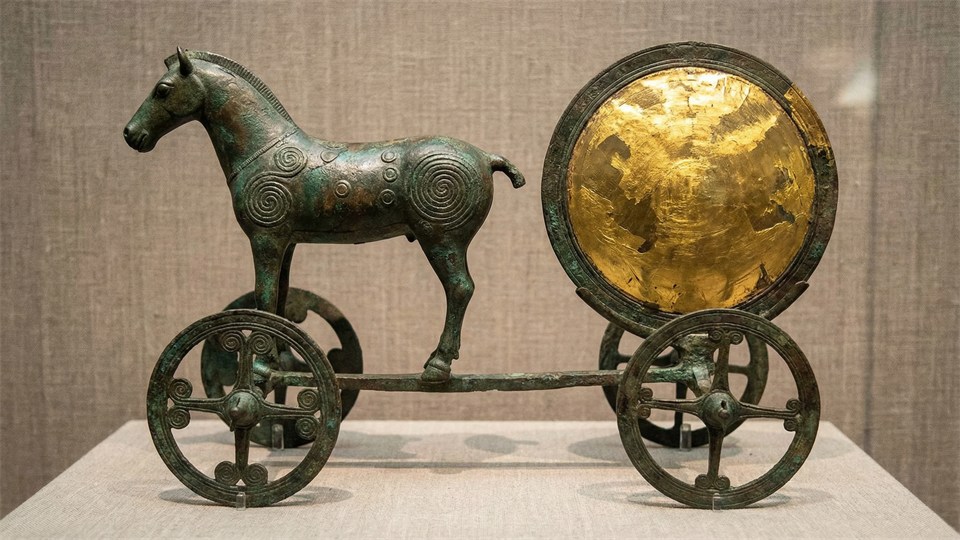
From around 1700 BC, the Bronze Age began, where the metal bronze was used for weapons, jewelry, and tools. Denmark was part of an extensive trade network that stretched all the way to the Mediterranean. Finds such as the Sun Chariot from Trundholm and rich grave finds bear witness to an advanced culture with religious beliefs and social divisions. Valuable objects were often sacrificed to the gods in bogs and lakes, which has given archaeologists a unique insight into the world of the Bronze Age.
The Iron Age began around 500 BC, when iron replaced bronze as the most important material. During this time, larger settlements and fortifications emerged, and societies became more organized. Denmark was not a unified nation, but consisted of many small tribes and clans that were often in conflict with each other. The Iron Age is also characterized by contact with the Roman Empire, especially in the form of trade in weapons and luxury goods. Bog bodies such as the Tollund Man tell of dramatic events and religious sacrifices.
The Viking Age, approximately 800-1050 AD, is one of the most famous periods in Danish history. The Vikings' reputation for seafaring, trade, raids, and exploration has given them a special place in world history. Danish Vikings were known for their longships, which made it possible to sail both on the open sea and in rivers. They explored and settled as far away as England, Ireland, Normandy, and even Russia.
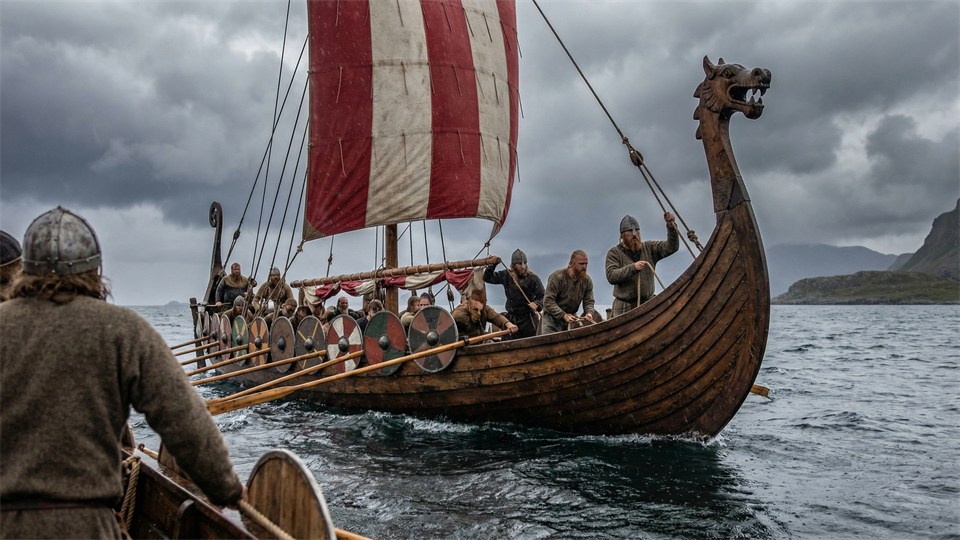
The Vikings were not only warriors, but also skilled craftsmen and farmers. Their society was divided into free men, thralls (slaves), and chieftains. The religion was characterized by Norse gods such as Odin, Thor, and Freya, and many myths and stories originate from this time. The Viking Age gradually ended when Christianity was introduced in Denmark around the year 965 under King Harald Bluetooth.
After the Viking Age, Denmark became a unified kingdom. The first known kings, such as Gorm the Old and Harald Bluetooth, laid the foundation for the monarchy, which still exists today. The kings gained more power, and the country was gradually divided into fiefs and districts, governed by nobles and magnates. However, royal power was often challenged by both the church and the nobility.
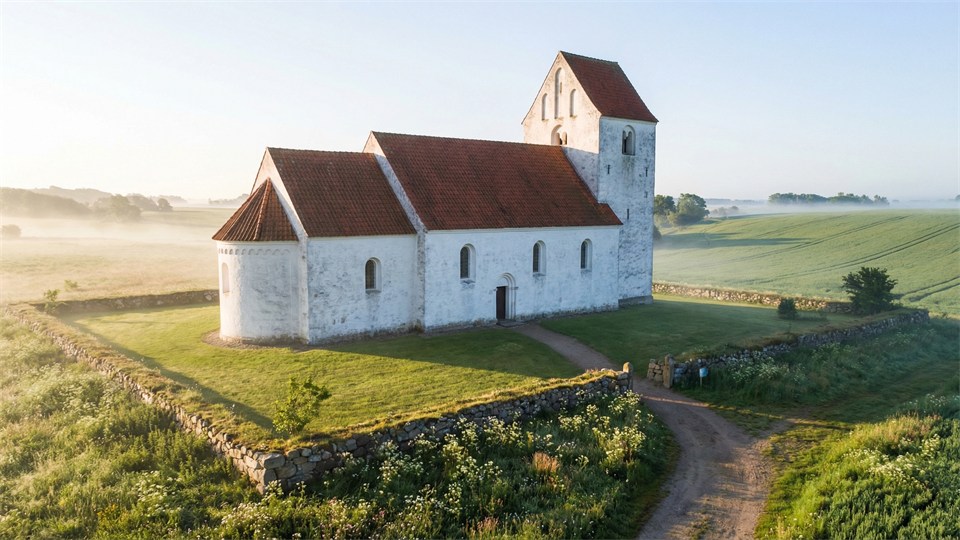
The influence of the church grew throughout the Middle Ages, especially after Denmark officially became Christian. Churches and monasteries were built all over the country, and bishops gained great power. Religion influenced all aspects of life, from legislation to everyday customs. The Middle Ages were also marked by major events such as crusades, plague, and peasant uprisings.
Most Danes were farmers who worked in the countryside. However, towns began to grow, especially around marketplaces and harbors. Crafts, trade, and markets played a greater role, and new social classes such as burghers and merchants emerged. The culture of the Middle Ages was expressed in frescoes, sagas, and folk songs that are still told today.
Around 1536, the Reformation was carried out in Denmark. This meant that the Catholic Church was abolished, and the country became Protestant with Luther as inspiration. The monasteries were dissolved, and the church's properties passed to the crown. The Reformation led to major changes in both religious life, education, and social structure.
The Renaissance in Denmark was characterized by kings such as Christian IV, who was known for building castles, cities, and strengthening both the navy and trade. The country experienced a blossoming in art, architecture, and science, but also wars, especially against Sweden and in the Thirty Years' War, which put the country under pressure.
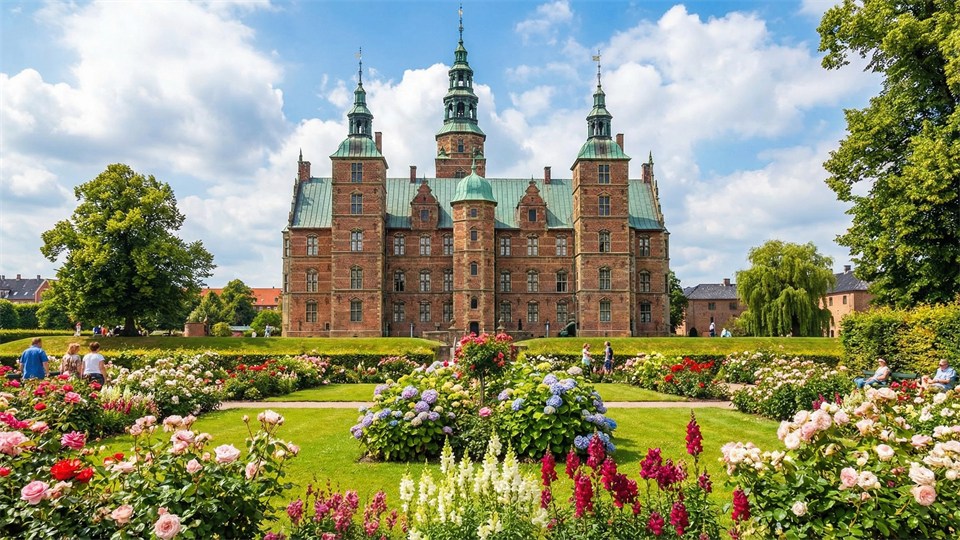
In 1660, royal power became hereditary and absolute, which meant that the king decided alone without having to consult the nobility. This strengthened central power and made Denmark one of Europe's most stable states. At the same time, civil servants and the army became important for the governance of society.
The Enlightenment of the 18th century brought new ideas about freedom, reason, and science. Major agrarian reforms were implemented, giving farmers better conditions and the opportunity to own their own land. The serfdom, which had tied men to the estate, was abolished in 1788. These changes helped modernize the country and improve living conditions for many.
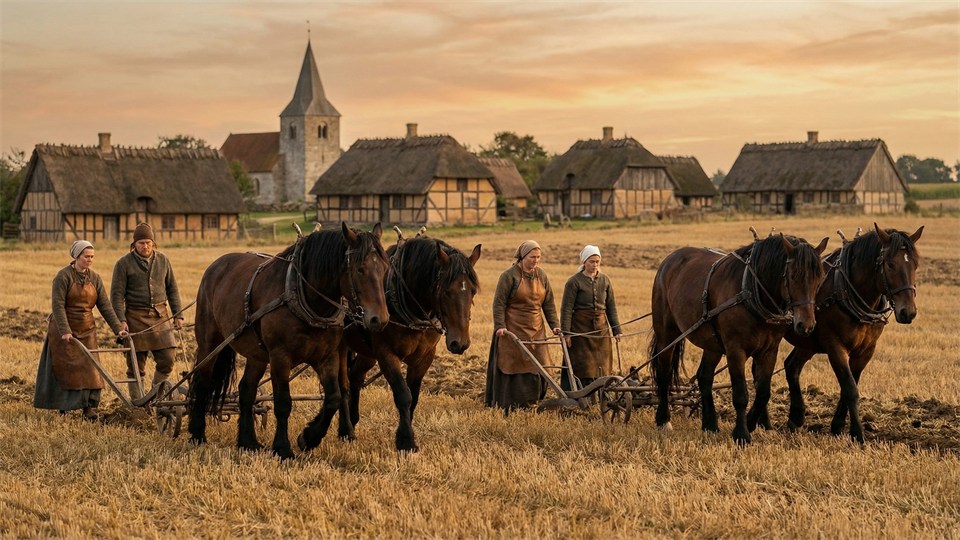
Denmark was drawn into the Napoleonic Wars and suffered great losses, including the fleet in 1807 and Norway in 1814. The economic and political landscape changed dramatically, and the country faced new challenges.
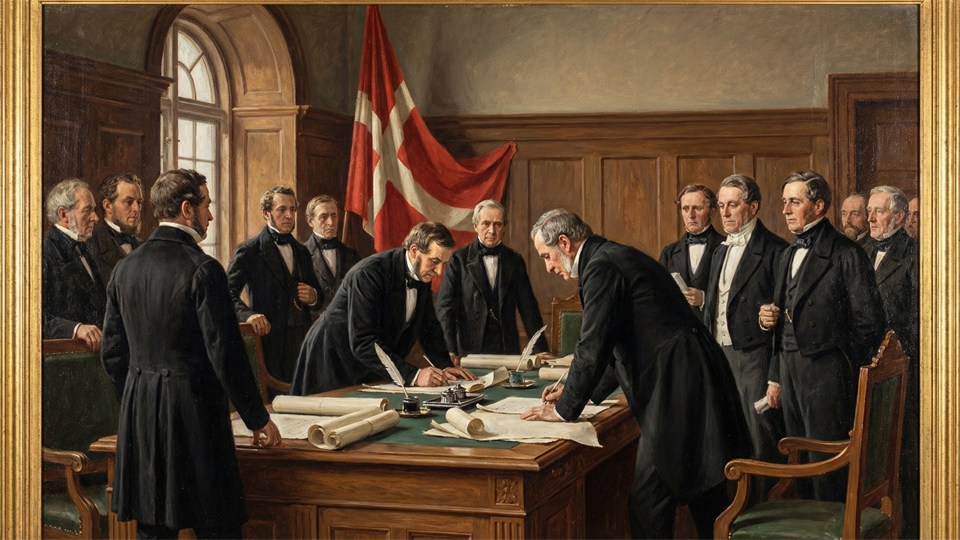
In 1849, Denmark got its first constitution, and the country became a constitutional monarchy with popular government. It was a milestone for Danish society, where citizens now gained rights such as freedom of speech and the right to vote (though only for men). Democracy and new political parties shaped society, and both cities and industry grew rapidly.
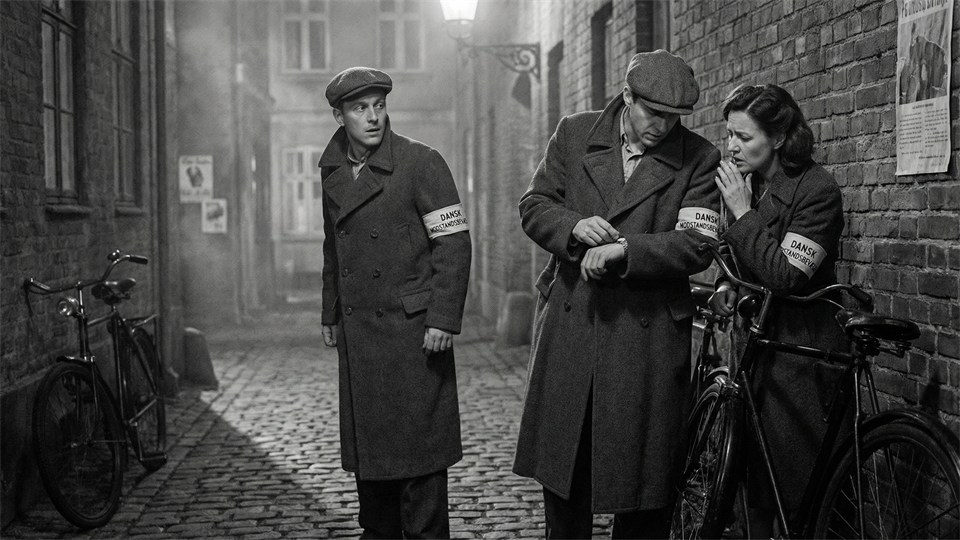
Denmark remained neutral during the First World War, but was occupied by Germany during the Second World War from 1940 to 1945. The occupation was a difficult time, but also a period of resistance, cooperation, and strong national identity. After the war, Denmark became a member of the UN and later NATO, which brought the country closer to international cooperation.
After the war, Denmark became one of the world's leading welfare societies. Free schooling, healthcare, and social benefits became part of everyday life. Women gained the right to vote in 1915, and equality and social reforms characterized the entire 20th century. Denmark also became known for design, architecture, film, and literature, which made an international impact.
Denmark became a member of the EEC (now EU) in 1973. Globalization, increased international trade, and cooperation have affected everything from the economy to culture. At the same time, Denmark has preserved many traditions and a strong national identity. Society is characterized by high trust, equality, and active citizenship.
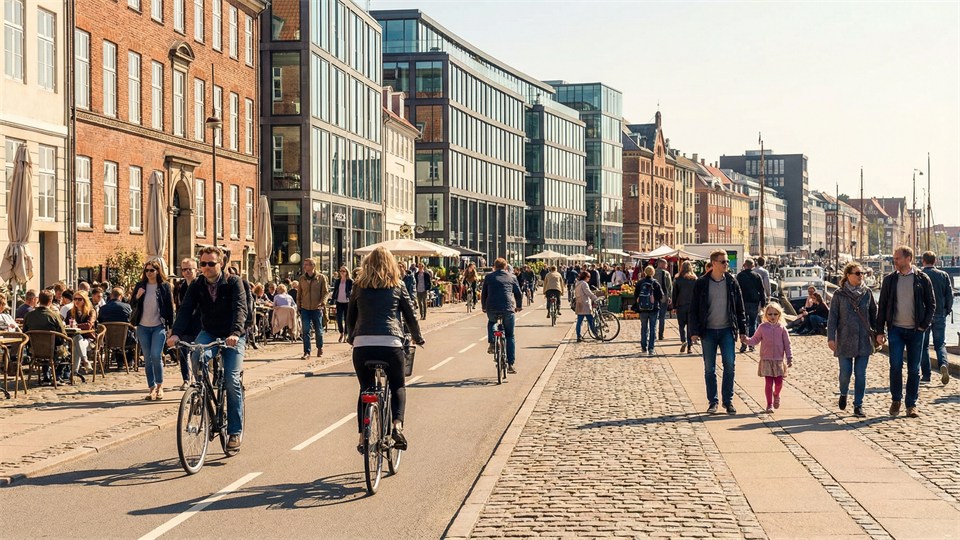
Today, Denmark faces global challenges such as climate, migration, and digitalization. The country is actively working for green transition, innovation, and social sustainability. Denmark is known for balancing tradition and renewal, and for having a society where citizens' participation and engagement are at the center.
The history of Denmark is a story of adaptation, survival, and change. From the first hunters to the modern welfare society, the Danes have managed to create a society based on community, openness, and innovation. The story is still developing, and understanding the past helps us better understand the present and the future.