


The French Revolution is one of world history's most famous and influential events. It began in 1789 and came to change not only France, but also the rest of Europe and the world. The revolution toppled the French monarchy, led to the establishment of the republic, and brought attention to values such as liberty, equality, and fraternity. But what actually triggered the revolution, and how did the events unfold? In this article, you will get a clear overview of the French Revolution – from its background and dramatic events to its legacy today.
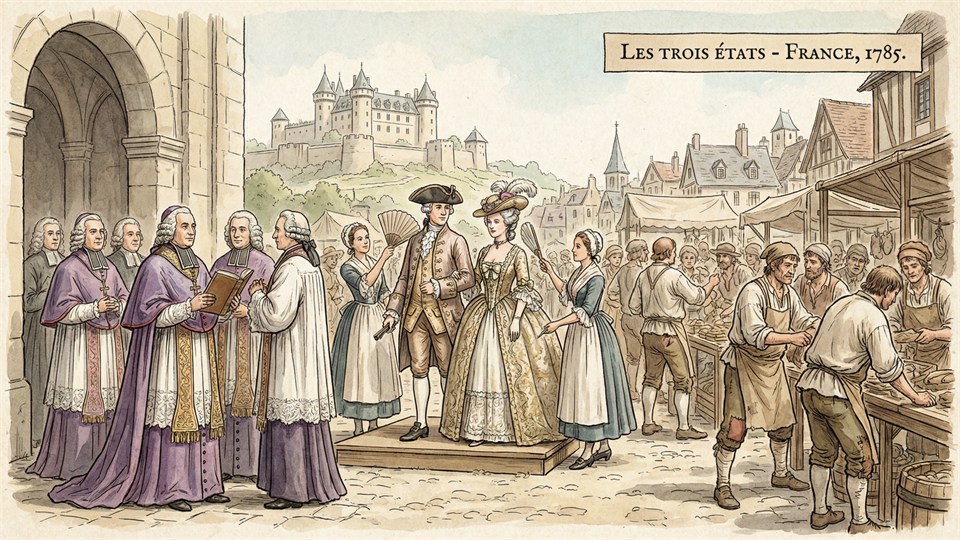
France at the end of the 18th century was marked by great differences between the various groups of the population. Society was divided into three estates: the clergy (1st estate), the nobility (2nd estate), and the large majority of citizens and peasants (3rd estate). The two upper estates enjoyed privileges, including tax exemption, while the 3rd estate bore the heavy burden of taxes and duties. The economic problems grew, and many peasants lived in poverty, while the nobility and royal family lived in luxury.
In the years before the revolution, Enlightenment philosophers – such as Voltaire, Rousseau, and Montesquieu – spread new ideas about society, power, and rights. They criticized the old absolutism and pointed to the need for liberty, equality, and the people's right to decide. These ideas especially inspired the educated part of the 3rd estate, who wanted change.
France's economy was in crisis. The country had spent enormous sums on wars, especially the American War of Independence, and the state treasury was empty. Attempts to introduce new taxes were met with resistance from the nobility. At the same time, food prices rose, and in 1788-89 poor harvests hit the population hard, resulting in hunger and hardship.
In May 1789, King Louis XVI convened the Estates-General to try to solve the economic crisis. Here, representatives of all three estates met, but conflict quickly arose over the voting rules. The 3rd estate wanted all votes to count equally, while the nobility and clergy wanted to preserve their privileges. When negotiations reached a deadlock, the 3rd estate declared itself the National Assembly and swore that they would not separate until France had a constitution – the so-called "Tennis Court Oath," where they met on an indoor tennis court.
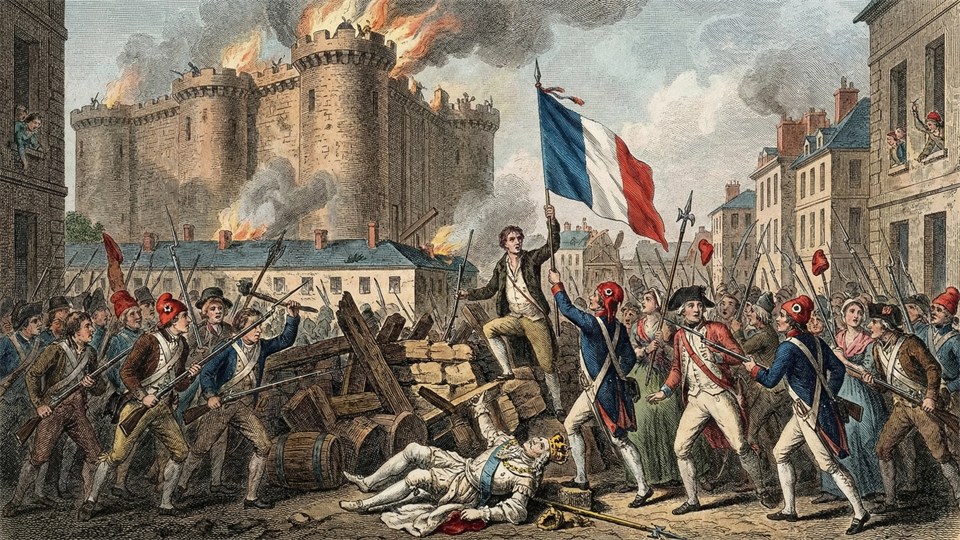
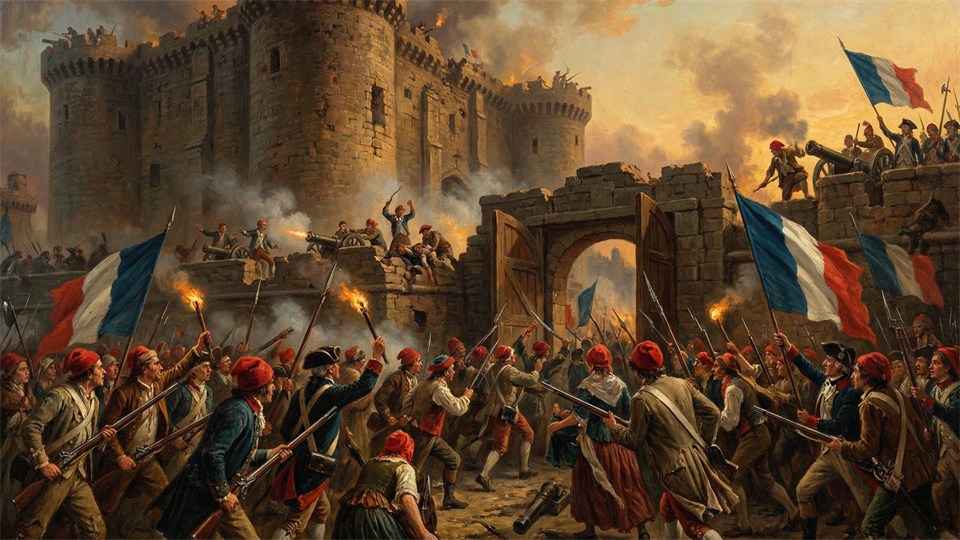
On July 14, 1789, a crowd stormed the Bastille prison in Paris. The Bastille was a symbol of the king's power and oppression. The storming of the Bastille became the starting signal for the revolution and is still celebrated today as France's national day. After the Bastille, unrest spread throughout the country.
After the outbreak of the revolution, many of society's old privileges were quickly abolished. In August 1789, the National Assembly adopted the "Declaration of the Rights of Man and of the Citizen." This declaration established principles such as equality before the law, freedom of speech, and the right to private property. It was the starting signal for a long series of reforms, where the church lost power and property, and the nobility was stripped of their special rights.
King Louis XVI initially tried to cooperate, but quickly lost the people's trust. In 1791, he and his family tried to flee the country, but were captured. In 1792, the monarchy was officially abolished, and France was declared a republic. The following year, Louis XVI was convicted of treason and executed by guillotine. Queen Marie-Antoinette suffered the same fate.
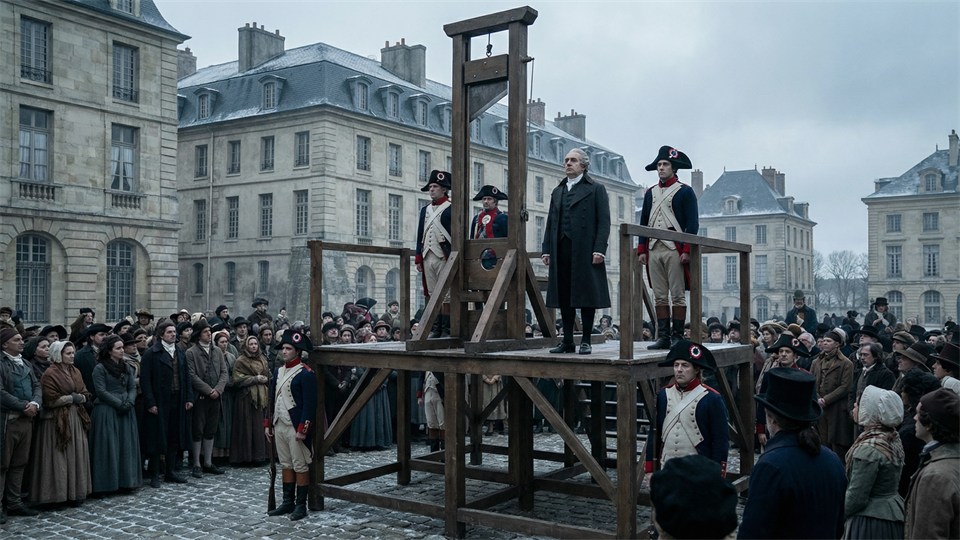
After the fall of the monarchy, the revolution became more radical. From 1793 to 1794, France was ruled by the Committee of Public Safety led by Maximilien Robespierre. In this period, called "The Reign of Terror" (la Terreur), thousands of people were executed as "enemies of the revolution." The guillotine became a symbol of fear and justice, but also of the extreme violence the revolution developed into.
In 1794, Robespierre himself was overthrown and executed. After this followed a more moderate period with the Directory, but France was still marked by unrest, economic difficulties, and war against other European countries. In 1799, Napoleon Bonaparte seized power in a coup, thus putting an end to the chaotic phase of the revolution, even though its ideas lived on.
The French Revolution led to fundamental changes, both in France and internationally. French society was transformed: the nobility lost their privileges, and the principle of equality before the law was introduced. The church lost power, and citizens gained new rights. Many of these changes became models for later societies around the world.
The revolution's ideas of liberty, equality, and the sovereignty of the people quickly spread to other countries. Many other European countries experienced revolutionary movements inspired by the events in France. The American Revolution had already pointed to new social ideals, but the French made it a popular project with great symbolic power. Also in Latin America and elsewhere, the revolution became a model for the struggle against injustice and oppression.
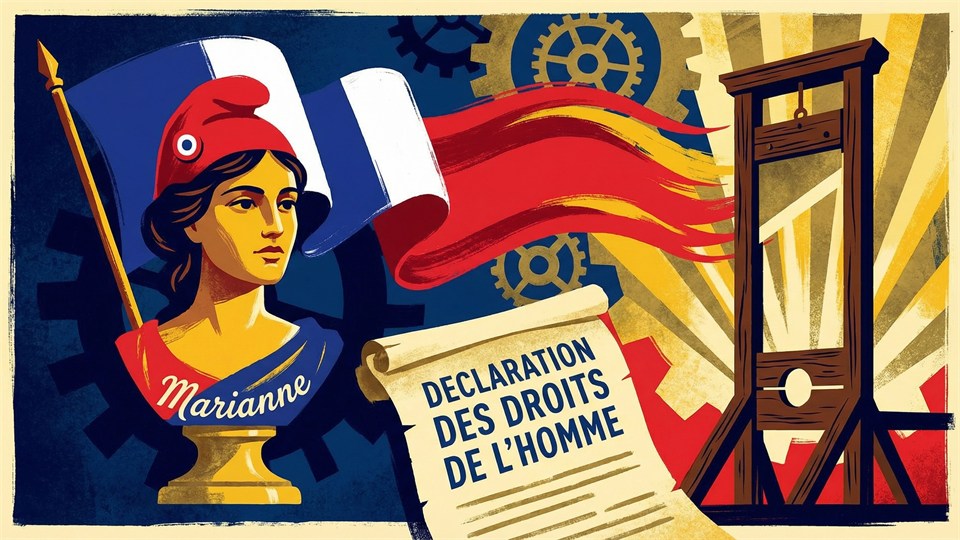
The revolution also influenced art and culture. Artists such as Jacques-Louis David created monumental paintings that celebrated liberty and revolutionary heroes. Music, poetry, and theater were used to convey the messages of the revolution. Liberty motifs, symbols such as the French tricolor and the Marianne figure became central to the new national identity.
The three words – liberty, equality, and fraternity – are still central values in France and many other countries. The revolution has left lasting traces in both political systems and in our understanding of civil rights. Although the revolution also led to violence and unrest, its core ideas became an inspiration for democratic movements throughout the 19th and 20th centuries and up to today.
The French Revolution is still discussed. Some see it as the beginning of modern democracy, while others point to its violent sides. But regardless of viewpoint, its significance cannot be denied: It questioned the legitimacy of power, inspired millions to demand rights – and changed world history forever.
The French Revolution was a dramatic and complex event that changed both France and the world. Through the struggle for liberty, equality, and the people's right to decide, the foundation was laid for modern society. The revolution showed how powerful ideas can be – and how they can change the world when put into action.