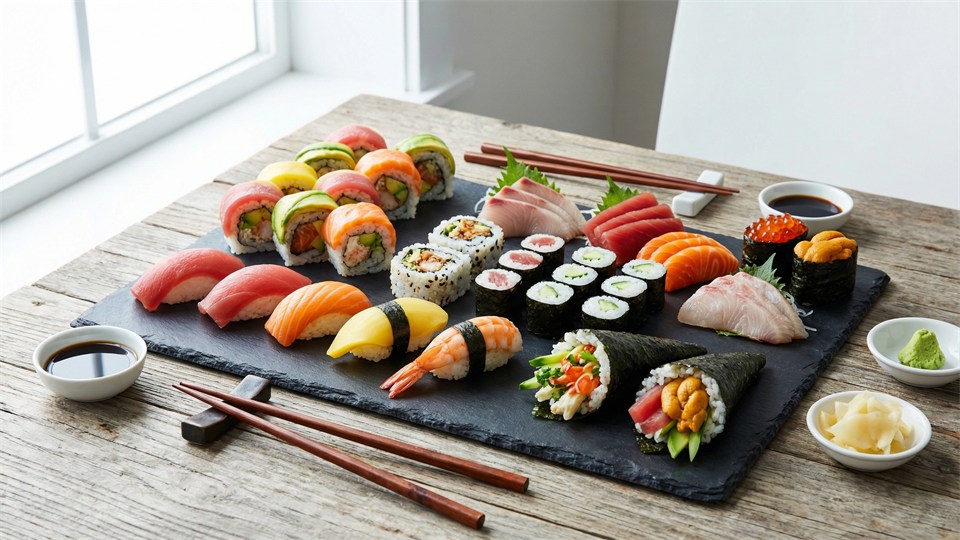


Sushi has long since made its way into the global kitchen and is loved for its combination of freshness, delicate flavors, and beautiful presentation. But for many beginners, sushi can seem confusing: What is the difference between nigiri and maki? What does sashimi actually mean? And is there sushi without fish? In this article, you will get a clear overview of the most important types of sushi – from classics to more modern varieties – so you can order (or maybe even make) sushi with confidence and fully enjoy the experience.
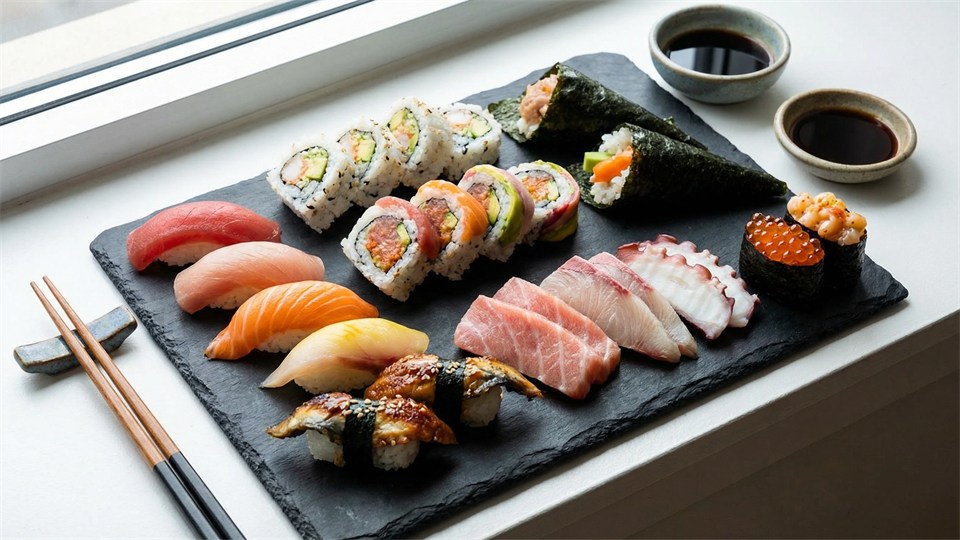
Sushi is fundamentally about vinegared rice (sushi rice) combined with various ingredients – often fish, but also vegetables, egg, or shellfish. It is not necessarily raw fish that defines sushi, but rather the special rice, which is mixed with rice vinegar, sugar, and salt. This rice is rolled, shaped, or topped with other ingredients. Sushi is often served with accompaniments such as soy sauce, wasabi, and pickled ginger, which both enhance the flavor and cleanse the palate between different bites.
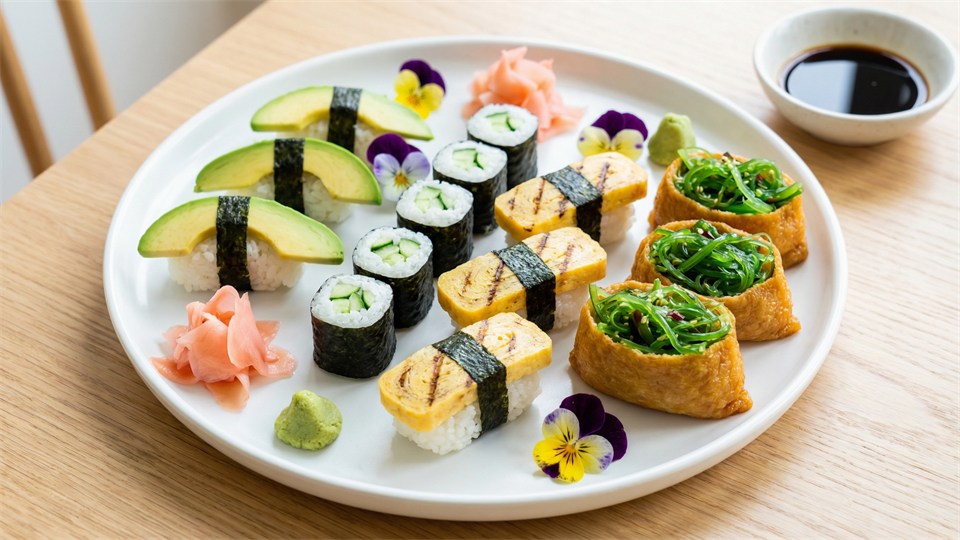
Nigiri is one of the most iconic types of sushi. Here, small oblong rice balls are shaped by hand, then topped with a piece of fish or another topping. Often, a bit of wasabi is spread between the rice and fish, and in some cases, the piece is bound together with a small strip of seaweed (nori). Nigiri is ideal if you want to taste the purity of the ingredients, as there are not many other elements to "disturb" the experience.
Nigiri is typically served in pairs and eaten with fingers or chopsticks. Try dipping the fish lightly in soy sauce (not the rice, as it quickly absorbs too much liquid).
Maki, or makizushi, is the type of sushi many first encounter. Here, sushi rice and filling (fish, vegetables, avocado, cucumber, etc.) are rolled in a layer of seaweed (nori) using a bamboo mat. The roll is then cut into bite-sized pieces. Maki comes in several varieties depending on size and filling:
Maki is easy to eat, versatile, and well-suited for sharing. Try exploring different fillings, from classic tuna/cucumber to vegetarian varieties with avocado or tempura vegetables.
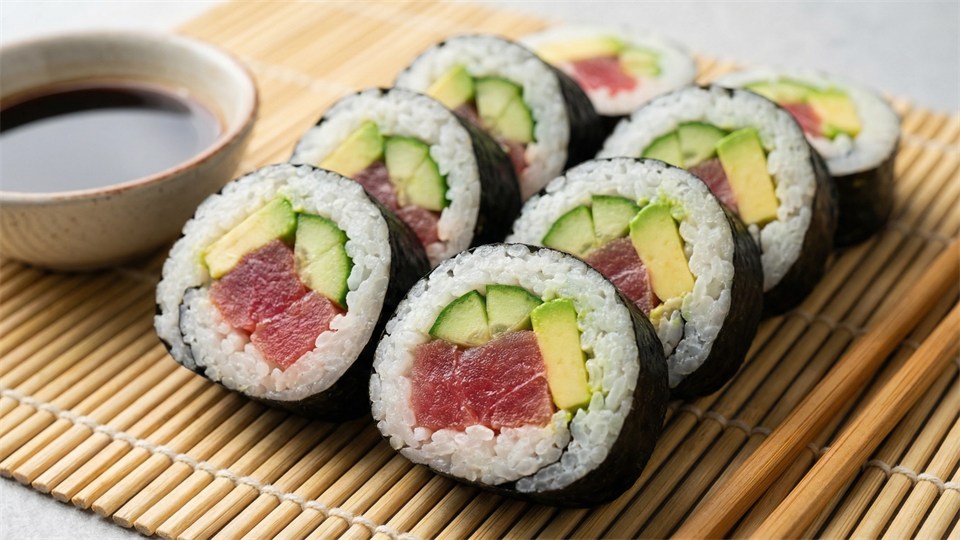
Sashimi is not technically sushi, because it does not include rice, but is almost always mentioned alongside sushi. Here, thin, beautifully cut slices of raw fish or shellfish – e.g., tuna, salmon, scallop, or squid – are served, often garnished with radish (daikon) and wasabi. Sashimi highlights the freshness and texture of the fish and is an obvious choice if you want the pure taste experience without rice or seaweed.
Typical sashimi fish include:
Eat sashimi with chopsticks and dip gently in soy sauce, possibly mixed with a little wasabi.
Temaki means "hand-rolled" and are cone-shaped rolls, reminiscent of a seaweed cornet filled with rice and various ingredients. Temaki is eaten with the hands and allows you to experiment with both content and expression, as they can be filled with anything from raw fish and shrimp to vegetables and tempura. Temaki is especially popular for homemade sushi, where guests can assemble their own favorite roll.
Typical fillings for temaki:
Eat temaki immediately so the seaweed stays crispy.
Gunkan-maki, or "boat sushi," consists of an oval rice ball, where a strip of seaweed is wrapped around the edge to form a small bowl. This is typically filled with ingredients that would otherwise be difficult to balance on rice – e.g., salmon roe (ikura), flying fish roe (tobiko), or various salads, such as tuna mousse or crab salad. Gunkan is both decorative and practical, as it holds the ingredients in place.
Gunkan is often eaten in one bite and should preferably be served fresh while the seaweed is still crispy.
Oshi sushi, also known as pressed sushi, comes from the Osaka region. Here, sushi rice and topping (e.g., salmon or mackerel) are pressed together in a square mold, then cut into blocks. The result is square pieces with an elegant, layered look. Oshi sushi is more compact than classic nigiri and is well-suited for experimenting with colors and patterns.
Typical varieties are with smoked or marinated fish, and oshi sushi can also be made with vegetables for a vegetarian version.
More and more people are choosing sushi without fish – either for taste, environmental, or dietary reasons. Vegetarian sushi can be made as maki, temaki, nigiri, or gunkan, where the filling might be avocado, cucumber, roasted pumpkin, pickled vegetables, tofu, or mushrooms. Miso-glazed eggplant and tamago (Japanese omelet) are also popular vegetarian choices.
Vegan sushi avoids eggs and dairy products, and instead uses, for example, tofu, seaweed salad, edamame, or tempura vegetables. Whatever you choose, there are many possibilities for composing tasty and beautiful bites without animal products.
In addition to the classic types, many modern sushi inventions have emerged – especially outside Japan. Examples include "sushi burrito" (large hand rolls in burrito size), "sushi bowls" (a bowl with sushi rice, vegetables, and fish), and "flame-seared sushi" (aburi), where the fish is quickly seared with a small blowtorch to add extra flavor.
These varieties can be fun to try, especially if you are new or want to explore the many possibilities of sushi. However, remember that not all varieties are found at traditional Japanese sushi restaurants.
Whether you prefer classic nigiri, colorful maki rolls, pure sashimi, or vegetarian alternatives, sushi offers a wealth of options for both taste, texture, and expression. If you know the difference between the most common types, it is easier to order, make, and enjoy sushi – and maybe even discover new favorites. Take your time to explore the many forms, and don't be afraid to try something new. Enjoy!