

Calories are a concept that most people know from foods, diets, and health advice. But what does it actually mean when it says that a food contains 100 calories? Why do we talk about calorie intake, and what role do calories play in the body? In this article, we dive into what calories are, how they work, and why it is important to understand them in order to take care of your health.
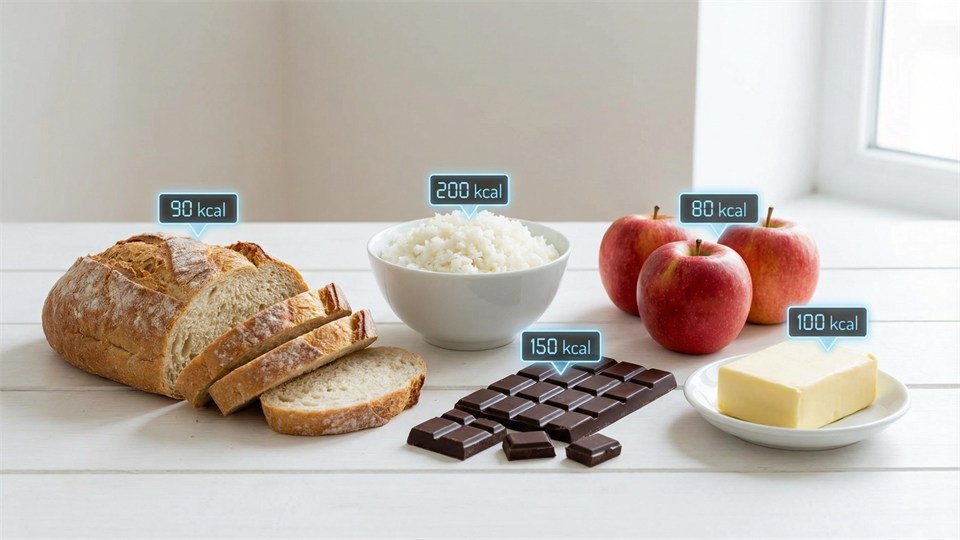
A calorie is a unit of measurement for energy. When we talk about food and nutrition, we use calories to indicate how much energy a particular food product provides the body. In scientific contexts, the term kilocalorie (kcal) is often used, where 1 kcal equals 1,000 calories. When you read food labels, it typically says "calories" or "kcal" – in everyday language, it means the same thing.
Technically, a (kilo)calorie is the amount of energy required to heat one kilogram of water by one degree Celsius. But in practice, we use the term to measure how much energy we get from our food and how much energy our body uses throughout the day.
All foods contain energy, but the amount varies greatly. Fat, carbohydrates, and protein are the three most important nutrients that contribute to the calorie content:
Alcohol also provides energy – approx. 7 kcal per gram – but it is not counted as a nutrient because the body does not need alcohol to function.
The body needs energy to stay alive and function optimally. The calories from the diet are used for both basic life processes and physical activity. Without sufficient energy intake, we would not be able to breathe, keep the heart running, or think clearly. Here are some of the most important processes that require calories:
The total amount of energy you need daily is called your total energy expenditure and depends on age, gender, weight, height, and activity level.
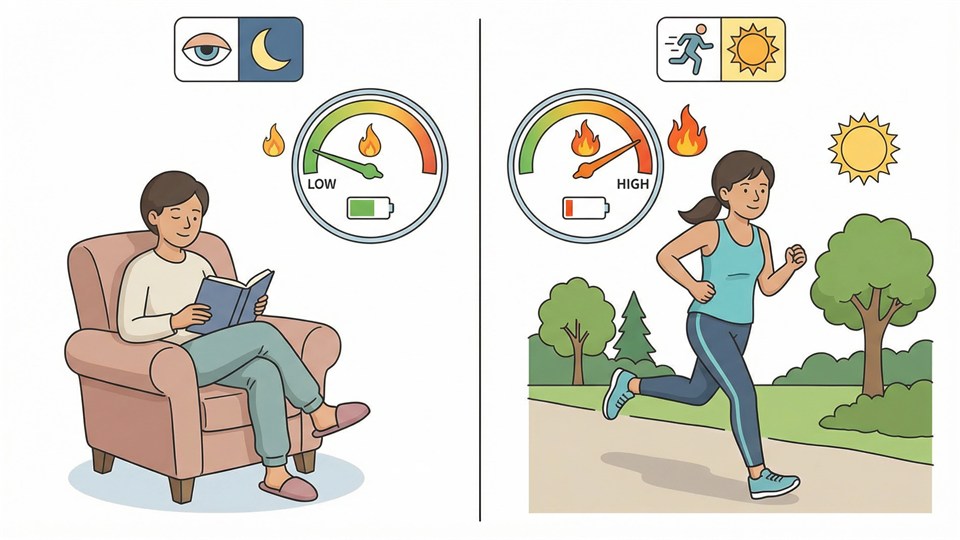
To maintain a stable body weight, there must be a balance between the number of calories you consume and the number of calories you burn. If you consume more calories than you use, the excess energy is typically stored as fat, which can lead to weight gain. Conversely, a calorie deficit – that is, burning more calories than you eat – will lead to weight loss.
Imagine an adult woman who has a daily energy requirement of about 2,000 kcal. If she eats food that totals 2,500 kcal per day, she will gain weight over time because the body stores the excess as fat. If, on the other hand, she only consumes 1,800 kcal, she will lose weight over time because she burns more calories than she gets.
Calorie needs are individual and depend on several factors:
To find out how many calories are in a food, you look at the content of fat, carbohydrates, protein, and alcohol. Manufacturers often measure the calorie content by analyzing the nutrients and using standard calculations (e.g. 9 kcal/gram fat, 4 kcal/gram carbohydrate and protein).
The nutrition label on the packaging typically states the calorie content per 100 grams and per portion. This makes it easier to compare products and plan your intake.
Yes. If you consume too few calories over a longer period, the body does not get enough energy to maintain its vital functions. This can lead to fatigue, reduced immune function, muscle loss, and in the worst case, damage to organs. Especially children, young people, pregnant women, and people with illness should be careful not to get too little energy.
Extremely low calorie intake can also lead to eating disorders and other health problems. It is therefore important to have a balance where the body gets the energy it needs without overeating.
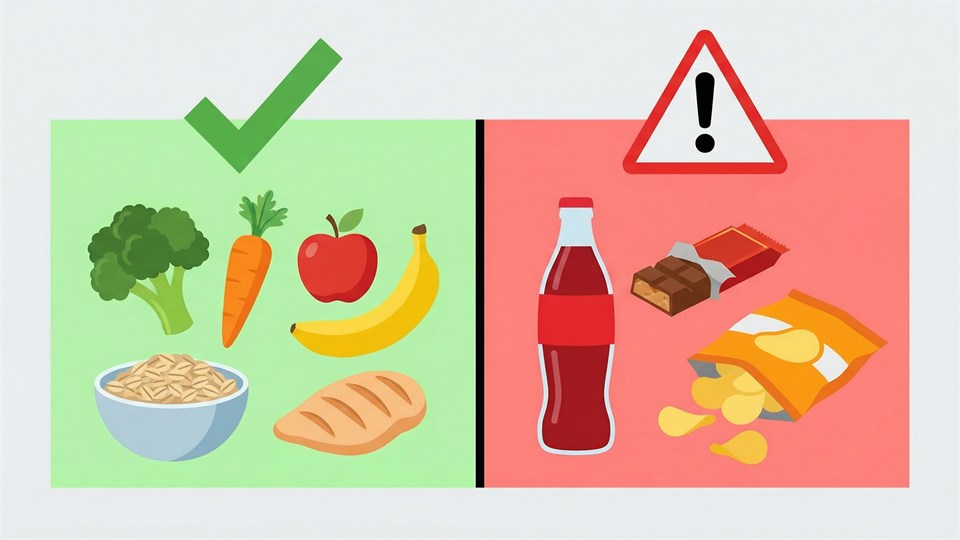
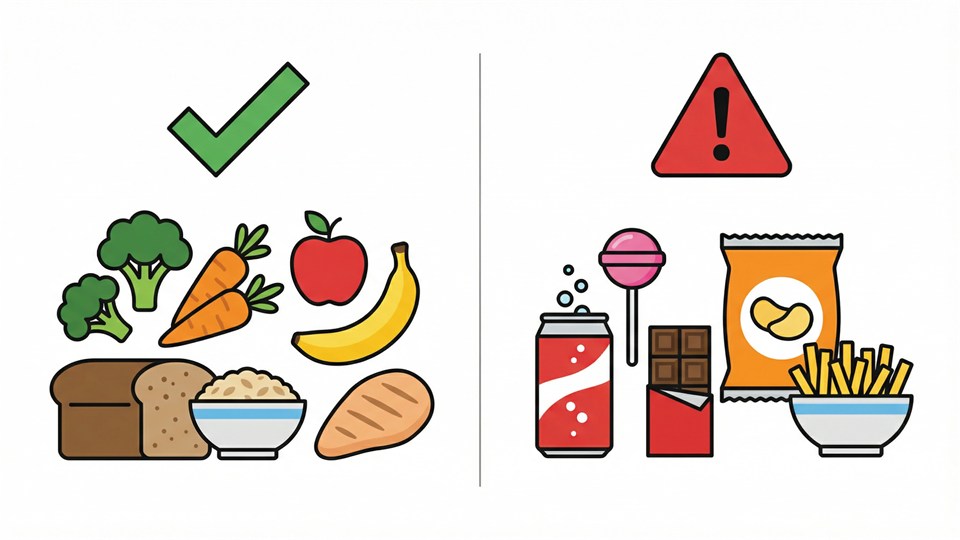
Although one calorie is technically a unit of measurement, it does not mean that all calories have the same effect on the body. How the body processes the energy also depends on where the calories come from. For example, 100 kcal from vegetables or lean meat will give the body more vitamins, minerals, and fiber than 100 kcal from sugar or soda.
Therefore, it is recommended to get the majority of your calories from healthy foods such as vegetables, whole grains, lean meat, fish, fruit, and healthy fats. In this way, the body gets both energy and the nutrients it needs.
Calories play a central role in weight loss. To lose weight, you need a calorie deficit, i.e. burn more calories than you consume. This can be achieved by eating healthier, choosing lower-calorie foods, and increasing physical activity. It is recommended to aim for a moderate deficit so that the body still gets sufficient energy and nutrition.
Example: A daily deficit of 500 kcal will theoretically lead to a weight loss of about 0.5 kg per week, as 1 kg of body fat contains about 7,000 kcal. But weight loss also depends on other factors such as metabolism, hormones, and muscle mass.
It is not necessary for everyone to count calories, but it can be helpful if you want to lose weight, gain weight, or keep your weight stable. For most people, however, it is more important to focus on healthy eating habits and listen to the body's signals of hunger and satiety.
Empty calories are calories from foods that contain almost no vitamins, minerals, or other important nutrients – for example, sugary drinks, candy, and fast food. Too much of this type of calorie can lead to weight gain and poor health.
Calories are the body's fuel and a central part of our health. Understanding what calories are and how they affect the body can help you make smarter choices in your everyday life. A good balance between intake and expenditure – with a focus on healthy sources – is the key to an energetic and healthy life.