

The brain is the body's control center and one of the most fascinating organs we have. It makes it possible to think, feel, remember, move, and respond to the world around us. Although most people know that the brain is important, it can seem difficult to understand because it works with countless processes at the same time. Even so, its most important functions can be explained in simple and accessible language. When you learn a little about the brain, it also becomes easier to understand why sleep, movement, diet, learning, and breaks matter so much for both body and mind.
The brain is part of the central nervous system and is protected inside the skull. It receives information from the senses, interprets it, and sends signals on to the rest of the body. This happens all the time, even when you are not thinking about it. The brain controls both conscious actions, such as when you stand up from a chair, and automatic functions, such as breathing, heart rate, and regulation of body temperature. It therefore functions as both a command center, an interpreter, and a coordinator. Without the brain, the body would not be able to gather sensory impressions, make decisions, or adapt to new situations.
In adults, the brain typically weighs around 1.3 to 1.5 kilograms, but its importance is far greater than its size suggests. It consists of billions of nerve cells that communicate with each other through electrical and chemical signals. These connections make it possible to learn new skills, store memories, and change behavior over time. For example, when you learn a new language, practice an instrument, or get better at a sport, it is the brain that adapts. It is therefore not a fixed and unchanging structure, but a living organ that is constantly working and reshaping itself.
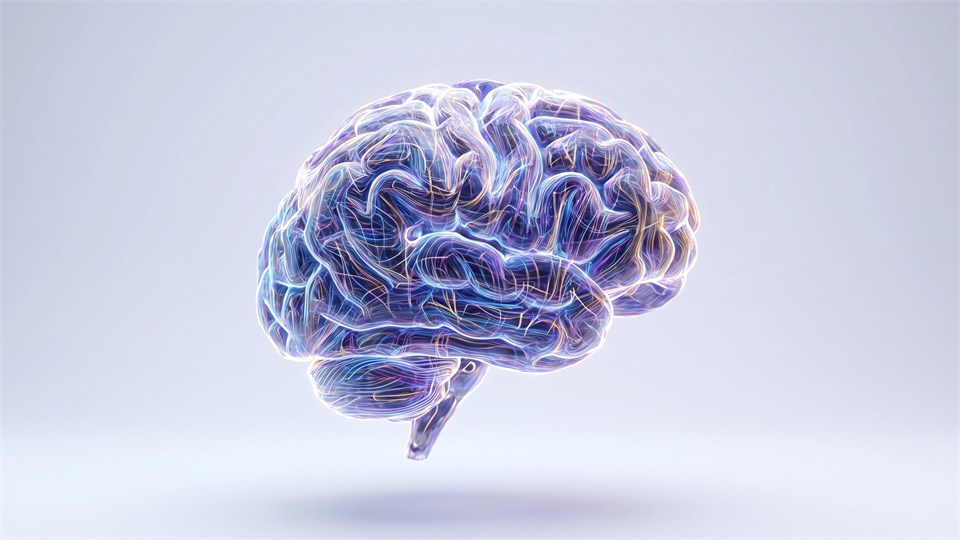
Although the brain works as a unified whole, it is useful to know some of its main areas. The cerebrum is the largest part and is responsible for many of the functions we associate with conscious thought. This is where language, planning, problem-solving, sensory impressions, and voluntary movements are processed, among other things. The cerebrum is divided into two halves, the right and left hemispheres, which work closely together. The two sides are connected by nerve pathways so that information can quickly be sent back and forth.
The cerebellum is located at the back and bottom of the brain. It plays an important role in balance, precision, and coordination. When you catch a cup, ride a bike, or walk on uneven ground, the cerebellum helps fine-tune the movements. The brainstem connects the brain to the spinal cord and controls several vital functions such as breathing, heart rhythm, and wakefulness. You could say that the brainstem takes care of some of the body's most basic survival functions, while the cerebrum is more responsible for advanced mental tasks.
On the outside of the cerebrum lies the cerebral cortex, the folded surface many people associate with the brain's appearance. A large part of the advanced processing of information takes place here. Different areas of the cortex have different specialties. Some are important for vision, others for hearing, language, or movement. Deeper inside the brain are structures that are central to emotions, motivation, and memory. These include the hippocampus, which is highly important for the formation of new memories, and the amygdala, which helps process fear and other emotional reactions.
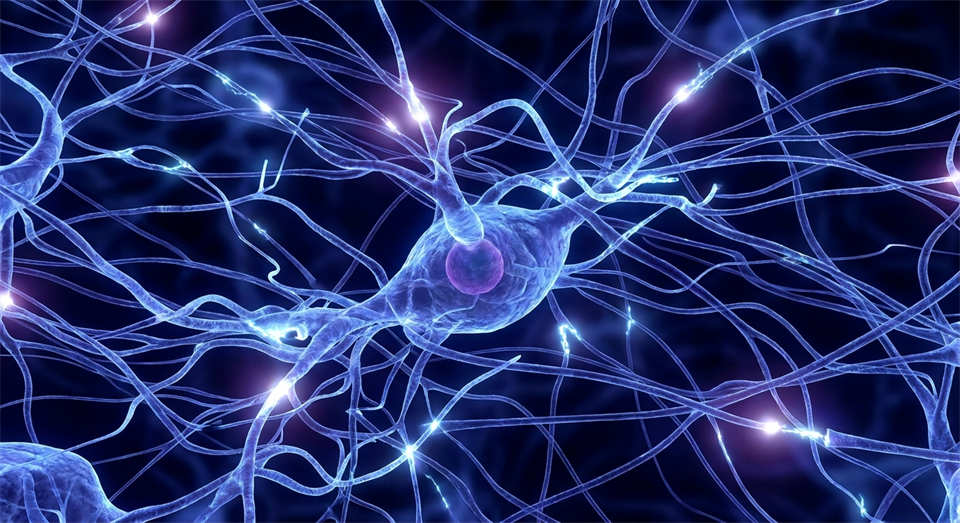
The brain works with the help of nerve cells, also called neurons. Each nerve cell can send signals on to other cells through small contact points called synapses. When a signal reaches a synapse, chemicals called neurotransmitters are released. These substances help transfer the message to the next cell. It sounds technical, but the principle is simple: the brain functions like a huge network in which messages are constantly sent, received, and adjusted. It is this communication that makes it possible to think quickly, react to danger, and perform precise movements.
Some neurotransmitters are often associated with specific functions. Dopamine, for example, is linked to motivation, reward, and movement. Serotonin is important for mood and well-being, among other things. Other signaling substances help with attention, calmness, or activation. However, it is important to understand that the brain is not controlled by one single substance at a time. The different signals influence each other in complicated patterns. That is why the brain's functions are rarely as simple as social media headlines can make them sound. In reality, almost everything in the brain is the result of cooperation between many areas and many types of signals.
A large part of the brain's work involves receiving and interpreting information from the senses. Eyes, ears, skin, nose, and tongue constantly send signals to the brain, which then tries to create an overall picture of the surroundings. When you see a ball flying toward you, the brain assesses its direction and speed, compares it with previous experience, and helps the body react. This happens in fractions of a second. The brain does not just register the world passively; it interprets, sorts, and prioritizes information so that you can focus on what matters most.
This also means that the brain can sometimes be wrong. Optical illusions are a good example that the brain does not simply copy reality, but constructs a useful version of it. If the information is unclear or contradictory, the brain often fills in the gaps based on experience and expectation. This is smart in many situations, but it also shows that experiences are not always completely objective. The senses and the brain work closely together, and it is precisely this cooperation that enables us to navigate a complex world.
The brain is not just a storage place for memories. It is also an organ that constantly changes when we learn something new. This ability is called plasticity. It means that connections between nerve cells can be strengthened, weakened, or reorganized depending on how they are used. When you practice repeatedly, certain neural pathways become more efficient. That is why what first feels difficult can later become almost automatic. This applies both to mental skills such as math and language and to physical skills such as dancing, writing, or ball games.
Memory also does not exist in just one single form. Short-term memory helps you hold on to information for a few seconds or minutes, for example a phone number you have just heard. Long-term memory makes it possible to store knowledge, experiences, and skills over a longer period. Some memories you can consciously recall, while others appear as habits or automatic actions. If you can ride a bike without thinking about every push on the pedals, it is a sign that the brain has stored the movement efficiently through practice.
Many people find that they learn best by returning to the material several times. This is because the brain strengthens connections that are used again and again. Breaks and sleep also help, because the brain gets a chance to process and stabilize new information. That is why it is often more effective to learn a little at a time over several days than to try to cram everything in at once. The brain needs time, variety, and repetition in order to learn as well as possible.

The brain plays a central role in everything from joy and curiosity to fear, anger, and sadness. Emotions are not just something that happens alongside thinking; they affect attention, memory, and decisions. If you are calm and feel safe, it is often easier to learn new things and think clearly. If you are very stressed or afraid, the brain may focus more on survival and quick reactions rather than long-term planning. This is a useful mechanism in dangerous situations, but it can be burdensome if the body is often on high alert.
Decisions rarely arise only through cold logic. The brain combines experiences, emotions, expectations, and assessments of risk. That is why two people can react differently in the same situation. Someone who has previously had a bad experience may be more cautious, while another person feels safe. The brain is constantly trying to predict what is likely to happen, and it uses previous experience as a guide. This makes us fast and efficient, but it can also lead to habits and thought patterns that are not always helpful.
The brain needs good conditions to function as well as possible. One important factor is regular physical activity, because movement increases blood flow and supports brain health. It does not have to be intense exercise every day. Walks, cycling, dancing, or other forms of exercise can also make a difference. A varied diet with room for vegetables, whole grains, healthy fats, and protein gives the brain the building blocks and energy it needs. At the same time, it is important to avoid or limit habits that can harm the brain, such as smoking, heavy alcohol consumption, and prolonged lack of recovery.
Mental activity is also important. The brain thrives on challenges, learning, and social relationships. Reading, solving tasks, learning new skills, or having good conversations can help keep the brain active. However, breaks matter just as much as activity. If the brain is constantly bombarded with impressions, it can affect concentration and mental energy. Many people benefit from creating periods of calm during the day, when attention is not constantly shifting between screens, messages, and tasks. A healthy brain is therefore about both stimulation and balance.

Because the brain controls so many functions, problems can show up in many ways. It can be anything from headaches, dizziness, and difficulty concentrating to changes in mood, memory, or movement. Some conditions arise suddenly, such as with a concussion or stroke, while others develop gradually. The important thing is to take clear or persistent symptoms seriously. If, for example, a person suddenly has difficulty speaking, smiling symmetrically, or lifting an arm, it requires immediate help, because the brain is very sensitive to a lack of blood supply.
More common problems can also affect the brain in everyday life. Long-term stress, too little sleep, a one-sided lifestyle, or lack of breaks can make it harder to remember, focus, and regulate emotions. This does not necessarily mean that there is a serious illness, but it shows how closely the brain's function is connected to the rest of the body and our daily habits. The brain is resilient, but it is not unlimited. It functions best when it gets energy, challenge, rest, and protection.
The brain is an incredibly complex organ, but its basic tasks can be understood without difficult technical terms. It controls movement, the senses, memory, emotions, decisions, and the body's most important functions. At the same time, it is adaptable and responsive, which means that our habits really do make a difference. When we move, learn new things, make room for breaks, and take care of the body, we also support the brain. The better we understand the brain, the easier it becomes to make wise choices in everyday life and to respect the organ that makes it possible for us to be ourselves.