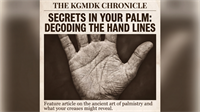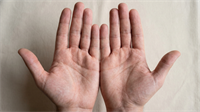
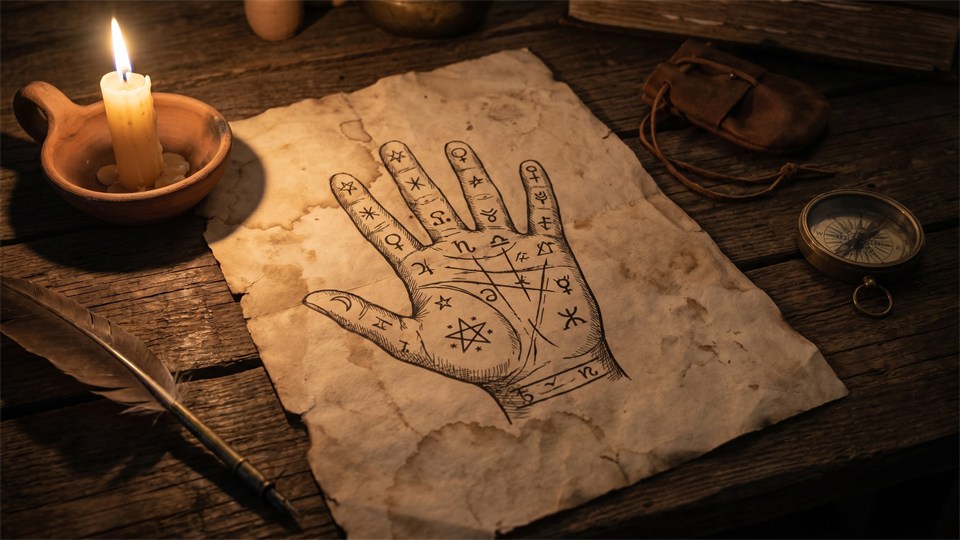


Palm reading has for centuries sparked curiosity, wonder, and debate. Some see it as a spiritual practice, others as cultural history, symbolic interpretation, or pure entertainment. Regardless of how one relates to the subject, palm reading is a tradition with deep roots that has moved through many civilizations and changed form along the way. From ancient ideas about fate and divine signs to modern interest in personal development and alternative lifestyles, palm reading has survived because it speaks to something fundamentally human: the desire to understand oneself and one’s path in life.
Today, palm reading can be found in books, online guides, social media, fairs, and private consultations. But behind the modern version lies a long history in which ideas, religion, philosophy, and folk belief have all left their mark. When viewed from a historical perspective, it becomes clear that palm reading is not only about lines in a hand, but also about the societies that gave them meaning.
Palm reading is often associated with very old cultures, and the tradition is mentioned in various forms across Asian, Middle Eastern, and Mediterranean regions. It is difficult to point to one single place where palm reading began, because similar ideas arose in several places over a long period of time. In antiquity, the body was often seen as a mirror of human nature, fate, or inner balance. Therefore, it made sense to study the face, hands, posture, and other outward signs as part of understanding a person.
In several early societies, the hands were given special significance because they were both practical tools and powerful symbols. Hands could create, protect, bless, and communicate. When people saw patterns, folds, and shapes in the palm, it became natural for some to connect them to personal traits or future events. In a time without modern psychology or natural science, such interpretations functioned as a way to create order in the unknown. Palm reading therefore became part of a broader worldview in which nature, body, and fate were closely connected.
Many historical accounts point to India as an important center of early palm reading. Here, the signs of the hand were often linked to religious and philosophical ideas about life path, karma, and human character. Palm reading was not necessarily seen as pure fortune-telling, but also as a method for understanding temperament, opportunities, and challenges. Traditions from India are believed to have later influenced other regions through trade, migration, and cultural exchange.
In Eastern traditions, the shapes and markings of the hand were often read as part of a larger system. People did not look only at individual lines, but also at the whole: the texture of the skin, the length of the fingers, the strength of the thumb, and the flexibility of the hand. This holistic view is interesting because it resembles modern palm reading, where many still emphasize that interpretation is not about one single detail, but about the interaction between many signs. That idea therefore has very ancient roots.
As ideas traveled between cultures, palm reading also found its way into the classical world. In ancient Greece and later Rome, there was great interest in understanding human nature through observation. Philosophers, physicians, and scholars concerned themselves with everything from temperament and the physical body to dreams and omens. In this environment, palm reading fit well as a practice that connected body and character. It was not necessarily regarded as certain knowledge, but as part of the era’s broader attempts to read meaning in a person’s outward features.
Stories from later times also connect well-known ancient names to palm reading, even though it can be difficult to separate fact from myth. What matters, however, is that in the classical world palm reading became part of an intellectual culture in which people sought patterns and systems in nature. Here, hands were not seen merely as random folds in the skin, but as something that might reveal strength of character, emotions, or fate. This linking of observation and symbolism became crucial to the further development of palm reading.
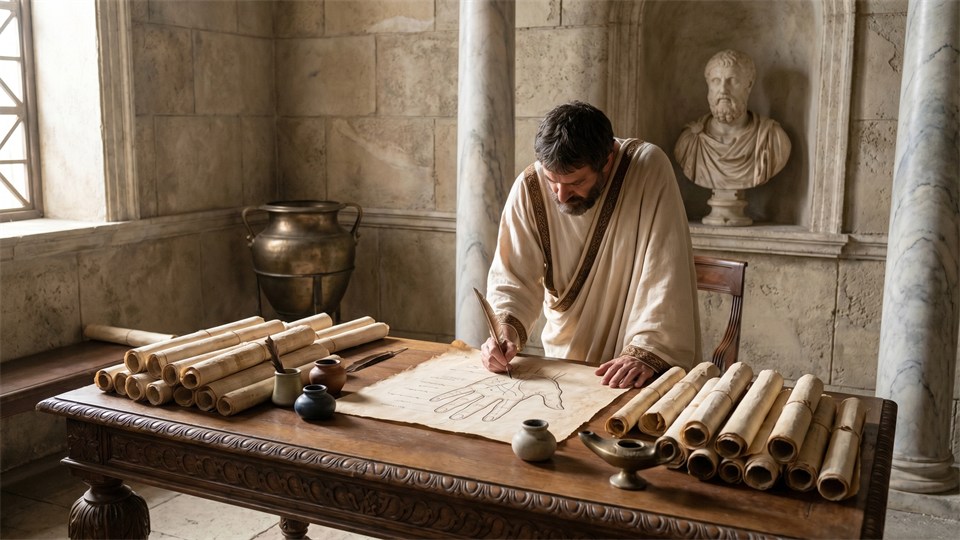
Although palm reading was at times discussed among scholars, it also lived on as a popular practice. Travelers, healers, storytellers, and fortune-tellers often helped spread the tradition. When a practice exists both in books and among ordinary people, it often gains a long life. It can change, adapt to local beliefs, and survive even when scholars change their minds. That is exactly what happened with palm reading, which in many periods moved between the respectable and the questionable.
In popular contexts, palm reading was often less concerned with theory and more focused on concrete questions. People wanted to know something about love, work, children, health, or luck. This made palm reading a practical form of storytelling, in which the reader could create meaning based on the signs of the hand and the individual’s life situation. This more personal and direct style is also recognizable today, when many modern palm readers try to make the interpretation relevant to the individual’s everyday life.
In the Middle Ages, palm reading was met with both interest and distrust. On the one hand, there was continued fascination with signs, symbols, and connections between body and soul. On the other hand, practices that resembled fortune-telling or hidden knowledge could arouse religious skepticism. Palm reading therefore acquired a mixed status. In some places it was tolerated as part of natural philosophy or folk tradition, while elsewhere it was seen as superstition or something one ought to keep one’s distance from.
This dual attitude is important for understanding the history of palm reading. It has rarely had a completely stable place in society. Instead, it has often existed in the borderland between curiosity and criticism. Precisely for that reason, palm reading kept changing character. To survive, it had to be adapted to the language of the times. Some emphasized it as character study, others as moral guidance, and still others as an innocent feature at markets and gatherings. History thus shows that palm reading is not one fixed tradition, but many versions of the same idea.
During the Renaissance, interest in humanity, nature, and ancient texts grew. This gave new life to many older practices, including palm reading. Scholars and collectors sought to organize the world into systems, and the shapes and lines of the hand were once again described in a more methodical way. Books and illustrations made it easier to spread specific ways of reading the hand. As a result, palm reading became more standardized, even though many variations still existed.
It was also during this period that palm reading became more closely linked to other forms of symbolic interpretation. People sought connections between a person’s outward appearance, temperament, and the order of the universe. Today, some of these ideas may seem unfamiliar, but they reflected a strong desire to find patterns in existence. Palm reading became attractive because it offered a concrete place to begin: the hand one always carried with oneself. That idea still has appeal in modern times, when many experience the hand as a personal and direct symbol.
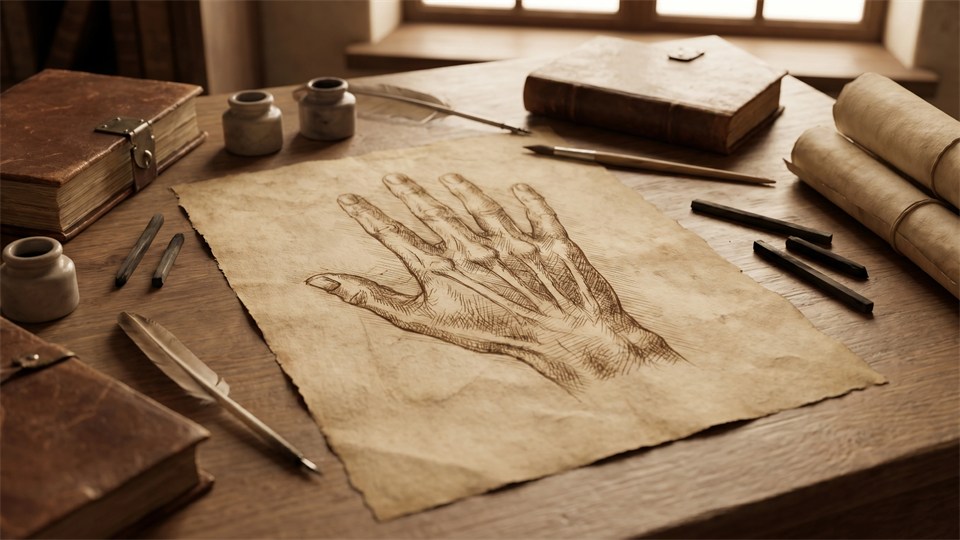
In the 19th century, palm reading became truly popular in wider circles. This period was marked by both scientific progress and great interest in the mystical, the hidden, and the personal. Séances, spiritual movements, character studies, and alternative explanatory models became fashionable in many environments. Palm reading fit well into this culture because it combined something visible and tangible with something mysterious and interpretive.
Printed books, newspapers, and later magazines helped make palm reading more accessible. People could now read about hand types, lines, and symbols without seeking out a specialist. At the same time, more well-known public palm readers emerged, making the practice popular as social entertainment and personal guidance. During this period, palm reading was often presented as a blend of intuition, observation, and understanding of life. It is precisely this blend that still characterizes the subject today.
An important shift in modern history is that the focus gradually changed. Earlier, palm reading had often been largely about fate and the future. In more recent times, more people instead began using palm reading to talk about personality, habits, emotional life, and possibilities. This made the practice more compatible with modern people’s self-understanding. Many do not want fixed predictions, but seek reflection and new perspectives on their lives.
For that reason, modern palm reading is often presented as a tool for conversation rather than as an absolute truth. A palm reader may, for example, describe a person as energetic, cautious, creative, or sensitive based on the shape and lines of the hand, but without claiming that the future is fixed. This more open approach has helped palm reading retain its place in a time when many are skeptical of rigid claims about fate.
Today, palm reading exists in many forms. Some encounter it as entertainment at markets, festivals, or private events. Others seek it out as part of alternative spirituality, coaching, or personal development. On the internet, images of hands, short explanations of lines, and small guides for getting started are shared. This has made palm reading more visible than before, but also more diverse. There is no single modern standard, but many approaches with different emphasis on intuition, tradition, and symbolism.
For beginners, it is important to understand that modern palm reading rarely concerns certain answers. Instead, it is often used as a language for talking about human themes such as relationships, ambitions, strengths, and insecurities. Some find it inspiring because the hand becomes a starting point for reflection. Others see it primarily as a cultural tradition with an exciting history. Both perspectives can easily exist side by side, and that flexibility is part of the explanation for why palm reading still fascinates.
Palm reading in history is the story of a practice that has changed meaning again and again. From ancient ideas about signs and fate to the systems of the Renaissance and the more personal interpretations of today, palm reading has adapted to the societies in which it has lived. It has been linked to religion, philosophy, folk belief, entertainment, and self-development, and that is precisely why it is difficult to place in a single simple category.
Whether one believes in palm reading or is simply curious about its cultural history, it is a fascinating example of how people throughout time have sought meaning in the body and in life. The hand is one of the most everyday things we have, but in the history of palm reading it also becomes a symbol of humanity’s eternal urge to read itself. That is perhaps the most important reason why palm reading still lives on in modern practice.