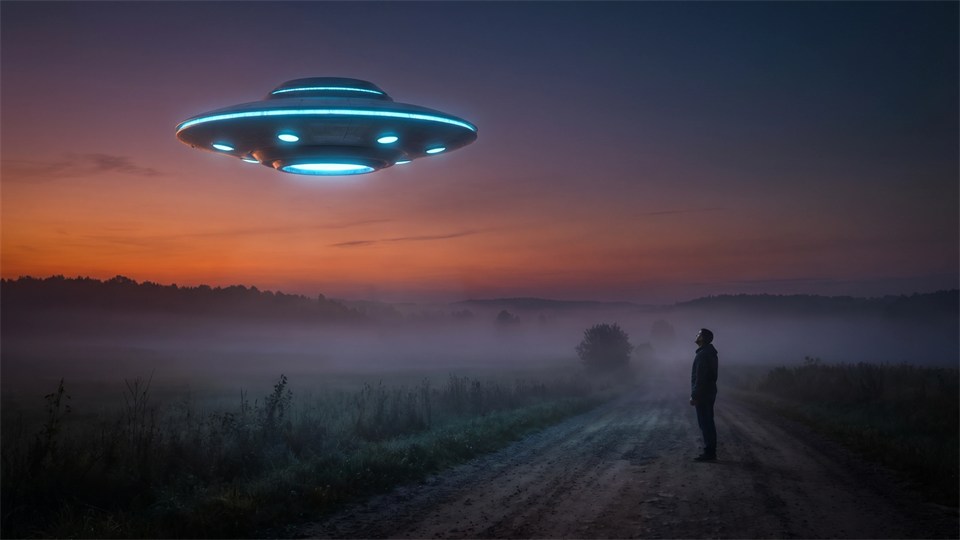


UFOs have sparked curiosity, debate, and imagination for decades. For some, they are a sign of something unexplained in the sky, while for others they are immediately associated with aliens and science fiction. But the word itself actually means something far more down-to-earth. A UFO is, simply put, a flying object that the observer cannot immediately identify. So the term does not in itself say anything about what the object is, only that it has not yet been explained. That is precisely why the subject is fascinating: it lies at the intersection of human observation, technology, misunderstandings, and the desire to understand the unknown.
Today, the subject is often referred to with newer terms such as UAP, and the discussion has become more sober than in the past. In this article, we look at what UFOs really are, how sightings arise, why many explanations turn out to be entirely ordinary phenomena, and why modern terminology has changed the way people talk about the subject.
The abbreviation UFO stands for "unidentified flying object." The most important word here is unidentified. If a person sees a light, a shape, or a movement in the sky and cannot determine what it is, it can be described as a UFO. That does not automatically mean it is an alien spacecraft. It could just as easily be an airplane seen from an unusual angle, a drone, a balloon, a planet, an unusual cloud formation, or something else entirely. The concept is therefore about our knowledge at the moment of observation, not about a final explanation.
This is an important distinction, because in popular culture the word has often been used as a direct shortcut to the idea of visitors from space. Films, books, and TV series have turned the UFO into a symbol of the mysterious and extraterrestrial. In reality, any serious conversation about UFOs begins with a more modest question: What was seen, under what conditions, and which natural or human-made explanations might fit? Only after examining it thoroughly can one say whether the sighting is still unexplained.
People have always looked toward the sky and tried to understand strange sights. Before modern astronomy and aviation, comets, meteors, the northern lights, or unusual clouds could seem both supernatural and ominous. As technology developed, the possible explanations changed as well. When airplanes, rockets, satellites, and later drones became part of everyday life, more things appeared in the sky that ordinary observers might have difficulty recognizing.
Modern UFO culture especially gained momentum in the 20th century, when reports of strange objects in the air became linked to the growing interest in space. The Cold War, military secrecy, and rapid technological development made the subject even more fascinating. When people did not know whether they had seen an experimental aircraft, an optical illusion, or something else entirely, rumors easily arose. In this way, UFOs became not only a question of sky phenomena, but also of culture, fear, hope, and ideas about the unknown.
Many UFO sightings are not due to deception, but to entirely ordinary limitations in human perception. Distances in the sky are difficult to judge, especially at night, when fixed reference points are lacking. A light can appear to stand still and suddenly move quickly, even though in reality it is simply changing direction relative to the observer. Atmospheric conditions such as haze, clouds, and heat shimmer can also make objects look strange. Even experienced people can be mistaken when brightness, angle, and movement interact in unexpected ways.
In addition, expectations affect our interpretation. If you are already preoccupied with mysteries in the sky, you may be more inclined to perceive an unusual sight as something extraordinary. That does not mean the sighting is fabricated, but that the brain quickly tries to make sense of what the eyes see. That is why details such as time, weather, direction, duration, and number of witnesses are important when a sighting is later evaluated.
A large proportion of reported UFOs later turn out to have entirely ordinary explanations. Lights from airplanes can seem unfamiliar if they are seen head-on or through clouds. Venus is notorious for being mistaken for a mysterious object, because the planet can shine very brightly near the horizon. Weather balloons, satellites, rocket launches, drones, and paper lanterns can also create great confusion. Even flocks of birds, reflections in camera lenses, or internal reflections in windows can produce images and videos that look dramatic.
The interesting thing is that an explanation often seems obvious afterward, but not at all in the moment. If, for example, you see a row of lights moving calmly across the sky, it can feel very strange if you do not know that satellite trains or formations of drones exist. That is why the UFO phenomenon is also a good example of how new technology can create new mysteries until the public learns to recognize them.

When a sighting is to be investigated seriously, one typically begins with the most basic questions. Where and when did it happen? How long did it last? In which direction did the object move? Was there any sound? Were there multiple witnesses? Are there photos or video, and can they be verified? The information is then compared with known factors such as air traffic, astronomical data, weather conditions, and any local activities. In this way, many possibilities can often be ruled out quite quickly.
It is also important to distinguish between an unexplained sighting and proof of something unknown. The fact that something has not yet been explained does not necessarily mean that the explanation is extraordinary or sensational. Some cases remain unexplained simply because the data are too sparse. Perhaps the sighting was too brief, the video too blurry, or the witness description too uncertain. A good investigation is therefore not about proving a particular theory, but about sorting between the probable, the possible, and the insufficiently documented.
In recent years, the abbreviation UAP has become more widespread. It often stands for "unidentified anomalous phenomena" or in some contexts "unidentified aerial phenomena." The shift in wording is not merely cosmetic. It reflects a desire to speak more neutrally and precisely about sightings without immediately evoking associations with classic flying saucers. UAP can also be broader than UFO, because the term is not necessarily limited to something that clearly resembles a flying object.
Modern terminology makes it easier for researchers, authorities, and pilots to report unusual incidents without feeling that they are automatically being pigeonholed as sensational or unserious. If a radar detection, a visual observation, and a camera clip point to something unusual, it can be described as an anomalous phenomenon and investigated methodically. In this way, the focus shifts from speculation to data. That does not make the mystery any less exciting, but it does make the conversation more useful.
UFOs are fascinating because they bring together several powerful human drives at once. We are naturally curious about the unknown, and the sky is a place where we expect both order and surprises. When something breaks the pattern, we pay attention. At the same time, the subject touches on big questions: Are we alone in the universe? How much do we really understand about the world around us? Could there be technology we do not yet know? Even a simple sighting of a strange light can therefore set very large thoughts in motion.
In addition, stories play a major role. UFOs live not only in reports and images, but also in conversations, documentaries, novels, and films. That makes the subject easy to share and interpret. Two people can watch the same video and come away with very different impressions, depending on whether they think like skeptics, adventurers, or technology enthusiasts. That openness is precisely part of the attraction. UFOs are both an observational phenomenon and a cultural mirror that shows what we fear, hope for, and imagine.
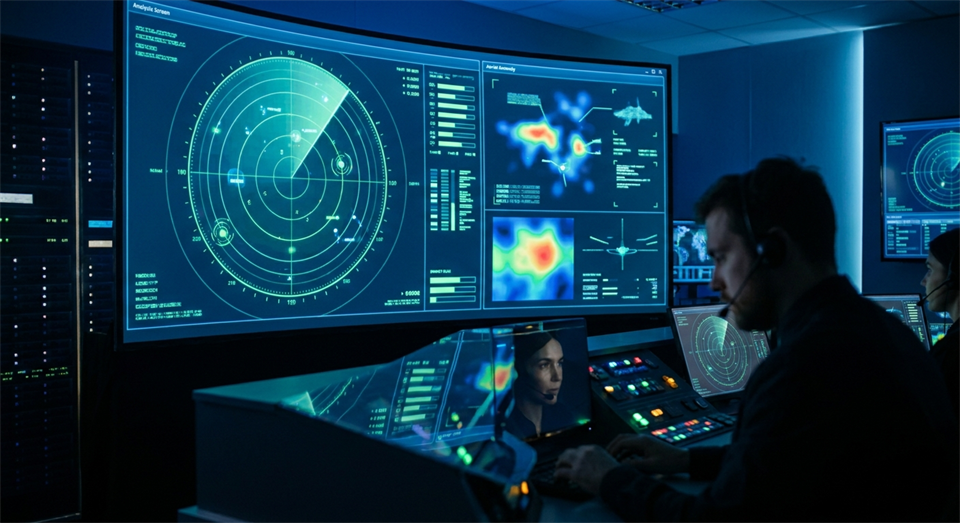
If you want to understand UFOs without falling into either blind belief or quick dismissal, the best approach is to be curious and critical at the same time. It is sensible to take sightings seriously, especially if they come from multiple sources or are accompanied by data. But it is just as important to accept that many mysteries have ordinary explanations, and that some cases can never be decided with certainty. That does not make the subject boring; on the contrary, it shows how complex reality can be when people, technology, and nature meet.
For beginners, it is useful to remember one simple sentence: A UFO is not a conclusion, but a starting point. The word describes a situation in which something has not yet been identified. Only after that come the investigation, the comparison, and the assessment. That approach makes it easier to speak clearly about the subject and avoid the most common misunderstandings.
UFOs are, at their core, observations that have not yet received a certain explanation. Some turn out to be planets, airplanes, drones, or atmospheric phenomena. Others remain open questions, not necessarily because they are supernatural, but because the information is insufficient. With modern terms such as UAP, people are trying to create more precise and less loaded language so that the subject can be investigated soberly.
That may be exactly why UFOs continue to fascinate. They remind us that the world still contains things we do not immediately understand. And instead of jumping straight to the most dramatic explanations, we can use them as an opportunity to practice something very human: to observe, ask questions, investigate, and learn more.