


A drop is one of the most exciting moments in modern DJ music, but the concept can be confusing if you are new behind the decks. Many associate the word with electronic dance music, where the audience waits for a big surge of energy after a build-up. Others use the word for a short audio file with the DJ's name or a voice effect. Both meanings exist, and as a DJ it is important to know the difference. In this article, we look at what drops are, how they work musically, and how you can use them deliberately without overdoing the effect.
In the most common sense, a drop is the point in a track where the music shifts from tension to release. It often comes after an intro, a break, or a build-up, where drums, effects, and melodic elements gradually build anticipation. When the drop hits, the bass, drums, and main groove typically return with higher energy. It is the moment when people on the dance floor often react most clearly: they jump, shout, raise their hands, or start dancing more intensely. For a DJ, the drop is therefore not just part of the song, but a tool for controlling energy and anticipation.
To understand a drop, it helps to look at the parts that often come before and after it. Many tracks start with an intro where the rhythm is simple, so the DJ can more easily mix the song in. Then there may be a verse, a theme, or a break where the energy drops and the listener gets a pause from the full rhythm. The build-up increases the tension with rising drums, filter effects, vocal snippets, pauses, or faster repetitions. The drop itself feels powerful because the contrast is clear: something has been held back, and now it comes back with force. After the drop, the track often continues into a more danceable section, where the beat, bassline, and hook carry the energy forward.
Drops matter a lot because they help the DJ tell a musical story. A good DJ set is not only about playing popular tracks, but about placing the energy correctly over time. If all the drops come too close together, the audience can get tired because there is no room for pauses. If too much time passes without a clear peak, the dance floor can lose focus. A skilled DJ therefore uses drops as reference points. They show where the track's most intense moments are, and they make it easier to plan when a new track should come in, when a break should be allowed to breathe, and when a climax should hit.
A DJ can use drops in several ways. The simplest method is to let a track play naturally up to the drop, especially if the audience is already in the mood. Another method is to time the transition so that the drop in the new track hits right after a break in the old one. This can create a strong sense of surprise and momentum. Some DJs also make so-called double drops, where two tracks hit their drop at the same time, but that requires good preparation because otherwise the bass, drums, and melodies can collide. The most important thing is not to force the technique in everywhere, but to choose the moments where the drop actually makes the set stronger.

Although the word drop is often used as one thing, drops can sound very different. In some genres, the drop is heavy and bass-driven, while in others it is more about groove, vocals, or melodic release. A house drop can be relatively elegant and built around a strong beat and a warm bassline. A dubstep drop can be dramatic, aggressive, and full of synthetic bass sounds. A pop drop can be more melodic, where the energy of the chorus takes over after a short pause. For DJs, it is useful to listen for what kind of energy the drop provides, because a heavy drop, a funky drop, and an emotional drop do not create the same reaction.
In addition to the musical drop, there is also another meaning: a DJ drop as a short audio identity. It can be a voice saying the DJ's name, a slogan, a radio-style effect, or a short signature sound. This type of drop is used especially in mixtapes, radio shows, livestreams, and some live performances. The purpose is not to create a climax in the song structure itself, but to tell the listener who is playing. It can work as branding, but it should be used thoughtfully. If a voice shouts the DJ name every minute, it quickly becomes distracting. A good audio logo is short, clear, and placed where it does not ruin vocals, breaks, or important musical details.
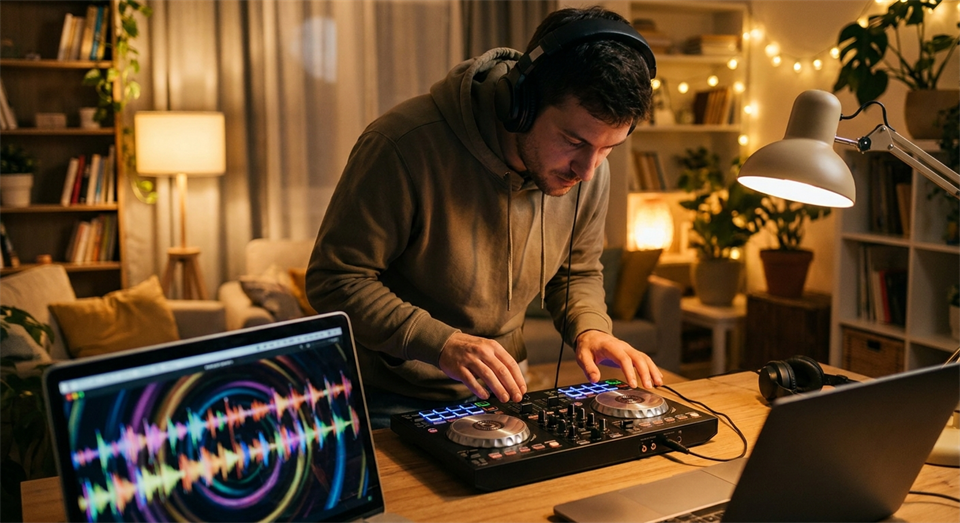
The best way to find drops is to listen actively to your tracks before you play them. Start by listening through the whole track without mixing, and notice where the energy changes. Many DJ programs show waveforms, where quiet breaks and powerful drops can be seen visually, but your ears should always be most important. You can set cue points at important places: intro, break, build-up, drop, and outro. That way, you can quickly navigate the track during a set. It is also a good idea to write small notes about the mood, for example heavy drop, happy drop, or short build-up, so you choose the right track in the moment.
A common mistake is to think that a bigger drop is always better. If a set consists only of big climaxes, they lose their effect because the audience does not get any contrast. Another mistake is to talk, turn up effects, or start a new track in the middle of an important drop, so the song's strongest moment gets covered up. Some beginners also chase drops without thinking about the whole picture, which can make the set feel like a collection of highlights with no direction. A drop works best when it comes at the right time, matches the audience's energy, and connects naturally with the music before and after.
You can train your understanding of drops in a simple way. Choose ten tracks from the same genre and mark the intro, break, build-up, and drop in each track. Then listen to how the drop feels: does it come quickly, slowly, hard, soft, dark, or uplifting? Afterwards, try making a short mix where you do not focus on as many technical tricks as possible, but on making the energy rise and fall naturally. Record the exercise and listen to it the next day. Ask yourself whether the drops feel earned, or whether they come too often. This kind of critical listening develops your musical judgment faster than just learning more buttons.
Drops are central for many DJs because they bring anticipation, energy, and audience reaction together in one clear moment. A drop can be the track's big musical release, but the word can also mean a short audio logo with the DJ's name. Both can be useful if they are used deliberately. As a beginner, you should first learn to hear where drops are and how they affect the mood. Then you can begin to plan your transitions, cue points, and energy build-ups around them. It is not about hitting the wildest drop every time, but about creating a set where each peak feels natural, effective, and musically meaningful.