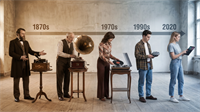


DJing is now closely associated with clubs, festivals, radio, streaming, and music production, but the role of the DJ has changed significantly over time. A DJ is not just a person who plays music. Historically, the DJ has been a mediator, tastemaker, technical experimenter, and often an important driving force behind new music scenes. The history of DJing is therefore about technology, audiences, and musical culture.
From the first radio hosts who selected records for broadcasts to modern artists who use digital controllers and software, the DJ's work has evolved alongside new media. At the same time, some of the basic ideas remain the same as before: choosing the right music for the right moment, creating atmosphere, and connecting listeners with sound. When you look at the history of DJing, it becomes clear that this role has had great importance for how music is discovered, shared, and experienced.
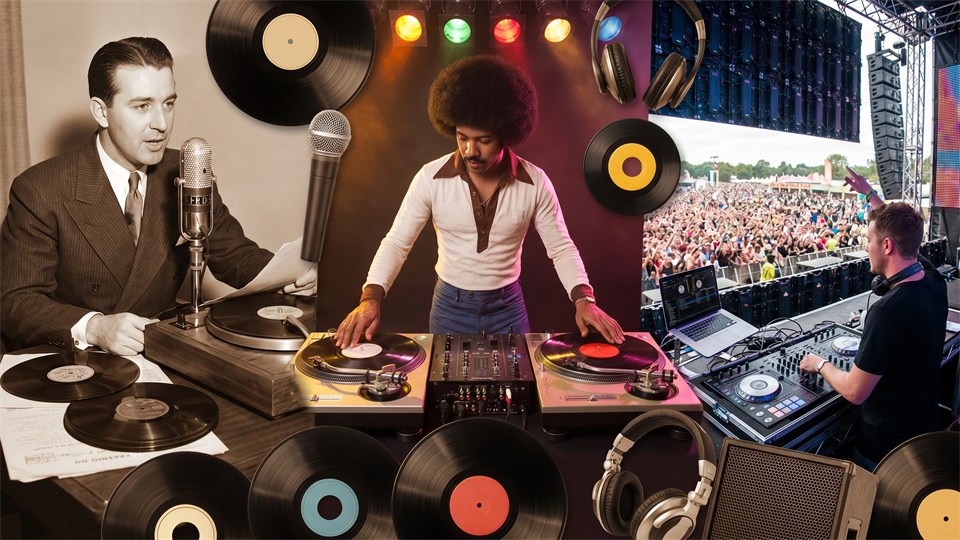
The word DJ is an abbreviation of disc jockey, and it emerged at a time when gramophone records became a central part of music broadcasting. In the early years of radio's development, it was often hosts who selected and presented recorded music to listeners. Instead of an orchestra having to perform live in the studio, records could now be played. This changed both radio and the music industry. The person who chose the records suddenly had great influence over which artists the audience came to know.
The first DJ-like figures were therefore not club artists, but radio personalities. Their strength lay in voice delivery, timing, and the ability to build a relationship with listeners. They introduced songs, told stories about the artists, and structured programs around mood, genre, or current releases. Already here, you can see an important feature of DJing: it is not only about technique, but also about curation. A good DJ does not just choose music at random, but creates a coherent experience.
As sound equipment became more widespread, music began to play a larger role at parties, dance venues, and public events. Instead of relying only on live music, records could be used as entertainment. This was an important step in the history of DJing, because the focus shifted from presentation to creating atmosphere in a physical space. Here, the DJ became responsible for reading the audience directly and adapting the music according to reactions on the floor.
During this period, the technique was still relatively simple. Many played one record at a time and switched between tracks with short pauses. But even without modern mixing techniques, it took experience to keep the energy up. The DJ had to understand tempo, variation, and audience expectations. In some places, the DJ became an alternative to live bands because it was cheaper and gave access to a wider selection of music. This also made the dance experience more international, because recorded music from many different artists and styles could be played.
When the vinyl record became the dominant music format, DJing gained a stronger technical and cultural foundation. Vinyl was durable enough for frequent use, and singles, especially in 7-inch and 12-inch formats, made it easier to choose and organize music. The 12-inch single in particular became important in club environments because it often featured longer versions with a clear rhythm and more room for mixing. This was a perfect fit for dance venues, where the music needed to flow more continuously than on the radio.
Club culture grew in several major cities, and the DJ gradually became a central figure in nightlife. Instead of simply starting and stopping songs, some DJs began to think in terms of transitions, energy building, and musical progression throughout an entire evening. It was no longer enough to have good records; you also had to know when to play them. In this way, DJing developed from music playback into a true performance form, where sequence, timing, and understanding the audience were crucial.
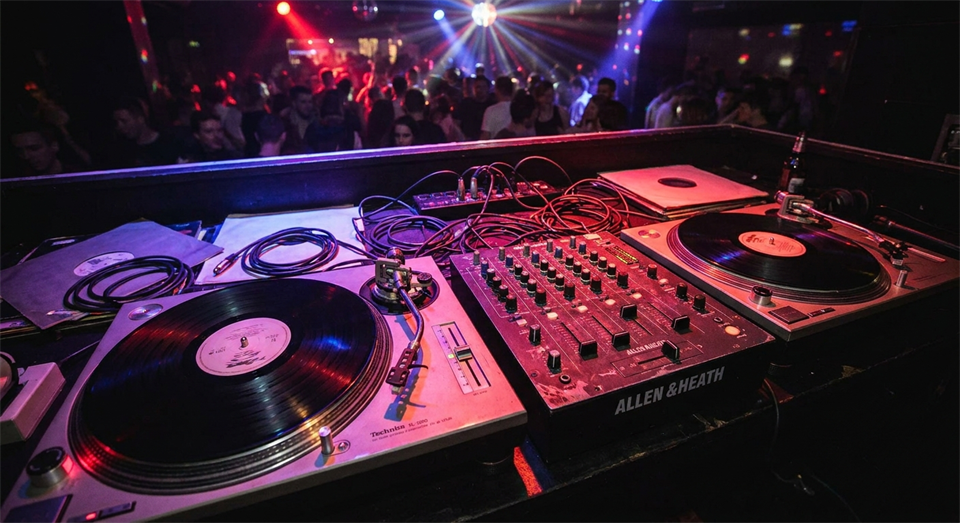
In the 1970s, the DJ gained a new status through disco and the growing club scene. This was where the idea of the long, continuous night of dancing emerged, with the music being tied together instead of interrupted between each track. DJs began using two turntables and a mixer to move more smoothly between tracks. This practice made it possible to maintain the rhythm on the dance floor and create a more intense experience for the audience.
The disco environment also made the DJ a cultural key figure. In many clubs, it was the DJ who introduced new versions, remixes, and lesser-known releases long before they became mainstream hits. Audiences came not only to hear popular songs, but also to experience a particular DJ's taste and ability to shape the course of the evening. It was during this period that many of the core ideas that still characterize modern club DJing were formed: build-up, peak moments, pauses, anticipation, and release.
While club DJing developed in one direction, the hip-hop scene created another highly influential branch of DJ history. In the urban environments of the 1970s, DJs began using two copies of the same record to extend the most rhythmic passages, often called breaks. This made the dance floor more energetic and created space for new forms of expression such as breakdancing and rap. Here, the DJ became not just someone who selected music, but a person who actively reshaped it.
Out of this grew turntablism, where the turntable was used as an instrument. Techniques such as scratching, backspins, and beat juggling showed that DJing could also be physical virtuosity and sonic inventiveness. This was a major change in the perception of what a DJ could be. Instead of standing in the background, the DJ became a performer with their own artistic language. Hip-hop thus showed that DJing was not only about playing finished music, but also about creating something new in real time.
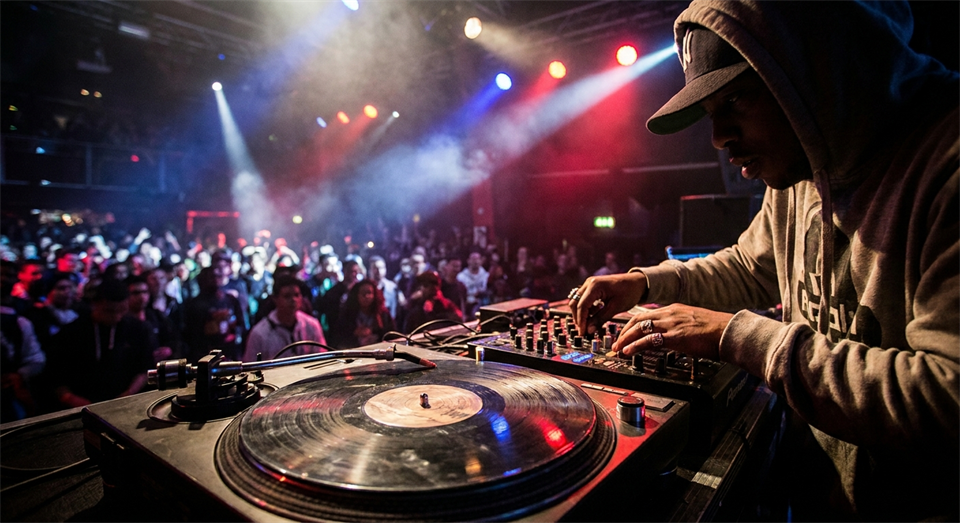
From the 1980s onward, electronic genres such as house, techno, and later trance, drum and bass, and many others grew. In these environments, the DJ often became the actual headliner on the poster. Whereas in earlier times the DJ in some contexts was a mediator of other people's music, the DJ now increasingly became an artistic profile with their own sound and their own audience. This was due in part to the fact that electronic dance music was especially well suited to long mixes and gradual build-up.
Clubs and later festivals made the DJ the center of shared musical experiences. Audiences learned to listen for flow, transitions, and shifts in atmosphere rather than only individual songs. At the same time, many DJs also began producing their own music, which strengthened the connection between DJing and music production. It became common for a well-known DJ both to release tracks and to play them in their sets. In this way, the boundary between performer, curator, and producer became more fluid.
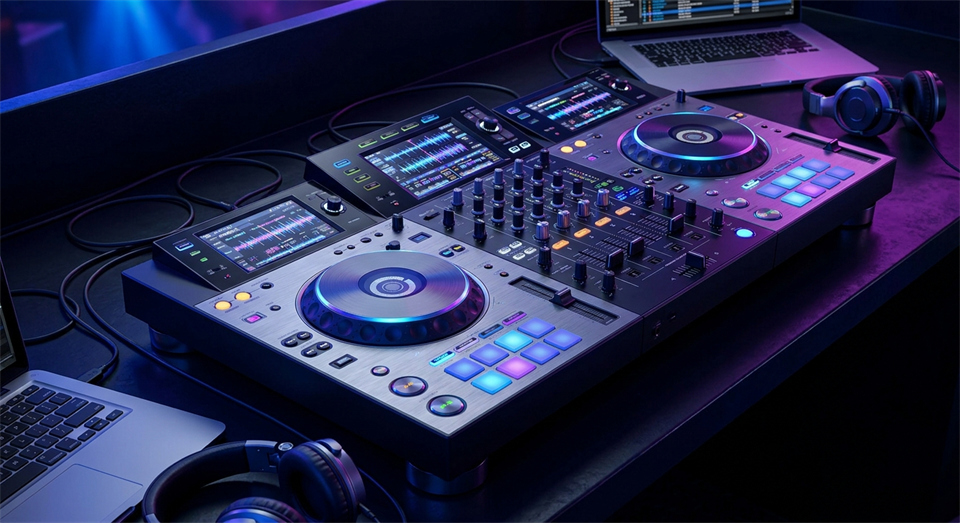
One of the biggest changes in the history of DJing came with digitization. First came CD-based solutions, which made it easier to transport large music collections. Later came digital playback systems, software, and controllers that changed the working method significantly. Where DJs previously had to carry heavy crates of vinyl, they could now bring thousands of tracks on a hard drive or USB stick. This made access to music much faster and more flexible.
However, digital technology also sparked debate. Some believed that part of the craft was lost when software could help with tempo, synchronization, and library searching. Others saw it as a natural development that gave the DJ more time for creativity, effects, and advanced set construction. Both viewpoints have shaped the discussion for many years. Historically, it is clear that new technologies almost always change the DJ's tools, but do not remove the need for musical understanding, timing, and a feel for the audience.
The internet made DJ culture more global than ever before. Music could now be discovered, bought, shared, and discussed across national borders at a pace that was previously impossible. DJ mixes were uploaded online, live performances were streamed, and new artists could build an audience without first depending on traditional media. This changed both how DJs learn their craft and how audiences find new music.
At the same time, competition increased because far more people gained access to the tools. This made selection and personal style even more important. When almost everyone can access the same music, the question becomes not only what you play, but how you play it. Today, a DJ can be a radio host, club artist, festival headliner, online curator, or creator of niche mixes for specific communities. The role has become broader, but it is still built on the same core: connecting people through carefully selected and well-placed music.
Looking back, the DJ has had greater importance for music history than many first assume. DJs have helped bring new genres forward, made underground music visible, and created spaces where audiences could gather around sound, dance, and identity. They have influenced which songs became hits, which artists were discovered, and how music was experienced outside the concert hall. In many cases, the DJ has been the link between technology and culture.
The history of DJing also shows that the role constantly adapts to new conditions. From the radio record host to the digital performer, enormous changes have taken place, but the task itself is still recognizable. A DJ selects, organizes, and presents music in a way that makes sense for an audience. This can happen in a radio studio, on a dance floor, in a livestream, or at a festival. Regardless of the format, DJing is therefore both a historical phenomenon and a living practice that continues to evolve with music and technology.
The history of DJing is the story of how music presentation became an independent art form. From the first radio hosts through vinyl club culture and hip-hop turntablism to today's digital systems, the DJ has continually found new ways to influence the listening experience. Although the equipment has changed dramatically, the basic principle remains the same: creating a connection between music and people.
For beginners, it is useful to know this history because it shows that DJing is not only about buttons and technique. It is also about culture, curiosity, musical taste, and the ability to read an audience. When you understand where the role comes from, it becomes easier to understand why the DJ still plays such an important role in modern musical life.