
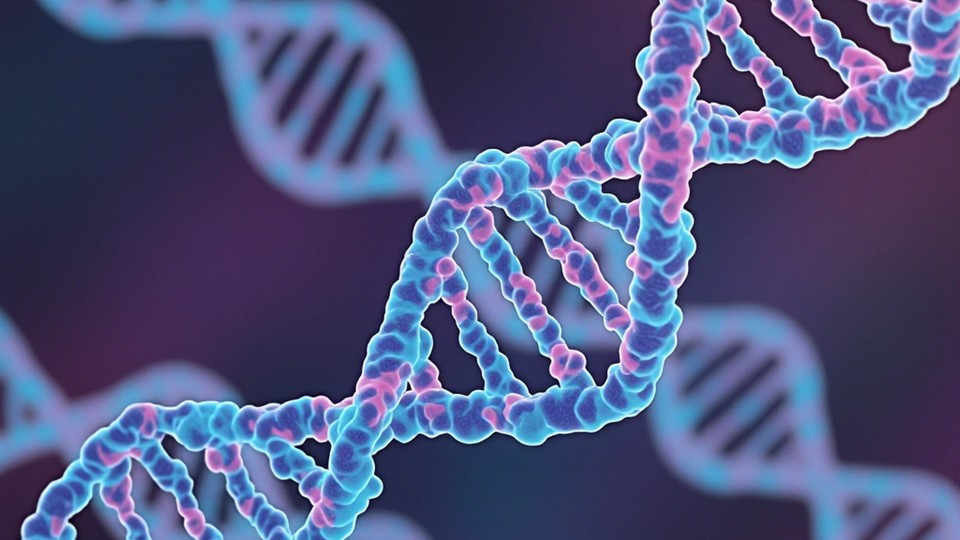


DNA stands for deoxyribonucleic acid and is the molecule that carries the genetic instructions that determine how all living organisms develop, function, and reproduce. In other words, DNA is the blueprint of life.
Every human, animal, plant, and even many microorganisms have DNA, which is unique to each species and individual.
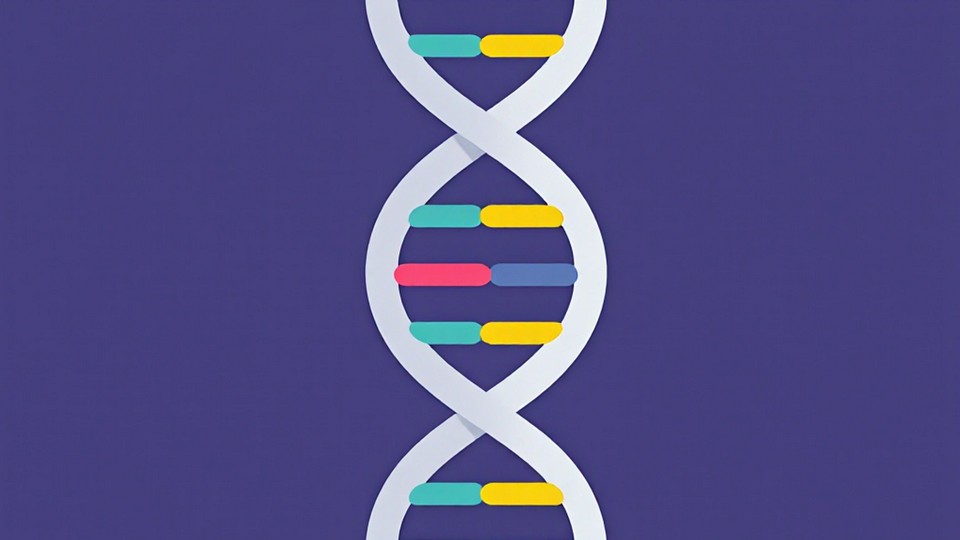
The DNA molecule is shaped like a double helix, where two long chains twist around each other. The chains consist of smaller units called nucleotides.
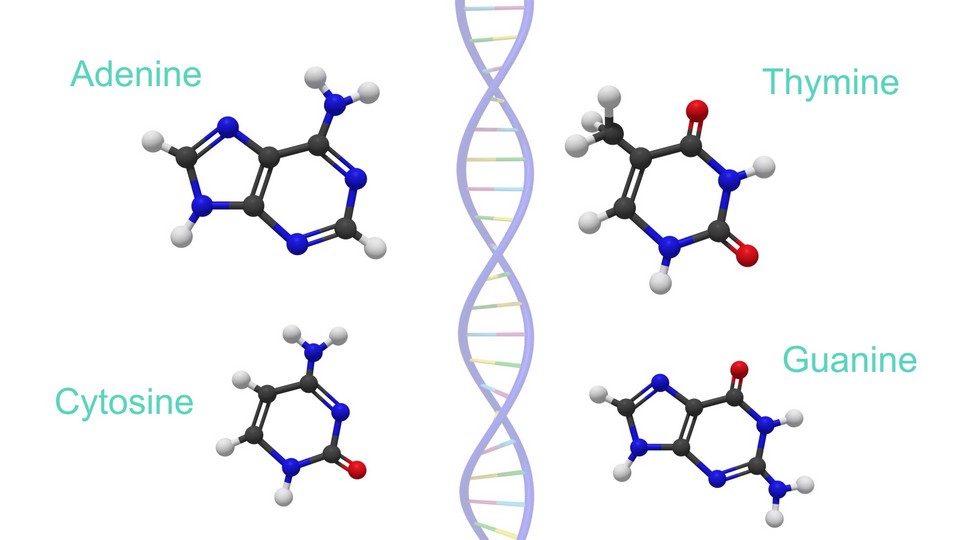
Each nucleotide consists of three parts: a sugar group (deoxyribose), a phosphate group, and one of four bases: adenine (A), thymine (T), cytosine (C), or guanine (G). The bases always pair across the two chains: A with T, and C with G.
DNA contains genes – small sequences of bases – that function as recipes for proteins. The proteins carry out almost all functions in the body, such as building muscles, fighting infections, and regulating biochemical processes.
When organisms reproduce, DNA is passed on to the offspring. That is why children resemble their parents, and why hereditary diseases can be inherited.
In transcription, a copy of the relevant DNA sequence (a gene) is made into RNA – a related molecule. This RNA is transported out of the cell nucleus.
In the ribosomes, the RNA code is translated into a protein, as amino acids are joined together in the correct order as prescribed by the DNA code.
Occasionally, errors occur when DNA is copied – this is called mutations. Most mutations have no effect, but some can lead to genetic diseases, while others can provide advantages that over time can lead to evolutionary changes.
DNA analyses are used to determine kinship, find disease genes, or identify individuals in forensic science. A single hair can often provide enough DNA for a test.
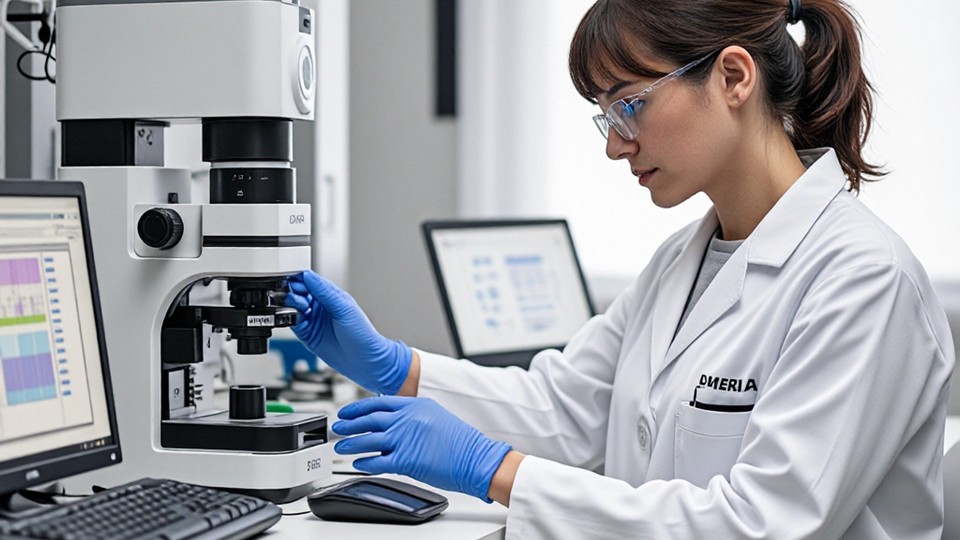
Today, scientists can alter DNA in organisms – for example, by making genetically modified plants that become more resistant or yield more. Methods like CRISPR make it possible to "edit" DNA precisely.
DNA technology raises important ethical questions: How far should we go in changing genes? Who should have access to our genetic information? These questions have led to legislation and rules internationally.
DNA is the fundamental code of life, determining everything from eye color to susceptibility to diseases. Through research and technology, we can now use this knowledge to understand, treat, and even shape life.