Fluorine (F) is a chemical element with atomic number 9 and is the most electronegative element in the periodic table. It belongs to the halogens (group 17) and is extremely reactive.
1. Introduction to fluorine
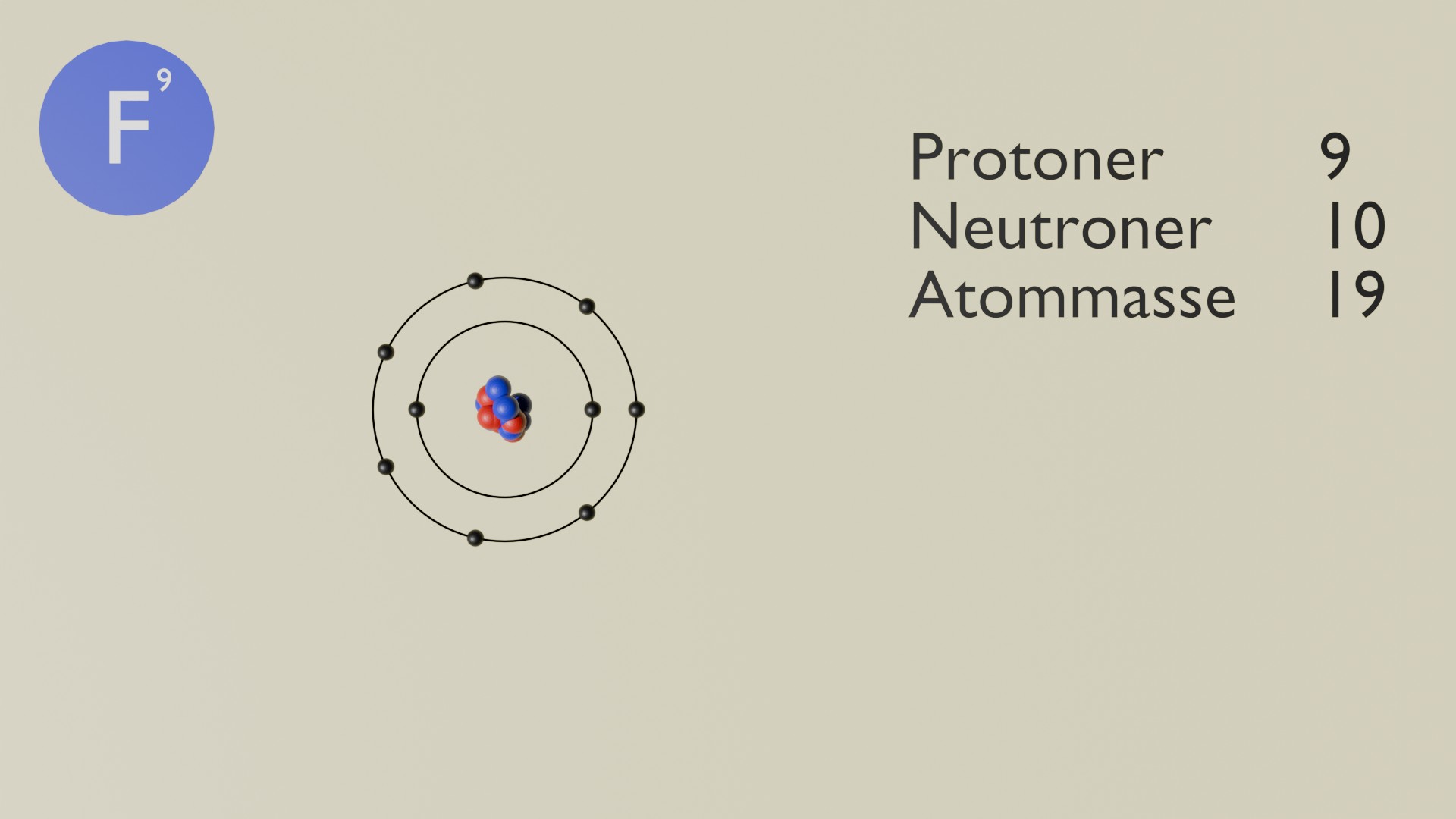
Fluorine has 9 protons, typically 10 neutrons, and 9 electrons. As the lightest halogen, it appears as a pale yellow, toxic gas at room temperature. Fluorine is highly corrosive and reacts violently with most substances – even glass.
2. Physical and chemical properties
Fluorine is a diatomic gas (F₂), which is extremely reactive and electronegative. It attacks many materials, including metals, plastics, and organic compounds.
- Melting point: –219.6 °C
- Boiling point: –188.1 °C
- Highly toxic and corrosive
Fluorine forms salts and compounds called fluorides – e.g., sodium fluoride (NaF) and uranium hexafluoride (UF₆).
3. Isotopes of fluorine
There is one stable natural isotope:
- Fluorine-19 (¹⁹F): 9 protons and 10 neutrons (100 % natural abundance)
Fluorine-18 (¹⁸F) is a radioactive isotope used in medical imaging (PET scanning).
4. Industrial applications
Fluorine is used in many industries, often in the form of fluorine compounds:
| Application | Description |
| Fluoroplastics (Teflon) | Polytetrafluoroethylene (PTFE) is a non-stick, heat-resistant plastic used in e.g., frying pans. |
| Aluminum production | Fluoride compounds are used as electrolytes in aluminum smelters. |
| Water fluoridation and dental care | Small amounts of fluoride are added to drinking water and toothpaste to strengthen tooth enamel. |
| Refrigerants and propellants | Fluorocarbons have been used in refrigeration systems and spray cans, but many are now phased out due to environmental concerns. |
5. Health and safety
Fluorine in pure forms is extremely toxic and should only be handled under controlled conditions. Inhalation of fluorine or fluoride gases can be life-threatening.
However, small amounts of fluoride (as in toothpaste) are beneficial for dental hygiene and prevention of cavities. Excess can, however, lead to dental fluorosis – discoloration of the teeth.