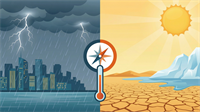
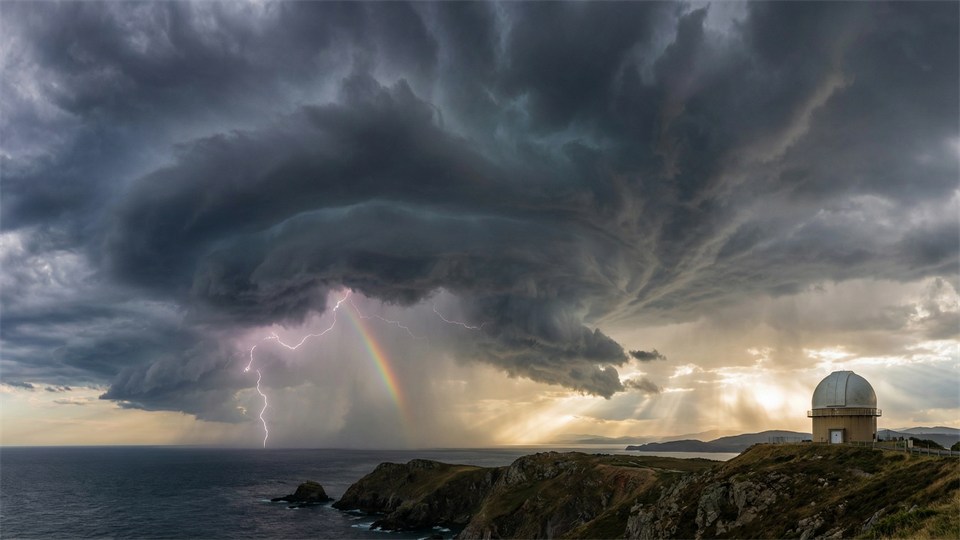


Weather is a word we use every day, but what does it actually mean? Weather is about how air, temperature, clouds, and precipitation behave right now and here, where we are. When we say that it is rainy weather, sunshine, or windy weather, we are talking about the weather.
In this article, we take a closer look at what weather is, which elements are involved, and how different factors create the many types of weather we experience on Earth.
Weather is a collective term for several different conditions in the atmosphere:
All these elements interact and determine what kind of weather we experience at a given time and place.
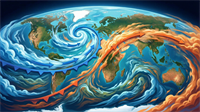
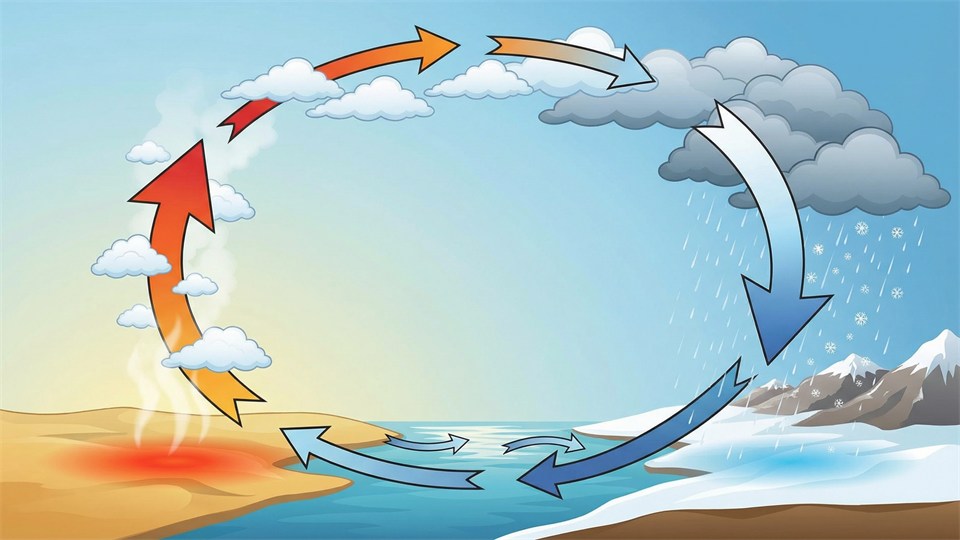
Weather arises because the Sun's energy is distributed unevenly over the Earth. The Sun does not heat the Earth evenly – the equator receives more heat than the poles. This creates temperature differences, which cause air to move. When warm air rises and cold air sinks, winds, clouds, and precipitation occur.
The weather is thus the result of the Earth's attempt to balance these temperature differences. Without the Sun, we would have no weather – the atmosphere would stand still and be uniform everywhere.
Temperature tells us how warm or cold it is. When the Sun heats the Earth, the temperature rises. At night, when the Sun is gone, the temperature drops again. Temperature affects whether precipitation comes as rain or snow, and how quickly water evaporates from soil and plants.
Humidity is about how much water vapor is in the air. When the air is saturated with water vapor, clouds and rain can form. High humidity makes it feel warmer in summer and colder in winter, because the body has a harder time getting rid of heat (or holding onto it).
Precipitation is all the water that falls down from the atmosphere, e.g. rain, snow, sleet, or hail. Precipitation occurs when water vapor in the air gathers into droplets or ice crystals, which become so heavy that they fall to the ground.
Clouds form when water vapor cools and becomes small water droplets or ice crystals. The shape and height of clouds tell us something about the weather: Thin, white clouds (cirrus clouds) often mean good weather, while dark, heavy clouds (cumulonimbus clouds) can bring rain or thunder.
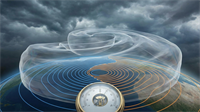
Air pressure is a measure of how much the air "presses" down on the Earth's surface. High air pressure often gives dry and calm weather, while low air pressure can lead to rain and wind. Air pressure is measured in hectopascals (hPa).
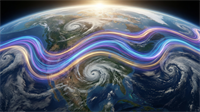
Wind is air moving from areas of high pressure to areas of low pressure. The greater the difference in pressure, the stronger the wind. Wind can move clouds, bring warm or cold air, and affect the temperature.
The weather changes when air masses with different properties meet. A cold front occurs when cold air pushes in under warm air and causes it to rise. This can bring rain, thunder, and a rapid drop in temperature. A warm front occurs when warm air slides up over cold air – this often brings prolonged rain and a rise in temperature.
The Earth's rotation also matters: It causes winds to bend, so we get complex patterns like low pressure, high pressure, and weather systems that move across continents and oceans.
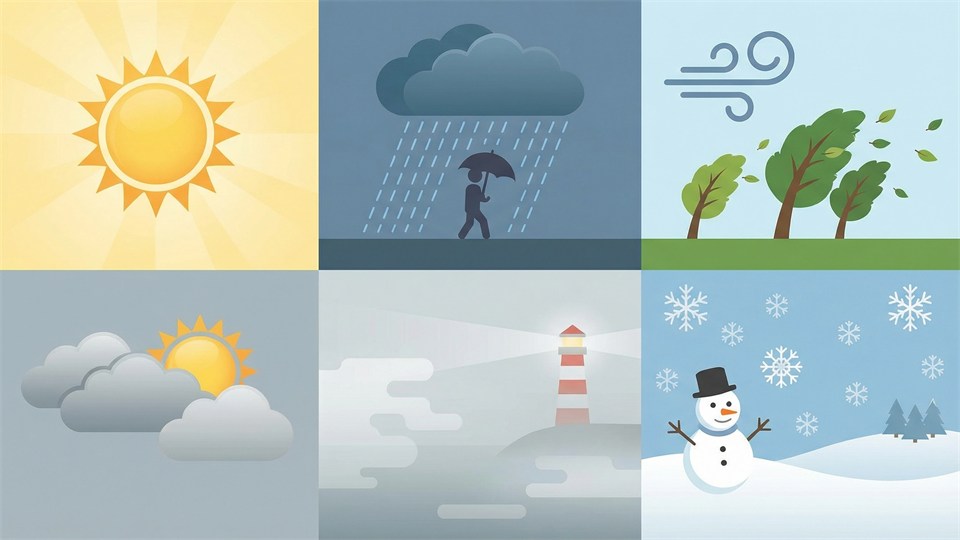
These weather types often change from day to day or even from hour to hour, especially in areas with changeable climates.
The weather affects all living things: plants, animals, and humans. Plants need rain and sun to grow. Animals adapt to the weather – for example, bears hibernate in winter, and birds migrate south when it gets cold. For humans, the weather matters for agriculture, transport, and daily life. Extreme weather such as storms, droughts, or floods can have major consequences for society and nature.
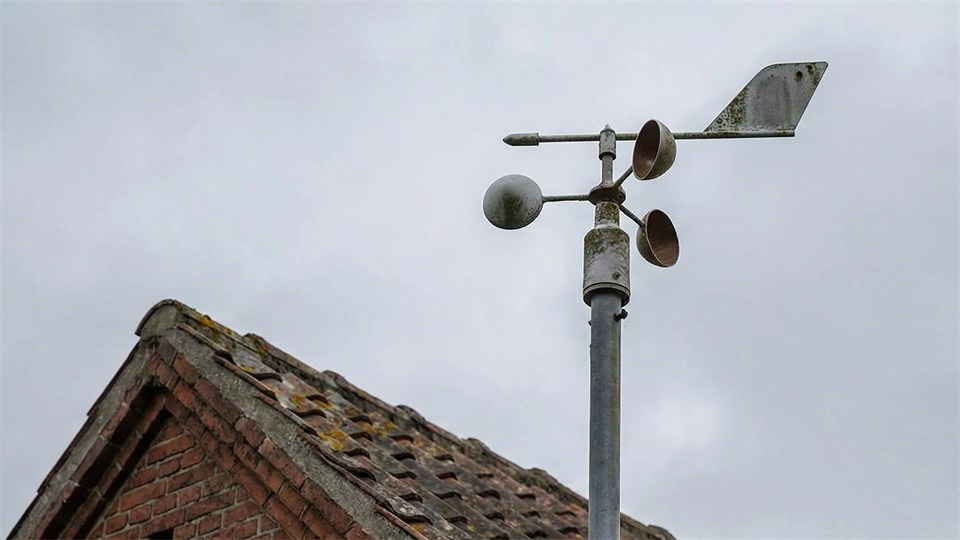
To understand and predict the weather, many types of measuring instruments are used:
These measurements help meteorologists make weather forecasts, so we can prepare for what is coming.
Weather is a combination of temperature, humidity, clouds, wind, air pressure, and precipitation, which is constantly changing. It arises because the Sun heats the Earth unevenly, and the atmosphere tries to balance the differences. Weather affects all life and is a fascinating example of how the forces of nature work together. Next time you look out the window, you can think about how many elements are involved in the weather you experience – and why it changes.