

Table of Contents
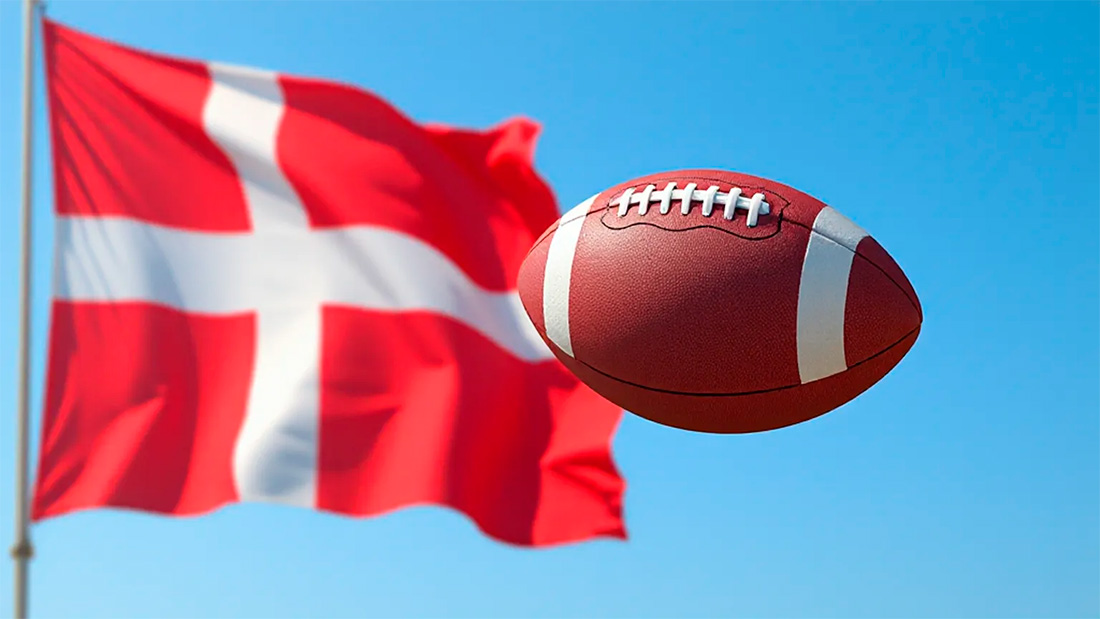
American football in Denmark has developed from a niche interest into an organized sport with national leagues, youth programs, and national teams for both men and women. Although the sport is not among the largest in the country, it has undergone significant development over the past four decades, driven by passionate volunteers, dedicated players, and a growing fanbase.
The sport truly arrived in Denmark in the early 1980s, inspired by American TV broadcasts and visiting Americans. The first clubs, such as Copenhagen Towers and Aarhus Tigers, were formed by small groups of enthusiasts who imported equipment from the USA and learned the rules of the game from TV and magazines.
In 1988, DAFF (Danish American Football Federation) was founded to unite the sport under one organization, establish common rules, and coordinate tournaments.
In the 1990s, the number of clubs increased, and DAFF organized a nationwide league. More clubs began to have youth divisions, and the first Danish national team was formed. The growing interest was supported by better access to American football on TV – especially the Super Bowl, which annually attracted new fans.
Clubs such as Triangle Razorbacks and Herlev Rebels were established during this period, contributing to the geographical spread of the sport.
In the 2000s, clubs began to work more professionally with training, tactics, and recruitment. Coaches and players were brought in from abroad, especially the USA, which raised the level. At the same time, equipment became more accessible and of higher quality.
TV coverage of the NFL was greatly intensified on TV2, and social media began to give clubs new opportunities to reach fans and recruit players. The league became more competitive, and international club matches were played in Europe.
Today, American football in Denmark is organized at several levels, both at senior and youth level. The National League is the top division for men, while women's football includes both tackle and flag variants.
The National League for men consists in 2025 of the following clubs:
Some of these clubs have also established women's teams, as a result of the increasing interest and participation in the sport.
In September 2024, it was announced that Denmark and Sweden, starting from the 2025 season, have received an ELF team. It has been established by a group of businesspeople and former players, and the ambition is to become a regular part of the playoffs.
Youth work is a central part of American football in Denmark. Many clubs have U14, U16, and U19 teams, where players are introduced to the sport with a focus on safety, technique, and fair play. Flag football serves as an entry point to the sport, as it is less physically demanding and requires less equipment.
Clubs also work with school projects and cooperate with municipalities to introduce the sport to new generations.
The future of American football in Denmark depends on continued recruitment, media coverage, and access to facilities. More artificial turf fields and indoor training facilities could extend the season and improve training conditions. There is also a growing interest in cooperation with NFL Europe and international coach exchanges.
If the sport continues its current development, there is potential for more professional players from Denmark in foreign leagues – and perhaps a greater role in the European football scene.